Wall art value guide: print quality, dimensions, framing, delivery and hanging
Wall art value is the complete displayed object: image rights, print, mount, frame, glazing, delivery and secure hanging. A low print price can become expensive after correction and custom framing.
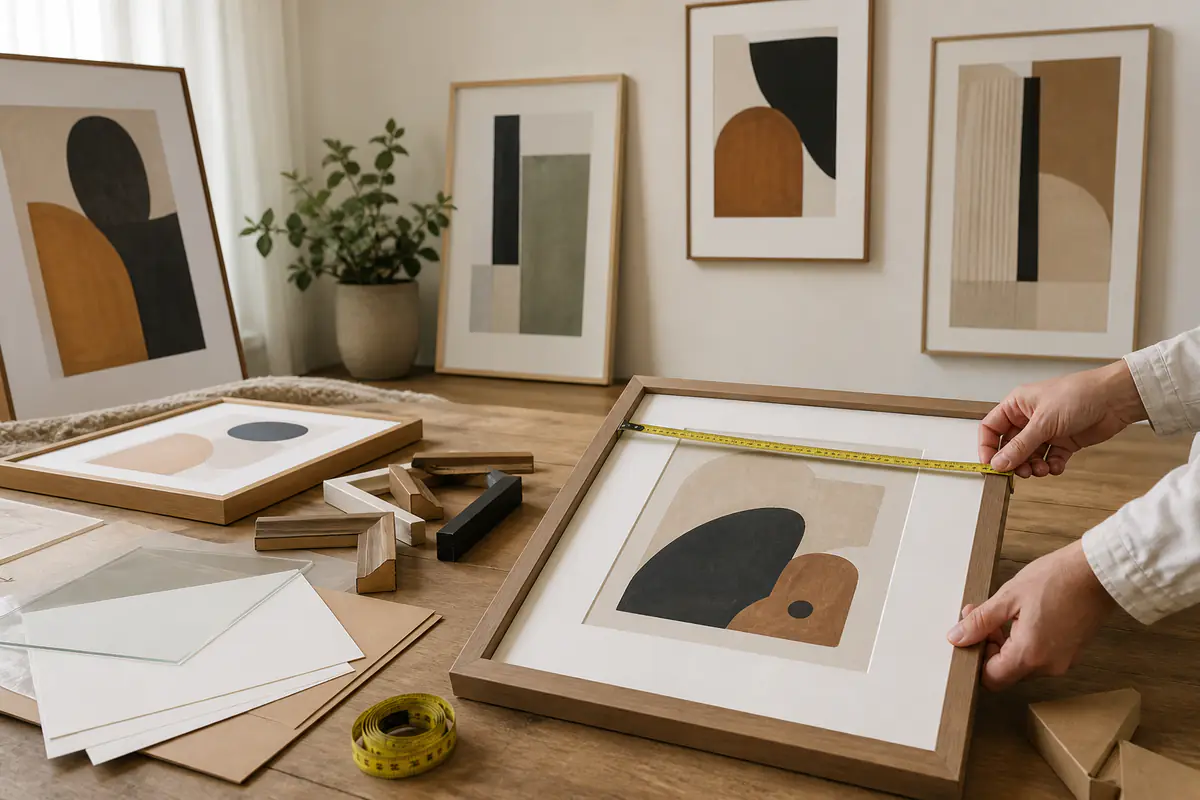
In this guide
Compare the finished installed size and cost
Artwork dimensions, paper or substrate, glazing and frame construction matter before trend or room mock-up. Measure the wall, verify what is included, price safe hanging and inspect delivery before discarding corner protection.
Plan position with the wall-art sizing guide, choose fixings through the hanging and grouping guide, and select components with the picture-frame guide.
| Component | Evidence | Cost to include | False shortcut |
|---|---|---|---|
| Artwork | Creator, licence, edition and print method | Image or print price | Visual appeal alone |
| Size | Image, paper, mount and outer frame | Custom mount or crop | Nominal A-size |
| Protection | Glazing, backing and environment | UV or safer glazing where justified | Most reflective glass |
| Installation | Weight, wall and fixings | Hardware or professional help | One generic hook |
Finished wall-art worksheet
- Confirm creator and authorised source.
- Record image and paper dimensions.
- Match aspect ratio before ordering.
- Choose mount, frame and glazing.
- Calculate packed size and delivery risk.
- Identify wall structure and object weight.
- Plan level, spacing and sightline.
- Keep condition evidence until installed.
Buy the artwork from an identifiable source
Record creator, publisher or authorised seller, title, edition status, print method and supplied certificate where relevant. Do not assume an image is licensed because it appears on a marketplace.
For open-edition decoration, authenticity may be less important than truthful materials and dimensions, but copying another artist’s design still reduces value and creates ethical risk.
Separate image, sheet and outer dimensions
Save the printed image size, complete paper or canvas size, mount opening, frame rebate and outer frame. Each describes a different footprint.
A room mock-up can exaggerate or shrink scale. Mark the true outer size on the wall with removable paper and view it from normal seating and entry points.
Match aspect ratio before choosing a standard frame
Compare width-to-height ratio of the image and frame opening. A mismatch requires cropping, borders or a custom mount; stretching is not a neutral solution.
Price the chosen correction before buying the print. An unusual cheap size can become poor value when only custom framing preserves the composition.
Understand print method and substrate
Ask whether the work is an original, photographic print, pigment inkjet, screen print, lithograph or basic poster, and record paper or canvas weight and surface.
Method names do not guarantee longevity. Ink, substrate, storage, light and humidity interact, so use specific maker care rather than a prestige term alone.
Judge image resolution at intended viewing distance
For digital prints, ask for the intended physical size and whether the file is prepared for it. Do not upscale a small image and expect fine detail at close distance.
Some art is intentionally textured or low-resolution. Value depends on the promised appearance matching the delivered print, not on a universal dots-per-inch threshold.
Choose a mount for spacing and preservation
A mount can create visual breathing room and keep suitable glazing away from the artwork. Record board type, colour, thickness and opening overlap.
A poorly cut acidic board can discolour work. Use conservation materials where the work and intended life justify them, rather than applying museum cost to disposable decoration.
Compare frame construction and finish
Inspect moulding material, joints, rebate depth, backing and hanging hardware. Veneer, solid timber, aluminium and composite each have valid uses but different weight and repairability.
Apply the furniture-quality principles to joint accuracy and finish. A large weak frame can twist even when the front looks convincing.
Choose glazing by safety and reflection
Standard glass, acrylic and specialist glazing differ in weight, breakage, static, scratch resistance, reflection and ultraviolet performance. Match the choice to size, location and artwork value.
Do not advertise UV protection as permanent immunity. Reduce direct sun and heat first, then use glazing as one layer of risk control.
Price the finished object
Add print, mount, frame, glazing, backing, delivery, fixings and professional installation. Include the cost of replacing poor supplied hardware.
Compare cost per year of intended display only after the piece fits the room and can be installed safely. An unframed bargain stored in a tube has no displayed value.
Assess delivery by packed dimensions
Large glazing and frame corners are vulnerable in transit. Save dispatch condition, carrier handling and damage-report deadlines, and inspect the parcel before discarding protection.
Open on a clean flat surface with help where weight or glass makes it necessary. Photograph crushing, puncture or broken glazing before moving loose fragments.
Match fixings to wall and weight
Identify masonry, stud, plasterboard or another substrate, plus pipes and cables. Use the object’s complete weight and fixing geometry, not the print size alone.
Follow fixing and wall guidance, and use a competent installer where the object, wall or location creates doubt. Do not hang heavy glazing above beds or seating on improvised hardware.
Control spacing in groups
For a gallery arrangement, lay the group on the floor or paper template and set consistent relationships between outer edges, visual weight and furniture below.
More pieces multiply frames, fixings and levelling work. A smaller coherent group may be better value than filling every gap with unrelated inexpensive prints.
Plan light, humidity and cleaning
Avoid direct sun, condensation, cooking grease and strong heat. Dust frame and glazing with methods suitable for the material; never spray cleaner towards the frame where liquid can wick inside.
Check backing and fixings periodically, especially after building work or movement. Browse Style & Gifts for related placement decisions.
Keep purchase and edition evidence
Retain invoice, artist or publisher information, edition details and condition photographs for valuable work. Store certificates separately rather than against the artwork.
Do not assume every limited number creates resale value. Buy primarily for a documented work that can be displayed and cared for safely.
Compare canvas with glazed paper honestly
Canvas can avoid glazing and offer depth, but stretcher quality, corner folds, surface protection and future retensioning matter. Paper can deliver fine detail but needs a suitable mount, backing and glazing.
Neither format is universally premium. Choose by image, scale, environment and maintenance, then compare the complete installed cost.
Use colour as a room relationship
Sample existing wall, timber and textile colours in the actual daylight and evening light. Artwork does not need to match every object, but its dominant value and contrast should remain intentional.
Use the colour-and-texture guide to avoid buying several decorative pieces solely to make one print fit. A work that stands independently is easier to move and retain.
Plan rental-friendly hanging without unsafe shortcuts
Check the tenancy and wall finish before using adhesive strips or making holes. Product load claims depend on preparation, surface, time and removal method.
A removable fixing is not automatically suitable above a bed or for glazed art. Use a supported shelf or competent installation when the risk outweighs cosmetic convenience.
Know when custom framing is justified
Custom work can solve unusual aspect ratio, conservation, deep objects or a precise architectural fit. Request a written specification for mount, glazing, backing, joints and hanging hardware.
It is poor value when used only to rescue an unsuitable impulse print. Decide the finished budget before ordering either component.
Plan moves and storage before buying oversize work
Measure doors, stairs, lifts and safe wrapping as well as the display wall. A frame that fits the wall but cannot leave the room without disassembly carries a hidden future cost.
Store upright only as appropriate, protected from damp, pressure and sharp temperature change. Never stack weight against glazing or a stretched canvas surface.
Use insurance and valuation proportionately
For valuable original or limited work, keep invoice, condition, dimensions and independent valuation where genuinely required by the insurer. Decorative poster purchases rarely justify the same administration.
Insurance is not conservation. Secure hanging, stable environment and careful transport reduce loss before a claim becomes relevant.
Where should the budget go?
A standard safe presentation already fits
The artwork has reliable dimensions and rights, and an appropriate ready-made frame and fixing solve the display.
Scale or preservation drives the cost
Custom mount, safer glazing, strong frame and professional installation are necessary to display the work correctly.
Balanced verdict
Wall art value is the complete, authorised and safely installed object. Match aspect ratio and dimensions, price every framing layer and protect the work through delivery and hanging.
A smaller properly presented piece can deliver more lasting value than a large cheap print with unresolved framing and safety costs.
Official checks:
GOV.UK copyright guidance ↗
V&A care guidance ↗
HSE work at height guidance ↗
Frequently asked questions
What dimensions should a wall-art listing provide?
Look for image, sheet or canvas and outer framed dimensions, plus mount opening where applicable.
Is acrylic glazing always cheaper?
Not always — It is lighter and less breakable but can scratch or attract static; compare the exact grade and use.
Does a limited edition guarantee value?
No — Verify creator, publisher, edition and condition, and buy primarily for the work rather than assumed resale.
Can any frame use the same wall hook?
No — Complete weight, frame hardware, wall substrate and location determine suitable fixings.
How should delivered framed art be checked?
Inspect outer damage, corners, glazing, joints, surface and supplied components before discarding packaging.
Methodology and limitations
We assessed wall art through rights, dimensions, aspect ratio, print method, substrate, mount, frame, glazing, total cost, delivery, fixings, environment and records. We did not appraise individual artwork or provide structural engineering advice.
Limitations
Artwork, walls, frames and locations vary. Follow creator, framer, fixing and building guidance, and use a competent installer where weight or wall condition is uncertain.