Choosing picture frames: aspect ratio, mount, glazing and hanging
A frame must fit the artwork, protect its materials and hang safely in the intended light. Start with exact artwork dimensions before choosing colour or style.
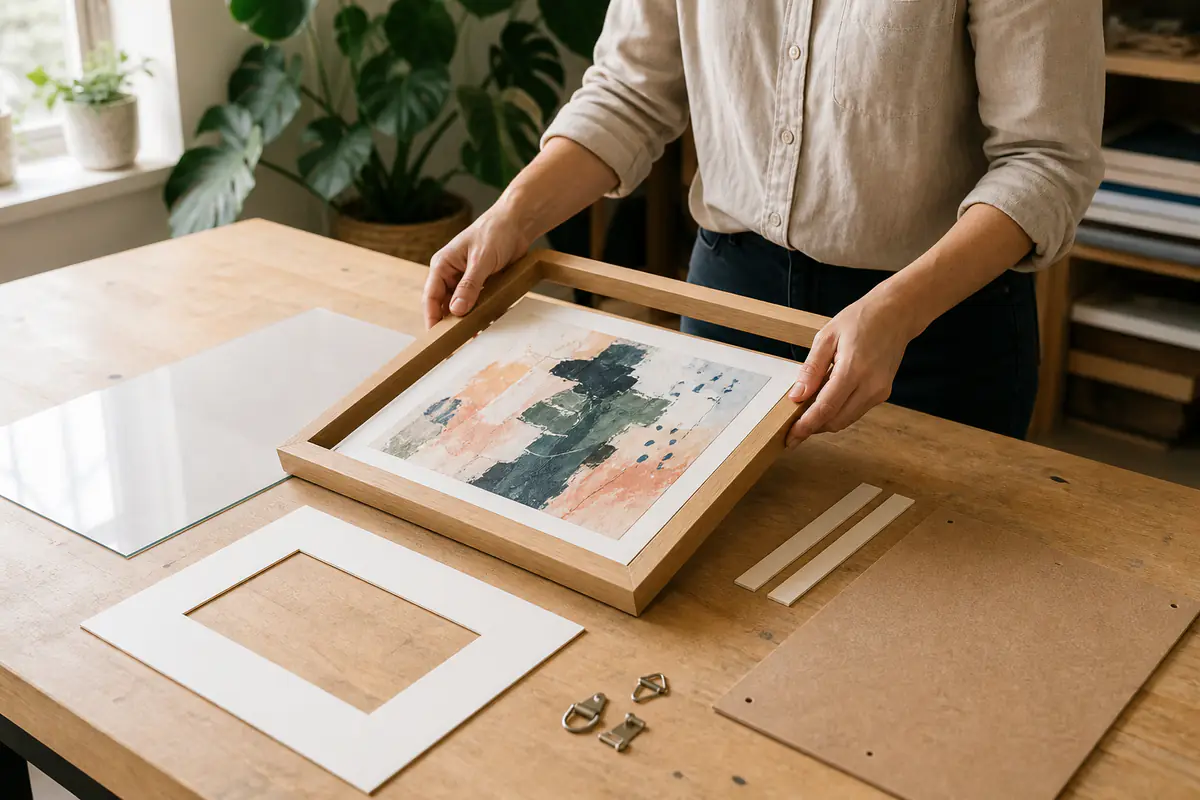
In this guide
Measure the artwork and define the conservation need first
Record image size, sheet or object size, thickness, orientation and whether the work can safely touch glazing or adhesives. Frame outer size, mount opening, rebate and glazing add weight and change apparent proportion. A decorative match is not enough if the artwork buckles, fades or cannot be removed.
Set the overall composition with the wall-art sizing guide, plan grouped placement through wall-art hanging and grouping, and compare reflective scale with the mirror size guide.
| Decision | Measure | Choose for | Avoid |
|---|---|---|---|
| Format | Artwork and image dimensions | Exact or intentional mount ratio | Forcing a crop to standard size |
| Mount | Opening, borders and depth | Separation and visual space | Covering signatures or active image |
| Glazing | Light, breakage and surface | Protection with acceptable reflection | Glazing touching vulnerable media |
| Hanging | Complete framed weight and wall | Compatible hardware and support | Generic fixing for every wall |
Frame specification record
- Measure artwork in two directions.
- Record image, sheet and thickness.
- State orientation and crop tolerance.
- Choose mount opening and borders.
- Record glazing type and weight.
- Check rebate, backing and spacers.
- Measure complete outer dimensions.
- Specify wall and hanging hardware.
Distinguish image size from artwork size
A print may have an image area, white border and full sheet; a photograph, textile or object has its own edge and thickness. Record all of them in millimetres.
Decide what may be covered by a mount and whether a signature, edition mark or deckled edge must remain visible. Do not order from a nominal paper name alone.
Match or deliberately adapt aspect ratio
Compare width-to-height ratio for artwork, mount opening and frame. A standard frame can work with a mount when the crop and border are intentional.
Do not stretch, trim or hide important content simply to use an available format. A custom size may be the lower-risk option for irreplaceable or unusual work.
Use the mount as spacing and protection
A mount can create visual breathing space and help keep flat artwork away from glazing. Record opening overlap, top and side borders, bottom weighting and material.
The opening must hold the work without covering active content unnecessarily. Conservation needs vary, so seek a qualified framer for valuable, fragile or historically important pieces.
Check frame rebate and package depth
The rebate must accommodate glazing, mount or spacers, artwork and backing while leaving secure retention depth. Measure objects and textured work at their highest point.
Do not force a thick package into shallow clips or bow the backing. Pressure can mark artwork, distort glazing and weaken the frame corners.
Choose glazing for light and breakage risk
Compare glass, acrylic and specialist options for weight, breakage, static, scratching, reflection and stated ultraviolet performance. No glazing makes poor placement harmless.
Test reflections from windows, lamps and seats. Acrylic can reduce weight but needs suitable cleaning; glass can be clearer yet heavier and breakable.
Keep vulnerable media away from the glazing
Pastel, charcoal, textured paint, photographs and other surfaces can transfer, block or abrade when touching a cover. Use suitable mounts or spacers based on the medium.
Avoid improvised pressure and adhesives. Ask a qualified framer when the medium, value or condition makes reversibility and material compatibility important.
Select backing and sealing deliberately
Backing supports the package and limits dust entry but does not make a frame waterproof. Record material, fasteners, hanging points and any dust seal.
Do not trap damp work or hang in persistently humid conditions. Check for insects, mould, staining or odour before sealing an older frame or artwork.
Treat frame colour and width as optical choices
A wide dark frame can increase apparent visual mass; a narrow light frame may recede. Compare with artwork tones, wall colour, neighbouring pieces and furniture.
Use real samples in the intended light. Screen previews cannot reliably represent wood, metal finish, paint sheen or the way glazing changes contrast.
Calculate the complete framed weight
Weigh or obtain specifications for frame, glazing, mount, backing and artwork. Outer dimensions alone do not reveal load or leverage on hanging points.
Large glazing can dominate weight. Plan transport, unpacking and installation before ordering, using support appropriate to the complete assembly.
Plan transport and temporary storage before framing
Measure the packaged route through doors, stairs, lift and vehicle as well as the finished frame. Protect corners and glazing without placing pressure on the artwork, and keep the package upright only where the maker recommends it.
Choose a dry, stable temporary location away from direct sun, heat, children and pets while the wall is prepared. Do not lean a heavy glazed frame where it can slide, bow or be struck; safe storage is part of the installation plan.
Match hanging hardware to frame and wall
Inspect frame attachment points, wire or rail geometry, wall construction, hidden services and complete load. Multiple points may control tilt and distribute load.
Do not use a generic plug or adhesive for every wall. Follow exact hardware limits and use a competent installer when construction, services or access are uncertain.
Mock the outer size and sightline
Tape the frame outline or use paper at the intended height, then view from doors, seats and circulation paths. Include mount and frame, not only image dimensions.
Check glare through the day and confirm doors, curtains, furniture and switches remain usable. The frame should belong to the whole wall arrangement.
Inspect quality before inserting artwork
Check square corners, joints, finish, glazing edges, rebate cleanliness, clips, hanging points and backing on a protected surface. Stop for cracks or sharp damage.
Clean with methods suitable for each material and keep liquid away from artwork. Photograph the empty frame specification for future replacement or rearrangement.
Plan reversibility, cleaning and future change
Keep measurements, mount opening, materials and hardware with a safe image of the back. A reversible package makes reframing and condition checks easier.
Browse Style & Gifts, compare decorative sourcing through H&M Home and the Zara Home UK review, and review product safety before reuse.
Standard frame with mount or custom framing?
The artwork fits without harmful compromise
Dimensions, ratio, depth, materials, glazing and hanging system suit the work, and the mount preserves all important content.
The work is unusual, fragile or valuable
Size, thickness, medium, conservation, glazing separation or load requires a reversible solution beyond a standard package.
Balanced verdict
A good picture frame is an artwork package, optical boundary and hanging load at the same time. Measure the complete work, choose compatible mount and glazing, then install for the verified wall and total weight.
Mock the outside size before ordering and retain the specification so later cleaning, moving or reframing does not begin from guesswork.
Official checks:
HSE manual handling guidance ↗
GOV.UK product safety alerts and recalls ↗
V&A guidance on caring for paintings ↗
Frequently asked questions
Should the frame match the artwork size exactly?
Only when the exact sheet or object fits safely. A mount can adapt dimensions without forcing a crop.
What is a frame mount for?
It creates visual spacing, controls the opening and can help separate flat work from glazing.
Is acrylic better than glass?
It depends on weight, breakage, static, scratching, reflection and conservation needs.
Should artwork touch the glazing?
Vulnerable media generally need suitable separation. Seek qualified advice for fragile or valuable work.
How do I choose wall fixings?
Use verified wall construction, complete framed weight, hardware geometry and exact manufacturer limits.
Methodology and limitations
We assessed picture frames through artwork dimensions, ratio, mounts, rebate, package depth, glazing, backing, aesthetics, load, hanging, inspection and reversibility. We did not inspect a specific artwork or wall.
Limitations
Art media, conservation value, frames, walls and loads vary. Use a qualified framer or installer for valuable work, uncertain materials, heavy glazing or hidden services.