Throws and blankets practical guide: pilling, washing and seasonal storage
A throw lasts through fibre-appropriate cleaning, complete drying and storage that avoids damp, pests and crushing. Read the label, remove dry soil first and treat pilling or snags without pulling the structure apart.
In this guide
Separate surface wear from structural damage
Inspect the whole dry textile under good light before shaving pills, cutting threads or washing. Loose surface fibre, a pulled loop, insect damage and a broken seam need different responses; aggressive grooming can make each worse.
Connect behaviour to fibre composition, compare warmth language with bedding measures explained, and judge value through cost per use.
| Observation | Check | First action | Avoid |
|---|---|---|---|
| Loose pills | High-friction areas and fibre length | Gentle approved grooming | Pulling pills by hand |
| Single snag | Loop, weave and nearby tension | Stop use and support the area | Cutting without structure check |
| Musty odour | Storage damp and deep drying | Isolate, air safely, assess cleaning | Masking with fragrance |
| Moth-like holes | Larvae evidence and nearby textiles | Isolate and inspect the storage area | Returning it to the same cupboard |
Seasonal textile record
- Save fibre, care and fire-safety labels.
- Photograph edges, seams and existing snags.
- Remove loose dry soil before wet cleaning.
- Measure machine capacity against wet weight.
- Record wash and drying method.
- Confirm the centre is completely dry.
- Clean the storage space before packing.
- Inspect periodically for damp and pests.
Identify fibre, structure and trim together
Wool, cotton, acrylic, polyester and blends respond differently to water, heat, friction and pests. A woven blanket, knitted throw and brushed fleece can share a fibre name but not the same care route. Fringing, binding, embroidery and bonded layers add restrictions.
Read every label before deciding that a gentle cycle is universally safe. Keep a photograph if labels may fade, and note whether the textile is decorative, used on bedding or supplied with upholstered furniture.
Remove dry soil before adding moisture
Shake outdoors only where suitable and secure, then vacuum gently through a clean screen or use another label-supported method. Pet hair, crumbs and grit can become harder to remove when wet and may add abrasion inside a machine.
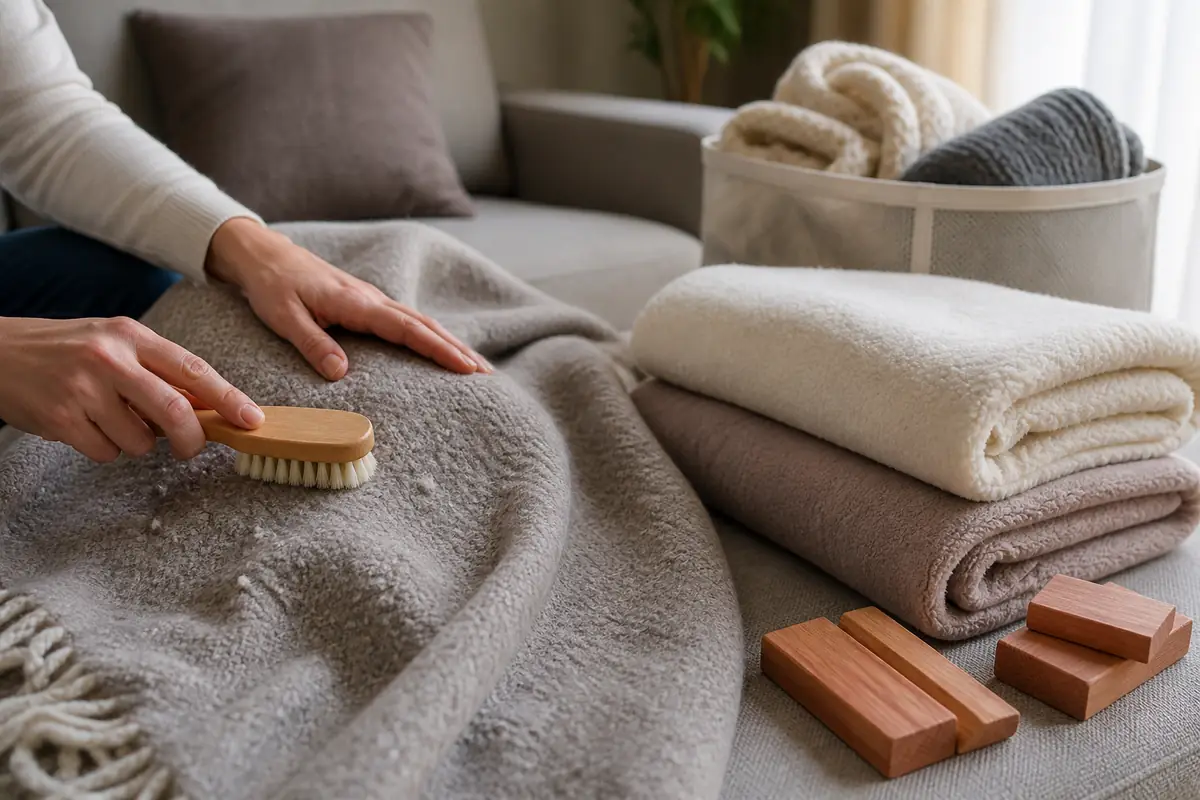
Inspect both faces, folds and edges. Do not beat delicate fibres or use sticky rollers that pull loops. A soft brush should move in the supported direction without raising a new fuzzy surface.
Treat pilling as fibre movement, not dirt
Pills form when loose fibres tangle under friction. They often appear on sofa contact, folded edges and areas handled repeatedly. Compare severity across the textile and look for thinning beneath the pills.
Use only a method suitable for the structure, working on a flat supported surface. A shaver can cut sound loops or snag a knit. The cushion fillings guide helps separate surface textile wear from compressed interior filling nearby.
Stabilise snags before deciding on repair
Do not pull a loop or cut a long thread immediately. Lay the textile flat, identify where tension has travelled and keep jewellery or pet claws away. A woven pull may be eased differently from a knitted loop.
A competent repairer can redistribute yarn, darn a hole or secure binding. Photograph the original structure and obtain a view before trimming. Invisible repair is not always realistic, but timely stabilisation can prevent enlargement.
Wash only within machine and textile capacity
A dry throw may become very heavy when wet. Check the care label and machine capacity, distribute the load and use the stated temperature, programme and detergent. Do not compress an oversized blanket into the drum.
Hand washing also requires safe lifting and complete rinsing. Avoid wringing or twisting. If home equipment cannot wash and dry the item evenly, use a competent cleaner rather than improvising.
Dry completely without distorting the shape
Support heavy wet textiles and reshape gently to recorded dimensions where care permits. Direct heat can shrink, felt, harden or melt fibres. Hanging a heavy knit from one edge can lengthen it permanently.
Turn or reposition according to guidance so thick folds and hems dry. A dry surface does not prove the centre is dry. Coolness, clumping or persistent odour is a reason to continue safe drying or seek help.
Handle spills without saturating hidden layers
Blot promptly with a clean colourfast cloth and use only a compatible treatment. Work from the edge and avoid vigorous rubbing that spreads dye or changes pile. Record unknown substances before adding cleaner.
Oil, wax, cosmetics, pet contamination and unstable colour may need specialist treatment. For a stained throw, do not combine detergents, bleaches or other cleaning treatments in an improvised mixture; use a single fibre-appropriate method that its care instructions permit. Preserve evidence before cleaning a new item that arrived stained or damaged.
Control pet hair and claws through routine placement
Use washable barriers where appropriate, rotate the throw and groom pets away from the textile. Keep loose fringe and open knits out of reach if they invite chewing or claw catching.
Pet use changes hygiene and washing frequency. Choose a size and fibre that can genuinely be cleaned with available equipment rather than buying a delicate decorative piece for daily floor or animal use.
Store clean, dry and breathable
Clean the cupboard or box area, dry the textile fully and fold without hard pressure on trims. Use breathable protection suitable for the fibre and keep it away from leaks, external damp walls, strong light and direct heat.
Do not seal uncertain dampness inside plastic or add unlabelled chemicals. Inspect stored items periodically and refold along different lines. Browse Style & Gifts for separate placement and gifting questions.
Respond to pest evidence at room level
Holes alone do not identify a pest. Look for larvae, casings, debris and damage on nearby animal fibres, then isolate affected textiles without spreading material through the home. Vacuum and clean the storage area safely.
Follow current professional or official guidance for confirmed infestation. Fragrance blocks do not replace cleaning and monitoring. Disclose repaired pest damage if donating or selling a textile.
Replace only after repair and hygiene are assessed
A worn edge, loose binding or local hole may be repairable when the main fabric remains sound. Widespread thinning, persistent contamination, severe felting or repeated pest damage can make replacement more practical.
Compare actual years and uses, care cost and repair estimate. Our product-lifespan guide helps frame the decision without inventing a universal expiry date.
Rotate throws by actual friction and light exposure
A throw left on one sofa arm receives different sun, skin contact and compression from the folded section. Reverse or relocate it where construction permits, and record a protected comparison area before the difference becomes severe.
Rotation will not restore lost dye or worn pile, but it can distribute future exposure and reveal whether a room condition rather than washing drives the change.
Prepare a gifted textile for real ownership
When giving a throw, include fibre, size and care information rather than removing every label for presentation. Consider whether the recipient has suitable washing and drying capacity, allergies, pets or pest-sensitive storage.
A beautiful oversized blanket can become a burden if it requires specialist cleaning. Practical care compatibility is part of gift value and reduces the chance of unused textile waste.
Clean at home or use specialist care?
The label, size and drying capacity support it
Colour is stable, the textile fits equipment without compression, wet weight can be handled safely and complete drying is achievable.
Construction, contamination or size adds risk
The throw is valuable, oversized, lined, multicolour, unstable, pest-affected or contaminated, or home drying cannot reach the centre evenly.
Balanced verdict
Throw and blanket care succeeds when dry soil, wet weight and complete drying are planned before washing. Groom pills cautiously, stabilise snags and store only when clean and fully dry.
Choose future textiles around real cleaning capacity and daily friction, not colour and softness alone.
Official checks:
WRAP textiles information ↗
GOV.UK product safety alerts and recalls ↗
British Pest Control Association ↗
Frequently asked questions
Can all throws be machine washed?
No — Fibre, construction, trim, size, wet weight and drying capacity all matter. Check the throw’s own wash and drying symbols rather than copying the cycle used for a different blanket or relying only on its fibre name.
Should pills be pulled off by hand?
No — Pulling can draw sound fibres from the structure. Use only an appropriate supported grooming method.
Why does a blanket smell musty after storage?
It may have been stored damp or in a damp space. Isolate it, assess fibre-appropriate cleaning and inspect the storage area.
Can a wet knitted throw be hung?
Often this risks stretching. Follow the label and support the full weight during drying.
Do small holes prove moth damage?
No — Inspect for pest evidence and other causes, and assess nearby textiles before choosing treatment.
Methodology and limitations
We assessed throw and blanket ownership through fibre, dry soil, pilling, snags, washing, drying, spills, pets, storage, pests and replacement. We did not wash, pest-treat or durability-test named textiles.
Limitations
Fibres, dyes, structures, contamination and pests vary. This guide cannot establish hygiene or identify an infestation. Follow care labels and obtain competent cleaning, repair or pest advice where needed.