How Large Should a Mirror Be? Proportions for Halls, Bedrooms and Living Rooms
Start with the furniture or wall the mirror must relate to: roughly two-thirds to three-quarters of the width below is a reliable first mock-up, then adjust for shape, frame and viewing purpose.
In this guide
Measure the composition, not just the empty wall.
Above a console, sideboard or mantel, make the mirror visibly narrower than the supporting furniture and centre the complete framed size. For dressing, prioritise enough vertical view and correct mounting height. In a narrow hall, leave door, switch and shoulder clearance. Always choose fixings for the wall type and the mirror’s actual weight.
A mirror can be technically small enough for a wall and still look wrong. The useful question is not “will 80cm fit?” but “what does 80cm align with, what will it reflect, and can it be installed safely?” This guide provides starting proportions, then shows where function should override decoration.
The simplest mirror-size formula
When a mirror sits above furniture, use the furniture width as the anchor. A mirror around 65–75% of that width is a useful mock-up—not an interior-design law. It creates visible side margins and lets the two pieces read as one composition. A 120cm console therefore suggests testing a mirror around 78–90cm wide; a 150cm sideboard suggests roughly 98–113cm.
Round the result to real product sizes, then tape the complete outline to the wall. Include the frame, not only the reflective glass. Stand at the doorway and from the main seat. A thick, dark or ornate frame has more visual weight than a slim frameless design and may look larger at the same measurement.
| Furniture or position | Useful first size to mock up | What can change it |
|---|---|---|
| 80–100cm narrow console | 50–70cm mirror width | Very narrow hall, lamps, switches and door swing |
| 120cm sideboard | 80–90cm mirror width | Heavy frame may need the smaller end |
| 150cm sideboard | 100–110cm mirror width | A pair of mirrors can replace one wide piece |
| 90–120cm mantel | 60–90cm mirror width | Mantel depth, ornaments and ceiling height |
| Single bathroom basin | Mirror no wider than vanity; align with basin or taps | Lighting, splash zone and electrical requirements |
| Full-length dressing position | Commonly 140–170cm high and 40–70cm wide | Viewer height, mounting height, distance and available floor/wall space |
For a mirror standing alone on a wall, use taped outlines rather than a percentage. Maintain clear margins from corners, architraves, radiators and furniture. A very small mirror can look like an isolated dot; an oversized one can reflect clutter, dominate circulation or become difficult to anchor safely.
Current UK mirror sizes and prices
The products below show how much weight, depth and price can vary at a similar face size. They are examples for planning rather than universal recommendations.
| Exact product | Size and weight | Price shown on 22 August | Planning note |
|---|---|---|---|
| IKEA LETTAN | 80×95cm; 8.15kg | £25 | Frameless bathroom format; hangs horizontally or vertically; safety film |
| Dunelm Apartment frameless round | 80×80cm; 4.5kg | £50 | Light visual profile and bevelled edge |
| IKEA LINDBYN round | 80cm diameter; 4.94kg | £65 | Slim frame; requires two suitable screws |
| Dunelm Elements round | 80cm diameter; 5.48kg | £85 | Deeper timber frame; checked colour/size was out of stock |
| IKEA STOCKHOLM | 80cm diameter; 10cm deep; package 6.42kg | £89 | Frame forms a shelf; wall screws sold separately |
Dated snapshot: official IKEA UK and Dunelm pages checked 22 August 2026. Prices, availability, delivery and product variants change. IKEA availability depends on the selected store or delivery address; the checked Dunelm Elements 80cm variant remained out of stock.
An 80cm diameter therefore ranges from a £50 frameless example to framed designs above £80, without changing the main dimension. Frame material, depth, mounting hardware and bathroom approval matter. The £25 LETTAN offers more reflective area in a rectangular format but weighs over 8kg. Never infer easy installation from a low price or thin appearance.
How large should a hallway mirror be?
A hallway mirror usually has two jobs: a final appearance check and adding reflected light or depth. In a narrow corridor, projection matters as much as width. Measure the tightest walking line with coats, bags, door handles and radiator valves considered. A deep shelf-frame may be useful above a console but intrusive opposite a door.
Above a console, start with the 65–75% rule and leave enough gap for keys, a lamp or tall foliage. Around 15–25cm between furniture and mirror is a practical visual mock-up, but raise it if objects would overlap the glass. The centre does not have to sit at an abstract gallery height; the mirror needs to work for the household while relating to the furniture.
Check the reflection before drilling. A mirror opposite a window can brighten a dim hall, while one facing an open coat cupboard multiplies visual clutter. A mirror directly opposite the entrance may reflect anyone approaching and feel visually busy. Tape foil or paper to the wall and observe it morning and evening.
For a small entry with no console, a 50–70cm round or arched mirror often provides a useful check without filling the wall. A tall narrow mirror can show more of the body while keeping width out of the circulation route. Browse our Home & Kitchen guides for related space-planning advice.
Bedroom mirrors: dressing function first
A dressing mirror should show the outfit from the normal standing position. A full-length mirror does not literally need to equal the viewer’s height—the reflection geometry can work with a shorter surface when correctly placed—but a generous 140–170cm tall format is easier for mixed-height households and flexible positioning. Width around 40–70cm gives a more comfortable full-body view than a narrow strip.
Measure the available step-back distance. A wide mirror squeezed beside a wardrobe can still be useless if the bed blocks the viewing position. Test the lower edge with shoes and the upper edge with the tallest user. If leaning rather than hanging, use the manufacturer’s anchoring method; a heavy floor mirror must not rely on friction alone.
Above a dressing table
Match the mirror to the seated task. A 60–80cm mirror can suit a 90–120cm dressing table, but lighting quality and eye height matter more than maximum surface. Side lighting reduces facial shadows better than one high lamp. Any powered bathroom-style mirror used elsewhere still needs compliant installation and accessible controls.
Wardrobe-door mirrors
Check door swing, hinges and added weight. Adhesive tiles may be unsuitable for some finishes and can distort when panels are not perfectly flat. A manufacturer-supplied mirrored door is normally the cleaner engineering choice. Do not add a heavy glass panel to a door without confirming capacity and fixing method.
Living-room proportions
In a living room, the mirror often functions like artwork. Above a sideboard or console, the furniture should visually support it. The 65–75% starting point works well, but a pair of smaller mirrors can create rhythm over a long cabinet. Keep the outer edges within the furniture width unless an intentionally wall-filling composition has been mocked up.
Above a mantel, measure the mantel width, chimney breast, ceiling and any projecting shelf. A mirror can sit or hang above the mantel only when the product instructions permit that arrangement and it is secured against movement. Leave visual breathing room; squeezing an ornate frame between shelf and ceiling makes even an expensive piece look accidental.
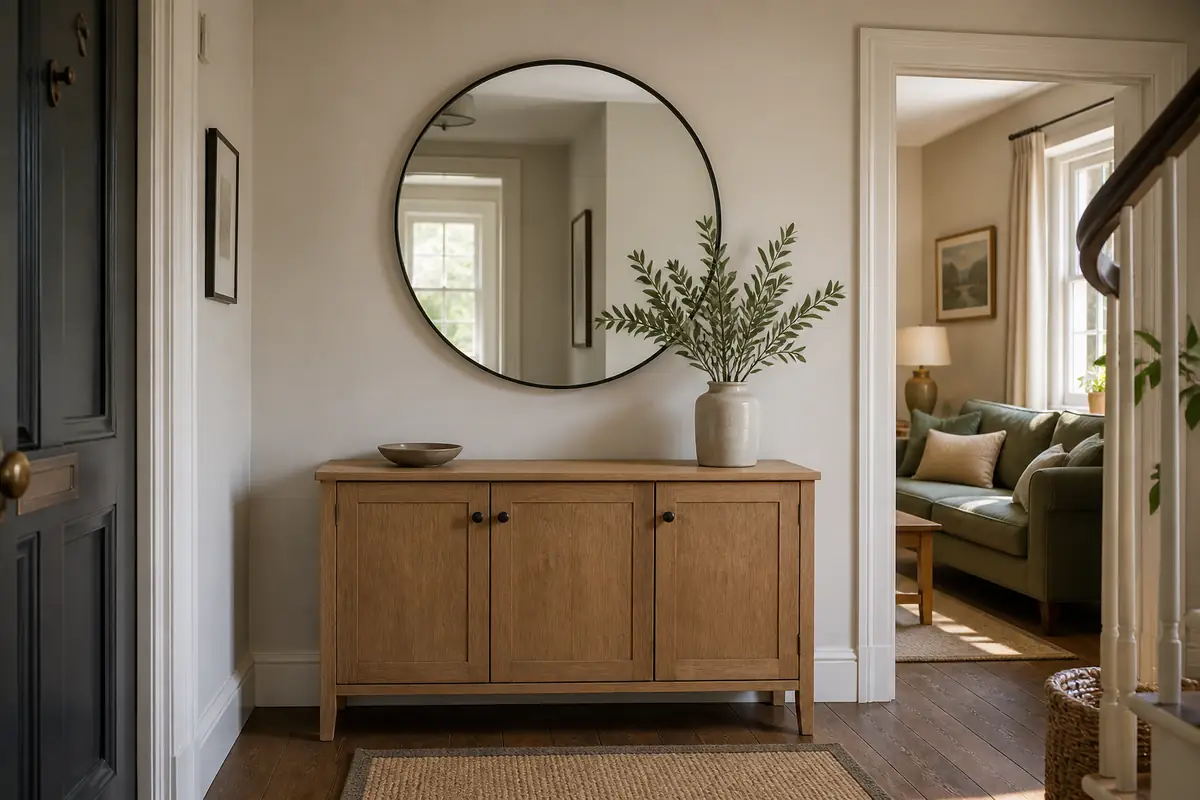
Consider what seated viewers see. A low mirror may reflect lamps or movement rather than a calm part of the room. A high mirror can show only ceiling. Use a helper to hold a paper outline and check the reflection from the sofa, doorway and dining position. The featured scene’s mirror is roughly two-thirds of the sideboard width—a balanced example, not a prescription.
Do not use a large mirror to solve a room-layout problem it only reflects. If it doubles a television, untidy shelving or direct glare, choose another wall or change the angle. For furniture-scale decisions, our living-room rug sizing guide uses the same principle: relate the object to the whole seating group, not an empty patch of floor or wall.
Round, rectangular or arched?
Shape changes perceived scale. A round 80cm mirror has less reflective area than an 80×80cm square because the corners are absent, yet the circular outline can feel prominent. It softens a wall full of rectangular doors, frames and furniture. An arched mirror adds vertical emphasis while retaining a softer top.
A rectangular mirror uses wall area efficiently and suits functional bathroom or dressing positions. Hung landscape, it relates to a wide vanity or sideboard; portrait, it supports a body-length view. Verify that the hanging hardware explicitly permits both orientations. The IKEA LETTAN page states that its checked 80×95cm model can hang horizontally or vertically; not every frame can.
Frame width affects the usable glass. Product dimensions may describe the overall frame, mirror plate or both. Dunelm’s Elements listing distinguishes its 80cm overall diameter from a 79.2cm mirror size. On ornate sunburst designs, an 80cm overall width can contain a much smaller central glass. Read the dimension diagram.
Bathroom mirror size and lighting
For a single basin, aligning the mirror with the vanity or the basin/tap centre usually creates order. Keep the overall width no greater than the vanity unless the design deliberately spans a double setup. Confirm that the product is approved for bathroom use; decorative living-room mirrors may have unsuitable frames, backing or fixings.
Integrated lighting changes depth, power requirements and price. The IKEA FAXÄLVEN 80cm example was £130 and required additional control components for some functions. An illuminated mirror should not be chosen by diameter alone. Check IP rating, electrical zone, driver, switch, cable route and installation requirements with a qualified electrician. Never improvise mains wiring.
Weight, wall type and safe fixing
Glass is heavy and fragile. The wall construction determines the fixing: masonry, timber stud, plasterboard and tiled walls need different anchors and drilling methods. Use the manufacturer’s specified hanging points and all required fixings. Do not assume a generic picture hook is adequate because the mirror weighs less than a framed artwork of similar size.
IKEA’s LINDBYN 80cm page requires two screws and says fixings must suit the wall material. STOCKHOLM’s screws are sold separately. LETTAN carries a tipping-hazard warning and says to anchor it securely, seeking professional advice when uncertain. Dunelm product weights in the checked 80cm examples ranged from 4.5kg to more than 18kg, showing why diameter alone cannot select hardware.
Before drilling, use a cable and pipe detector appropriate to the wall and understand its limitations. Bathroom drilling adds tile, waterproofing and hidden-services risks. If the mirror is large, unusually heavy, above a bed or seating area, or the wall is uncertain, use a competent installer. Safety film can reduce damage if glass breaks; it does not make poor fixing safe.
A room-by-room measuring method
- Measure the anchor. Record furniture width, wall width, ceiling height and all nearby edges.
- Define the task. Decorative reflection, face-level use or full-body dressing require different shapes.
- Calculate a starting size. For furniture, test 65–75% of its width.
- Mark the complete outline. Include frame, shelf, depth and hanging clearance.
- Test the reflection. Check standing, seated and doorway viewpoints in daylight and artificial light.
- Confirm weight and wall type. Select the product only when a safe fixing plan exists.
- Check delivery and returns. Large glass needs careful handling and may have collection restrictions.
Use low-tack masking tape or paper and leave the outline up for a day. Photograph it from the entrance and main seating position. This catches an undersized mirror more reliably than visualising a product image. Our product-shortlisting guide helps compare the final two or three models without losing exact dimensions.
The mirror belongs above a console or sideboard
Mock up a framed width visibly narrower than the furniture, then centre the full outside dimensions and confirm safe fixings.
Dressing view or a narrow hall sets the brief
Prioritise useful body view, eye height and circulation clearance rather than filling a percentage of empty wall.
Our verdict
For a mirror above furniture, two-thirds to three-quarters of the furniture width is the most useful starting point. It produces natural margins in many rooms and converts an empty-wall question into a measurable relationship. Then adjust for frame weight, intended reflection, viewer height and safe fixing.
An 80cm mirror is versatile: it can work above a 110–125cm console, over many single vanities or as a standalone hallway focal point. It is not universally “large”. Against a 180cm sideboard it may look modest; in a 90cm alcove it can dominate. Tape the exact outline and use the full framed dimension.
Compare retailer service in our Dunelm review and IKEA UK review. Continue with how to measure before buying furniture, browse Style & Gifts or use the UK shop directory.
Check current official information:
IKEA LETTAN 80×95cm ↗IKEA LINDBYN 80cm ↗IKEA STOCKHOLM 80cm ↗Dunelm Apartment 80cm ↗Dunelm Elements 80cm ↗
Frequently asked questions
Should a mirror be wider than a console table?
Usually no. A mirror around 65–75% of the console width creates balanced margins. An intentionally oversized wall treatment can work, but it should be mocked up and safely engineered.
How high should a mirror hang above furniture?
Start by testing a 15–25cm gap, then adjust for objects, frame depth, ceiling and useful eye height. The furniture and mirror should read together rather than as separate floating items.
Is an 80cm mirror large?
It is medium-to-large in many hallways and bathrooms, but scale depends on the furniture and wall. It can suit a 110–125cm console and look small above a very wide sideboard.
What size mirror is best for a hallway?
A 50–80cm round or arched mirror suits many console arrangements. For outfit checks, choose a tall narrow format and confirm step-back distance and circulation clearance.
Can I lean a large mirror against the wall?
Only when the manufacturer permits it and provides an anchoring method. Large leaning mirrors must be secured against tipping, especially around children, pets and circulation routes.
Do bathroom mirrors need special fixings?
They need fixings appropriate to the product, wall, tile and weight, and the mirror must be approved for bathroom use. Illuminated models also require compliant electrical installation.
How this mirror-size guide was prepared
Recommended Today checked official IKEA UK and Dunelm listings on 22 August 2026. We recorded overall dimensions, weights, orientations, safety film, bathroom suitability, fixing notes, displayed price and stated availability. Proportion ranges are practical mock-up starting points, not structural standards.
We did not install, load-test or inspect these mirrors. Mounting depends on the exact product and wall, so manufacturer instructions and competent professional advice take priority.
Prices, stock, dimensions and fitting instructions change. Recheck official pages before buying. Never hang a mirror until its weight, hanging points, wall construction and suitable fixings are confirmed.