Wall art practical guide: light exposure, frames and moving
Wall art keeps its appearance and practical value when light, humidity, fixings, glazing, cleaning and moves are planned together. The display position is part of the object’s ownership cost.
In this guide
Control exposure and support before cosmetic cleaning
A beautiful frame cannot compensate for direct sun, damp, unstable fixings or trapped moisture. Document the work and frame, map light and wall conditions, clean only compatible surfaces and prepare protective packaging before a move.
Choose pieces through the wall-art value guide, size them using the wall-art sizing guide, and plan groups with the hanging and grouping guide.
| Risk | Evidence to inspect | Protective action | Avoid |
|---|---|---|---|
| Light | Daily sun path and medium sensitivity | Lower exposure or suitable glazing | Assuming glass blocks all UV |
| Moisture | Wall, humidity and frame backing | Ventilation and dry location | Bathroom placement by style alone |
| Fixing | Wall type, load and frame hardware | Rated compatible system | One generic nail |
| Moving | Frame, glazing, corners and route | Layered labelled protection | Stacking face to face |
Wall art ownership record
- Photograph front and back.
- Record artist, medium and dimensions.
- Map daily light exposure.
- Check wall and fixing type.
- Inspect glazing and backing.
- Dust with compatible tools.
- Save frame and repair details.
- Keep moving materials labelled.
Identify what is actually being displayed
Record artist or maker, title, medium, support, dimensions, edition or print method where known, frame, glazing, mount and backing. Different materials tolerate light, moisture and cleaning differently.
Do not call every image a print or every clear sheet glass. If the construction is uncertain or valuable, seek a competent framer or conservator before treatment.
Map daylight across the full year
Observe direct and reflected sun at different times and seasons. A wall that seems shaded in winter can receive strong summer exposure.
Lower exposure, rotation or suitable glazing can reduce risk, but no display method makes light damage impossible. Keep reference photographs to notice gradual fading.
Understand glazing limits
Glass and acrylic vary in UV filtering, reflection, weight, scratch behaviour and breakage risk. Save the exact glazing specification rather than relying on “museum” as a generic word.
Keep the artwork separated from glazing where the medium and framing method require it. Condensation or contact can mark surfaces.
Control humidity and damp
Avoid walls with active damp, condensation or rapid humidity changes. Bathrooms, kitchens and exterior walls need evidence beyond décor suitability.
Use the mirror proportion guide for safer alternatives in difficult locations. Never seal a damp backing into new packaging.
Inspect wall type and fixing capacity
Identify masonry, stud, plasterboard, tile or other substrate and calculate complete framed weight. Include glass, mount and hanging wire.
Use fixings rated for that substrate and load and follow manufacturer instructions. Large, heavy or valuable work can justify professional installation.
Check frame hardware periodically
Inspect cord, wire, D-rings, screws, corners and wall hooks without lifting by fragile moulding. Material can loosen or age even when the picture remains level.
Replace components as a compatible system. Do not add a second unknown wire to compensate for one failing attachment.
Keep a stable gap from the wall
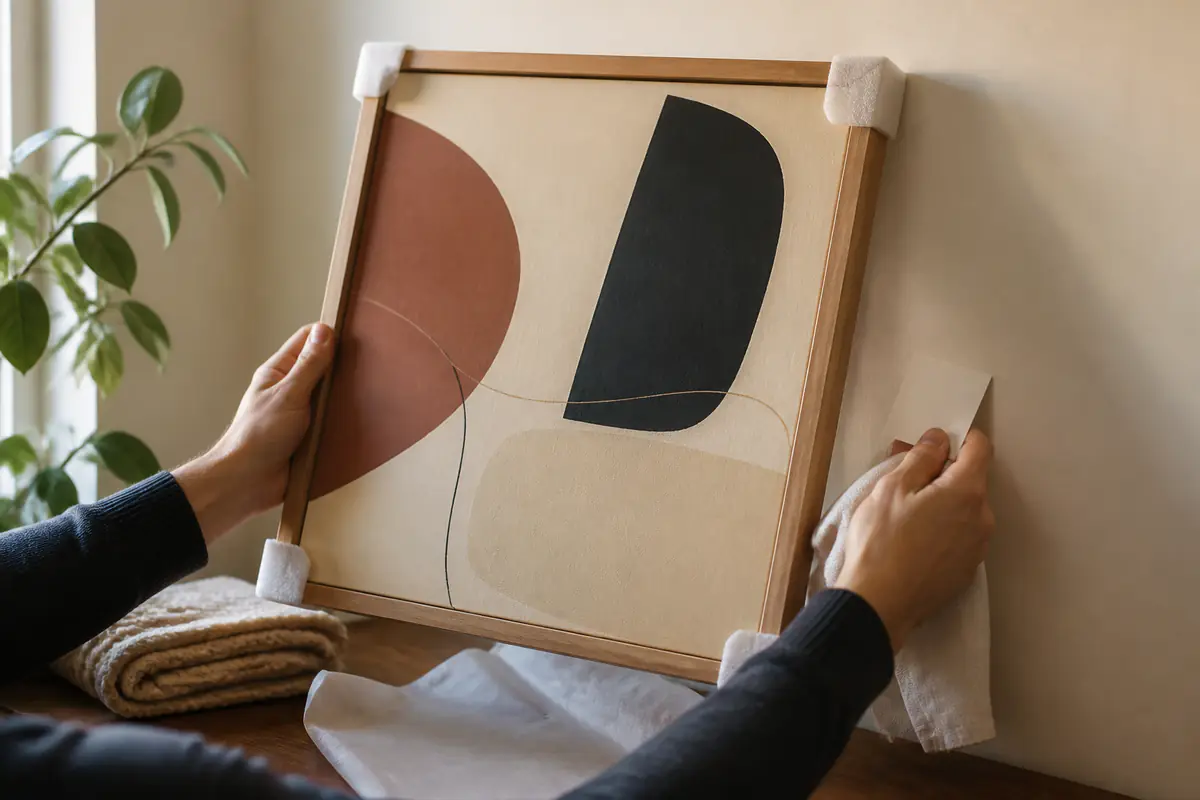
Bumpers or suitable spacers can support airflow and protect paint, but they must not stain or shift the load. Check frame construction and framer advice.
Do not wedge absorbent household material behind a frame. It can trap moisture, attract pests or transfer colour.
Dust rather than wash by default
Power off nearby electronics and use a clean soft tool appropriate to frame and glazing. Support the frame without pressing on artwork or glazing.
Do not spray cleaner directly. Liquid can run under glazing, stain mounts, swell wood or damage a print surface.
Clean acrylic and coated glazing correctly
Acrylic can scratch and build static; coated glass can have product-specific restrictions. Use the glazing supplier or framer method.
Paper towels, abrasive cloths and general window cleaner may be unsuitable. Test frame surfaces separately and never clean original art without material expertise.
Respond to mould or pests cautiously
Isolate the work from other paper and textiles, photograph the issue and correct the environment. Do not brush spores through the room.
Seek professional advice for valuable, sentimental or active damage. Household mould remover can permanently damage paper, paint, mount and frame.
Rotate without losing layout evidence
Photograph hanging points, complete weight and position before rotation. Label the back with non-damaging records rather than adhesive on original material.
Use the picture-frame value guide when replacing frames. A new frame should preserve support, spacing and safe load.
Prepare for building work
Remove art before drilling, sanding, painting or high-dust work. Store vertically where construction and glazing allow, away from vibration and traffic.
Covering art on the wall is not equivalent to removal; dust and impact can enter gaps or overload fixings.
Pack for a move in layers
Use clean interleaving, corner protection, rigid faces and a fitted outer carton appropriate to glazing. Label orientation and do not let tape touch frame finish or artwork.
Keep pieces separated and avoid stacking face to face. For valuable or large glazed work, use specialist art transport and insurance evidence.
Document condition before and after moving
Photograph front, corners, glazing, backing and hardware in stable light. Record existing marks so a new issue can be identified fairly.
Use the Style & Gifts when a wall-art decision also affects furniture placement, display space or gifting. Keep receipts and framer specifications with the object, not taped to it.
Plan heating and radiator distance
Avoid rapid heat cycles and direct warm airflow from radiators, stoves or vents. Heat can dry wood, alter adhesives and create local humidity changes.
Measure the actual surface and air conditions rather than judging distance by appearance. A seasonal radiator that is off during installation can become the dominant risk later.
Control vibration and door impact
Check whether a slammed door, stair traffic, speaker or appliance transmits vibration to the wall. Loose hardware and glazing can rattle before a frame visibly shifts.
Use compatible secure hardware and change placement where impact persists. Padding an unstable frame without fixing the load path only hides the symptom.
Use labels without touching original material
Keep title, maker, medium, frame weight and condition records in a separate file or on an archival label attached only where appropriate. Ordinary adhesive can stain paper and backing.
For borrowed or valuable work, follow lender or conservator instructions. Do not remove historical labels simply because they look untidy; they may be part of provenance.
Plan insurance evidence proportionately
For valuable work, keep purchase, valuation, photographs, dimensions and frame details in a secure location separate from the object. Check what the policy requires during display, storage and transit.
A retail price screenshot is not necessarily a current valuation. Use appropriate professional documentation when value or uniqueness makes it necessary.
Inspect after seasonal change
At least after major heating, humidity or daylight changes, look for movement, cockling, mould, fading, corrosion, loose corners or contact with glazing. Compare with reference photographs.
Do not repeatedly unframe a stable work merely to inspect it. Use visible evidence and seek professional help when internal change is suspected.
Choose backing and dust seals by material
Backing boards and dust covers protect from dust and handling but must be compatible with the artwork and frame. Record who installed them and when.
Do not seal moisture, insects or unstable acidic material inside a frame. A tidy paper backing is not proof of archival construction.
Manage acrylic static and flex
Acrylic glazing is lighter and safer around impact but can attract dust, scratch and flex toward the artwork. Use the supplier’s cleaning and spacing guidance.
Do not peel protective film after installation in a way that pulls dust across the surface, and never press acrylic against friable media.
Plan loan and temporary display records
For a loan, record lender, dates, condition, packing, environmental limits and who may move or clean the work. Keep signatures and photographs together.
A temporary display still needs rated fixings and suitable light. Short duration reduces exposure but does not remove impact or moisture risk.
Retire damaged frames before they fail
A split corner, loose glazing point, corroded hanger or bowed backing should be assessed before the work returns to the wall. Support the object while moving it.
Do not reinforce structural damage with household tape or a heavier cord. A competent framer can preserve the work and replace the load path appropriately.
What should you prioritise for wall art?
Exposure and support are controlled
Light, humidity, glazing, fixing and cleaning conditions suit the documented medium and frame.
The environment creates material risk
Direct sun, damp, unstable fixing, building work or traffic cannot be reduced safely in place.
Balanced verdict
Wall-art ownership is environmental control plus safe support. Know the medium, reduce light and moisture risk, use the correct fixing and clean conservatively.
Good moving documentation and packaging preserve both the object and any later damage evidence.
Official checks:
RoSPA general home safety advice ↗
NHS damp and mould prevention ↗
GOV.UK product safety advice ↗
Icon caring for collections ↗
Frequently asked questions
Does ordinary glass prevent artwork fading?
Not completely. Glazing specifications vary and lower light exposure remains important.
Can framed art be hung in a bathroom?
Only after assessing humidity, condensation, medium, backing and fixing; many works need a drier location.
Should cleaner be sprayed on frame glass?
No — Apply only a compatible method that prevents liquid entering the frame.
How should glazed art be moved?
Use fitted layered protection, rigid faces, corner guards, orientation labels and specialist help when appropriate.
What information should be kept?
Record medium, dimensions, frame, glazing, weight, hardware, condition photographs and repair or framer details.
Methodology and limitations
We assessed practical wall-art ownership through medium identification, light, humidity, glazing, fixings, cleaning, mould, building work, packing and condition records. We did not inspect individual artworks.
Limitations
Materials, frames, coatings, walls and value vary. Seek a competent framer, conservator or installer for valuable, fragile, large or uncertain works.