Vase value guide: material, dimensions, stability, cleaning and delivery
A useful vase holds the intended stems at the right spread, stays stable when filled and can be cleaned without damaging the vessel or surface beneath it. Buy the internal geometry before the decorative silhouette.
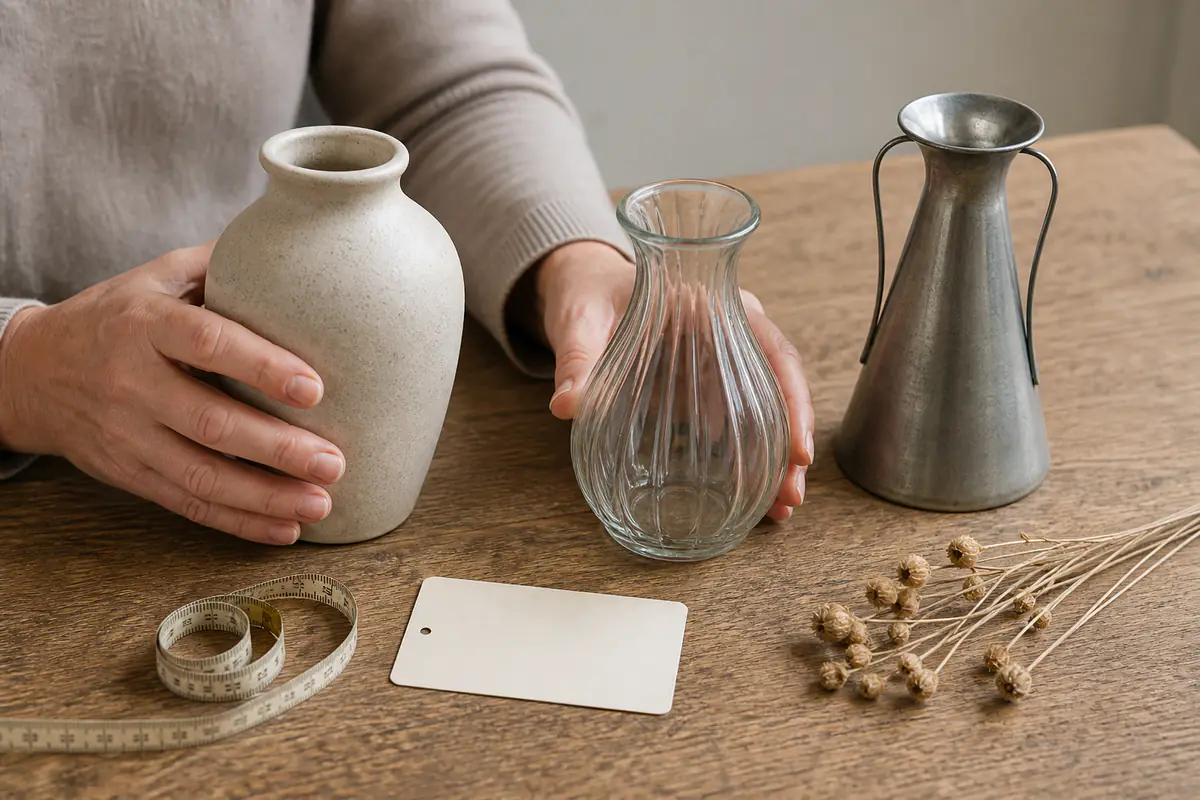
In this guide
Match the vase to stems, water and placement before finish
A striking shape is poor value when the opening, base, weight or cleaning access makes the arrangement unstable. Measure stem length and bundle width, check internal opening and usable depth, test surface safety and price delivery risk for fragile materials.
Plan dried arrangements with the dried flowers and branches guide, scale the display through the wall-art sizing guide, and coordinate nearby pieces with the wall-art grouping guide.
| Decision | Evidence to record | Useful match | Risk |
|---|---|---|---|
| Geometry | Internal opening, usable depth, base and outer height | Supports intended stems | Nominal height hides shallow cavity |
| Stability | Filled weight, base width and centre of mass | Safe in actual route | Top-heavy arrangement or pet access |
| Material | Water resistance, lining and finish | Compatible with fresh or dry use | Leak, corrosion or surface staining |
| Ownership | Cleaning access, delivery and replacement | Maintainable without damage | Trapped residue or fragile return |
Vase specification card
- List fresh, dried or empty-display use.
- Measure intended stem length.
- Measure bundle width at the neck.
- Record internal opening and depth.
- Check filled stability and base contact.
- Confirm water-safe material.
- Plan cleaning and drying access.
- Protect the furniture surface.
Define whether the vase will hold water
Fresh flowers need a reliably watertight vessel that can be emptied and cleaned. Dried stems may need no water but can be abrasive, top-heavy or difficult to dust; an empty decorative object has a different purpose again.
Do not assume a ceramic, metal or woven object is water-safe because it is called a vase. Check lining, glaze, seams and seller instructions for the intended use.
Measure usable depth rather than outer height
A thick base, false bottom or narrow shoulder can reduce internal stem depth. Record the distance from opening to internal base and compare it with the support the stems need.
Outer height determines visual scale and centre of mass, while usable depth determines hold. Both measurements are necessary for a confident purchase.
Choose opening width for the bundle
A narrow neck gathers a few stems upright; a wider opening allows spread but can let a small bunch fall to the edge. Measure the bundle where it will meet the neck.
Irregular hand-thrown openings need minimum and maximum dimensions. A nominal diameter taken at the rim may not describe the tighter point below.
Use shape to support rather than fight stems
Cylinders support straight bundles, bud vases control single stems and wider shoulders can help create a rounded arrangement. Highly constricted shapes may be hard to fill, empty or clean.
Choose the vase after the typical arrangement. Buying stems to rescue an unsuitable object often creates recurring cost and clutter.
Check stability with the intended centre of mass
Record base width, empty weight and how water changes mass. Tall branches act as levers, and a narrow lightweight vessel can tip even when it looks balanced in a studio image.
Place arrangements away from door swing, curtains, pets, children and crowded dining routes. Do not add stones or improvised weights unless the vessel and surface can tolerate them.
Inspect glass for practical risk
Clear glass makes water level visible and suits many interiors but shows residue and can chip or shatter. Check wall thickness, rim finish, base flatness and whether the hand fits for cleaning.
Bubbles and variation can be decorative features or manufacturing evidence depending on the product description. Reject sharp edges, unstable bases and cracks rather than treating them as character.
Understand ceramic and earthenware limits
Glazed ceramic can be durable and opaque, but crazing, unglazed bases or incomplete internal glaze may allow seepage or mark furniture. Ask whether it is tested as watertight.
Use a protective mat where appropriate and inspect periodically for moisture. A decorative outer pot may need a separate glass liner for fresh flowers.
Treat metal as a material system
Metal vessels can be light or strong but may corrode, react with water or have protective coatings with specific care. Check seams, lining and whether direct flower-water use is approved.
A distressed finish should not hide active rust, sharp edges or unstable handles. Dry the vessel fully and protect surfaces from condensation.
Use dried stems without ignoring shedding
Dried grasses and branches need adequate neck control and base stability. Record arrangement width and height and keep brittle material away from flames, heaters and busy routes.
Dust and shedding are ownership costs. The mirror proportion guide offers a related way to judge vertical scale beside furniture.
Check cleaning access before texture
Narrow necks, deep shoulders and rough interiors can trap leaves, biofilm and water. Confirm whether a bottle brush reaches the entire cavity and which cleaners are permitted.
Do not seal a damp vase into storage. Allow full drainage and drying, and avoid thermal shock in glass or ceramic unless instructions approve the temperature change.
Protect the surface beneath it
Use a stable non-staining pad when the base could scratch, sweat or seep. Check that felt pads remain dry and do not hide moisture.
Move the vase to clean beneath it rather than sliding. Water rings and rust marks can cost more to repair than the vessel itself.
Calculate room-scale visual weight
Mark the vase and arrangement silhouette at the actual location. Consider lamps, artwork, shelving height and sightlines across a table rather than judging the object close up.
A large vase can work empty but may overwhelm a small surface once stems are added. Use the wall-art value guide for balancing spend across the whole display.
Compare handmade variation honestly
Handmade pieces may vary in colour, rim, glaze and dimensions. Decide which variation is acceptable and whether the listing provides a range rather than one precise sample.
Variation is not permission for instability, sharpness or leakage when the object is sold for functional use. Keep photographs of objective defects and the product description.
Plan fragile delivery and return
Check packaging method, delivery route, inspection deadline and who handles damage. Photograph a crushed box before unpacking further and lift by the body, not a delicate neck or handle.
Keep fitted packaging until the vase is measured, stable and accepted. Repacking a large glass or ceramic piece safely can determine whether an online saving is worthwhile.
Compare retailer styling with specification
Styled room photographs help show scale only when furniture dimensions are known. Wide lenses, cropped stems and hidden supports can make a vessel appear larger or more stable.
Compare home ranges through Dunelm versus Wayfair home décor while keeping exact vase geometry and delivery evidence central.
Choose a simpler vessel when evidence is weak
A plain, stable, washable vase in the right dimensions often has greater use value than a dramatic shape that fits one arrangement. Decorative rarity matters only when the object’s empty-display role is intentional.
The Style & Gifts covers other room purchases where appearance must be weighed against usable space and care. Keep the measurements of a successful vase for future flower orders.
Plan seasonal storage without breakage
Store empty, clean and fully dry with space around delicate rims and handles. Avoid nesting vessels unless the materials and padding make separation safe.
Keep heavy pieces low and do not leave a tall vase balanced behind other objects. A reusable shipping insert or divided box can protect occasional vessels without consuming display space.
Use liners without hiding leaks
A removable watertight liner can make a decorative outer vessel suitable for fresh arrangements when dimensions and stability allow. Check that it can be lifted without spilling and cleaned independently.
Do not use a liner as evidence that the outer material can remain wet. Inspect beneath it and the furniture surface after every use, especially when condensation can form.
Record the successful arrangement geometry
Note vase opening, usable depth, filled weight and the approximate number and length of stems in an arrangement that stays balanced. Photograph the silhouette without relying on it for exact measurement.
This makes future flower orders more deliberate and reduces repeated purchases of bunches that are too short, wide or heavy for the vessel. Recheck stability whenever branch length or placement changes.
Which vase route offers better value?
Fresh arrangements are the main job
The vessel is watertight, stable, correctly sized and fully cleanable without risking the surface.
The object itself leads
Water use is unnecessary and the scale, stability, dusting and material limits are understood.
Balanced verdict
Vase value begins with internal geometry, stability and material compatibility. Match the opening and depth to the stems, protect the surface and buy only a finish that can be maintained.
A decorative object can be worthwhile, but its non-functional role should be stated rather than implied to hold water safely.
Official checks:
RoSPA general home safety advice ↗
NHS damp and mould prevention advice ↗
GOV.UK product safety advice ↗
GOV.UK consumer protection rights ↗
Frequently asked questions
Can every decorative vase hold water?
No — Confirm internal glaze, lining, seams and watertight-use instructions for the exact product.
What vase size suits a bouquet?
Measure stem length, bundle width at the neck and required usable depth rather than choosing from outer height alone.
Is a heavy vase always more stable?
Not always — Base width, centre of mass, stem leverage, surface and placement matter together.
What cleaning access should I check before paying for a narrow-neck vase?
Follow its material instructions and confirm a suitable brush can reach the cavity; rinse and dry it fully.
What should be checked after delivery?
Inspect rim, cracks, base stability, dimensions, finish and watertightness where approved, while retaining fitted packaging.
Methodology and limitations
We assessed vase value through intended fresh or dry use, internal geometry, stability, material and lining, cleaning, surface protection, room scale, delivery and return risk. We did not test individual vessels for watertightness.
Limitations
Handmade dimensions, glaze, materials, care and delivery packaging vary. Verify the exact internal measurements, water-use approval, complete weight and seller instructions before purchase and placement.