Vases practical guide: cleaning, water marks and storage
A vase can be watertight, decorative, porous, coated or historically fragile. Safe care begins by identifying the material and finish before choosing water, tools or a cleaning product.
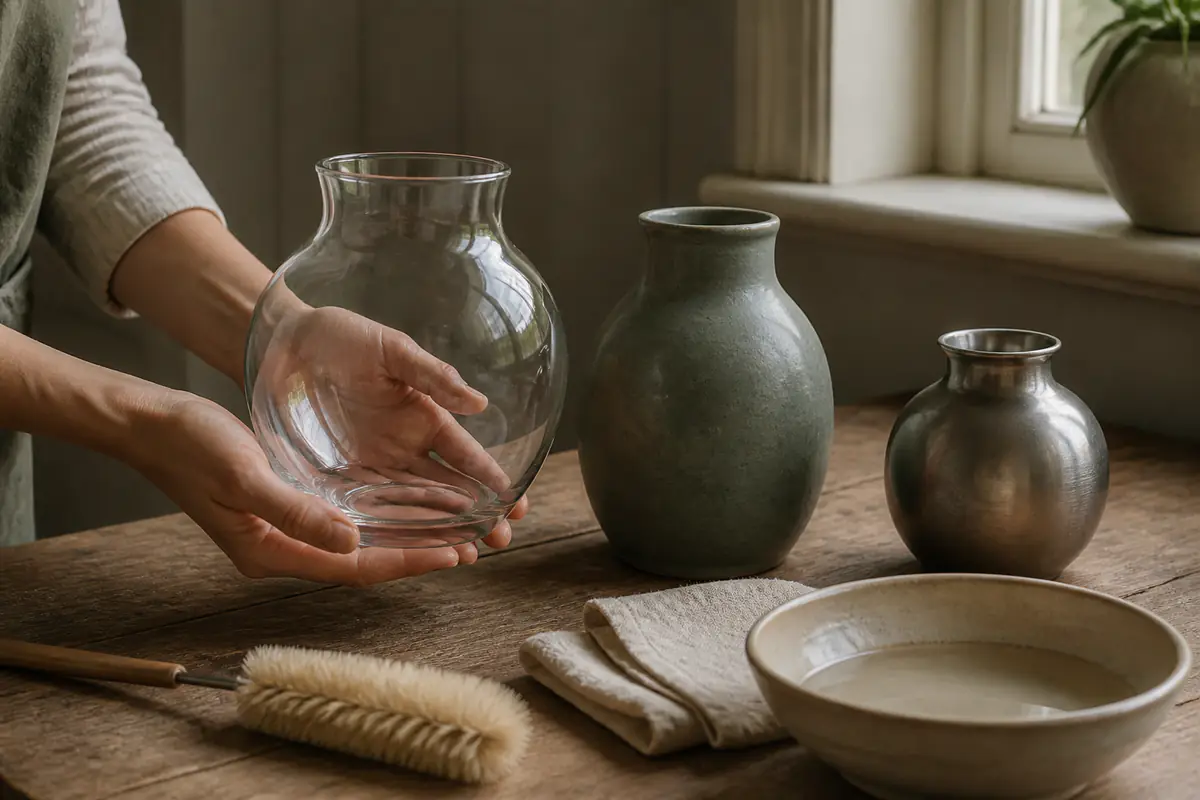
In this guide
Use the least aggressive method that solves the known problem
Do not pour acid, bleach, abrasives or boiling water into an unidentified vase. Empty flowers promptly, support the vessel with both hands, test a compatible cleaning method and dry it fully before display or storage.
Choose shape and stability with our vase buying guide, compare lasting construction in the vase value guide, and plan stems with the dried-flower arranging guide.
| Condition | Identify first | Least-risk response | Stop when |
|---|---|---|---|
| Cloudy glass | Deposit, coating and glass condition | Use maker-approved gentle cleaning | Etching or iridescence is suspected |
| Ceramic staining | Glaze, cracks and porosity | Keep dry and seek informed advice | Liquid enters crazing or body |
| Narrow-neck residue | Material, opening and loose decoration | Soak or brush only if compatible | Tool pressure threatens the wall |
| Metal marks | Metal and protective finish | Dust and use specific approved care | Corrosion or plating loss appears |
Vase condition record
- Material and maker marks.
- Glaze, coating or decoration.
- Height, weight and opening.
- Watertightness evidence.
- Existing chips and cracks.
- Cleaning method and date.
- Flowers, water and additives.
- Storage location and supports.
Decide whether it is decorative or functional
Do not assume every vessel called a vase is watertight or safe for cut flowers. Check maker information, interior finish, drainage holes and any statement that it is decorative only.
If uncertain, use a separate stable liner only when it fits without pressure and cannot trap damaging moisture. Never conceal a leak where water can reach furniture or electrics.
Identify material and finish
Distinguish ordinary glass, crystal, glazed ceramic, porous pottery, metal, enamel, resin and mixed construction as far as evidence allows. Note applied paint, gilding, decals, lustre and textured decoration.
A method safe for clear modern glass can damage soft metal, cold-painted ceramic or a historic surface. Maker marks and provenance should be photographed, not scrubbed away.
Inspect before adding water
Use good light to find chips, hairline cracks, unstable feet, loose handles and repaired joins. Support the base while turning the vase; do not lift it by a rim, neck or applied decoration.
A crack can open under the weight and temperature of water. Keep a suspect vessel dry and display it in a stable low-risk position pending informed assessment.
Place the vase for stability
Use a level surface with enough depth, away from table edges, cables, traffic and direct heat. Consider the combined centre of gravity of vessel, water and tall stems.
Protect vulnerable furniture with a compatible discreet barrier that does not trap condensation or stain the finish. Our home gift guide explains why intended location matters before purchase.
Prepare flowers before filling
Remove foliage that would sit below the water line, trim stems with a suitable clean tool and discard decaying material. Keep soil and outdoor debris from entering the vessel.
Use only an additive compatible with the flowers and vase material. Do not mix household chemicals or assume a stronger concentration keeps water fresher.
Use suitable water and temperature
Follow flower and vessel guidance on water temperature and fill level. Avoid sudden temperature change that can stress glass or ceramic and wipe external spills promptly.
Do not fill a heavy vase in a position where it then must be carried awkwardly. If safe, move the empty vessel and add water close to the display location.
Refresh water before decay builds
Change water and remove dying stems at a frequency appropriate to the flowers and room. Observe odour, slime and cloudiness rather than relying on a decorative arrangement to hide them.
Support the vase during emptying and protect the sink from impact. A narrow heavy vessel may be safer emptied with two hands and a clear route.
Clean promptly after use
Rinse loose organic material before it dries, using a temperature and method compatible with the exact vessel. Keep jewellery and hard sink surfaces from scratching it.
Do not leave flower water sealed in a vase after the arrangement has ended. Stagnant residue becomes harder to remove and can affect porous or cracked materials.
Approach cloudy glass cautiously
First distinguish removable mineral deposit from permanent etching, internal bloom, coating failure or deterioration. Start with the maker’s gentlest approved method and soft non-abrasive tools.
Household acids can attack decoration, metals and some glass conditions. Stop if cloudiness does not respond without rubbing, or if the surface shows iridescence, flaking or fine cracking.
Do not soak porous or crazed ceramics by default
Water and cleaner can enter unglazed bodies, crazing, chips and old repairs, causing staining or delayed damage. Dust gently and seek material-specific advice for valuable or uncertain pieces.
Bleach can alter surfaces and leave residues. A stain that is stable may be safer than an aggressive cosmetic treatment that changes the object.
Use narrow-neck tools without force
Choose a soft bottle brush only when the material and opening permit it, and guide it without levering against the neck. Count any loose beads or cleaning media if a documented method uses them.
Do not shake hard objects inside thin glass or push a rigid handle through a tight curve. If the residue cannot be reached safely, soaking with a verified compatible solution or professional help is preferable.
Care for metal and applied decoration dry-first
Remove loose dust with a soft compatible tool and identify the metal and finish before polishing. Patina, plating and lacquer can be mistaken for dirt.
Do not use general metal polish on an unknown or mixed vessel. Liquid can enter seams and abrasives can remove gilding or thin plating permanently.
Dry the interior completely
Drain upside down only when the rim is strong and the support stable, padded and ventilated. Otherwise use a secure angle and time, following maker guidance.
Trapped moisture can mark storage materials and encourage odour. Do not push paper, cloth or a hairdryer into a narrow vase where fibres, heat or force can cause damage.
Handle large or awkward vases as loads
Empty them first, clear the route and use two hands under the base and body. Ask for help when height, weight or fragility prevents a secure view and grip.
Do not carry by handles unless they are confirmed structural and sound. The picture-frame care guide offers a similar evidence-first approach to fragile home objects.
Store upright with individual support
Use a dry stable shelf capable of the load, with separation from neighbouring objects and protection from vibration. Keep tall vessels low enough to retrieve without overreaching.
Do not nest vases unless the maker designed them for it and a non-abrasive separation prevents wedging. Keep lids or detachable parts labelled and supported separately.
Pack for moving without pressure points
Photograph condition, wrap the body in clean compatible layers, protect rim and handles without stuffing them under tension and use a correctly sized rigid box with void support.
Label orientation without writing on the object. Do not let heavy items rest on the neck, and unpack promptly if packing could retain damp.
Know when repair needs a specialist
Stop using a cracked, leaking, unstable or sharp-edged vase for water. Adhesive appearance does not prove a repair is watertight, food-safe or structurally reliable.
A valuable, signed or historic vessel deserves a conservator or specialist repair assessment. Record detached fragments without cleaning fracture surfaces.
Retire or repurpose without hiding risk
A non-watertight vase may hold dry stems only when stable and clearly treated as decorative. Do not pass on an undisclosed crack or unsafe repair as fully functional.
Browse Style & Gifts for related object-care guidance. Dispose of sharp broken material through local instructions, packaged to protect handlers.
Clean at home or seek specialist care?
Material and condition are known
A stable modern vessel has compatible instructions and the deposit responds to a low-force method.
Surface, structure or value is uncertain
Cracks, crazing, corrosion, gilding, iridescence, old repair or provenance makes experimentation disproportionate.
Balanced verdict
Vase care begins with material identification and safe handling. Control water, organic residue, deposits and drying with the least aggressive compatible method.
A persistent mark is preferable to irreversible cleaning damage on an uncertain or valuable vessel.
Official checks:
V&A conservation information ↗
The National Archives collection guidance ↗
HSE work at height guidance ↗
GOV.UK recycling collections ↗
Frequently asked questions
Can vinegar remove cloudy marks from every glass vase?
No — Cloudiness may be deposit, etching, coating or deterioration, and acids can damage decoration or mixed materials.
Is every vase watertight?
No — Some are decorative, porous or damaged. Confirm maker guidance and condition before adding water.
Can a crazed ceramic vase be soaked?
Do not assume so — Water can enter cracks and the body, causing staining or delayed damage.
What cleaning method avoids forcing a tool against a vase’s narrow neck?
Use only a compatible low-force soak or soft tool that does not lever against the neck; stop when material or residue is uncertain.
Can a cracked vase still hold flowers?
Do not use it with water. Dry display may be possible only when the vessel remains stable and the risk is clearly controlled.
Methodology and limitations
We assessed vase care through intended function, material and finish identification, condition, placement, flowers, water, deposits, material-specific cleaning, drying, handling, storage, moving, repair and retirement. We prioritised stable structure and reversible low-force care over cosmetic improvement, and treated a persistent mark as different from active corrosion, mould or structural failure. We did not inspect individual vessels, identify historic materials remotely or endorse one cleaner across glass, ceramic, metal and decorated surfaces.
Limitations
Materials, coatings, repairs and value vary widely. Maker instructions take priority for modern products, while valuable, historic, cracked, corroded or unidentified vessels may require a qualified conservator or specialist repairer.