Vases buying guide: height, opening, stability and materials
A vase is a container, a support structure and a visual object. The right choice depends on the stems or display it will hold, the opening and water volume, the surface beneath it and whether every internal area can be cleaned.
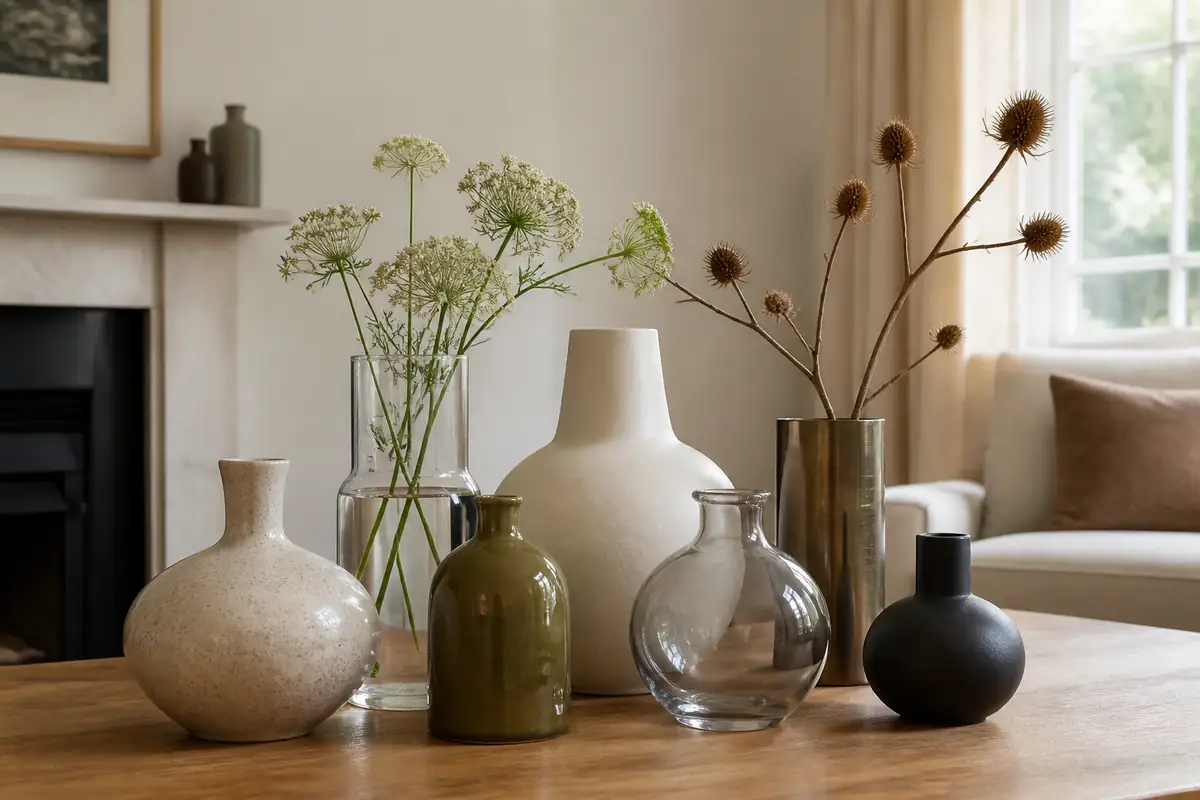
In this guide
Choose the opening for the stems and the base for the risk
Measure the intended surface and a typical bouquet, then select enough height and neck control without making the arrangement top-heavy. Confirm the vessel is watertight, stable when filled and accessible to a bottle brush or hand.
A sculptural vase can look correct empty and fail with flowers; a practical cylinder can overwhelm a narrow shelf. This guide tests both use and proportion. For arranging a wider display, see our gallery and object-composition guide.
Start with what the vase will hold
A few single stems need a narrower opening that gathers them. A hand-tied bouquet needs enough neck width for the bound stems without compressing them. Branches need height, weight and a broad stable base. Dried arrangements need no water but can still create leverage and shed material.
If the vase will usually stand empty, its silhouette and surface finish lead, but it must still suit the shelf and remain stable. Do not buy one vessel for every arrangement. A small bud vase and a medium general-purpose vase often cover more real uses than one oversized statement piece.
Match height and opening to the arrangement
| Vase form | Useful for | Risk to check |
|---|---|---|
| Bud vase | One to a few light stems | Small base and easy tipping |
| Narrow-neck | Loose stems needing support | Difficult internal cleaning |
| Straight cylinder | Hand-tied or uniform bouquets | Wide opening may let stems spread |
| Flared rim | Open, outward arrangement | Large upper width and water line |
| Floor vase | Long branches or empty sculpture | High leverage, pets and walkways |
There is no universal flower-to-vase ratio. Use the stem length after trimming and the arrangement’s centre of mass. As a starting test, support enough lower stem to keep the flowers controlled without burying most of their visual length. Mark the vase height beside the intended location with paper.
Opening width controls spread
A wide mouth needs more stems or internal support to prevent a bouquet falling to the perimeter. A narrow neck can pinch a bound bouquet or make water changes awkward. Check the internal opening, not the widest external rim, especially on thick ceramic or double-wall glass.
Irregular sculptural openings may look distinctive while making trimming, arranging and cleaning difficult. If the product page gives only total width, ask for the neck measurement or treat fit as uncertain.
Stability is a filled and loaded calculation
Base width, vessel weight, water mass and stem leverage all contribute. A heavy vase is not automatically stable if its base is narrow or uneven. Tall branches can move the centre of mass outside the base when brushed. Test the location away from door swings, curtain movement and table edges.
- Base: check its flat contact area, not the widest body.
- Feet: inspect pads for level support and surface marking.
- Water: remember that filling changes weight and handling.
- Stems: branches and dense flowers add leverage above the rim.
- Traffic: avoid narrow routes, low furniture and reachable pet zones.
For a delicate surface, use an appropriate waterproof mat or coaster that does not trap grit. Recheck condensation and drips after refilling. The product-dimensions guide helps turn a styled photograph into a measured placement.
Glass: visible water and visible residue
Clear glass makes water level and stem condition visible and can suit many rooms. It also shows mineral deposits, algae and scratches. Coloured or opaque glass hides some residue but does not remove the cleaning need. Bubbles and irregularities may be part of handmade production; sharp edges, cracks and unstable bases are not decorative character.
Check whether the colour is within the glass, coated or painted, because cleaning and scratching behaviour differ. Thin rims can chip; very thick glass adds weight. Recycled-glass claims should state scope and do not alone establish durability.
Ceramic, metal and mixed materials
Glazed ceramic can provide colour and weight, but decorative earthenware may not be guaranteed watertight. Ask whether it is designed for fresh flowers. Glaze crazing, an unsealed foot or a hairline crack can allow moisture to reach furniture. Use an internal liner only when the maker supports it and it can be removed safely.
Metal vessels can corrode, tarnish or react with water and plant material depending on composition and coating. A separate watertight insert can isolate the decorative body. Mixed-material designs create joints that need inspection; a glass insert should lift out without scraping or becoming trapped.
Stone or resin can create mass and texture, but porosity, coating and cleaning instructions remain product-specific. Material prestige cannot replace a watertight statement.
Cleaning access is a buying specification
A hand must not fit if a suitable brush can reach every internal surface, but a narrow shoulder or textured interior can create inaccessible zones. Check whether the base is flat inside, whether the neck permits a brush and whether decorative relief traps residue.
Follow care instructions. Sudden temperature change can stress some glass or ceramic, dishwashers may be unsuitable for coatings, and abrasives can dull finishes. Empty stagnant water, clean residue and dry the outside before returning it to furniture.
Water capacity affects both handling and placement
A large vessel becomes much heavier when filled. Confirm that it can be carried safely to the sink without gripping a delicate rim, and that the shelf or table is suitable for the combined load. Refill with a jug when moving the filled vase would be awkward, while protecting the surface from spills.
Water level should support the arrangement without submerging foliage that the flower-care guidance says to remove. A very opaque vessel hides the level, so establish a measured refill routine rather than topping up blindly. Fresh water and clean tools matter more than decorative additives of uncertain composition.
Use inserts deliberately
A removable glass or plastic insert can make a decorative outer vessel watertight and easier to clean. Measure its rim, height and lifting clearance; it should not rattle, become wedged or leave water trapped between layers. The outer vase must still be stable with the insert and arrangement.
An improvised jar inside a large vase can shift the centre of mass or show above the opening. If the product is sold with an insert, check whether replacements are available. If not, record its dimensions before loss or breakage.
Scale the vase to the surface and reflected view
On a dining table, height and spread should not block conversation or serving. On a mantel, check heat and stability. On a bedside table, leave safe room for lighting, water and daily objects. On a shelf, include the flowers’ eventual height, not just the empty vessel.
Mirrors can double the visual mass and reveal an unfinished rear surface. If the vase sits near a mirror, our mirror-placement guide helps check reflected clutter and sightlines.
Colour and texture should work empty as well as filled
A vase used frequently with flowers can be neutral enough to support varied colours, while an empty sculptural vase may carry the palette itself. Compare under the room’s actual light. Gloss emphasises reflections and fingerprints; matte texture can show dust or resist wiping.
Our materials-mixing guide explains how repeating undertone or shape can connect a new object without making every finish identical.
Fresh flowers or dry display?
Water safety and cleaning lead
The vessel is explicitly watertight, stable when filled, easy to carry and accessible for complete cleaning.
Silhouette and surface lead
The material may be decorative-only, but opening, shedding, leverage and placement remain safe.
Delivery and gift risk
Glass and ceramic need protective transit packaging and a prompt inspection. Photograph damage before discarding the box and keep all pieces safely away from hands. For a gift, retain a gift receipt and avoid choosing a huge object without knowing the recipient’s storage and style.
Colour and handmade variation may be described as expected. Read the range and decide whether you accept it before ordering. The gift returns guide covers recipient-friendly terms.
A practical shortlist
- Name fresh, dried or empty use and typical stems.
- Measure surface, height clearance and internal opening.
- Check base contact, filled stability and traffic risk.
- Confirm watertight status and material finish.
- Verify brush access and cleaning instructions.
- Assess colour, rear view and appearance when empty.
- Compare delivered cost, packaging, variation and returns.
Balanced verdict
A useful vase supports the intended stems, remains stable and can be cleaned without risking the surface beneath it. Buy the internal opening and base geometry before the decorative silhouette. For an object used empty, state that purpose honestly and keep placement safety in the decision.
Continue with the Style & Gifts archive or plan nearby artwork with our wall-art sizing guide.
Official guidance:
Royal Horticultural Society: cut flowers ↗GOV.UK consumer product safety advice ↗
Frequently asked questions
How tall should a vase be?
It depends on trimmed stem length, arrangement weight and location. Support enough stem while preserving balanced visible height.
What opening is best for a bouquet?
Measure the bound stems. Too narrow compresses them; too wide may need more stems or support.
Are ceramic vases watertight?
A ceramic vessel sold as decoration may not be watertight; confirm that the particular vase is intended for water and inspect its glaze, base and any cracks before placing it on furniture.
How can I prevent a vase tipping?
Choose a broad flat base, suitable vessel weight and modest stem leverage, then place it away from edges and traffic.
Can decorative vases go in a dishwasher?
Only when the maker explicitly permits it; coatings, glaze, metal and handmade glass can need gentler care.
Methodology and limitations
We assessed vases by intended use, dimensions, opening, stability, water safety, material, cleaning, placement, delivery and gifting.
Limitations
Handmade variation and colour are difficult to judge online, while flowers create different loads. Verify exact dimensions and care.