Throw blankets buying guide: fibre, size, weave and care
A throw can add warmth, protect upholstery or complete a room, but those jobs demand different dimensions and materials. Compare the fibre label, construction, care burden and usable size before colour or softness claims.
In this guide
Buy for a defined job and the care you will actually perform
Measure the intended sofa, chair or user, then choose a fibre and construction compatible with warmth, skin sensitivity, pets and washing facilities. A beautiful throw that sheds, snags or cannot be cleaned at home may be poor value despite a low sale price.
Retail pages often sell a mood before they disclose enough specification. This guide turns the purchase into a comparison of purpose, dimensions, material and maintenance. For decoding labels, start with our fabric-composition guide.
Define the job before choosing the look
A personal warmth layer needs enough length to cover the intended user without excessive weight. A sofa protector needs coverage, washability and stability. A decorative drape can be smaller, but fringe, colour transfer and snagging become visible. A picnic or travel throw needs a different balance of packability, soil resistance and cleaning.
Write one primary job and one acceptable secondary job. Trying to make a delicate decorative weave serve as a pet cover creates predictable disappointment. Conversely, buying a heavy washable protector for occasional shoulder warmth may create bulk without comfort.
Compare dimensions, not names such as large or oversized
There is no universal throw size. Measure the surface or body area the textile must cover and allow for the way it will fold or drape. Product photography can make a throw appear wider because only a narrow section of the sofa is visible. The stated width and length, excluding or clearly including fringe, are the useful evidence.
| Purpose | Prioritise | Watch for |
|---|---|---|
| Personal warmth | Body coverage, breathability, weight | Too short when seated or reclining |
| Sofa protection | Coverage, washability, colourfastness | Slipping, shrinkage and difficult drying |
| Decorative layer | Drape, texture, finish | Snags, fringe tangling and shedding |
| Travel | Pack size, warmth-to-weight, easy care | Bulky construction and slow drying |
| Gift | Neutral dimensions, clear care, receipt | Allergy, fibre preference and home style |
Mark the rectangle with a sheet or existing blanket if the dimensions are hard to visualise. For furniture coverage, include arm shape, back height and how much tucking is needed. The furniture-measuring guide applies the same principle to operating size rather than catalogue impression.
Fibre changes warmth, feel, drying and maintenance
Wool can provide warmth and moisture management, but the exact breed, yarn, finish and construction affect feel and care. Some products are machine washable; others require gentle hand washing or professional cleaning. “Wool blend” is incomplete information until the percentages and other fibres are known.
Cotton can feel breathable and familiar, and many cotton throws are washable, but dense constructions become heavy when wet and can take time to dry. Acrylic and polyester can offer accessible colour, lighter weight and easier care, although softness, static, pilling and heat sensitivity vary. Recycled content describes a feedstock, not automatic durability or low shedding.
Linen can feel crisp and become softer through use, yet a loose weave may snag. Viscose-family fibres can provide drape and sheen but need exact care checks. Cashmere claims deserve the same scrutiny as any premium material: verify composition, construction and care rather than treating the word as a complete quality grade.
Construction matters as much as fibre
A tight woven throw can resist distortion better than a very open decorative weave, while a knitted throw may stretch and snag on claws, jewellery or hardware. Brushed surfaces feel soft but may shed or pill. Quilted throws distribute filling differently and may be less fluid for draping.
- Edges: inspect hems, binding or blanket stitch for loose sections.
- Fringe: check length, twist and whether care will cause tangling.
- Pattern: confirm whether it is woven, printed or surface applied.
- Weight: compare grams or product weight where provided, not adjectives.
- Reversibility: check whether both faces are designed for use.
Zoomed photographs can reveal yarn scale and finishing, but they do not establish hand feel or long-term shedding. Treat absent construction details as uncertainty. The fabric-weight and opacity guide explains how to read limited online evidence without inventing certainty.
Warmth is a system, not a fibre slogan
Warmth depends on trapped air, thickness, coverage, room conditions and the user. A light wool throw may regulate differently from a dense cotton one, but product-level construction still decides performance. If overheating is a concern, prioritise breathable layers that can be adjusted instead of one extremely heavy textile.
For a sofa near a draught, coverage may improve comfort more than luxurious fibre. For a household that washes textiles frequently, reliable drying can matter more than maximum warmth. A good specification aligns with the actual room and routine.
Care instructions are part of the purchase price
Read the sewn-in or published care information before ordering. Confirm whether the product fits the washing machine without overloading it, whether flat drying space is available and whether professional cleaning would be realistically used. The phrase “easy care” is not a substitute for symbols and instructions.
Washing temperature, agitation and drying can change size, surface and fringe. Spot cleaning may be insufficient for a throw used by pets or children. If colour transfer could damage pale upholstery, check the maker’s warning and test conservatively in line with instructions.
Our care-label guide helps translate the symbols. Keep that care burden in the shortlist: a less expensive throw can cost more over time when it needs repeated professional cleaning.
Pets, children and allergies change the shortlist
Claws favour tighter constructions over open loops and long fringe. Frequent spills favour machine-washable textiles that fit the household machine. Loose decorative elements and long fibres may be unsuitable around very young children, and any specific allergy or sensitivity deserves product-level advice rather than broad natural-versus-synthetic assumptions.
A washable cover beneath a decorative throw can separate protection from appearance, but it adds layers and storage. If pet hair is a daily issue, consider how visible it will be on the chosen colour and texture and whether the surface releases it during cleaning.
How to assess sustainability claims
Ask what the claim covers: fibre origin, recycled percentage, processing, certification, durability, packaging or end of life. A single recycled-content statement does not describe the entire product. Natural fibre does not eliminate land, water, dye, transport or care impacts. Longevity depends on whether the throw survives the user’s real routine.
Check the named standard, certificate owner and product scope. Prefer a specific verifiable statement over imagery or terms such as conscious and eco. Our sustainability-claims guide provides a reusable evidence test for textiles.
Gift buying requires an exit route
A throw can be a flexible gift because sizing is less personal than clothing, but colour, fibre feel and care still vary by household. Retain a gift receipt, avoid removing packaging needed for return and communicate the care requirement. If the recipient has pets, allergies or limited drying space, a highly specific luxury fibre may be less thoughtful than a clear easy-care option.
Choose between decorative and everyday priorities
Texture and drape are the main job
It will see light use, the weave and fringe suit the room, and the stated care is acceptable.
Warmth and repeat cleaning lead
The dimensions provide real coverage, the construction resists the household’s wear and it can be washed and dried realistically.
A practical shortlist
- Name the primary use and intended user or surface.
- Measure the required rectangle and decide whether fringe counts.
- Record exact fibre percentages and construction.
- Check product weight or density evidence where available.
- Read every care symbol and confirm washing and drying capacity.
- Review snagging, shedding, pet and child constraints.
- Compare delivered cost and returns, then keep the product record.
When buying online, use the returns-policy checklist before opening the product beyond inspection needs.
Balanced verdict
The best throw is the one whose measurable coverage, fibre, construction and care fit a defined job. Colour and softness are valid preferences after those conditions are met. Avoid paying for a material name without percentages and construction evidence, and avoid treating machine washability as useful when the wet textile will not fit the machine or drying space.
Inspect the delivered throw in daylight for dimensions, edge finishing, snags, unexpected shedding and colour consistency before normal use. Keep the label and care record, then test placement without exposing it to pets, food or washing until the purchase decision is settled.
Continue with the Style & Gifts archive.
Official and standards guidance:
Woolmark: wool care ↗GINETEX: care labelling symbols ↗GOV.UK: textile fibre labelling ↗
Frequently asked questions
What is a good size for a sofa throw?
There is no universal size. Measure the area you want to cover and allow for drape or tucking using the stated dimensions.
Is wool always warmer than cotton?
Fibre matters, but construction, thickness, trapped air, coverage and room conditions also determine warmth.
Which throw is best for pets?
A tightly constructed, washable throw without long fringe or open loops is often practical, but check the exact product and pet behaviour.
Do recycled fibres make a throw sustainable?
Recycled content can address material input, but does not by itself establish durability, processing impacts or whole-life performance.
Should a throw be washed before use?
Follow the manufacturer’s instructions. If washing is advised or preferred, confirm the machine and drying method can safely handle it.
Methodology and limitations
We assessed throw blankets by purpose, dimensions, fibre disclosure, construction, warmth, cleaning, durability, claims and gift suitability.
Limitations
Feel, colour and shedding are difficult to judge remotely, while care and composition vary by product. Verify the exact label and returns terms.
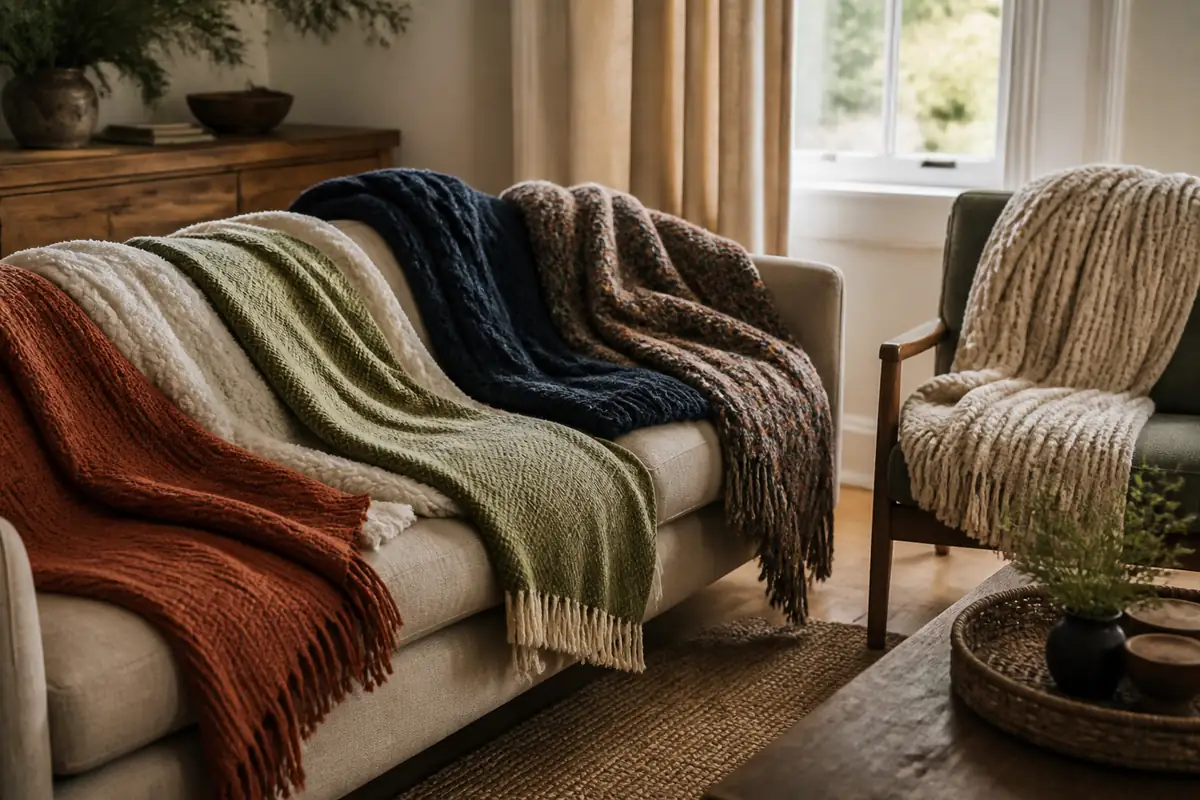
The image is an editorial illustration, not a photograph from a product test. Links are editorial and non-affiliate.