Choosing shirt dresses: shoulder fit, fabric, fastening and layering
A shirt dress works only when the bodice, button line and skirt move together. Compare measurements, fabric behaviour and care before treating the waist tie as a cure for poor fit.
In this guide
Fit the shoulders and button line before judging the silhouette
Choose the size that lets the shoulder, bust and upper back move without pulling, then assess waist placement, skirt sweep and layering room. A belt can refine shape, but it cannot correct strained buttons, a high waist seam or sleeves that restrict reach.
Shirt dresses combine tailored details with a longer skirt, so one size label hides several fit decisions. The collar may sit neatly while the bust gaps; a generous skirt may still pull across the back; and a soft fabric may become transparent in daylight. A useful shortlist starts with the garment measurements and ends with a realistic plan for underwear, layers, shoes and laundering.
Translate the product page into fit evidence
| Detail | What to check | Warning sign |
|---|---|---|
| Shoulder | Seam position and room to reach forward | Collar shifts or back pulls when arms move. |
| Bust and placket | Garment chest, button spacing and closure | Horizontal strain or gaps between buttons. |
| Waist | Seam or tie position against your torso | Blousing cannot settle without distortion. |
| Hip and sweep | Flat hip width, pleats, vents and hem circumference | Skirt catches when sitting or climbing stairs. |
| Fabric | Fibre, weave, lining, stretch and care | Opacity or shrinkage information is absent. |
Take body and garment measurements separately
Record bust, natural waist, fullest hip, shoulder breadth, upper arm and preferred finished length over the underwear normally worn. Body measurements identify the minimum room needed; they are not the finished dimensions of the dress. Compare them with the retailer’s garment measurements wherever available and note whether the chart is generic or specific to the style.
Measure a similar woven dress that already fits. Lay it flat without stretching and record underarm width, shoulder, sleeve, waist position and length. This is especially useful when shopping across retailers whose size labels differ. Our UK clothing size-chart guide explains why the same nominal size cannot be assumed to match.
Prioritise shoulder, bust and upper-back movement
The dress should allow ordinary reach, sitting and coat wearing without the collar travelling backwards. Check photographs for a dropped, set-in or raglan-like shoulder, because each changes where the seam should fall. With woven fabric, useful ease must come from the cut, pleats or stretch content rather than hope.
Button spacing matters as much as circumference. A placket can gape even when the bust measurement appears sufficient, particularly if the buttons are widely spaced or the fabric is slippery. A concealed internal fastening can help a well-fitting dress, but adding one should not be the plan for a bodice already under tension.
Check where the waist is designed to sit
A fixed waist seam should meet the intended point on the torso without riding towards the ribs or dropping onto the high hip. Ties offer adjustment, but side loops and belt length can still place the shaping too high or low. Examine rear photographs: excess fabric trapped under a tight tie may create bulk rather than controlled drape.
If alterations are likely, identify seams and pockets first. Moving a waist seam is more involved than shortening a simple hem, while a curved hem, border print, lining or side vents can restrict easy changes. Use the decision method in our repair and alteration guide before assuming a cheap purchase will be inexpensive to correct.
Allow the skirt to work while walking and sitting
- Sit test: the lower placket should remain closed without pulling across the hip.
- Step test: stride and stairs should not require holding the skirt.
- Wind test: a light wrap or curved hem may need a slip or secure fastening.
- Pocket test: loaded pockets should not drag the side seams forward.
- Hem test: check the length with the actual shoe height and coat.
Product images often show a static front view. Look for video or side and rear views, but do not infer your fit from the model alone. Compare the stated model height and worn size only after checking your torso and garment measurements.
Read fibre, weave and opacity together
Cotton poplin can hold a crisp line but may crease; viscose-rich fabric can drape fluidly but needs careful washing; linen blends can feel breathable while showing deliberate texture; polyester may resist creasing but vary widely in breathability and static. Fibre name alone does not establish comfort or quality. Weave density, weight, finish, lining and colour all matter.
Check pale and backlit views for opacity, then plan suitable underwear or a slip. A lining can improve coverage but may reduce airflow or pull differently from the outer fabric. Our fabric weight and opacity guide provides a more reliable way to read limited product-page evidence.
Plan layers before choosing size
Decide whether the dress will be worn alone, over a fine roll-neck, with a cardigan or beneath a structured jacket. Extra room must be in the upper arm, shoulder and back, not only at the waist. Bulky layers can make the placket bow and the collar sit away from the neck.
For a small working wardrobe, compare the dress against existing outerwear and footwear rather than an imagined new outfit. The autumn capsule wardrobe guide and workwear capsule guide help test whether a new silhouette fills a genuine gap.
Check care against the fabric and construction
Read the care label information before buying. Washing temperature, hand-wash instructions, drying method and ironing needs can determine whether the dress remains useful. Contrast stitching, dark dye, belts, covered buttons, trims and lining may each affect cleaning. Do not assume that “machine washable” means it can join every normal load.
After delivery, inspect seams, buttons, spare fastenings and fabric in daylight before removing tags. Try movement over clean underwear and follow the return conditions. Our UK clothing returns guide explains how hygiene seals, wear and altered items can affect the route back.
Inspect construction where the dress carries tension
Turn attention to the collar stand, shoulder seam, armhole, placket, waist join and pocket openings. These areas combine movement with repeated handling. Stitching should be secure and reasonably even, buttonholes should be cut cleanly, and the placket should lie flat without twisting. Pattern matching at seams may indicate care, but it is not a substitute for sound construction and suitable fabric.
Check whether spare buttons are supplied and whether the main buttons feel easy to replace. Very heavy buttons on a light fabric can pull the placket out of shape. A deep side-seam pocket should be anchored without dragging the skirt, while a decorative chest pocket should not distort the bust. Compare these details with our clothing-quality guide before paying a premium for styling alone.
Calculate cost per wear conservatively
Estimate how often the dress will be worn across its realistic seasons, then subtract outfits it merely duplicates. Include a slip, belt replacement, dry cleaning, alterations and specialist ironing if any are genuinely required. A versatile appearance does not create value if the care routine keeps the dress in the wardrobe.
Use the purchase price divided by a cautious number of wears, not an idealised lifetime. A slightly dearer dress can be the better choice when construction, fit and laundering make repeat wear likely; a cheap dress is poor value when button strain or difficult care limits use. Keep the calculation separate from sale urgency.
Which shirt-dress route fits?
You want a defined collar and cleaner line
The shoulder and bust measurements work, the fabric has enough body and the care routine suits regular pressing or steaming.
You value movement and flexible layering
The fabric is sufficiently opaque, the waist position works without over-tightening and the skirt falls cleanly through sitting and walking.
Balanced verdict
The strongest shirt dress is not the one with the most dramatic belt or the longest size range on paper; it is the one whose upper body closes calmly and whose skirt remains practical in motion. Fit the non-negotiable shoulder and bust area first, then judge shape, opacity, care and cost per wear. If the product page withholds garment measurements and returns are awkward, choose a clearer listing.
Use our clothing-quality checks, fashion-sale guide and the Fashion archive for the rest of the shortlist.
Check current official sources:
GOV.UK returns guidance ↗
Citizens Advice cancellation guidance ↗
Frequently asked questions
Should I size up when a shirt dress gaps at the bust?
Compare the larger size across shoulder, back, waist and hip. Sizing up can help, but a different cut or closer button spacing may give a better overall result.
Can a belt fix a loose waist?
It can add shape when the bodice and waist position already work. It cannot correct a seam in the wrong place or excessive fabric that bunches heavily.
How do I judge opacity online?
Check fibre, colour, lining and backlit images, then inspect in daylight after delivery while keeping the return conditions intact.
Is a curved hem harder to alter?
It can be, especially with side vents, lining or a border detail. Ask an alterations professional before relying on a simple shortening cost.
What should I test before removing tags?
Button closure, reaching, sitting, stairs, sleeve movement, pocket drag, hem length and the fit under intended layers.
Methodology and limitations
We assessed shirt dresses through body and garment measurements, shoulder and placket behaviour, waist placement, skirt movement, textiles, layering, care, alterations and returns. This is a fit-and-buying framework, not a hands-on review of a named garment.
Limitations
Retailer measurements, fabrics and returns change. Recheck the exact product page and terms before ordering.
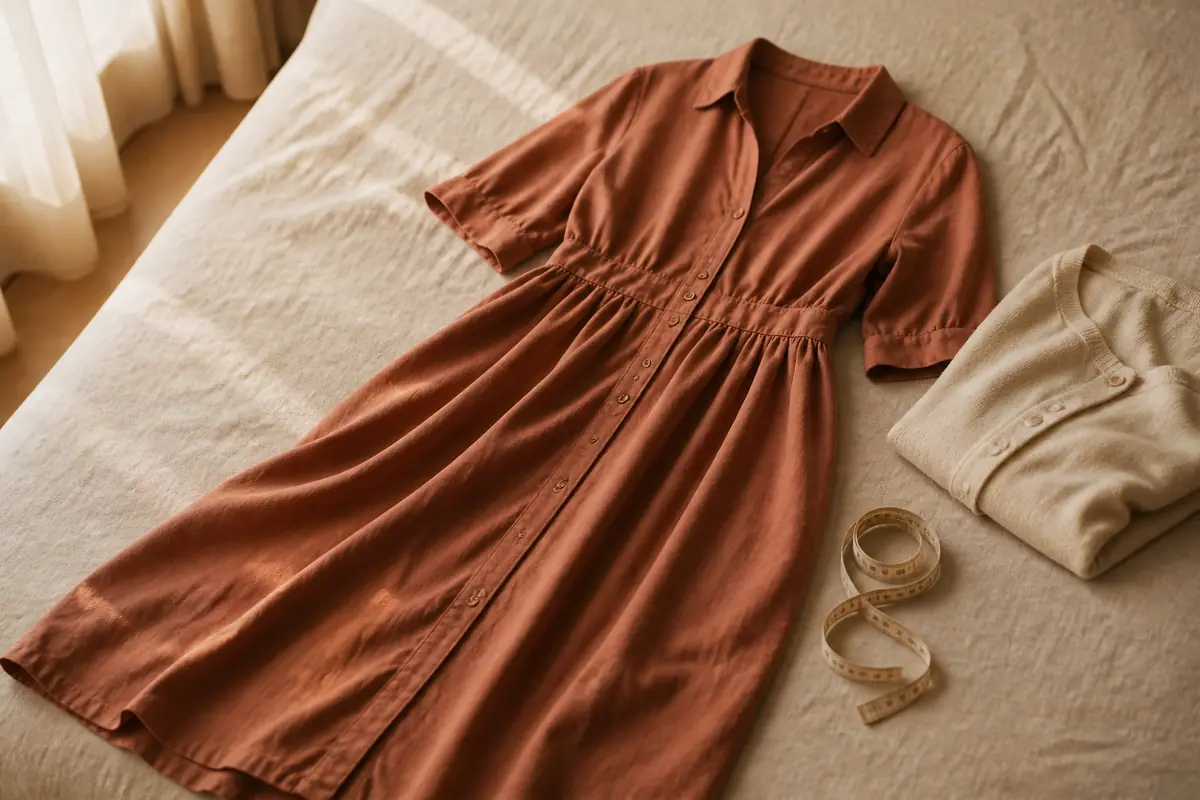
The image is an editorial illustration, not a photograph from a product test. Links are editorial and non-affiliate.