Shoulder fit and sleeve length: shirts, jackets and knitwear
Shoulder fit is the relationship between body, garment pattern, fabric and intended silhouette. Check seam position, chest and back movement, arm lift and sleeve finish together before blaming one measurement.
In this guide
Test movement before judging the shoulder seam alone
Wear the intended base layer, relax the arms and then reach forward, lift and bend without forcing the garment. A dropped shoulder is intentional in some cuts, while a seam on the shoulder point can still bind if chest, armhole or back width is wrong.
Measure with the home clothing method, read size systems through clothing sizing charts, and inspect seams using the clothing-quality guide.
| Observation | Possible cause | Check | Avoid |
|---|---|---|---|
| Seam past shoulder | Dropped design or excessive width | Product silhouette and sleeve head | Assuming every drop is oversized |
| Horizontal back pulls | Insufficient back or chest room | Reach forward and button closure | Sizing by shoulder alone |
| Sleeve rides up | Short sleeve or restricted armhole | Bent elbow and forward reach | Measuring only with arms down |
| Cuff covers hand | Long sleeve or dropped shoulder | Shoulder, cuff and alteration route | Shortening before wash behaviour check |
Upper-body fit record
- Record intended silhouette and layer.
- Measure shoulder landmarks consistently.
- Measure chest and back width as relevant.
- Note armhole depth and sleeve shape.
- Test forward reach and elbow bend.
- Check cuff closure and hand coverage.
- Photograph neutral posture front and back.
- Review alteration before removing tags.
Define the intended shoulder construction
A set-in sleeve usually places a seam near the shoulder transition, while dropped, raglan and grown-on sleeves distribute shape differently. Read the product description before using one seam rule.
Compare the garment with examples of the same construction. A dropped seam can be deliberate; unwanted collapse, twisting or restriction still needs evaluation.
Find repeatable body and garment landmarks
Body shoulder points can be difficult to locate, so use the same method each time and record who measured. For garments, lay them flat without stretching and follow the seam or specified points.
Do not compare a curved yoke measurement with a straight shoulder width without noting the method. Retailer charts may describe body rather than finished clothing.
Check chest and back before changing shoulder size
Pulling across buttons, upper back or armholes can make the shoulder feel tight. Reach forward as if driving or typing and observe whether the garment limits movement or simply follows it.
Sizing up may release the back while making neck, body and sleeve too large. Look for a different cut when the proportion mismatch cannot be solved by one size step.
Use armhole depth to explain mobility
A very low armhole can lift much of the body when the arm rises; a tight high armhole can pinch. Sleeve cap shape and fabric stretch also affect motion.
Test ordinary tasks rather than extreme gym positions. Jackets require the intended shirt or knit underneath because layering changes armhole space.
Measure sleeve length in the wearing position
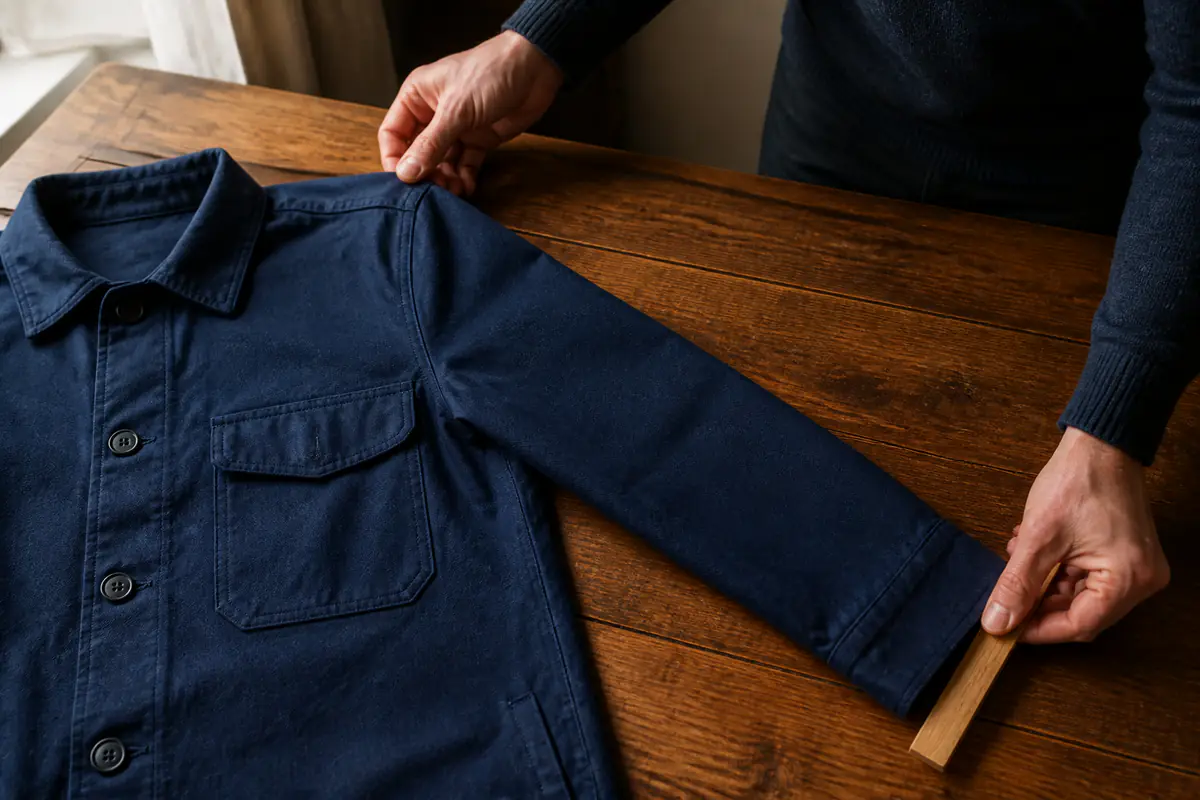
Record from the specified shoulder or centre-back point to cuff, then test with the elbow slightly bent and arm forward. Shirt, jacket and knit sleeves finish at different practical positions.
A cuff that looks correct with arms down may expose too much during reach. Watches, gloves and turned-back styling can alter preference but should not hide restriction.
Separate long sleeves from dropped shoulders
Excess hand coverage can come from sleeve length, shoulder width or both. Pin the shoulder position temporarily without damaging the garment and observe how the cuff changes.
Shortening a sleeve does not correct a collapsed shoulder, and narrowing a shoulder is a more complex alteration than a simple cuff adjustment.
Judge shirts through cuff and placket function
Buttoned cuffs should allow hand movement without sliding excessively. Check placket opening, gauntlet button and whether sleeve fullness twists into the cuff.
For formal shirts, jacket sleeve relationship may matter; for casual overshirts, intended layering can justify more ease. Use the shirt fit guide where relevant.
Judge jackets with the correct layers and closure
Wear the planned shirt or knit, fasten the jacket as intended and check collar, shoulder, chest and sleeve together. Shoulder padding and canvas can create structure that should not be compressed by a smaller size.
A tailor can assess sleeve shortening, but buttonholes, zips, vents, lining and pattern matching affect feasibility and cost. Ask before purchase when alteration is essential.
Allow knitwear to behave as knitwear
Knits stretch, relax and recover according to fibre, gauge and construction. A shoulder may settle after wear, while hanging storage can create unintended length.
Read composition and care through fabric composition explained. Do not aggressively steam or stretch a new knit to manufacture the expected fit.
Check online evidence without model copying
Model height, size and pose provide context only. Look for front, back and arm-down views, stated garment length and shoulder construction. Compare with a measured garment of similar fabric and cut.
If decisive dimensions are missing, factor return cost and time into the order. Avoid buying several sizes when a different retailer supplies clearer measurements.
Decide alteration only after fabric behaviour is understood
Sleeve shortening can be straightforward at a plain cuff and complex at functional buttonholes, zips, rib or lined vents. Shoulder alterations can change sleeve pitch, chest and balance.
Obtain a competent view on the actual garment before removing tags. Include alteration in cost per wear rather than treating it as invisible.
Create a personal upper-body block
Record a successful garment’s shoulder method, chest, back, sleeve, cuff and armhole alongside fabric and intended layer. That becomes a better online reference than the size label.
Browse Fashion for separate trouser, denim and care questions. Update the record when posture, body or layering needs change.
Recheck balance after any sleeve adjustment
A temporary cuff turn or pin can preview length, but view the garment from front, side and back before approving permanent work. Excess sleeve may have been compensating visually for a dropped shoulder, long body or low armhole; shortening it can reveal that the overall cut is still wrong.
After a competent alteration, repeat the original movement sequence with the intended layer and footwear. Check cuff symmetry, sleeve pitch, hem level and whether pressing has marked the fabric. Keep the alteration record with the garment measurements so a future purchase is compared with the corrected result, not the original mismatch.
Keep, alter or compare another cut?
Movement works and the mismatch is local
Chest, back, armhole and shoulder are comfortable, while a competent alteration can correct a simple sleeve or cuff issue without harming balance.
Restriction or collapse involves the whole pattern
Shoulder, chest, back and armhole fail together, or alteration would require structural work disproportionate to the garment.
Balanced verdict
Shoulder fit cannot be judged by seam position alone. Define the sleeve construction, test chest and back movement, then measure sleeve in a realistic bent-arm position.
Choose another cut when several upper-body proportions fail; reserve alteration for a sound garment with a clearly local issue.
Official checks:
WRAP textiles information ↗
GOV.UK consumer protection rights ↗
The Textile Institute ↗
Frequently asked questions
Where should a shoulder seam sit?
For a set-in sleeve it is often near the shoulder transition, but dropped, raglan and grown-on designs use different landmarks.
Why does a shirt pull when reaching forward?
Back width, chest, armhole and sleeve shape may be insufficient even if the shoulder seam appears correct.
How should sleeve length be measured?
Use the retailer’s stated method and test the garment with the elbow bent and arm forward, not only hanging down.
Can jacket sleeves always be shortened?
No — Functional buttonholes, zips, vents, lining and proportion can make alteration complex.
Does knitwear shoulder fit change?
It can relax through wear and care. Fibre, gauge, storage and construction determine how much.
Methodology and limitations
We assessed shoulder and sleeve fit through construction, landmarks, chest, back, armhole, movement, cuffs, jackets, knitwear, online evidence and alteration. We did not fit or tailor named garments.
Limitations
Bodies, posture, patterns, fabrics and preferences vary. Measurement methods differ by retailer. Use a competent tailor for structural alteration decisions.