Clothing returns in the UK: hygiene seals, personalised items and refunds
A clothing return depends on why it is going back, how it was bought, who sold it and what happened after delivery. Separate an online change of mind from a fault or misdescription, then check whether a genuine hygiene seal, personalisation or excessive handling affects the route.
In this guide
State the legal problem before discussing store policy
Write whether the item is unwanted, faulty, misdescribed, late or incorrectly supplied. Preserve the garment, tags, seal, listing, order and photographs; notify the trader through a recorded route within the relevant time. A voluntary policy can be more generous, but it cannot remove applicable statutory rights.
This is general Great Britain consumer information, not legal advice. Northern Ireland guidance and individual facts can differ. Obtain tailored advice where a trader disputes status, damage, hygiene, personalisation or a substantial refund.
Identify purchase channel and seller
Distance-selling cancellation generally applies to contracts completed online, by mail or phone, with exceptions. A high-street change of mind normally depends on voluntary policy. Marketplace purchases require the actual contracting seller to be identified; the platform may provide an additional dispute route.
Save the seller name, listing and confirmation using the online-purchase documentation guide. A social profile or platform logo does not establish who owes the remedy.
| Reason | Starting route | Evidence to preserve |
|---|---|---|
| Changed mind online | Distance cancellation if applicable | Receipt date, cancellation notice and return proof |
| Wrong size chosen | Cancellation or voluntary exchange policy | Item condition, tags and policy |
| Not as described | Consumer Rights Act remedy | Listing, measurements, label and photos |
| Faulty construction | Statutory faulty-goods route | Fault photos, timeline and use or care record |
| Late for an essential date | Delivery and contract terms | Agreed deadline and dispatch messages |
Return evidence file
- Order number, seller and payment date.
- Product page, size chart, composition and description.
- Delivery date and parcel condition.
- Photographs before try-on and of any issue.
- Cancellation or complaint wording and timestamp.
- Trader instructions, return label and acceptance scan.
- Tracked delivery, parcel weight and refund record.
Know the online cancellation sequence
GOV.UK states that online customers normally tell the trader within 14 days of receiving goods that they wish to cancel, then have another 14 days to return them. The trader normally refunds within 14 days of receiving the goods back, subject to the rules and evidence.
This does not mean every clothing-related item has an unrestricted route. Check statutory exceptions and the trader’s required cancellation method. Do not wait until the last day when return portals, weekends or cross-border addresses may complicate proof.
Handle clothing as you would in a shop
Trying on is different from wearing. Test indoors, briefly and cleanly with appropriate underwear; keep tags attached; avoid fragrance, make-up, deodorant transfer, pet hair and floor contact. Do not wash, alter or remove protective components before deciding.
Excessive handling that reduces value can affect a refund under distance-selling rules. A trader should not treat every opened parcel as used, but a visibly worn garment is not equivalent to a careful fitting-room check.
Hygiene exceptions require more than a category label
GOV.UK lists sealed goods that are unsuitable for return for health protection or hygiene reasons once unsealed, giving underwear as an example. The facts include whether the goods were genuinely sealed, whether the seal was broken after delivery and whether the item is unsuitable for return for those reasons.
Do not remove a hygiene strip or seal merely to inspect a product when uncertain. Photograph how it arrived and ask the retailer for the route. A “no returns for hygiene” sentence does not automatically decide a fault or misdescription claim.
Personalised and altered items need early decisions
Clearly personalised or made-to-specification goods can be excepted from ordinary change-of-mind cancellation. Initials, custom dimensions, selected fabric or a requested alteration may matter. Standard dropdown choices do not necessarily make every product bespoke; the exact contract is relevant.
Use the alterations-before-buying guide before commissioning work. Confirm measurements, tolerances, proof, production start, change deadline and fault route in writing.
Faults and misdescription are separate
A sale item, hygiene-sensitive garment or personalised piece is not exempt from being satisfactory, fit for purpose and as described. A disclosed defect is different from an undisclosed one. Record loose seams, broken fastening, incorrect fibre label, wrong size supplied or material discrepancy before repair or wash.
The faulty-goods guide explains the general remedy sequence. Contact the trader, not only the manufacturer, and obtain instructions before paying for repair or return.
Distinguish fit disappointment from inaccurate information
A labelled UK size is not a universal measurement. If the correct product matches a disclosed chart but does not fit, that is usually a change-of-mind issue. If the supplied garment materially differs from stated dimensions or variant, preserve measured evidence.
Use the size-chart guide before ordering. Measure the garment using the retailer’s method and account for normal tolerances rather than stretching fabric to produce a desired number.
Read seller policy for extra benefits
Retailers may offer longer windows, store returns, free postage or exchanges beyond legal minimums. Those benefits can have conditions such as membership, full-price status, original packaging or a specified carrier. Save the version applying at purchase.
The returns-policy audit covers seller, deadline, cost, route and refund timing. For marketplace concessions, confirm whether a store can accept the return.
Calculate return postage and risk
For an ordinary cancellation, the consumer may have to pay return cost if properly informed. Faulty-goods costs are a different matter. Agree the route for bulky, valuable or cross-border garments before posting.
Photograph the folded item and sealed parcel, record weight, retain the acceptance scan and use suitable tracking and compensation. Do not write sensitive order details on an exposed note beyond what the trader requires.
Check the refund components
For a qualifying full distance cancellation, standard outbound delivery is normally refunded; an upgrade above standard may not be. Return postage, partial-order delivery thresholds, vouchers and multibuy recalculation can affect the statement. Ask for a clear breakdown.
Store credit should not silently replace a refund due under law, although a consumer can agree to an alternative. Compare the refund to the original payment and retain the settlement message.
Escalate with chronology, not volume
Send a short timeline: purchase, delivery, discovery, notice, return and requested remedy. Attach only relevant evidence. If the retailer fails to resolve it, use its formal complaint, marketplace process, payment protection or official consumer-advice route as appropriate.
The chargeback and Section 75 guide explains why payment routes differ and neither should be used as a substitute for stating the underlying contractual failure.
Prepare the parcel as evidence
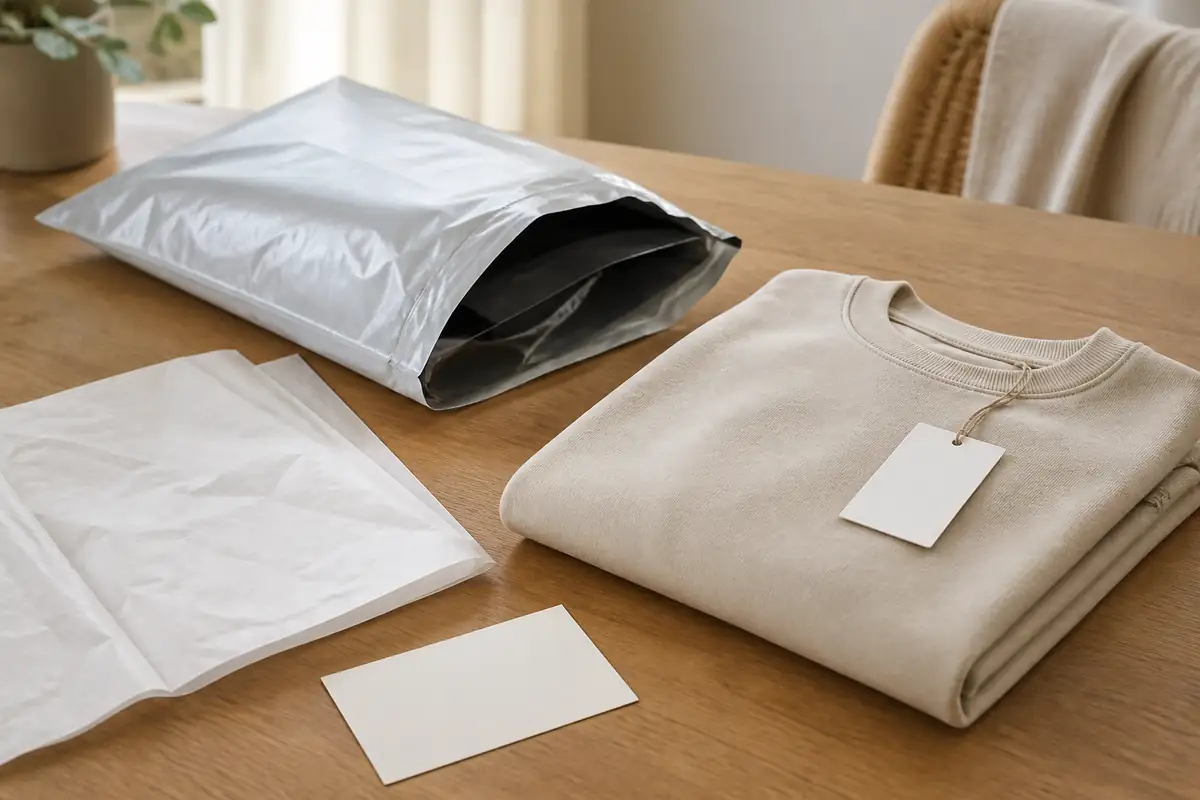
Before packing, photograph the complete garment, the specific issue, attached tags or hygiene seal and the condition of included accessories. Use clean, protective packaging suitable for the journey and do not add fragrance, wash or attempt a repair unless the trader has agreed it. An intervention intended to help can make the original condition harder to establish.
Put the trader’s required identifier inside without exposing unnecessary personal information. Retain the carrier receipt, tracking number, parcel weight and a photograph of the sealed parcel. If the seller supplied a label, save a copy before handing it over. Tracking that says “delivered” is useful but may not prove the contents, so the pre-packing record remains important.
Return evidence file
- Order confirmation, seller identity and listing captured at purchase.
- Delivery date and photograph of the item as received.
- Exact reason: unwanted, faulty, misdescribed, wrong or late.
- Date and wording of cancellation or fault notice.
- Seller instructions and any agreed postage arrangement.
- Parcel photographs, receipt, tracking and refund calculation.
Check the refund rather than only the notification
A message saying that a refund was “processed” is not the final check. Compare the amount received with the item price, applicable delivery component and any agreed return cost. Allow the payment method’s stated processing time, then ask for the transaction reference if the credit is absent. Keep gift-card, split-payment or buy-now-pay-later records because the money may return through more than one route.
Close the evidence file only when the remedy is complete. If part of the claim is disputed, identify the exact missing component and the evidence for it rather than reopening every point.
Use cancellation when
- An eligible distance purchase is simply unwanted.
- The notice and return windows remain open.
- Handling stayed within a shop-like inspection.
- No relevant exception has been triggered.
Use the fault route when
- The garment is faulty or unsafe.
- Size, fibre, colour or construction was misdescribed.
- The wrong item or variant arrived.
- A disclosed remedy failed.
Balanced verdict
Good clothing-return outcomes start by naming the correct route. “No returns”, a removed tag and a hygiene category are not interchangeable legal conclusions.
Inspect cleanly, keep the evidence and act promptly. The strongest complaint is specific about seller, purchase channel, problem, dates and requested remedy.
Check current official information:
GOV.UK accepting returns and refundsGOV.UK online and distance sellingGOV.UK consumer rights and advice
Frequently asked questions
Can I try online clothing on?
Normally you may handle it as in a shop, but avoid wear or handling that reduces value.
Does removing a swing tag always remove my rights?
No single fact decides every route, but keep tags attached for a clean change-of-mind return.
Can underwear be returned?
A sealed hygiene exception may apply after unsealing; check the exact item, seal and reason. Faults are separate.
Can personalised clothing be returned?
Ordinary cancellation can be excepted, but faulty or misdescribed goods still require a remedy.
Who pays return postage?
It depends on the route and information supplied. Agree costs before sending.
Are sale items covered?
Sale pricing does not remove statutory rights.
How we researched this guide
Recommended Today reviewed current GOV.UK distance-selling, returns and refund information and mapped it to clothing-specific hygiene, personalisation, sizing and handling questions.
Limitations
This is not legal advice and we did not adjudicate a dispute. Facts, jurisdictions and policies vary. Recheck official guidance before purchase. The image is an editorial illustration, not a photograph from a product test.