Repair, alter, rotate or retire clothing: a practical wardrobe decision
A low cost per wear cannot make an uncomfortable, unsafe or unusable garment valuable. When clothing stops serving its role, diagnose the barrier: fit, damage, care, coordination, season or life change. Then choose the least wasteful action that produces a reliable next use.
In this guide
Repair only when a defined next use exists
Name the garment’s next three realistic wears, inspect the structure and obtain the actual cost and result of repair or alteration. Rotate or store only with a return date. Sell or donate only in honestly wearable condition. Retire unsafe, contaminated or irreparably degraded pieces through an appropriate route.
This replaces a planned duplicate of the existing cost-per-wear framework. It answers a distinct question after ownership: what to do when a garment is no longer earning use. It does not assess protective workwear or prescribe local textile-disposal services.
Diagnose why use stopped
Ask when the garment was last worn and what prevented the next wear. “I forgot it” differs from tight shoulders, a broken zip, dry-cleaning friction or a colour that coordinates with nothing. Write one primary barrier and evidence.
Use the cost-per-wear guide to understand past value, but do not let sunk cost dictate the next decision. Money already spent cannot be recovered by storing an item indefinitely.
| Barrier | Best first test | Likely route |
|---|---|---|
| Small local damage | Inspect surrounding material and repair access | Mend if the structure can support it |
| Fit in one alterable area | Check seam allowance and garment balance | Obtain an alteration quote |
| No current outfit role | Build three outfits from owned items | Rotate briefly or release |
| Care burden | Price and schedule the real care route | Simplify, sell or reserve deliberately |
| Widespread degradation | Check safety, fibre strength and contamination | Repurpose or retire appropriately |
Decision record
- Garment role and last three actual wears.
- Current body and garment measurements.
- Damage map with clear photographs.
- Fibre, construction and care label.
- Repair or alteration scope and quotation.
- Next three dated realistic occasions.
- Decision owner, deadline and final route.
Inspect the whole structure before a local repair
A new zip is poor value if fabric beside it is splitting. Check seams, stress points, lining, hem, cuffs, collar, fasteners and surrounding fibre strength. Look for repeated moth holes, coating breakdown, brittle elastic or colour loss that changes the whole garment.
The fabric-composition guide helps identify components that need different methods. A repairer needs the item in hand for certainty; photographs support a provisional quote only.
Separate repair from alteration
Repair restores a damaged function; alteration changes fit or design. A hem, button or open seam can be bounded, while shoulders, armholes, rise and extensive relining may alter balance and cost. Ask what the finished result can and cannot achieve.
The alterations guide covers seam allowance, reversibility and fitting. For an owned garment, bring the intended shoes and layers to a fitting and mark the exact discomfort.
Use a three-wear forecast
Name three dated or recurring occasions within the next season and construct complete outfits from items already owned. If each depends on buying more, the garment may not solve a real wardrobe need. Photograph the combinations to remove memory bias.
Do not forecast years of hypothetical use. Three plausible wears are enough to justify a modest repair; a larger intervention needs a stronger repeated role.
Calculate forward cost, not original price
Compare money required from today: cleaning, repair, alteration, storage and missing compatible items. Original price is relevant to records and resale expectations but is sunk. A cheap repair can revive a modest garment; an expensive original item can still be uneconomic.
Include time and inconvenience without inventing an hourly wage for leisure. A difficult specialist-care route can suppress use even when the cash cost looks reasonable.
Read care before committing
A repair can change care: new trim may tolerate a different process, while a patch or adhesive may limit heat. Ask the repairer for instructions and retain materials information. The care-label guide interprets the original symbols without assuming they cover later work.
Clean before long storage only as appropriate, and store fully dry. Unresolved stains, body oils and food can attract pests or set over time.
Rotate with a deadline
Seasonal, maternity, formal or size-transition clothing can justify temporary storage. Label the container with contents and a review month; use clean, dry, dark and supported storage suited to the material.
If the review arrives and no defined use exists, decide again. Rotation without a date is delayed clutter, not a wardrobe strategy.
Sell with complete condition evidence
Measure, photograph and disclose wear, alterations, odour, repairs and missing parts. Do not call an item “excellent” when flaws are merely hard to photograph. Price against completed sales where available, less platform fees, delivery and the time needed.
Keep payment and communication inside the chosen platform. The purchase documentation method also works for recording a resale transaction without retaining unnecessary personal data.
Donate only what is honestly usable
Donation does not transfer the responsibility to assess condition. Follow the receiving organisation’s current list; sort clean wearable goods from damaged textiles and never place wet, mouldy, contaminated or hazardous items in a donation bag.
Local routes differ, and charity shops incur disposal costs for unusable goods. If repair is simple but you will not do it, disclose the fault and ask whether the organisation accepts repairable items.
Repurpose without creating permanent scraps
Cleaning cloths, patches, stuffing or craft material can be useful when fibre and finish suit the purpose. Avoid using unknown treated fabric for food contact, children’s sleep products or heat protection. Remove unsafe hardware.
Choose a defined project and quantity. Cutting every unwanted garment into pieces can turn a usable textile route into household waste.
Retire when safety or integrity fails
Protective clothing, children’s garments, drawstrings, fasteners and degraded coatings can involve safety beyond appearance. Follow manufacturer, recall and local disposal guidance. Do not resell an item that is unsafe or materially misdescribed.
For ordinary clothing, widespread fibre weakness, persistent contamination or unrepairable functional failure can justify retirement. Check the local council’s current textile route rather than assuming kerbside recycling.
Prevent the same failure in the replacement
Record why the item left: wrong rise, scratchy fibre, specialist care, weak seam, duplicate role or poor coordination. Make that a filter for the next shortlist. The before-first-wear guide helps protect a replacement without washing away the return option.
A replacement is not automatically required. Repairing the wardrobe plan can be more useful than replacing the garment.
Set a decision date and a maximum intervention
An unresolved garment can accumulate speculative purchases: special underwear, another jacket, new shoes or a repair kit that never gets used. Write one next action, its maximum cost and a deadline. If the garment needs professional assessment, obtain it before buying supporting pieces. If the result depends on a skill you do not intend to learn now, price the professional route honestly.
Use a short quarantine period for emotional or seasonal uncertainty, but give the box a review date and an inventory. At review, reassess condition before returning anything to the wardrobe. Storage is not neutral when elastic, coatings, pests, moisture or forgotten stains can worsen.
One-page garment decision
- Reason use stopped and whether that reason still exists.
- Whole-garment condition, not only the obvious defect.
- Quoted repair or alteration, expected result and aftercare.
- Three specific future wears and any dependencies.
- Decision deadline and maximum further spend.
- Honest next route if the intervention fails.
Judge a repair by the completed garment
A technically neat mend can still fail if it changes drape, comfort, stretch or laundering. Agree thread, patch, reinforcement, visible finish and acceptable tolerance before work starts. For alterations, ask how balance will change across seams and whether enough allowance exists. A fitting should use the underlayers and footwear intended for real wear.
After the work, inspect the repair under gentle movement and follow the revised care method. Record the cost and first three wears. That converts a hopeful sustainability claim into evidence for future decisions about similar fabric, construction and service.
Invest in repair when
- The remaining structure is sound.
- The result and care are clearly defined.
- Three real future wears exist.
- Forward cost beats a suitable replacement.
Release or retire when
- The problem is widespread or unsafe.
- Fit needs structural reconstruction.
- Use depends on more speculative purchases.
- A responsible next route is available.
Balanced verdict
The most sustainable-looking action is not always the most useful one. Repair, storage, resale and donation each fail when there is no honest next use.
Diagnose the barrier, calculate forward cost and set a deadline. A repaired favourite deserves investment; an unsafe or permanently unwanted garment deserves a responsible exit, not another year of guilt.
Check current official information:
GOV.UK textile labellingUK product safety alerts and recallsGOV.UK local recycling collections
Frequently asked questions
Should original price decide whether I repair?
No. Compare cost from today, expected result and real future use.
How many future wears justify repair?
There is no fixed number; name at least three plausible occasions before a modest intervention.
Can every fit problem be altered?
No. Fabric, seam allowance and garment balance limit results.
Should damaged clothing be donated?
Only if the organisation explicitly accepts that condition or textile route. Do not conceal faults.
Is storage a valid decision?
Yes for a defined seasonal or life-stage reason with a review date and suitable conditions.
When should clothing be retired?
When safety, contamination or structural degradation prevents an honest wearable or repurposed next use.
How we researched this guide
Recommended Today separated the existing cost-per-wear calculation from the post-ownership repair, alteration, rotation, resale, donation, repurpose and retirement decision.
Limitations
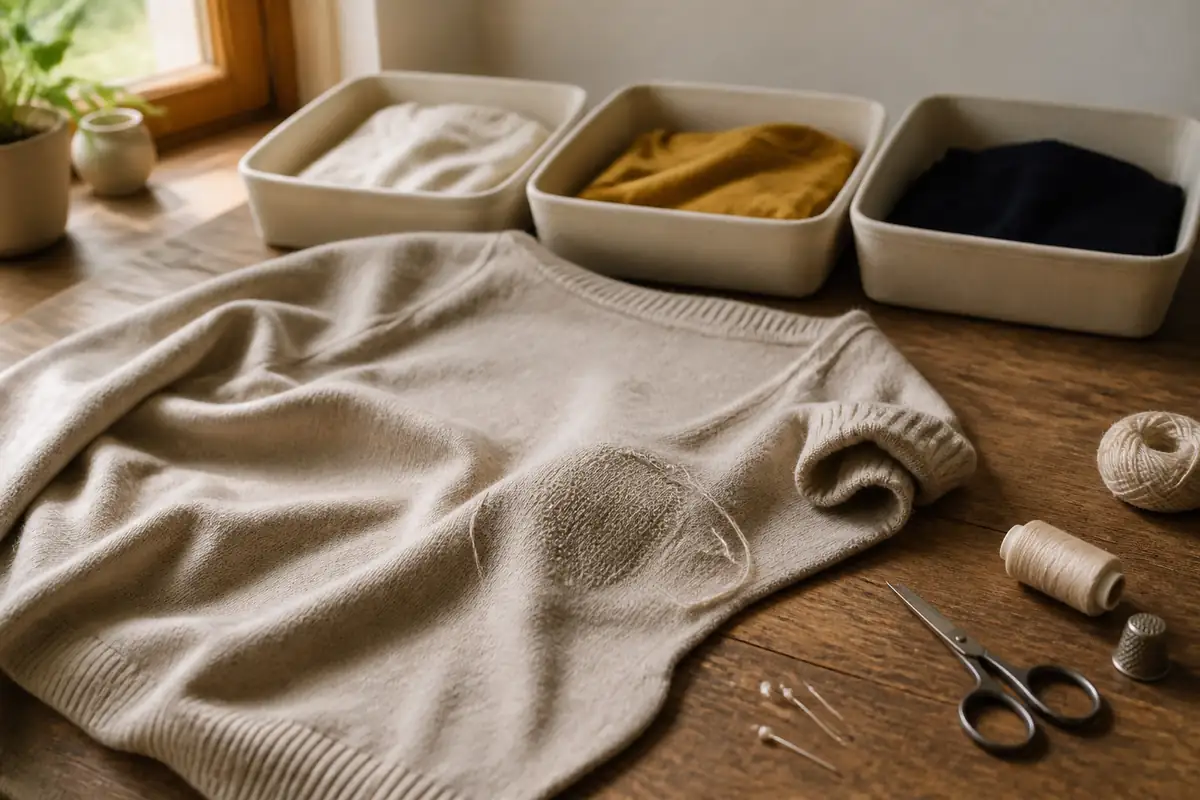
We did not inspect a garment, quote repairs or assess local textile services. Materials, safety and routes vary. Recheck the exact garment and local guidance before purchase. The image is an editorial illustration, not a photograph from a product test.