Men’s shirt fit explained: collar, shoulder, sleeve and body shape
A shirt can match the neck label and still pull at the chest, drop beyond the shoulder or expose the wrist. Good fit comes from body measurements, garment dimensions, intended ease, posture, fabric and how the shirt will be tucked, layered and moved in.
In this guide
Fit the collar and shoulders, then check movement
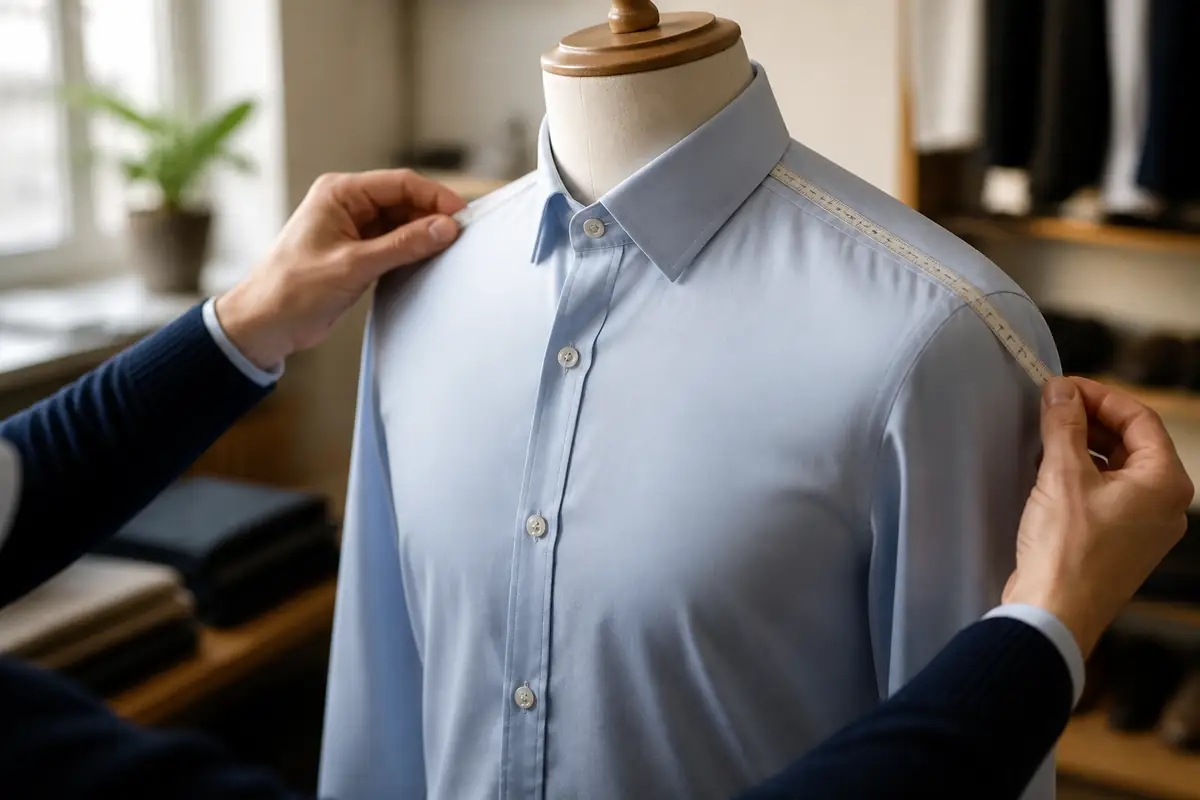
Start with a collar that closes without pressure and a shoulder seam near the natural shoulder point. The chest and back should allow reaching and sitting without button strain, while sleeves finish correctly with the arms relaxed and bent. Choose the cut only after those structural points work.
This guide covers woven button-front shirts for work, smart-casual and formal use. Overshirts, stretch performance tops and deliberately oversized fashion cuts use different ease. Made-to-measure and significant asymmetry benefit from an experienced fitter or tailor.
Define how the shirt will be worn
Decide whether the shirt must take a tie, sit under a jacket, remain tucked, work open-necked or be worn untucked. Note the normal undershirt, trousers and watch. A formal shirt needs collar and cuff precision; a casual shirt may tolerate more ease but still needs balanced shoulders and length.
Record heat, commute and movement. Someone presenting, driving or reaching frequently needs enough back and arm mobility without a billowing body. The workwear capsule guide helps place the shirt inside a repeatable office system rather than treating it as an isolated purchase.
| Fit area | Good starting sign | Too small | Too large |
|---|---|---|---|
| Collar | Closes comfortably and stays level | Pressure, gap below knot, skin pinching | Large gap, collar collapses |
| Shoulder | Seam near natural shoulder point | Sleeve pulls upward, chest strain | Seam drops down upper arm |
| Chest | Placket lies flat through movement | Button gaping and horizontal pulls | Excess folds and unstable collar |
| Sleeve | Cuff reaches wrist with bend allowance | Wrist exposed when reaching | Cuff covers hand or bunches heavily |
| Length | Stays tucked or balances untucked | Hem escapes on reaching | Bulky tuck or tunic proportion |
Measure before comparing size charts
- Neck at the collar line without pulling tight.
- Chest at the fullest point with normal breathing.
- Waist or midsection where the shirt must pass.
- Shoulder across the back between seam points.
- Sleeve from shoulder or centre-back as the chart specifies.
- Wrist and preferred cuff allowance.
- A well-fitting shirt’s garment dimensions for comparison.
Understand body and garment measurements
Body measurements describe the wearer; garment measurements include ease. A shirt with a 112 cm chest is not designed for a 112 cm body chest. The required difference depends on fabric, cut and preference. Check which method the brand uses before comparing numbers.
Measure a known shirt flat and follow the retailer’s diagram. Pit-to-pit doubled can approximate garment chest, but pleats and curved seams complicate the result. Collar sizes can describe finished collar or intended neck. The UK size-chart guide explains why labels cannot be transferred blindly between brands.
The collar should work closed and open
Button the collar and turn the head, swallow and sit. It should remain comfortable without a pronounced gap or pressure. Rules about fitting a fixed number of fingers are only rough checks because finger size and collar construction vary. The collar should not lift away dramatically under a tie or collapse when open.
Collar shape also interacts with face, tie knot and jacket lapel, but fit comes first. A spread, point or button-down collar can frame differently; none compensates for the wrong neck size. Wash shrinkage claims need manufacturer evidence and correct care.
Shoulder placement sets the sleeve
Find the natural point where the shoulder turns into the arm. A conventional shirt seam should sit close to it. A seam high on the shoulder can restrict movement and pull the sleeve; a dropped seam can make the upper body look loose and alter apparent sleeve length. Raglan and intentionally dropped styles are exceptions.
Look from front, side and back. Posture and shoulder slope affect how fabric hangs. Wrinkles from neck to underarm can indicate a slope or balance issue rather than a simple size problem. An alteration to shoulder structure is more complex than shortening a sleeve.
Chest and back need movement ease
Button the shirt and let arms hang. The placket should lie flat without openings between buttons. Reach forward, cross the arms, sit and lift them to normal work height. Some diagonal folds are natural in movement; persistent strain, back restriction or buttons bearing tension suggests insufficient ease.
Box pleats, side pleats and back darts redistribute room but do not guarantee fit. A very slim waist cannot rescue a tight chest. If the shirt fits the shoulders and chest but has excessive waist fabric, tailoring or a different cut may help.
Choose cut after the body is accommodated
Slim, tailored, regular and classic are brand-specific labels. They may change chest, waist, armhole and sleeve together. Compare actual garment dimensions. A fuller midsection may need more front length and waist room without a larger collar; an athletic build may need chest and upper-arm space with waist suppression.
Do not size down solely to remove waist fabric if shoulders or chest then strain. A good alteration takes excess from appropriate seams while preserving balance. The occasionwear alteration guide explains why structural changes need physical inspection.
Sleeve length depends on shoulder and cuff
With arms relaxed, a button cuff usually finishes around the wrist break, but personal preference, jacket sleeve and cuff style matter. Bend the elbow and reach forward; the cuff should not climb excessively. If the shoulder seam drops, the sleeve may appear longer even when its listed measurement matches.
Check whether the chart measures from shoulder seam, centre-back neck or another point. French cuffs require links and can sit differently. A watch may need an adjustable or asymmetric cuff. Sleeve shortening is often possible, but placket length, button placement and taper limit the result.
Cuff fit controls apparent sleeve length
A cuff should pass the hand when opened and remain at the wrist when closed. It should not compress, rotate constantly or slide over the hand. Two-button cuffs can provide adjustment, but pulling one side too tight can distort the sleeve. Check both wrists if a watch or asymmetry changes the requirement.
Inspect the button attachment and spare-button provision. Cuff edges receive repeated wear, so dense, neat stitching and suitable interfacing matter. Decorative contrast does not prove construction quality.
Length should match tuck strategy
A tucked formal shirt needs enough back and side length to stay in the waistband while sitting and reaching. Test with the intended trouser rise. An untucked shirt usually looks balanced when the hem relates to the seat and fly, but body proportions and curved hems vary; there is no universal centimetre rule.
A shirt can be shortened, but pocket position, side gussets, hem curve and button spacing may become awkward. Avoid buying a formal extra-long tail for casual untucked use unless alteration is clearly feasible.
Fabric changes drape, stretch and care
Poplin, twill, oxford, flannel and other constructions distribute structure and breathability differently. Fibre content does not identify weave or weight. Added elastane can improve movement but does not fix poor shoulder placement, and recovery varies. Non-iron or easy-care claims should state care and performance conditions.
Read the fabric-composition guide and care-label guide. Confirm shrinkage guidance, washing temperature, drying and ironing before selecting a close fit.
Inspect construction on arrival
Keep tags attached and check in neutral light. Compare collar points, placket, cuffs, sleeve lengths, side seams and hem. Look for loose threads, skipped stitches, puckering and mismatched patterns. Button and unbutton every closure without forcing it.
Try with the intended trousers, jacket and tie on a clean floor. Do not wash or alter while the return decision is open. The returns-policy audit helps plan online sizing risk.
Alter only after the keep decision
Simple sleeve or waist changes can be worthwhile when collar, shoulders and chest are right. Neck enlargement, major shoulder work or armhole reconstruction may be impractical. Ask a tailor to inspect seam allowance, plackets, darts and balance before promising a result.
Include alteration and care in the price. The cost-per-wear method is useful for a shirt worn frequently, but only after comfortable movement and laundering are proven.
Choose a closer cut when
- Collar, shoulders and chest remain comfortable.
- The fabric and armholes allow normal movement.
- The shirt will sit under tailored layers.
- Care is unlikely to shrink the fit beyond use.
Choose more ease when
- Work requires reaching, driving or long sitting.
- Dense or rigid fabric needs movement room.
- The shirt is worn open or as a casual layer.
- The fuller cut can be tailored selectively.
Balanced verdict
Fit a shirt from the structural points outward: collar, shoulders, chest, then sleeve, cuff, waist and length. Cut names are shortcuts, not measurements. A shirt that hangs neatly while standing but restricts work movement is not well fitted.
The best online evidence combines body measurements with a known shirt and the exact brand diagram. When those disagree, choose clearer evidence or an in-person fitting rather than guessing from the label.
Check current official information:
GOV.UK textile labellingGOV.UK returns and refundsGOV.UK distance selling rules
Frequently asked questions
How tight should a shirt collar be?
It should close and allow normal turning, swallowing and sitting without pressure or a large gap. Fixed finger rules are only rough checks.
Where should the shoulder seam sit?
For a conventional shirt, near the point where the shoulder turns into the arm. Deliberately dropped and raglan styles differ.
How do I measure shirt sleeves?
Follow the brand’s diagram because measurements may start at the shoulder or centre-back neck. Compare with a known shirt.
Should I size up for a larger stomach?
Use a cut with sufficient midsection and front length while preserving collar and shoulder fit; a different cut may work better than a global size increase.
Can a tailor make a shirt slimmer?
Often at the waist or sleeves, but feasibility depends on seams, balance and construction. Structural shoulder changes are more complex.
Should I wash a shirt before deciding?
No if you may return it. Test fit clean and dry with tags attached, then wash only after accepting it and following the care label.
How we researched this guide
Recommended Today reviewed UK textile and distance-selling guidance and mapped shirt fit across body and garment measurements, collar, shoulder, chest, sleeve, cuff, length, fabric and movement.
Limitations
Bodies, postures, brand blocks and intended silhouettes vary. We did not fit-test individual shirts or prescribe universal ease. Recheck the exact chart and care page before purchase. The image is an editorial illustration, not a photograph from a product test.