Living-room rugs practical guide: cleaning, rotation, underlay and moving
Treat the fibre, construction, dyes, floor and underlay as one system. Vacuum at a suitable setting, blot spills instead of flooding them, rotate only when wear and pile allow it, and check that every edge remains flat.
In this guide
Protect the floor and the rug without creating a trip edge
Keep the care label and fibre record, use a floor-compatible non-slip underlay, remove grit regularly and deal with spills from the outside inward. Stop using a rug that curls, slides or obstructs a door until the cause is corrected. Specialist cleaning is sensible for unstable dyes, valuable hand construction and contamination that household methods cannot remove safely.
If size and furniture placement are still undecided, begin with our living-room rug buying guide. For dining zones, use the separate dining-room rug size guide. The decisions below concern cleaning, underlay, trip edges and storage after a rug has reached the room.
| Condition | First response | Avoid |
|---|---|---|
| Dry surface grit | Suitable low, controlled vacuum setting | Aggressive beater on delicate pile or fringe |
| Fresh liquid spill | Blot with clean absorbent material; follow care advice | Rubbing, heat and flooding |
| Curling corner | Remove trip risk; inspect backing, underlay and humidity | Tape that damages floor or fibre |
| Uneven fading | Reduce direct light; rotate if construction permits | Assuming cleaning restores colour |
| Pet contamination | Isolate, follow fibre-safe hygiene route | Masking odour with fragrance alone |
Keep the original evidence
Photograph the front, back, label and condition when new. Record fibre composition, construction, dimensions, colour name, cleaner restrictions and retailer. Labels are easily lost after delivery yet determine whether water, solvent, steam, suction or agitation is permitted.
Hand-knotted, hand-tufted, machine-woven and printed rugs can behave differently. A wool face may have a cotton foundation, latex backing or synthetic adhesive. Never choose a cleaning method from the visible fibre alone.
Monthly safety and condition check
- Walk every edge and corner to find lifting or movement.
- Inspect under furniture feet for crushing, transfer and damp.
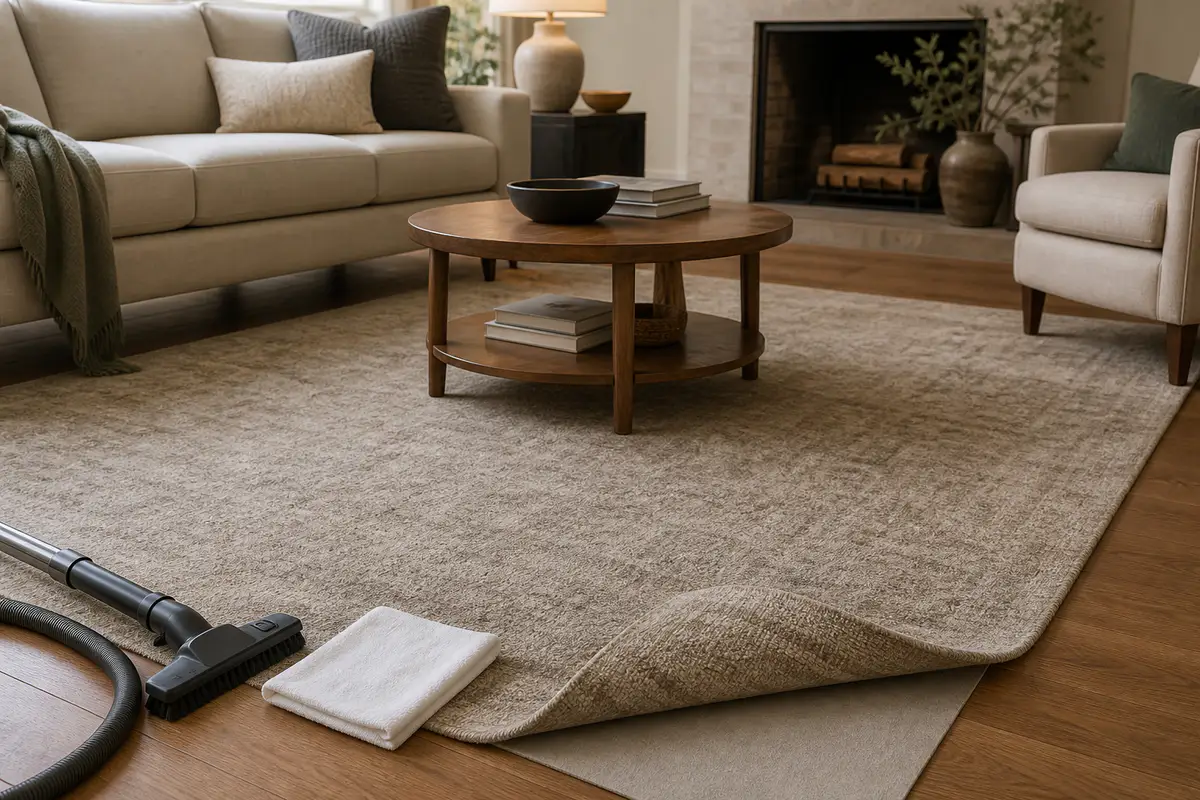
- Lift one section to check backing, underlay and floor.
- Look for direct-sun fading and traffic lanes.
- Check fringe, loose yarn, pet damage and trapped debris.
- Confirm doors, vents, heaters and escape paths remain clear.
Vacuum for the construction
Remove surface grit before it works deeper into the pile. Use the setting and attachment permitted by the maker. Powerful suction can lift loose loops; rotating brushes can fuzz wool, catch fringe or pull a loop. Vacuum fringe separately with care or leave it to a suitable method.
Work slowly in more than one direction only if the pile tolerates it. Move light furniture rather than repeatedly vacuuming around the same outline. A robot vacuum needs edge clearance and tassel management; do not assume obstacle detection prevents winding or lifting. Our robot-vacuum guide for UK homes explains the threshold, cable and floor-plan checks that matter before automated cleaning.
Blot spills and control the boundary
Remove solids without spreading them. Blot liquid with a clean white absorbent cloth, working from the edge toward the centre. Use only the solution and amount permitted for the fibre and dye. Test in a concealed area and do not saturate backing or floor.
Record what was spilled and what was used. Sugary residue can attract soil after the visible mark disappears. Oils, dyes, bleach, wax, paint, biological contamination and unknown treatments justify specialist advice. Keep children and pets away until the area is clean and completely dry.
Drying matters as much as cleaning
A damp rug can transfer colour, swell natural floors, weaken adhesives or develop odour. Promote safe ventilation without placing a wet textile against direct heat. Do not return furniture until the rug, underlay and floor are dry.
If lifting is required, get help with large wet rugs because weight increases sharply. Support the textile rather than hanging a heavy wet rug from one edge. A cleaner’s drying process and liability for unstable dyes should be clear before collection.
Underlay must match both surfaces
An underlay should be sized within the rug edge, resist movement and be compatible with the floor finish. Rubber, latex, PVC and adhesives can react with some coatings or leave a pattern. Ask both floor and underlay manufacturers rather than relying on “suitable for all floors”.
Lift and inspect periodically. Dust, moisture and pressure can create outlines. Replace an underlay that crumbles, sticks, smells or no longer grips. Do not use loose small patches that create ridges. Our online product-quality guide helps test fibre and backing evidence before replacement.
Rotate or leave in place?
Construction and room allow even wear
The rug is rectangular and symmetrical, pile direction is not visually critical, furniture can be moved safely and no fixed fading line will look worse.
Shape, pile or layout has one intended direction
A doorway, fireplace, pattern, carved pile or furniture plan makes the reversed position unsafe or visually unsuitable.
Sunlight, heat and humidity
Direct light can fade dyes and create an outline beneath furniture. Use blinds or curtains where appropriate and move small objects that create sharp exposure differences. Rotation redistributes exposure; it does not reverse fading.
Keep rugs clear of fire, portable heaters and hot air outlets. Do not cover floor vents or underfloor-heating controls. Confirm that rug and underlay are approved for the floor temperature. Avoid trapping damp against cold external floors.
Furniture feet and pile recovery
Use floor- and rug-compatible cups when the load needs spreading. Sharp or narrow feet can crush pile and cut backing. Lift rather than drag furniture. If indentations occur, follow the manufacturer’s method; water, ice and steam hacks can damage dyes, backing or the floor.
Recheck sofas and chairs after repositioning so every foot sits securely. A partly supported foot can rock and abrade the rug edge. If the rug is used to define a seating zone, furniture placement should not create a raised path across the main walkway. When a heavy piece is also due for replacement, use the load, joint and finish checks in our furniture-quality guide before putting it back on the textile.
Professional cleaning
Ask a cleaner how they identify fibre and construction, test colourfastness, treat fringes, control moisture and dry the rug. Provide the care label and spill history. A quote based only on dimensions may not cover stain work or specialist handling.
Photograph condition at handover and record collection, insurance and expected return. Cleaning cannot restore fibres worn away or colour bleached by sunlight. Ask for realistic limitations, not a guaranteed “as new” result.
Moving and storage
Vacuum and dry the rug before moving. Roll in the direction advised for its construction, using a clean breathable wrap where appropriate. Do not fold a rug that can crack or crease. Label the roll without adhesive touching the textile.
Store off a damp floor in a clean, dry, ventilated area. Inspect periodically for pests and moisture. Do not seal residual damp in plastic. For broader home-textile choices, browse Style & Gifts.
Adapt the routine to the household
An entrance-facing living room, a pet household and a low-use formal room do not need the same schedule. Base cleaning on visible soil, grit, hair and the maker’s restrictions rather than a universal weekly rule. Use a clean barrier for temporary messy activities instead of repeatedly applying protector sprays. A spray can change colour, texture, flammability behaviour or future cleanability, and “fabric safe” is not evidence for the exact rug and floor.
For allergies or respiratory sensitivity, concentrate on controlled removal rather than fragranced masking products. Empty vacuum containers and clean filters as instructed, away from the rug if that avoids returning dust. If contamination involves sewage, mould, pests, bodily fluids or a substance with unknown hazards, keep people away and obtain competent cleaning or disposal advice. Household stain removal is not a substitute for risk assessment.
Inspect after seasons and room changes
Heating, ventilation and sunlight change across the year. Lift a manageable section after a humid period, a leak or a long interval with furniture unmoved. Look for moisture, odour, backing transfer and floor discolouration. Investigate the cause before cleaning the symptom. Never place a rug over a damp patch to make a room look finished, and do not return an underlay until the floor’s own cleaning or refinishing instructions allow it.
Recheck clearances when a sofa, coffee table or television stand moves. A formerly protected edge can become a trip point; a new furniture foot can sit half on and half off the pile. Record the layout with a photograph before lifting a large rug, then use enough people to control the weight. Do not pull from a fringe or single corner.
Repair, claim or retire
A loose end is not permission to cut deeply into the construction. Photograph it, prevent snagging and ask the maker or a rug specialist whether it can be secured. Keep receipts for professional work and before-and-after images. If the problem may be a product fault, preserve the label, delivery condition and care history; excessive cleaning or an improvised adhesive can make the cause harder to establish.
Retire the rug from normal use when backing disintegrates, edges cannot lie safely, contamination cannot be removed, or repair would not restore a dependable surface. Reuse or recycling options vary by material and local service. Describe the fibre and condition honestly before passing it on, especially if there is staining, pest exposure or an unresolved trip risk.
Balanced verdict
Regular dry soil removal, fast controlled spill response and a compatible underlay prevent most avoidable ownership problems. Rotation is useful only when it preserves safe placement. A rug that slides, curls or stays damp is not ready for ordinary use.
Escalate unstable dye, valuable construction, deep contamination and backing failure rather than experimenting. A careful professional assessment costs less than damage to both rug and floor.
Official and sector checks:
NHS allergy information and reducing household triggers ↗GOV.UK consumer product safety advice ↗GOV.UK local recycling collections ↗
Frequently asked questions
How often should a living-room rug be vacuumed?
Base frequency on traffic, pets and fibre guidance. Remove grit before it becomes embedded, using a suitable setting.
Can I steam-clean any rug?
No — Heat and moisture can destabilise dyes, adhesives, backing and natural fibres. Follow the exact care guidance.
Does every rug need underlay?
Many benefit from suitable anti-slip support, but compatibility with both rug backing and floor finish must be confirmed.
What should I check when the corners of a living-room rug lift?
Remove the trip risk, inspect backing and underlay, check humidity and use only a maker-approved correction. Avoid damaging tape.
Can sunlight fading be cleaned out?
No — Fading is colour loss, not soil. Control future exposure and seek specialist advice for valuable rugs.
Methodology and limitations
We assessed rug ownership through records, dry cleaning, spills, drying, underlay, light, furniture, professional care and storage. The original rug-care review was completed on 30 August 2026; the NHS allergy reference and GOV.UK consumer-safety page were rechecked on 5 October 2026.
Limitations
Fibre, dyes, backing, floor finishes and contamination vary. Exact care labels and competent specialist advice take priority.