Dr. Martens 1460 Smooth vs Virginia UK: leather and fit
Match the manufacturer references, then assess leather texture and complete fit before choosing between the standard Smooth and narrower Virginia versions.
In this guide
Compare the leather and the boot shape together
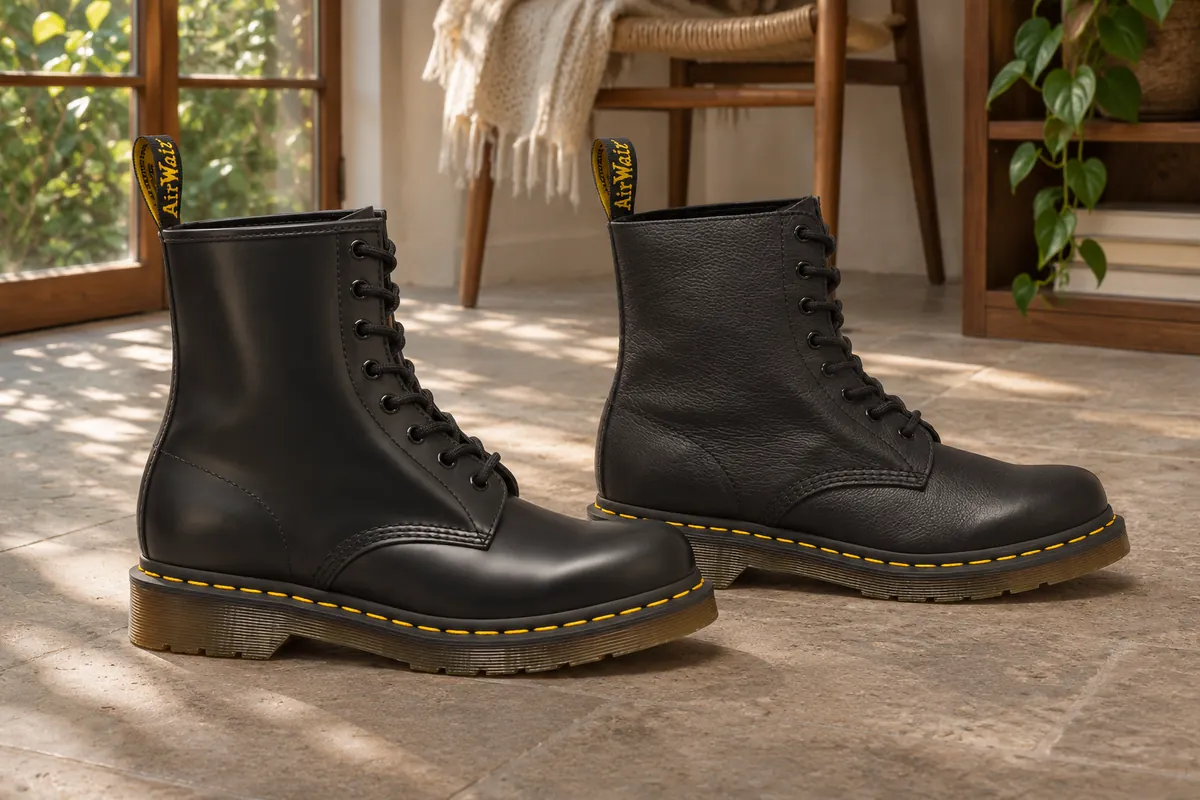
Compare the standard black 1460 Smooth reference 11822006 with the black Virginia reference 13512006, rather than every boot carrying the 1460 name. The published difference includes a softer, pebbled Virginia upper and a narrower fit description. A softer upper may be a reason to investigate that version, but it is not proof that the narrower shape will suit your foot. Establish fit before treating either material as the better everyday purchase.
The UK manufacturer currently calls reference 13512006 “1460 Soft Leather Lace Up Boots”; retailers may still use the Pascal Virginia name. This article concerns that precise reference and the standard Smooth reference checked on 22 November 2026. It excludes Bex and platform soles, lined winter boots, Made in England editions, vegan uppers and other 1460 materials.
Identify the two black 1460 references
| Feature to verify | 1460 Smooth, 11822006 | 1460 Virginia, 13512006 |
|---|---|---|
| Upper | Smooth leather | Soft, pebbled Virginia leather |
| Fit description | Standard reference: check its own size information | Manufacturer describes a narrower fit |
| Declared upper composition | 100% leather | 100% leather |
| Declared inner composition | 25% leather, 75% textile | 60% leather, 40% textile |
| Declared sole | PVC | PVC |
| Important buying limit | Smooth finish does not quantify stiffness for your pair | Soft material does not establish adequate toe or instep room |
Those percentages and descriptions do not measure finished-boot weight, breathability or how the leather will age. We have not established a numerical width difference between the selected sizes. A manufacturer’s narrower-fit description is a prompt for closer fitting, not a conversion formula from one version to the other.
Use the product code to stop a false comparison
A search for “black 1460” can return many products whose soles, lining or upper differ. Record the full manufacturer code, material and size before looking at the cheapest result. A retailer’s own stock number is useful to that seller, but it is not a replacement for the manufacturer reference when matching listings across shops.
The name change on the Virginia page is a practical example. A Pascal-labelled retailer result and a Soft Leather-labelled brand result may refer to the same 13512006 boot, while another similarly named page may not. Verify the code and declared materials before assuming either a match or a genuine product difference. Our purchase-documentation guide explains how to retain the listing details that define what you actually ordered.
Separate surface softness from the space inside
The Virginia upper is described as supple by Dr. Martens, which can be an appealing proposition when comparing leather finishes. However, flexibility at the ankle and adequate space at the forefoot are different questions. A foot compressed by the underlying shape is not automatically accommodated because the material bends more easily.
Our guide to footwear width and toe-box shape helps distinguish width, volume and contour. Use both feet’s measurements and the selected product’s chart rather than following a blanket instruction to size down. A numerical size change can also alter length and heel position, so it should solve the complete fit rather than one isolated area.
A return-safe boot-fitting sequence
- Wear the socks you expect to use with the boots and loosen the laces properly before entry.
- Position the heel, lace evenly and stand with your normal weight distribution.
- Check the front, sides and instep for clear restriction before walking indoors.
- Sit and bend gently to assess ankle movement without forcing a crease or modifying the boot.
- Stop the trial if the fit is clearly unsuitable and keep the pair within the seller’s return conditions.
This is an assessment sequence, not a promise that uncomfortable footwear becomes suitable after a specified number of days. We do not recommend enduring pain to preserve a purchase. If sizing is uncertain, the online foot-measurement and inspection method provides a better starting record for discussion with the seller.
Choose the finish you want to maintain
Smooth and pebbled finishes look different before any wear occurs. Decide which appearance fits the clothes and occasions you actually have in mind. Do not select a more formal-looking finish simply because it photographs well if you prefer a less polished surface in everyday use. Conversely, a soft texture is not automatically the finish you want for a particular outfit.
Inspect the delivered pair for uneven stitching, marks, fastening problems and differences between left and right. Compare both boots under similar light before deciding that a surface feature is a defect or an intended material characteristic. Our leather boot buying guide covering uppers, soles and care expands that inspection beyond the two references considered here.
Follow the care route for the selected upper
The checked Smooth page recommends wiping dirt away with a damp cloth and using an appropriate wax-based polish. The Virginia page gives a different treatment sequence involving drying after cleaning and the brand’s recommended balsam. Follow the actual upper’s current guidance, test any permitted treatment discreetly and avoid transferring a familiar routine from a different material.
Do not apply treatments during a preference-return inspection unless the seller has explicitly permitted them. A product intended to condition retained boots is not part of deciding whether an untouched new pair fits. Keep cleaning, polishing and any alterations until after you have accepted the purchase.
Neither a leather upper nor a visible welt establishes waterproof performance, a safety classification or an easy local resole. If one of those properties matters, seek the relevant specification or repair assessment before purchase. This comparison does not infer a certified use from the appearance of a familiar boot.
Compare the seller after fixing the reference
The same product can be offered through the brand and through multi-brand footwear retailers. First match 11822006 or 13512006, the selected size and new-product condition. Then compare the complete delivered price, collection confirmation and permitted fitting process. A promotional saving on another sole or lining is not a saving on the boot you selected.
The Schuh versus Office footwear retailer comparison addresses the shop-level decision separately. It does not confirm that both currently have your size. Use our UK clothing and footwear returns comparison to investigate how the return route changes with the actual seller, particularly if you plan an indoor fit comparison between two references.
We accessed the UK product pages at publication but did not reserve a size or establish a delivered checkout quote. Page-level promotions, stock selectors and bundle terms can change. This article therefore concentrates on the fixed product distinction instead of presenting an unverified “best deal” for a size that may not be available.
Put the premium through a realistic wear plan
Use the amount you would genuinely pay for the selected pair. If one option hypothetically costs £25 extra and earns 125 actual wears, the difference is 20p a wear before care or repairs. That calculation does not establish that either boot will last for 125 wears, or that the higher-priced one lasts longer. It simply exposes the assumption behind your price decision.
The cost-per-wear explanation for clothing and footwear can help test that estimate against your rotation. If the boots compete with several similar pairs, a high assumed wear count may be unrealistic. A modestly priced pair that does not fit remains a poor purchase even when divided by an optimistic future total.
Which standard 1460 should you investigate?
Investigate the Smooth reference
You want the specified Smooth finish and its shape appears compatible with your measurements. Confirm the actual pair’s fit and accept its material-specific care rather than expecting an exact break-in timetable.
Investigate the Virginia reference
The softer pebbled upper is part of your brief, and the narrower fit description is compatible with your foot. Assess space and support independently from how easily the leather bends.
Our verdict gives priority to the complete boot rather than a promise about softness. Virginia is a distinct material-and-fit proposition, not a universal comfort upgrade. Smooth is a distinct finish choice, not evidence of a longer life. The better shortlist entry is the correctly matched reference you can assess without relying on pain, guesswork or an unsupported durability story.
Manufacturer references for these two boots
Dr. Martens UK 1460 Smooth reference 11822006Dr. Martens UK 1460 Soft Leather Virginia reference 13512006
Smooth and Virginia buying questions
Why does the brand use Soft Leather while a retailer says Pascal Virginia?
Names can change or be shortened. Match reference 13512006 and the materials before deciding whether the two listings describe the same boot.
Is Virginia automatically better for a wide foot?
The manufacturer describes a narrower fit for this reference. Softness alone does not prove sufficient width or volume.
Should I choose a smaller size to allow for stretching?
There is no universal size-down rule established by this comparison. Check both feet, the selected chart and the complete indoor fit.
Do the two boots have identical linings?
The checked pages list different leather and textile proportions for the inner. Those percentages do not independently establish comfort or moisture performance.
Have you measured which leather lasts longer?
No durability trial was conducted on these references. We cannot turn a material name, a welt or a price difference into a measured lifespan ranking.
How the 1460 reference comparison was researched
We checked the two specified Dr. Martens UK pages on 22 November 2026 and separated their current names, declared compositions, fit descriptions and care routes. The fitting sequence and premium calculation are editorial decision tools, with hypothetical assumptions identified explicitly.
What remains untested about these boots
Recommended Today has not worn, flex-tested, weighed or repaired either pair for this article. No guarantee about breaking in, weather resistance or long-term sole life follows from the research. A different product code, lining or sole requires a new assessment.