Everyday trainers: cushioning, outsole, fit and cost per wear
A thick midsole does not guarantee comfort, and a familiar size does not guarantee fit. Match the trainer to your foot shape, daily surfaces, walking volume and support needs, then judge cushioning, flex, heel hold and outsole as one system.
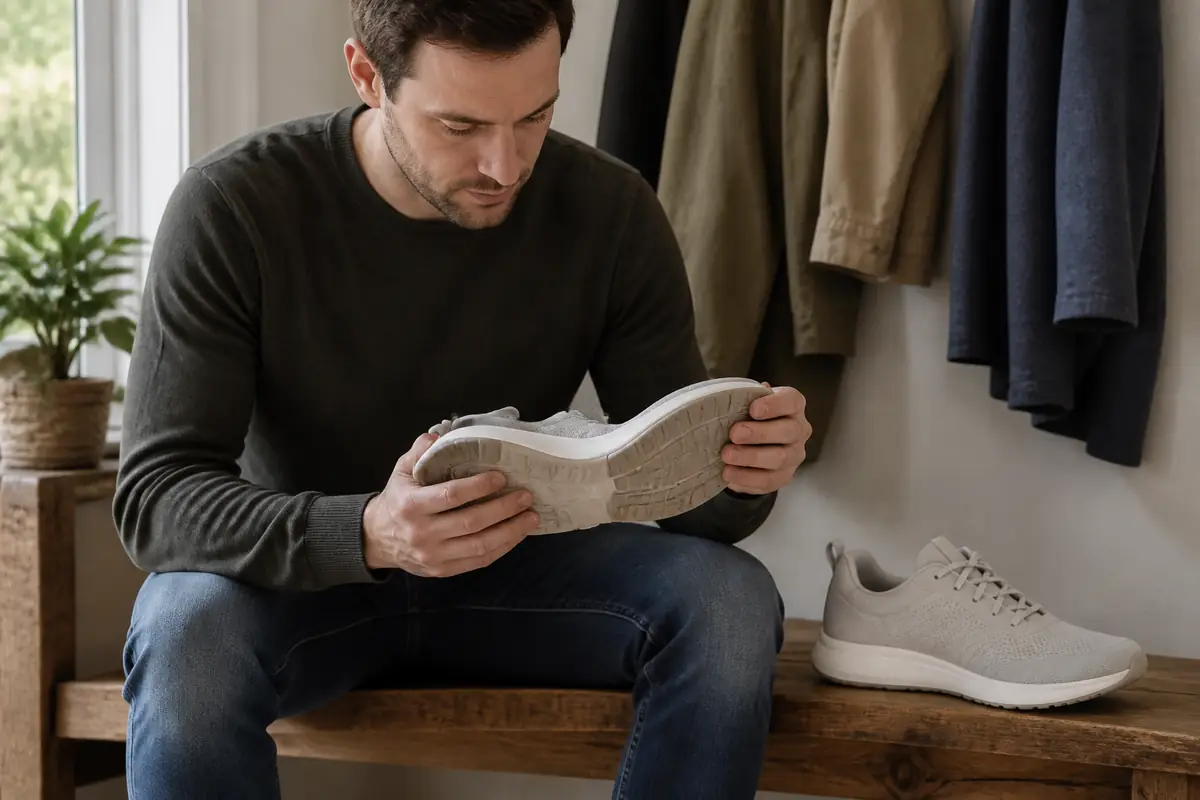
In this guide
Fit first, then choose the least complicated construction that suits the job
Your toes need space while the heel and midfoot remain secure. Try both shoes with the socks and any orthoses you use, walk on an allowed clean surface, and reject pressure, sliding or instability rather than hoping for a dramatic break-in. Compare outsole coverage and upper durability with your routes before paying for fashionable height or technical claims you do not need.
This is a consumer comparison guide, not a prescription. Pain, injury, diabetes-related foot risk or a need for orthoses should be discussed with an appropriate clinician. For ordinary daily wear, a disciplined fit and use check removes more poor choices than chasing a universal “best” shoe.
Write a use profile before looking at models
Estimate daily walking time, standing, commuting, stairs, weather and indoor versus outdoor use. Note whether one pair must also handle light exercise, work dress codes or frequent driving. A soft lifestyle trainer may suit short dry journeys but wear quickly on abrasive pavements; a structured athletic shoe may be unnecessary for low-mileage indoor use. Do not let a running category imply that the shoe is suitable for your gait or activity without checking its intended use.
Record foot length and width for both feet later in the day, then compare brand-specific guidance. Size labels vary. If you use insoles or orthoses, bring them and check removable insole depth and fastening range. The NHS footwear guidance from Guy’s and St Thomas’ emphasises correct fit and adequate room; individual clinical advice takes priority where applicable.
| Feature | Useful question | Common mistake |
|---|---|---|
| Toe box | Can toes lie naturally without side pressure? | Buying extra length to solve insufficient width |
| Heel hold | Does the heel stay secure without lace pain? | Accepting major slip as “break-in” |
| Cushioning | Is it comfortable and stable for your route? | Equating maximum thickness with support |
| Flex point | Does it bend where your forefoot bends? | Twisting and folding the whole shoe as a quality test |
| Outsole | Is rubber placed where your surfaces wear? | Judging grip by tread depth alone |
Fit both feet using a repeatable sequence
Try shoes at a time when your feet resemble their normal daily state. Wear the correct socks and lace from the toe upwards so the heel is seated without crushing the instep. Stand with full weight, check toe length and width, then walk, turn, use an incline if the shop provides one, and sit to see whether the collar or tongue presses. Repeat for both feet because asymmetry is normal.
The upper should hold the foot without distorting its natural shape. Toes need movement; the widest part of the foot should align with the shoe’s widest part; and the heel should not repeatedly lift or rub. A small adjustment in lacing can refine volume, but it cannot fix a last that is fundamentally too narrow, shallow or curved. Our leather-boots fit guide explains similar last and heel-hold principles for higher footwear.
Ten-minute fit check
- Remove stuffing and check both shoes internally.
- Insert any normal orthosis and wear normal socks.
- Lace evenly; do not force the foot into place.
- Stand and check the longest toe and widest joint.
- Walk at normal pace, turn and stop sharply.
- Notice heel lift, arch pressure, toe contact and instability.
- Try the other size or width before rationalising discomfort.
Interpret cushioning and support cautiously
Cushioning is the combined feel of insole, midsole geometry, foam, outsole and your own movement. Softer is not always more comfortable over a full day, and firmer is not automatically more supportive. Very high stacks can feel smooth yet less connected on uneven ground. Compare comfort and stability together, not by pressing a thumb into the foam.
Support is also not one visible plastic piece. Heel counter, base width, upper hold, lacing and midsole geometry interact. People vary, and a general retail guide cannot select a corrective shoe. If a clinician has advised a particular feature, take that specification literally and confirm compatibility rather than substituting a marketing category.
Read the outsole for route, grip and wear
Map your real surfaces: smooth indoor floors, wet paving, loose paths, transport steps or long dry pavement. Rubber coverage tends to improve abrasion resistance compared with exposed midsole foam, but adds weight. Tread shape, rubber compound, surface contamination and wear all affect grip, so no pattern guarantees slip prevention. Replace shoes when wear changes stability or exposes construction, not at an invented universal mileage.
Inspect how the outsole joins the upper and midsole. Small cosmetic glue marks are different from gaps or lifting. Flex should occur near the forefoot rather than a weak midfoot collapse, but do not aggressively bend a new product in a way the retailer could treat as damage. For material labels, consult our care and material-label guide.
Match upper and fastening to daily use
Open mesh may ventilate well but admit rain and snag more easily. Dense textile or leather can resist abrasion but feel warmer. Overlays can hold the foot; poorly placed seams can rub. Laces offer adjustable volume, while elastic systems trade adjustment for speed. Examine the toe crease, collar lining and flex areas because they usually reveal wear before decorative panels do.
Water-resistant finishes are not the same as waterproof construction, and waterproof membranes can increase warmth. For mostly urban use, quick drying and a spare pair may be more practical than sealing every walk. Follow the exact care instructions and avoid heat that can deform foam or adhesives.
Calculate cost per comfortable wear
Start with the paid price plus delivery, insoles, cleaning products and likely return cost. Estimate realistic weekly wears, not an aspirational number. Divide by expected comfortable wears, then update the calculation when outsole, upper or cushioning condition changes. Our cost-per-wear guide provides the full method.
A more expensive pair can be better value if it fits, is used and survives the route; an unused bargain is expensive per wear. Durability claims should be supported by construction detail, repair options or meaningful warranty terms. Use our specification comparison and returns-policy checklist before ordering multiple sizes.
Prioritise lighter flexibility when
- Routes are mainly dry and even.
- You value low weight and natural movement.
- The upper still holds heel and midfoot.
- Outsole coverage matches modest mileage.
Prioritise structure and coverage when
- You stand or walk for long periods.
- Routes include rough or wet surfaces.
- An orthosis needs depth and fastening range.
- Toe and heel areas receive repeated abrasion.
Buying online without turning the home into a showroom
Shortlist from measurements, last description, material, use and return terms before ordering. Save the size chart and product page because information can change. Try indoors on a clean surface without removing tags. Compare no more pairs than you can track and return correctly. The product-shortlisting guide and UK returns guide help keep the process controlled.
Rotate and maintain without promising extra life
Let damp trainers dry naturally with removable insoles loosened where the instructions allow. Avoid direct high heat, which can distort foam, textile and adhesive. Brush away dry dirt before using a suitable cleaner and test it on an inconspicuous area. Rotation can give each pair time to dry and makes changes in wear easier to see, though it does not guarantee that materials last a particular number of miles.
Inspect the same places monthly: heel lining, lace eyelets, toe flex, outsole edges and upper-to-sole join. Uneven wear can be useful information, but do not self-diagnose gait or modify footwear aggressively from a pattern alone. When damage causes instability, exposes sharp material or allows water through an intended barrier, repair or replacement becomes a function decision rather than a cosmetic one.
Balanced verdict
Good everyday trainers are not defined by the thickest foam, deepest tread or most technical description. They fit both feet, remain stable on the intended route, hold securely without pressure and use materials proportionate to likely wear. Begin with use and fit, then compare construction and cost. If a fashionable model requires you to excuse discomfort in the first ten minutes, it has already failed the everyday brief.
Official and clinical sources
Frequently asked questions
Should trainers feel tight at first?
No. They may feel secure, but toes should have room and there should be no significant width, arch or collar pressure.
Does more cushioning mean more support?
No. Cushioning feel and stability are related but different; geometry, upper hold and base width also matter.
How much heel slip is acceptable?
Minor movement can occur in some shapes, but repeated lift, rubbing or instability suggests a poor match.
Can I use running shoes for everyday walking?
Often, if fit and construction suit you, but check intended use, stability, durability and clinical requirements.
When should trainers be replaced?
When wear, damage, loss of comfort or altered stability affects safe use—not at one universal mileage.
Is waterproof always better?
No. It may help in sustained wet conditions but can be warmer and slower to vent in ordinary indoor-heavy use.
How we researched this guide
Limitations
Checked 29 August 2026 against current NHS footwear guidance, GOV.UK labelling and consumer information. We compared fit, cushioning, upper, outsole and value decisions without wear-testing models or prescribing clinical footwear. Feet, gait and health needs differ, and material specifications change. Verify the exact product and obtain professional advice for pain, injury, diabetes-related risk or orthoses.