How to choose a winter coat: fibres, insulation, fit and care
A useful winter coat manages wind, rain, insulation, movement and moisture for a defined routine. Compare the whole system — shell, fill, lining, hood, closure, length and layering room — instead of trusting one fibre percentage or “warm” label.
In this guide
Choose for the coldest normal journey, not an abstract winter
Write the temperature, wind, rain, activity, journey length and layers the coat must handle. Then compare shell protection, insulation distribution, closure and fit with those layers. A slightly less insulated coat with better wind control and usable ventilation can outperform a bulky coat that is wrong for the routine.
This guide covers everyday adult winter coats for UK commuting, errands and ordinary outdoor use. It does not select specialist mountaineering, workwear or protective clothing and does not assign universal temperature ratings. Individual cold tolerance, health, activity and weather vary.
Build a winter-use brief
Record the coldest routine day, exposed waiting time, walking pace, rain, wind, public transport, car use and indoor transitions. A stationary school-gate wait needs more insulation than a brisk commute, while repeated train and shop entry makes ventilation and weight important.
List the normal layers and carried items. A coat over a shirt differs from one over a thick jumper or suit jacket. The workwear capsule guide helps define those combinations before sizing.
| Coat system | Strength | Trade-off | Evidence to check |
|---|---|---|---|
| Wool-rich tailored coat | Structured appearance and useful dry-cold comfort | Weight, rain limits and specialist care | Fabric weight, lining, interlining and care |
| Synthetic insulated coat | Even insulation and often easier care | Bulk, breathability and compression changes | Fill type, distribution and wash method |
| Down insulated coat | High warmth-to-weight potential | Moisture care, leakage and ethical evidence | Fill power, fill weight, baffles and sourcing |
| Waterproof insulated parka | Weather barrier and warmth in one | Weight, cost and indoor overheating | Seams, hood, ventilation and care |
| Shell plus separate insulation | Adaptable across conditions | More pieces and fit coordination | Layer compatibility and combined movement |
Winter-coat evidence note
- Weather, activity and longest exposed period.
- Shell fibre, construction and weather claim.
- Insulation type, amount and distribution.
- Lining, interlining, seam and baffle construction.
- Hood, collar, cuffs, storm flap and hem coverage.
- Body and garment measurements with intended layers.
- Cleaning, drying, reproofing and repair route.
- Delivered price, return conditions and cost per wear.
Read the shell as construction, not only fibre
Wool, polyester, nylon, cotton and blends can all appear in winter shells, but fibre content alone does not describe density, weave, coating, membrane, wind resistance or water behaviour. A dense wool melton and a loose wool blend with the same percentage can perform differently.
Use the fabric-composition guide to separate fibre from structure. Ask for fabric weight or clear construction evidence where it matters. A soft handfeel in a photograph is not proof of warmth or durability.
Distinguish weather resistant from waterproof
Water-resistant or shower-resistant claims should identify a treatment, construction or test. Waterproof performance depends on fabric, seams, closures and design; water can enter through an open zip or unprotected pocket even when the shell resists rain.
For sustained wet weather, read the waterproof jacket guide on hydrostatic-head claims, seam sealing and breathability. A wool coat can shed brief light rain but should not be marketed as a storm shell without evidence.
Wind control can matter as much as fill
Moving air removes warmed air around the body. Inspect shell density, front closure, storm flap, collar, hood, cuff and hem. A warm fill with a gaping neck and loose cuffs may feel colder than a lighter system that seals adjustably.
Windproof language needs a test or defined construction. Also plan ventilation: a fully sealed coat can overheat during walking, making moisture and later chill more likely. Two-way zips, adjustable cuffs and opening options improve range.
Understand insulation types
Down uses clusters that trap air and can provide high loft for weight. Fill power describes loft quality under a test but not the total amount in the garment; fill weight and distribution also matter. Synthetic fills vary widely in structure, weight, recovery and wet performance, so a generic “thermal” label is incomplete.
Wool coats may rely on dense shell, lining and hidden interlining rather than a loose fill. Our wool-coat guide covers wool percentage, weight, lining and construction in detail. Compare each coat within its intended system rather than forcing one insulation metric across every category.
Inspect distribution and cold spots
Baffles keep loose insulation in place. Wide unfilled seams, compressed shoulders and sparse side panels can create cold zones. Product photographs should show front, back and side distribution. Stitch-through construction is lighter but can reduce insulation at seams; box baffles add complexity and bulk.
Check hood, collar, sleeves and pockets. A highly insulated body with thin sleeves may not suit stationary use. Insulated hand pockets add comfort but should not replace gloves in conditions that need them.
Length changes coverage and movement
Hip, thigh, knee and calf lengths protect different areas. More length can improve warmth in wind but adds weight, restricts stride or catches when cycling and driving. A rear vent can restore movement while creating an opening in strong wind.
Measure the garment length from the stated point and compare with the wearer, not only the model. Test sitting, stairs, getting into a car and normal walking. A long coat should not drag or expose a large gap when fastened.
Fit with the real layers
Open the exact size chart and determine whether dimensions are body or garment measurements. Compare shoulder, chest, waist, hip, sleeve, upper arm and length with a coat that fits. Intended ease must accommodate insulation and movement without allowing uncontrolled air movement.
Try with the thickest normal jumper, jacket or scarf. Reach forward, lift arms, sit and fasten every closure. The UK size-chart guide explains body versus garment dimensions and why the label alone is insufficient.
Shoulders and armholes set mobility
Tailored set-in shoulders should sit near the intended shoulder point, while raglan and dropped constructions differ. Tight armholes can restrict layered movement; excessively low armholes can pull the body when arms lift. Insulation occupies internal volume, so shell measurements alone can mislead.
Check backpack straps if used. Repeated compression and rubbing at shoulders can affect fabric and insulation. A coat designed for casual wear may not suit heavy pack use.
Hood and collar need a real task
A hood should turn with the head, adjust around the face and work with the intended hat. A large fashion hood can catch wind or obscure vision; a small fixed hood may not cover layers. Removable hoods add fasteners that should lie flat and remain secure.
Fasten the collar with a scarf and without one. Check zip guards against skin and whether drawcord ends are safely placed. Faux-fur or other trim adds care and wet-weather considerations without proving warmth.
Closures and pockets are heat-management tools
A two-way zip can ease sitting and stride. Snaps, toggles and storm flaps change wind protection and accessibility. Test with gloves if relevant. Buttons should be reinforced; a zip should run without catching lining.
Pockets need usable openings, secure closure and placement that does not conflict with bags or car belts. Interior pockets can protect a phone from rain but body heat and condensation still matter.
Read lining and interior finishing
A slippery woven lining eases layering but may trap moisture differently from mesh or brushed fabric. Check sleeve lining, seams, quilting, hem, spare buttons and access for repair. A decorative lining does not prove durable construction.
Look for loose insulation, uneven quilting, pulling at pockets, open seam allowances and a hem that hangs evenly. Photograph a manufacturing fault before wear.
Care can decide practical warmth
Read the full care label before buying. Down can require a large-capacity machine, low heat and extended drying with periodic redistribution; incomplete drying can damage loft and create odour. Wool-rich tailoring may require professional cleaning. Waterproof shells can need approved washing and reproofing.
The care-label guide helps interpret symbols. Price the actual routine, storage and drying space. A coat that cannot be cared for correctly will not preserve its intended performance.
Check repair and longevity
Ask whether zips, snaps, drawcords and cuffs can be repaired and whether the maker offers spare parts or service. Patches may work on some technical shells but need compatible adhesives and surface preparation. Tailored wool can be altered, though shoulders and armholes are complex.
Dark abrasion points, pilling, fill migration and coating failure have different causes. Construction and appropriate use matter more than a vague “investment” label.
Calculate cost per useful winter
Add delivery, alteration, cleaning, reproofing and likely repair. Estimate wears only for conditions the coat can genuinely handle. The cost-per-wear method makes optimistic assumptions visible.
A versatile layered system can produce more wears than a single extreme coat, while someone outdoors for long stationary periods may justify dedicated insulation. Buy the routine, not the category prestige.
Protect the return option
Try indoors with clean layers and tags attached. Check closures, movement, hood, pockets, hem and appearance in daylight. Do not wear in rain, apply treatments or remove care labels until the keep decision is made.
Use the returns-policy audit for bulky parcel charges, carrier limits and refund timing. A coat can be expensive to return even where a change-of-mind route exists.
Choose an integrated insulated coat when
- Cold, wind and exposure are predictable.
- One garment must be quick and simple.
- Fill, shell and closure evidence fit the routine.
- Care and indoor transitions are manageable.
Choose a layered system when
- Activity and temperature vary widely.
- Rain protection is needed separately from warmth.
- Indoor transitions make ventilation important.
- Existing layers can do more than one job.
Balanced verdict
A winter coat is a weather and layering system, not a fibre competition. Shell, insulation, closure, length and fit must work together for the real journey.
A down number, wool percentage or waterproof word is useful only with context. Choose documented protection and usable care over maximum bulk, and test it with the layers and movements that define the season.
Check current official information:
GOV.UK textile labellingGOV.UK returns and refundsGOV.UK online and distance selling
Frequently asked questions
Is a higher wool percentage always warmer?
No. Fabric weight, density, lining, interlining, wind, fit and coat design all affect warmth.
Does fill power tell me how warm a down coat is?
It describes loft quality, not total fill amount or garment construction. Fill weight, distribution and shell also matter.
Should a winter coat be one size larger?
Use garment measurements and try with intended layers. Automatic sizing up can misplace shoulders and allow excessive air movement.
Is water resistant the same as waterproof?
No. Waterproof performance needs defined fabric and construction evidence, including seams and closures.
Is a longer coat always warmer?
It covers more area but can restrict movement and add weight. Wind control, insulation and fit still matter.
Should I wash a new coat before deciding?
No if you may return it. Inspect and try it clean with tags attached, then follow care instructions only after keeping it.
How we researched this guide
Recommended Today reviewed current UK textile and distance-selling guidance and mapped winter outerwear across shell, weather resistance, insulation, distribution, closure, length, layering, care and cost.
Limitations
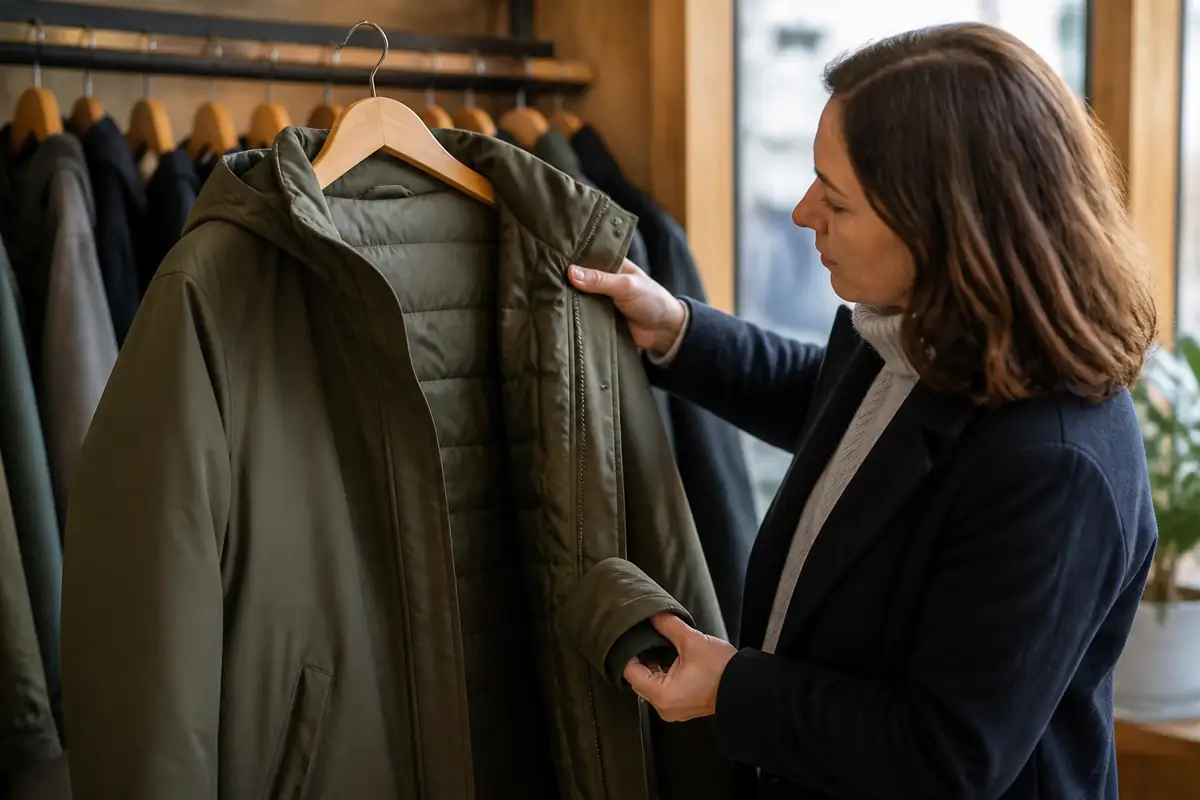
We did not climate-chamber or wear-test coats and do not assign universal temperature ratings. Weather, bodies and products vary. Recheck the exact composition, construction, care and terms before purchase. The image is an editorial illustration, not a photograph from a product test.