How to buy a wool coat: composition, lining, construction and fit
A high wool percentage can be useful, but it does not settle warmth, durability or fit. Compare the cloth, lining, seam work, closure and space for real winter layers before paying for a fibre headline.
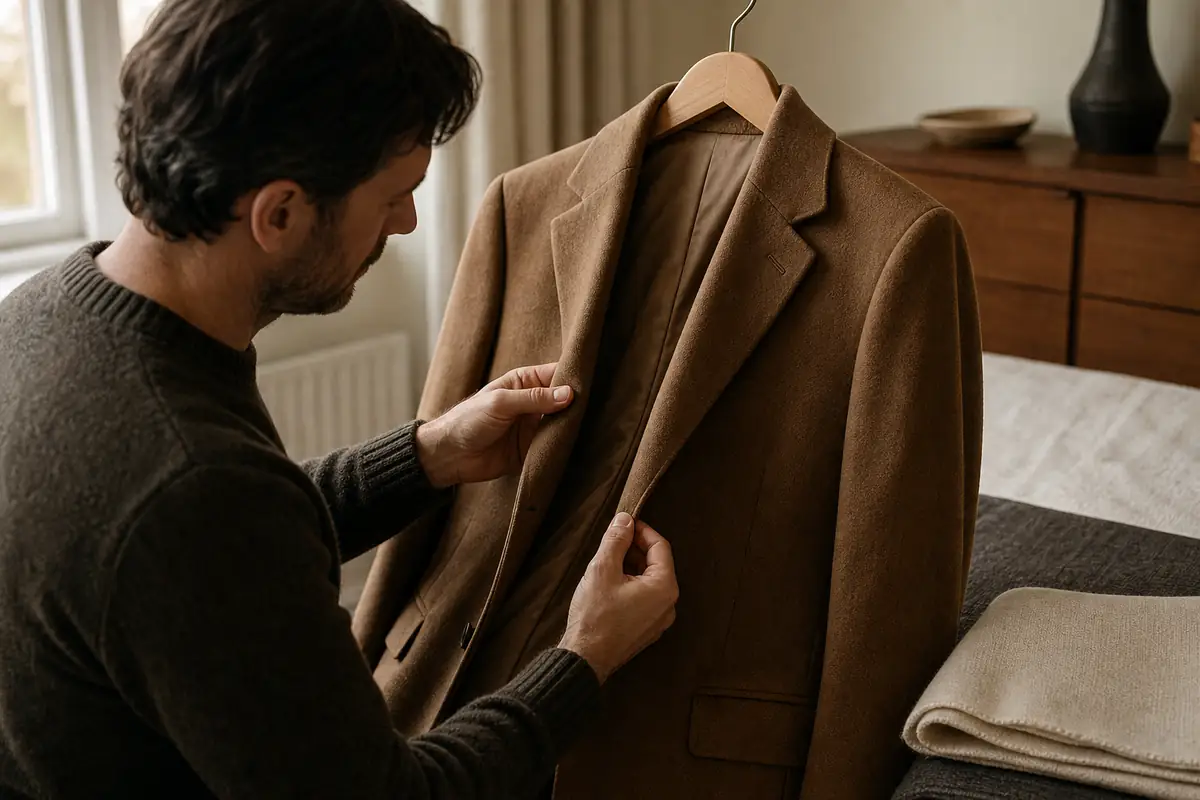
Judge the complete coat, not the percentage alone
Start with a clearly labelled fibre composition, then examine fabric density, recovery, lining, seam stability and movement over the clothes you will actually wear. More wool may improve warmth and handle, while synthetic fibres can add abrasion resistance or reduce price; neither fact guarantees quality. The best value is a balanced construction that fits your climate, commute and care tolerance.
“Wool coat” covers lightweight fashion layers, dense winter overcoats and blends with very different behaviour. Define your temperature range, rain exposure and expected layers before comparing details.
Choose the job before the silhouette
| Use | Useful features | Trade-off | Fit test |
|---|---|---|---|
| Daily commute | Secure closure, pockets, resilient cloth | More hardware and weight | Sit, reach and carry a bag |
| Formal overcoat | Clean drape, structured collar, longer line | May restrict casual movement | Wear over a jacket |
| Light transitional coat | Softer unstructured cloth | Less wind protection | Check shoulder stability |
| Cold-weather walking | Length, close neck, usable pockets | Bulk and slower drying | Stride and raise arms |
| Occasional statement coat | Distinct colour or shape | Lower cost-per-wear potential | Style with three outfits |
Inspect these eight areas
- Shell fibre percentages and any separate component labels.
- Cloth density, surface shedding and recovery after gentle compression.
- Shoulder, collar, lapel and front-edge stability.
- Lining fibre, coverage and ease pleats.
- Seam allowance, puckering and loose thread ends.
- Button reinforcement, buttonhole finish and spare fastenings.
- Pocket depth, placement and stress at openings.
- Care label, repair access and return conditions.
Read the fibre label precisely
UK textile labels should identify fibre content. “Wool blend” is incomplete shopping evidence without percentages: a coat may combine wool with polyester, polyamide, acrylic, cashmere or other fibres. Check whether the stated mix describes the outer fabric only and whether the lining has its own composition.
Use the fabric-composition guide to separate fibre identity from performance assumptions. Recycled, responsible or premium language needs clear scope; the sustainable-fashion claims guide helps test environmental wording rather than treating it as a construction grade.
Wool percentage is not a warmth rating
Warmth also depends on fabric weight, weave or knit structure, air trapped within the cloth, coat length, closure and wind penetration. A dense 60% wool blend can feel more protective than a loose, thin fabric with a higher wool percentage. Product pages that omit weight and close-up imagery leave uncertainty.
Press an inconspicuous area gently and release. Cloth should recover without a permanent crushed patch during ordinary handling. Look for excessive loose fibre on the surface, but recognise that some nap is intentional. The fabric-weight guide explains how to use gsm, ounces and visual clues without inventing precision.
Check pilling risk where friction happens
Pilling forms through fibre movement and abrasion; blend, yarn, finish and wear all matter. Inspect underarms, bag-contact areas, pocket edges and side seams on a sample or after delivery. A very soft brushed surface may feel luxurious but need more maintenance than a compact finish.
Do not treat one fibre as pill-proof. Long fibres, strong yarn and stable fabric can improve wear, while repeated shoulder-bag friction can roughen almost any coat. Ask whether light brushing is recommended and avoid aggressive depilling that thins the cloth.
Lining should support movement, not just hide seams
A full lining helps sleeves slide over knitwear and protects the inside from abrasion. Half or partial lining can reduce weight and show more of the construction. Check for an ease pleat at the centre back, enough length at the hem and slack where sleeve lining joins the armhole.
Pulling, twisted sleeves or a lining that hangs below the shell signals poor balance or finishing. Polyester lining can be durable and slippery; viscose-family linings may feel breathable but vary in strength. Fibre name alone still does not replace seam inspection.
Examine structure at collar, shoulders and front edge
A tailored coat may use interfacing to hold lapels and prevent the front from collapsing. Look for smooth roll, symmetrical notch placement and no bubbling. Soft unstructured coats need not look rigid, but the two sides should still hang evenly.
Shoulder fit sets the coat’s frame. A conventional set-in shoulder usually places the seam near your shoulder point, while dropped or raglan designs intentionally sit elsewhere. Judge the intended cut, then check that neither armhole bites nor excess fabric folds unpredictably.
Fit over the thickest realistic layer
Try the coat over the jumper or jacket you expect to wear. Fasten every closure, cross your arms, reach forward, sit and take a long stride. The back should not pull into a tight horizontal line and the front should close without forcing buttons.
Extra size is not the only solution: too-wide shoulders can distort sleeves and collar position. Compare garment measurements with a trusted coat and use the clothing size-chart guide. For feasible sleeve or hem changes, consult the alterations guide before assuming a tailor can remake the shoulder.
Test closure and weather practicality
Buttons should be firmly attached, ideally with reinforcement appropriate to the fabric. Buttonholes should open cleanly without loose loops. A concealed placket reduces visual interruption; a double-breasted front adds overlap but can change fit when worn open.
Check whether the collar closes high enough for wind, whether a scarf fits comfortably and whether pockets hold a phone without pulling the front. Wool is not automatically waterproof. Persistent heavy rain may require a different outer layer, and a soaked coat needs careful drying away from direct heat.
Inspect seams, hem and pattern alignment
Major seams should be even, secure and free from puckering. A generous hem allowance can help future repair, while raw or poorly secured inner edges may fray. On checks or stripes, alignment at the centre front and prominent seams is a useful sign of cutting care, though perfect matching everywhere raises fabric use and price.
Our clothing-quality guide provides a systematic after-delivery inspection. Photograph any flaw before removing tags and distinguish a genuine defect from the normal character of a brushed wool surface.
Plan care before buying pale or long-nap cloth
Read the care label before checkout. Dry-clean-only instructions add cost and travel; specialist pressing may be needed to preserve shape. Between cleans, air the coat, empty pockets, brush as directed and use a broad hanger that supports the shoulders.
Store it clean and dry with breathable protection and sensible moth prevention. Do not compress it under heavy garments. The care-label guide translates symbols, while the cost-per-wear guide includes cleaning and repair rather than dividing price by an imaginary wear count.
Assess value with a replacement horizon
Compare purchase price, likely wear frequency, cleaning, button or lining repairs and whether the silhouette works across several outfits. A neutral coat is not automatically better value if it never fits your real wardrobe. Conversely, a fashionable detail can shorten the period you want to wear it.
Look for spare buttons, accessible customer service and clear defect remedies. For online orders, use the returns-policy audit and keep the coat indoors while checking fit.
Warmth, handle and long wear justify care
The cloth is dense, construction is sound and you accept brushing, careful drying and possible specialist cleaning.
Durability, budget or easy wear leads
The blend is clearly labelled and the finished cloth performs well; do not reject it merely because the wool number is lower.
Balanced verdict
A strong wool-coat purchase combines honest fibre labelling with dense appropriate cloth, stable construction and room for real layers. No wool percentage rescues twisted lining, weak closures or poor shoulder fit.
Choose the coat you can maintain and wear repeatedly. Inspect it under good light, move in it before removing tags and price care into the decision.
Check current official information:
GOV.UK textile labelling overviewGOV.UK textile labelling guidanceGOV.UK returns and refunds
Frequently asked questions
What wool percentage is best for a coat?
There is no universal threshold. Compare density, construction, climate, care and price alongside the declared percentage.
Is cashmere in a coat always better?
No. It can change softness and handle, but amount, fibre quality and fabric construction matter; the name alone does not guarantee durability.
Should a winter coat be fully lined?
Full lining often improves layering and protects the inside, but a well-finished partial or unlined design can suit lighter use.
How much room should a coat have?
Enough for intended layers and unrestricted reaching, sitting and walking, without shoulders collapsing or the collar standing away.
Can a wool coat be waterproof?
Wool can resist light moisture, but an ordinary wool coat is not automatically waterproof. Check the exact finish and care instructions.
Is dry-clean-only a quality sign?
No. It is a care requirement, not a grade. Include the cost and convenience in the buying decision.
How we researched this guide
Recommended Today reviewed current UK textile-labelling and consumer guidance. We assessed coats by composition, cloth, lining, structure, movement, care and lifetime cost without ranking brands or claiming wear tests.
Limitations
We did not laboratory-test fibre, warmth or abrasion and did not fit a particular body. Specifications and care instructions change; recheck the exact label on publication day. The original image shows inspection of a fictional unbranded plain coat with no label, tag, logo, text, package or price. Links are editorial and non-affiliate.