Waterproof jackets explained: ratings, seams, breathability and fit
A waterproof fabric rating does not describe the whole jacket. Water can enter through untreated seams, openings and poor hood fit, while internal moisture can feel like leakage. Compare the membrane or coating, seam construction, ventilation and fit as one weather system.
In this guide
Buy for exposure and movement, not the largest laboratory number
For sustained rain, require an explicit waterproof claim, sealed critical seams and a hood, cuffs and hem that remain protective while moving. Ask which test produced any hydrostatic-head or breathability value and do not compare numbers from different methods as if identical. Leave enough room for intended layers without making the shell flap or gape.
This guide covers everyday and recreational rain shells. Mountaineering, offshore, cycling at speed, workplace PPE and high-visibility clothing have additional design or certification needs. No jacket prevents every wet feeling in every condition.
Start with the weather job
Define duration, wind, activity and shelter. A packable shell for a fifteen-minute commute has a different brief from a jacket worn all day on exposed hills. Note whether you carry a rucksack, cycle, use walking poles, wait on platforms or need to fit a helmet. Decide whether the jacket is a stand-alone layer or part of a system with fleece and insulation.
Write minimum features before comparing fabrics: hood type, pocket access, pit zips, cuff adjustment, hem length, packability and compatible layers. The shortlisting framework stops an impressive membrane name from replacing the use case, while the autumn layering guide helps separate rain protection from warmth.
| Claim or feature | Useful evidence | What remains unknown | Buying check |
|---|---|---|---|
| Waterproof rating | Value plus named test method | Seams, openings and wear | Check complete garment construction |
| Breathability value | Method, units and conditions | Your sweat rate and layering | Compare only like with like |
| Taped seams | All or critical seam statement | Tape width, bonding and longevity | Inspect shoulders and hood |
| DWR finish | Care and renewal instructions | Long-term beading | Treat as surface management |
| Water-resistant | Specific exposure or test claim | Sustained-rain performance | Do not read it as waterproof |
Fit check with the intended layers
- Raise both arms without the hem exposing the waist.
- Turn the head with the hood tightened normally.
- Check the brim protects vision without falling over the eyes.
- Close cuffs over gloves or bare wrists as intended.
- Wear the normal rucksack and check shoulder seams and pockets.
- Sit, bend and reach without tightness across the back.
- Confirm zips can be operated with cold or gloved hands.
Hydrostatic head needs its test context
Hydrostatic-head figures express resistance to water pressure in a fabric test, commonly as a column height. A larger value can indicate greater resistance under that method, but test standards, sample preparation and conditions matter. The number applies to the tested material, not automatically every seam, zip or finished garment after wear and washing.
Do not create false bands such as “this number is always enough for British rain”. Wind pressure, kneeling, pack straps, contamination and ageing change real exposure. Ask for the named method and whether the figure is initial or after conditioning. If a retailer lists only “weatherproof”, seek a precise waterproof or water-resistant statement before relying on it.
Seams and openings often decide the outcome
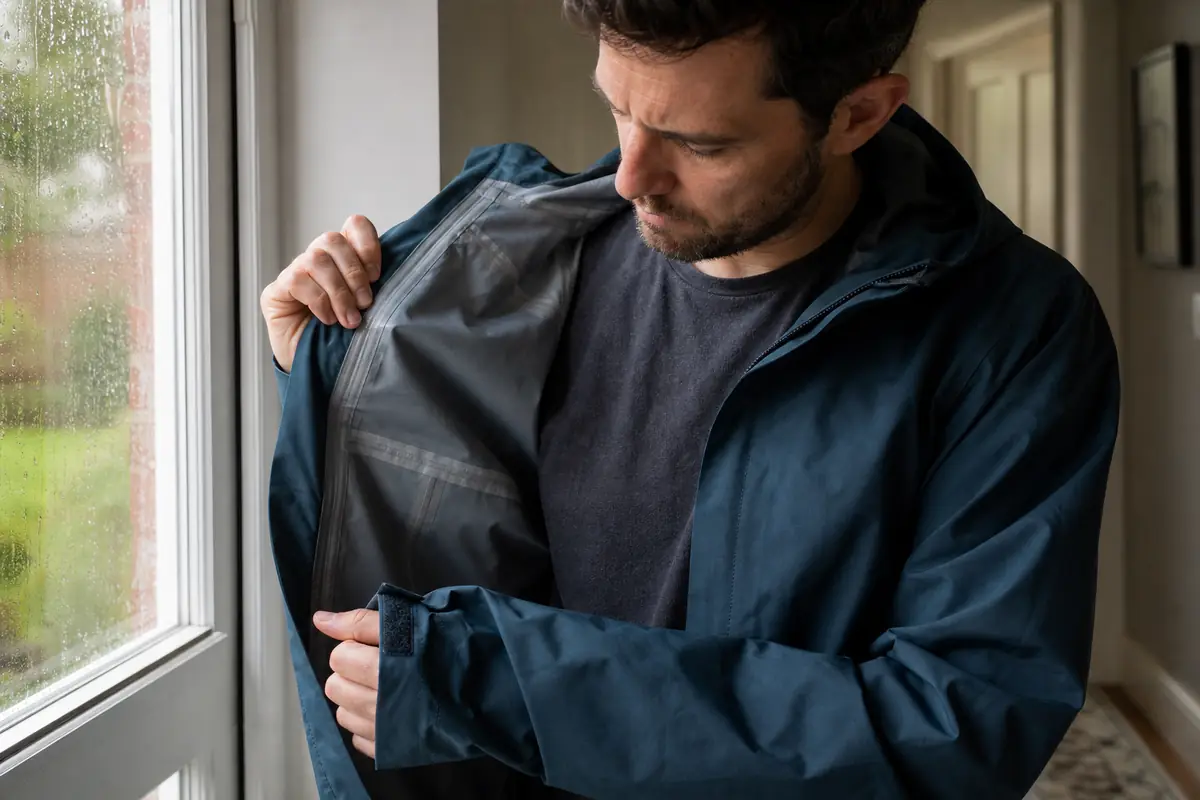
Needle holes can admit water. Fully taped garments cover all relevant seams; critically taped products may protect shoulders, hood and other exposed zones but leave lower-risk seams untreated. Welding and seam-sealing technologies differ. Look inside under good light for continuous, well-adhered tape without bubbles, lifting or missed junctions.
Main zips may use coated constructions, storm flaps or both. Pocket zips can be less protected than the centre front. Hood drawcord exits, vents and hem channels also need thoughtful design. A waterproof pocket claim is not guaranteed by a waterproof jacket claim, so keep electronics separately protected.
Breathability numbers are not universal comfort scores
Methods may report moisture-vapour transmission or evaporative resistance using different units and directions. Values from unlike methods cannot be ranked directly. Fabric moisture transport also does not eliminate heat and vapour faster than the wearer produces them. Humidity, temperature, effort, base layers and pack coverage all affect comfort.
Mechanical ventilation can be more controllable than chasing a marginal fabric difference. Pit zips, two-way fronts, mesh-backed pockets and adjustable cuffs release heat, but openings can admit rain. For high output, prioritise easy vent operation and a cut that allows air without exposing the torso.
Distinguish membrane, coating and face fabric
A waterproof layer may be a membrane laminated to textiles or a coating applied to fabric. Two-layer, 2.5-layer and three-layer constructions package protection differently: lining, printed protective layer or bonded backer affect weight, feel, durability and price. No layer count is automatically best for every use.
The outer face protects the waterproof component from abrasion and carries a durable water-repellent finish that helps water bead. When the face wets out, the barrier may still resist water, but breathability and comfort can fall. Fibre composition and denier do not alone establish tear or abrasion performance. Read our fabric composition guide alongside construction evidence.
Fit the hood, shoulders, cuffs and hem
A hood should turn with the head and leave peripheral vision. Volume adjustment helps accommodate bare heads or helmets; a wired or structured brim can keep water away from the face. Check that tightening does not pull the collar into the mouth or expose the forehead. A stowable hood trades structure for neatness.
Raglan or articulated sleeves can improve reach, while seam placement under pack straps may affect wear. Cuffs should close without creating hard pressure. Hem and tail length must protect while walking or sitting without restricting stride. Women’s, men’s and unisex labels are less useful than actual garment and body measurements.
Care preserves a system; it cannot repair damage
Follow the exact label for washing, detergent, rinsing, drying and surface-treatment renewal. Ordinary fabric softener can interfere with some technical finishes; household waterproofing products may be incompatible. Clean dirt and body oils because contamination can affect beading and breathability. The care-label guide explains the symbols, but the manufacturer’s technical instructions take priority.
Inspect seam tape, cuffs, shoulders and zip coatings. A clean face that no longer beads may need an approved renewal treatment; peeling tape, punctures or delamination require repair assessment. Ask whether the maker offers patch kits, repair or warranty evaluation before assuming a premium shell is serviceable.
Price the full layer system
A shell without insulation may need a base and midlayer. Add care products, repair, delivery and likely return costs to the purchase price. A highly rated jacket can be poor value if hood fit fails; a modest shell can be excellent for short urban exposure. Use cost per wear only with realistic wet-weather use.
Online, save the rating method, seam statement and care page. Try indoors with layers and pack while keeping tags and fabric clean. The returns-policy audit helps identify who pays when sizing fails and whether protective coatings face special conditions.
Inspect on arrival without staging a rain test
Check the jacket dry in strong neutral light. Follow every tape junction, open and close zips, tighten hood and hem controls, and confirm no cord end or adjuster is loose. Compare the received size and fibre label with the listing. Do not shower-test, soak or apply treatment while the change-of-mind decision remains open, because that can alter the garment and return position.
Choose a lighter shell when
- Exposure is shorter and shelter is available.
- Pack size matters more than abrasion resistance.
- Activity is high and ventilation is easy.
- The hood and seams still match the route.
Choose a more protective build when
- Rain and wind are sustained or exposed.
- A pack repeatedly loads shoulders and back.
- All seams and openings need stronger control.
- Repair support justifies the added cost and weight.
Balanced verdict
A waterproof jacket is only as convincing as its weakest opening, seam or fit point. Use ratings to compare like-for-like materials, then test the hood, cuffs, hem, ventilation and layers as a finished system. Buy for the harshest weather you realistically face, not an expedition story that adds weight and cost to every ordinary journey.
No breathable fabric can make unlimited sweat disappear. Manage pace, layers and vents, and maintain the surface according to the exact instructions.
Check current official information:
GOV.UK textile labellingGOV.UK product labelling and claim accuracyGOV.UK consumer rights and advice routes
Frequently asked questions
Is water-resistant the same as waterproof?
No. Water-resistant usually describes more limited exposure; verify the exact claim and test.
Does a higher waterproof rating always mean a better jacket?
No. Test method, seams, openings, fit, durability and intended exposure also decide suitability.
Why do I feel wet inside a waterproof jacket?
Condensation and sweat can accumulate when vapour production exceeds transport and ventilation, although leakage is also possible.
Are taped seams necessary?
Needle holes need a water-control method for sustained rain. Check whether all or only critical seams are sealed.
Can I wash a waterproof jacket?
Yes when the care instructions allow it. Use the specified products, rinse and drying method.
Do I need insulation too?
A shell mainly controls weather. Add compatible layers when temperature and activity require warmth.
How we researched this guide
Recommended Today reviewed current UK textile-labelling and product-claim guidance and compared common waterproofing, seam, ventilation, fit and care specifications.
Limitations
We did not laboratory-test fabrics, measure vapour transfer or field-test jackets. Test methods and wearer conditions vary. Recheck the exact rating method, construction and care page before purchase. The image is an editorial illustration, not a photograph from a product test.