Choosing wide-leg trousers: waist fit, length, drape and footwear
A wide hem is only the final measurement. The waistband, rise and hip must release cleanly before the fabric can fall into the intended line.
In this guide
Fit the top block before judging the sweep
Choose the intended waistband position, verify waist, rise, seat and upper-thigh ease, then assess the leg with the shoes it will actually meet. A fluid fabric needs enough weight to fall rather than cling; a structured fabric needs deliberate volume and a hem that stays clear of the floor.
Wide-leg trousers can look simple on a hanger because the dramatic dimension is at the hem. In wear, the silhouette is controlled by a smaller area from waist to upper thigh. If that top block twists, pulls or collapses, extra width below it cannot restore the line.
Read the specification as a silhouette map
| Measurement | Decision it supports | Common mistake |
|---|---|---|
| Waist | Where the trouser is designed to sit | Comparing it with a lower-rise garment. |
| Front/back rise | Torso length and seat coverage | Sizing up to solve a rise that is too short. |
| Hip | Ease over seat and pocket area | Accepting pocket flare as part of the style. |
| Upper thigh | Clean release into the wide leg | Measuring only the hem. |
| Inseam/outseam | Finished length and waistband context | Using model height as a substitute. |
| Hem width | Volume and footwear coverage | Assuming every wide leg has equal drape. |
Fix the waistband position first
Decide whether the trouser should sit at the natural waist, slightly below it or on the hips. Measure that exact circumference over the intended base layer. A higher band can feel firm when sitting because the torso expands; a low band may need more stability to prevent the rise dropping.
Compare a well-fitting garment laid flat, noting whether the waistband is straight or curved. Elastic backs add range but can gather fabric over the seat. Side adjusters refine a close fit; they should not be used to fold several centimetres of excess cloth. Our size-chart guide separates body and garment measurements.
Judge rise, seat and pockets together
The crotch seam should meet the body without pulling upward or hanging low. Sit and lift a knee: the waistband should stay broadly in place, the front should not form sharp radiating lines and the back should retain coverage. A long-looking front crease may actually be tension from insufficient rise or hip room.
Slant pockets reveal strain quickly. If they gape while standing, inspect hip and thigh ease before blaming construction. Patch pockets add visible bulk; welt pockets should lie closed. Remove only temporary pocket stitching after the final keep decision.
Choose fabric by the line it must create
- Fluid viscose or lyocell blends: can fall softly but may crease, grow or need careful washing.
- Wool-rich cloth: can hold a refined line, with cleaning and moth-storage implications.
- Linen-rich cloth: offers airiness and visible creasing that must suit the brief.
- Polyester blends: may resist wrinkles, while weight, static and heat comfort vary.
- Cotton twill: gives structure but may make a very wide cut feel bulky.
- Stretch fibres: can support comfort; recovery still needs checking after sitting.
Composition is not a direct quality rank. Feel the cloth, hold it in side light for opacity, squeeze and release it, and observe whether folds fall vertically. Pattern matching, grain and seam balance also affect drape. Use the fabric-composition explainer to interpret labels without oversimplifying them.
Length is a relationship with footwear
Bring the lowest and highest shoes that will genuinely be worn. A full-length hem may skim the upper without touching the ground; a cropped version needs an intentional endpoint rather than an accidental shortage. Walk, turn and use stairs. The back hem must not drag, and the front should not fold under the sole.
Heel height changes the leg angle, but shoe toe shape and sole bulk also alter the visual break. If one trouser must work with several shoes, choose the safest shared length rather than pinning for the most dramatic pair. Weather matters: a pale sweeping hem may be impractical for wet commutes.
Pin alterations without losing the leg shape
Shortening a straight wide leg is often more predictable than changing a flare, pleat or deep cuff. Pin both legs while wearing the shoes and stand naturally. Compare front and back, then walk before marking. A turned cuff needs enough cloth and may add weight; a blind hem may show on delicate fabric.
Waist alteration can affect pocket position, darts, centre-back seam and waistband details. Reducing hip width may disturb the intended drape. Obtain advice and a quote before the return deadline, then include it in the cost-per-wear calculation.
Inspect structure and finishing
Check waistband interfacing, zip base, hook-and-bar attachment, belt loops, pleat alignment and the crotch seam. Side seams should hang vertically without rotating toward the front or back. The cloth should not be forced across the seat, and lining should be long and wide enough not to tether movement.
Look for skipped stitches, loose overlocking, unpressed seam allowances and puckering around invisible zips. On stripes or checks, decide where matching matters and whether the price claim is supported by the execution. The clothing-quality guide provides a broader sequence.
Build three outfits before keeping them
Use one close-fitting top, one relaxed layer and one outer layer already owned. Test tucked and untucked proportions, pocket bulk and whether the waistband remains comfortable under the layer. A trouser that works only with a new shoe and new jacket creates a wardrobe project, not a single purchase.
Photograph the outfits privately from front, side and back at normal camera height. The goal is not to copy a model pose but to see line, length and repeated use. Connect the decision to the capsule-wardrobe method.
Check movement in coats, chairs and transport
A full trouser leg occupies more space than a straight cut. Sit in a dining chair and an office chair, step over a low threshold and walk beside another person. The hem should not catch a caster, bicycle component or escalator edge. For cycling or frequent stairs, a cropped or less expansive cut may be the safer everyday choice.
Add the coat or long cardigan intended for cold weather. Two broad layers can grip each other, create static or obscure pockets. Check whether the outer layer pushes the waistband down or gathers the trouser at the seat. A smooth lining can help layers move, but it adds care and repair points.
In wet conditions, a hem that is safe indoors can absorb water and transfer dirt upward. Build seasonal practicality into the chosen length rather than planning to hold both legs whenever weather changes.
Test bags as well as coats. A cross-body strap can pull a soft waistband or crush pleats, while a shoulder bag may rub a delicate surface at the hip. Load the bag normally and walk for several minutes. If the trouser line depends on standing without everyday accessories, the wardrobe role has not been solved.
Care can alter drape and length
Read the sewn label before buying. Some fluid fabrics are machine washable; others require delicate handling or professional cleaning. Heat, hanging and aggressive spin can affect length or shape. Pressing temperature matters, especially for synthetic blends and crease finishes.
Store trousers from a supportive hanger or folded as the fabric permits. Empty heavy pockets and allow moisture to dry before storage. Follow the care-label guide; do not assume a fibre name gives the complete instruction.
Which wide-leg route is appropriate?
Soft movement is the intended effect
The top block releases cleanly, the cloth is opaque enough and the wearer accepts its creasing and care.
A stable architectural line is preferred
Volume does not overwhelm the frame, seams hang straight and the weight remains comfortable in use.
Balanced verdict
The right wide-leg trouser fits securely from waist through upper thigh and then falls without drag, twist or pocket strain. Choose length with real footwear, price alterations before purchase and prefer a fabric whose care and movement suit repeated life.
Review UK return rights, judge sale value with the discount evidence guide, and browse more Fashion guidance or the shop directory.
Check current official guidance:
GOV.UK textile labelling ↗GOV.UK returns and refunds ↗GOV.UK product labelling ↗
Frequently asked questions
Should wide-leg trousers touch the floor?
No. The hem should remain safely clear during walking and stairs with the intended shoes.
Why do slant pockets gape?
Hip or thigh tension, pocket construction and waistband position can all contribute; inspect the full top block.
Can wide-leg trousers be shortened?
Often, but the alteration may change a flare, cuff or intended proportion. Pin and quote first.
Do pleats make the hip look wider?
The effect depends on pleat direction, cloth and fit. A strained pleat is a fit problem, not an intended silhouette.
Is heavier fabric always more flattering?
No. Weight may support drape or create bulk. Judge movement, opacity and comfort on the wearer.
Methodology and limitations
We assessed wide-leg trousers through waist position, rise, hip release, cloth, hem, footwear, construction, outfit use and care. Official UK textile and returns guidance was checked on 29 August 2026. No named garment was wear-tested.
Limitations
Fit and styling are individual. Fabric can vary by colour and production. Recheck the exact chart, garment, alteration advice and return window.
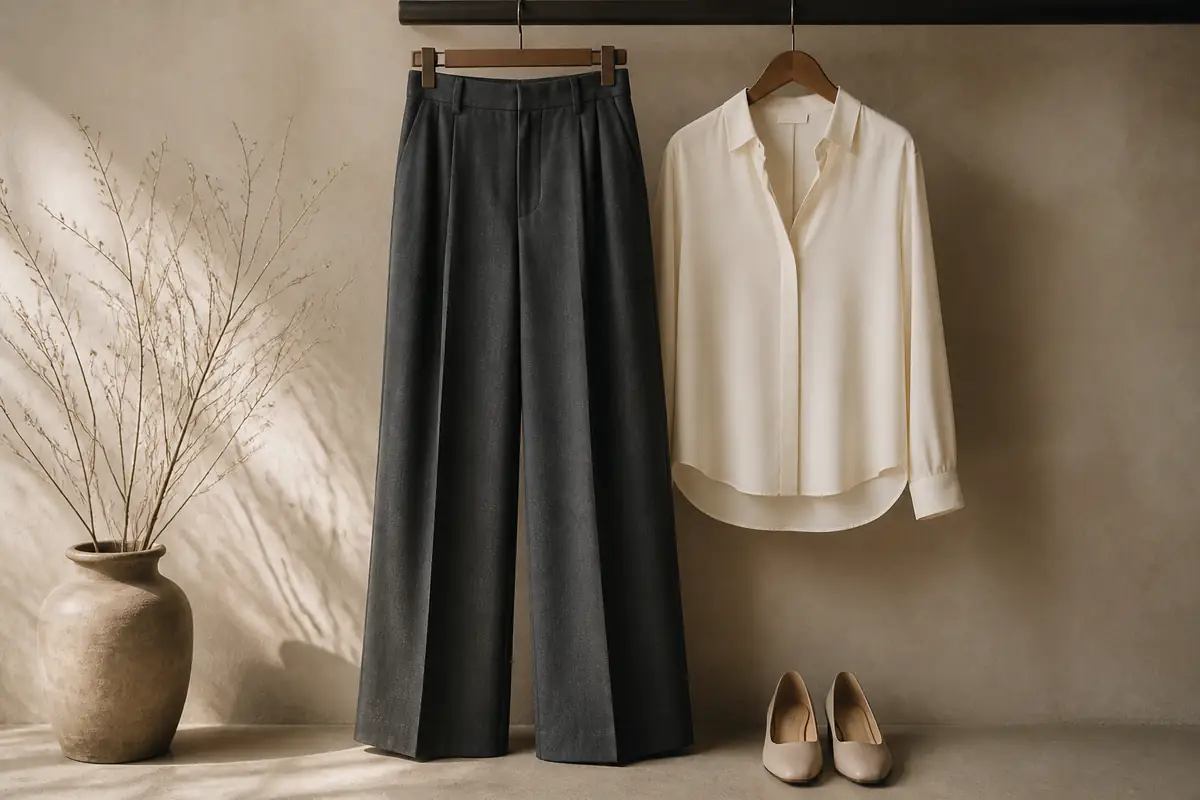
The image is an editorial illustration, not a photograph from a product test. Links are editorial and non-affiliate.