Belts buying guide: sizing, width, materials and buckles
A belt can hold trousers, define a waist or finish an outfit, but each job changes the required length, width and flexibility. Measure over the clothes you will wear, then compare the usable hole range and construction rather than buying from trouser size alone.
In this guide
Measure the wearing position and target the middle hole
Use a comfortable existing belt or a body measurement taken over the intended outfit. The chosen size should close near the middle of its adjustment range, fit the garment loops and leave a tidy tail without forcing the buckle or first keeper.
“Small”, “medium” and a nominal waist number are not universal belt measurements. This guide separates body position, product dimensions, buckle geometry and material evidence. For wider fit planning, use our clothing size-chart guide.
First decide what the belt must do
A trouser belt is functional: it must fit the loops, sit comfortably when seated and support the waistband without excessive stiffness. A waist belt worn over a dress or coat is positioned elsewhere and may need much more or less length. A decorative low-hip belt follows another circumference again.
Write the intended garments before measuring. Thick denim, tailoring, a knitted dress and a winter coat change both circumference and suitable width. One reversible or adjustable belt can cover related outfits, but no single size is guaranteed to serve every wearing position.
Three useful ways to measure
| Method | How | Watch for |
|---|---|---|
| Existing belt | Measure from buckle’s working point to the used hole | Do not include the buckle decorative length |
| On the body | Measure over the intended clothing where it will sit | Keep tape comfortable, level and untwisted |
| Garment path | Thread a soft tape through the actual loops | Allow for overlap and buckle construction |
| Size chart | Match the maker’s stated measurement method | Centimetres may mean total length or fit range |
An existing belt is often the most reliable reference when it fits the same job. Lay it flat without stretching and measure from the point where the pin meets the buckle to the hole normally used. For a box-frame or automatic buckle, follow the maker’s diagram because the working point differs.
Do not assume the printed belt size equals total leather length. Some brands quote the distance to the centre hole, others a body range or garment size. Record the first and last usable holes, spacing and total length. The product-dimensions guide helps assess specification tolerance.
Aim for adjustment on both sides
Closing on the middle hole leaves room for outfit thickness, ordinary body change and material settling. A five-hole belt commonly offers two positions either side, but count and spacing vary. If the correct fit uses the final hole from day one, the remaining tail may sit awkwardly and there is no useful adjustment in that direction.
Check tail length after fastening. It should normally reach the first keeper without extending so far that it hangs or needs improvised tucking. Double-keeper designs can control more tail, while a wide statement buckle changes the visual proportions.
Width must fit loops and the outfit
Measure the narrowest garment loop opening, including seam bulk. A belt listed at exactly that width may still be difficult to thread if its edges are thick or the buckle cannot pass. For tailored trousers, a narrower refined belt often sits cleanly. Casual denim can accept more width and visual weight, subject to the loops.
For over-dress or coat use, there may be no loops, so width becomes a balance of comfort, structure and proportion. A very wide rigid belt can dig in when seated. A very narrow belt may roll, migrate or look visually lost on a heavy garment.
Leather labels need translation
Full-grain and top-grain describe layers or processing but do not alone guarantee tannage, finish, thickness or workmanship. “Genuine leather” indicates real leather yet is not a complete quality grade. Bonded materials can contain leather fibres combined with binders; coated split leather can look smooth while ageing differently from an aniline or semi-aniline surface.
Ask for the main strap material, lining, edge finish and country-of-origin information where provided. Examine whether the belt is one substantial layer, stitched layers or a coated composite. Our leather-grades guide explains why construction must accompany terminology.
Leather can develop creases around the used hole and requires storage away from persistent damp and heat. A dark lining or unfinished edge may transfer colour onto light clothing, so follow care information and inspect before use.
Textile, elastic and synthetic belts
Woven textile belts can provide fine-grained adjustment because the pin passes through the weave, but the structure must resist distortion and fraying. Webbing with a clamp buckle can be light and practical; check whether the clamp damages fibres or slips under load. Elastic belts adapt to movement but can curl, lose recovery or pull on loops.
Synthetic coated straps may offer uniform colour and lower initial cost, yet surface cracking and edge peeling depend on formulation, flexing and storage. Avoid assuming that “vegan leather” identifies a single composition or durability profile; seek the exact material. The clothing-quality guide provides a construction-first checklist.
Buckle design changes fit and maintenance
- Pin buckle: simple and visible; inspect hole reinforcement and pin alignment.
- Frame buckle: check bar strength, tongue travel and strap thickness.
- Automatic ratchet: offers small increments; inspect track, release and cut-to-fit instructions.
- Clamp or slider: useful for webbing; test grip without damaging material.
- Reversible: check the rotation joint and whether both faces have equal finish quality.
Heavy buckles can pull a soft belt down or feel uncomfortable when seated. Plating descriptions do not establish resistance to wear or sensitivity; base metal and coating thickness may be undisclosed. If nickel sensitivity is relevant, seek a specific material statement rather than relying on colour.
Construction details that deserve a close look
Edges should be even, with paint or burnishing that bends without obvious cracking. Stitching should run consistently without loose ends, especially around the buckle fold and keeper. Holes should be clean and appropriately reinforced for the material. Rivets or screws should sit flat and not catch clothing.
A replaceable screwed buckle can improve repair potential, while permanent rivets may be robust but harder to alter. Cut-to-fit systems require precise instructions and usually cannot be restored after trimming. Measure twice, cut conservatively and retain the removed section until fit is confirmed.
Colour and wardrobe compatibility
A belt does not have to match shoes exactly. Repeating the temperature or formality can create coherence without forcing an identical shade. Matte brown leather, polished black, woven navy and a bright statement colour solve different outfit roles. Compare under neutral light because retailer photography and screens shift colour.
For frequent use, list the trousers, shoes and outerwear it must accompany. Our wardrobe-colour system helps count real combinations instead of buying a versatile-sounding neutral that matches little.
Choose a functional or statement priority
Fit and repeat wear lead
The width clears every loop, the centre of the range fits, the buckle is comfortable and materials suit regular flexing.
Proportion and finish lead
It works over named outfits, remains comfortable, and decorative hardware does not compromise fastening or care.
Online returns and alteration risk
Keep protective films and tags while trying the belt indoors over the intended garments. Do not punch an extra hole, cut a strap or apply conditioner until the decision is final; alteration commonly affects return eligibility. Read our clothing returns guide and save the size diagram with the order.
Inspect comfort in more than one posture
Fasten the belt while standing, then sit, bend and walk in the intended trousers or outerwear. The buckle should not dig into the abdomen, twist the waistband or pull sharply on one loop. A comfortable static fit can become restrictive when a rigid strap meets a seated waist.
Check that the pin enters the hole without levering or widening it and that the keeper does not catch knitwear. If the belt supports a heavy accessory or tool, use a product specifically designed and rated for that load rather than assuming a fashion belt can carry it safely.
A disciplined shortlist
- Name the wearing position and garments.
- Measure an existing belt or body over those clothes.
- Record usable hole range, total length and tail.
- Confirm width against the narrowest loop.
- Identify strap, lining, edge and buckle materials.
- Inspect holes, stitching, fasteners and repairability.
- Compare delivered cost, care and return restrictions.
Balanced verdict
A good belt fits near the centre of its range, clears the loops and has a material and buckle suited to its actual job. Measure the wearing position rather than translating trouser size blindly. Premium terminology cannot replace construction evidence, and an adjustable design is only useful when its mechanism remains comfortable and maintainable.
Continue with the Fashion archive or assess long-term value with our cost-per-wear guide.
Official and standards guidance:
GOV.UK: textile fibre labelling ↗UK textile fibre products regulations ↗
Frequently asked questions
Should belt size match trouser waist size?
Not automatically. Measure where the belt will sit over the intended clothing and follow the maker’s exact sizing method.
Where should a belt fasten?
Ideally near the middle of its usable hole or adjustment range, leaving room in both directions.
How wide should a trouser belt be?
It must clear the narrowest loop including edge thickness. Style depends on garment formality and proportion.
Is genuine leather the best grade?
It confirms leather but not complete quality. Check layer, tannage, finish, lining, edge and construction.
Can I add a hole to an online purchase?
Only after deciding to keep it. Punching or cutting is an alteration and can affect returns and structure.
Methodology and limitations
We assessed belts by wearing position, sizing method, range, width, materials, construction, buckle, care and return risk.
Limitations
Brand sizing and material terminology vary, while comfort cannot be confirmed remotely. Verify the exact diagram and inspect indoors before alteration.
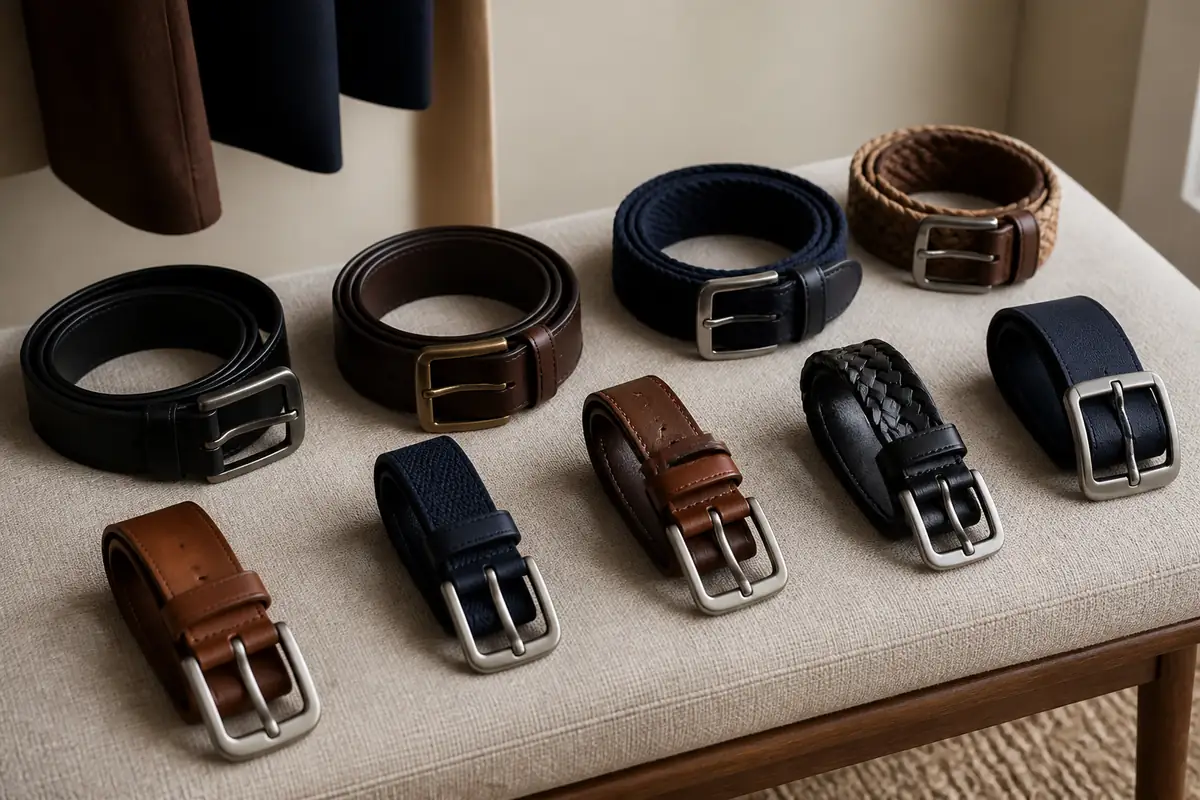
The image is an editorial illustration, not a photograph from a product test. Links are editorial and non-affiliate.