Trouser length and break explained: footwear, hems and shrinkage
Trouser length is not one universal inside-leg number. Rise, waistband position, hem width, fabric and shoes all change where the cloth lands. This guide helps UK shoppers judge the break before buying or altering a pair.
In this guide
A slight break is the safest versatile starting point
For a first pair, aim for a clean front with one shallow fold and a back hem that does not touch the ground. Assess it with the intended shoes and waistband position. Choose no break deliberately for a shorter, sharper line; choose a fuller break only where the cut, fabric and styling support the extra cloth.
A retailer can list a 30-inch inside leg accurately and still deliver trousers that look longer or shorter than another 30-inch pair. The crotch depth, waistband placement, taper and fabric determine how that measurement hangs on a particular body. Treat the label as a starting measurement, then judge the complete silhouette.
What trouser break means
| Finish | What you see at the front | Best suited to | Main risk |
|---|---|---|---|
| No break | The hem meets or sits just above the shoe without a visible fold. | Narrower hems, cropped styling and a deliberately clean line. | Can look unintentionally short when sitting or with lower-cut footwear. |
| Slight break | One shallow crease forms where the hem reaches the shoe. | Versatile tailoring, chinos and many straight or tapered cuts. | May become a full break with a wider hem or softer fabric. |
| Medium break | A clear fold appears, with more fabric resting over the shoe. | Traditional straight cuts and roomier tailoring. | Can interrupt the line on short or strongly tapered trousers. |
| Full break | Several folds stack over the shoe. | Intentional relaxed or classic styling in suitable cloth. | Can drag, crease heavily or look like an unaltered length. |
Break describes fabric behaviour, not a moral rule. No-break trousers are not automatically better fitted, and a full break is not automatically untidy. The decision must agree with the cut and the wearer’s movement. Product photographs often pin, crop or style a sample on one model, so use them to understand intent rather than predict your result.
Measure the pair where you will wear it
Put on the underwear, belt if normally used, and shoes intended for the trousers. Settle the waistband at its natural wearing position rather than pulling it up for the measurement. Stand normally, ask another person to mark the desired front and back, and check the line from several steps away. Bending down to pin your own hem changes the length.
Measure a well-fitting pair flat as a second reference. Smooth but do not stretch it. Record the inside leg from crotch seam to hem, the outside length from waistband to hem, front rise, back rise and hem width. Our UK clothing-size chart guide explains why one labelled size can conceal different garment measurements.
- Use the intended shoes. A loafer, trainer and boot create different contact points and visual weight.
- Check both legs. Bodies and garments are not always perfectly symmetrical; a tailor can mark them separately.
- Walk and sit. The standing break is only half the fit. Watch how far the hem rises and whether it catches.
- Inspect the back. The hem should not scrape the ground or disappear under the heel.
- Photograph the pinned result. Compare the whole silhouette, not a close-up of the cuff.
Rise changes apparent length
The same inside-leg measurement begins at a different vertical point on low-, mid- and high-rise trousers. If a wearer positions a low-rise pair higher than designed, the crotch can pull and the leg appears shorter. If a high-rise pair slides down because the waistband is loose, extra cloth reaches the shoe.
Check that the waistband remains stable without excessive belt tension and that the crotch has enough room before altering the hem. Shortening a pair cannot repair a strained rise, twisted side seam or seat that pulls the waistband down. Use our clothing-quality checks to inspect seam alignment, pressing and construction before paying for alterations.
Hem width controls how fabric meets the shoe
A narrow tapered hem stops higher on the shoe and may create a sharp fold quickly. A wider straight hem can fall around more of the upper and needs enough length to maintain its line. This is why copying the inside leg from slim jeans to wide-leg trousers often fails.
Measure the hem opening of the reference garment and compare it with the new pair. For a wide or flared leg, assess the back edge carefully: it needs visual length without reaching wet pavements. For a cuffed or turn-up hem, preserve enough cloth for the finished depth, seam allowance and a clean fold. Ask an alterations specialist how much fabric is available before assuming a temporary hem can be reversed.
Fabric weight, drape and stretch alter the break
Dense wool can hold a crease and form a deliberate break. Fluid viscose-rich cloth may pool rather than fold once. Stretch denim can relax at the knee and waistband during wear, lowering the garment. Linen creases throughout, so a precise single break will not remain photographically perfect all day.
Read the fibre label and care instructions rather than relying on “premium”, “easy care” or “travel” language. UK textile-labelling guidance requires fibre content to be shown, but the percentage alone does not predict drape, shrinkage or recovery. Yarn, weave, finishing and construction also matter. See our fabric-composition guide for a better specification check.
Allow for shrinkage only when evidence supports it
Do not add an arbitrary inch “for shrinkage”. Check the care label, product description and repeated owner reports for the exact fabric and colour. If the garment is washable, follow the stated temperature and drying method before making an irreversible alteration when practical. A tailor may recommend one wash first for cotton or denim, but that decision depends on construction and care instructions.
Claims such as pre-washed or pre-shrunk reduce uncertainty only if the maker explains them; they do not guarantee zero dimensional change. Tumble drying when line drying is specified can make a careful fitting irrelevant. If reviews are used, separate repeated measurement reports from vague complaints using our review-evidence method.
Online ordering: compare garment numbers, not model height alone
Model height is useful only with the worn size, actual inside leg, rise and footwear. A model with different proportions can make the same trouser appear cropped or long. Look for a garment measurement table, separate short/regular/long options and a clear description of where the waist should sit.
Before ordering two lengths, check whether returns are free, whether altered items become non-returnable and whether the seller is the retailer or a marketplace trader. Our guides to checking an online shop, marketplace responsibility and UK returns cover those separate questions.
Which break should you choose?
You want a clean, flexible line
The hem is narrow or moderately tapered, the footwear is consistent and you are comfortable with more sock or ankle showing while seated.
The cut is wider and intentionally traditional
The cloth drapes cleanly, the back remains off the ground and the extra fold looks deliberate with the intended shoe rather than like spare length.
Balanced verdict
A slight break is the most forgiving first target, not a compulsory fashion rule. It works across many shoes and avoids both obvious pooling and an unexpectedly cropped result. No break can sharpen a narrow silhouette; a fuller break can suit a wider, traditional cut. Measure the whole garment in the intended outfit, confirm care behaviour and alter only after the rise and seat fit correctly.
If alteration cost affects the decision, calculate realistic wears with our cost-per-wear guide and browse further Fashion guidance.
Check current official guidance:
GOV.UK textile labelling guidance ↗Business Companion clothing and textile guidance ↗Citizens Advice service cancellation guidance ↗
Frequently asked questions
Should trouser hems touch the back of the shoe?
They may reach the upper, but should not drag on the ground or become trapped under the heel during normal walking.
Can I use the same inside leg for every trouser style?
No. Rise, waistband position, hem width, footwear and intended break can change the finished length even when the label is identical.
Should I wash trousers before hemming them?
Follow the exact care instructions and ask the alterations specialist. For some washable cotton garments, checking dimensional change first is sensible; it is not a universal rule.
Is no break suitable for formal trousers?
It can be, especially with a narrow contemporary cut, provided it looks deliberate when standing and sitting.
Can a tailor lengthen trousers?
Sometimes, if there is sufficient clean fabric in the existing hem. Ask before purchase or alteration because previous stitching and wear marks may remain visible.
Methodology and limitations
We compared trouser length through five interacting variables: rise, waistband stability, hem width, footwear and fabric behaviour. We checked current UK textile-labelling and consumer guidance on 29 August 2026. No named garment was worn, washed or ranked.
Limitations
Body proportions, mobility, styling preferences and tailoring methods differ. Fibre content does not predict exact shrinkage, and online measurements may use different methods. Confirm the seller’s measuring convention and let a competent alterations specialist mark valuable garments in person.
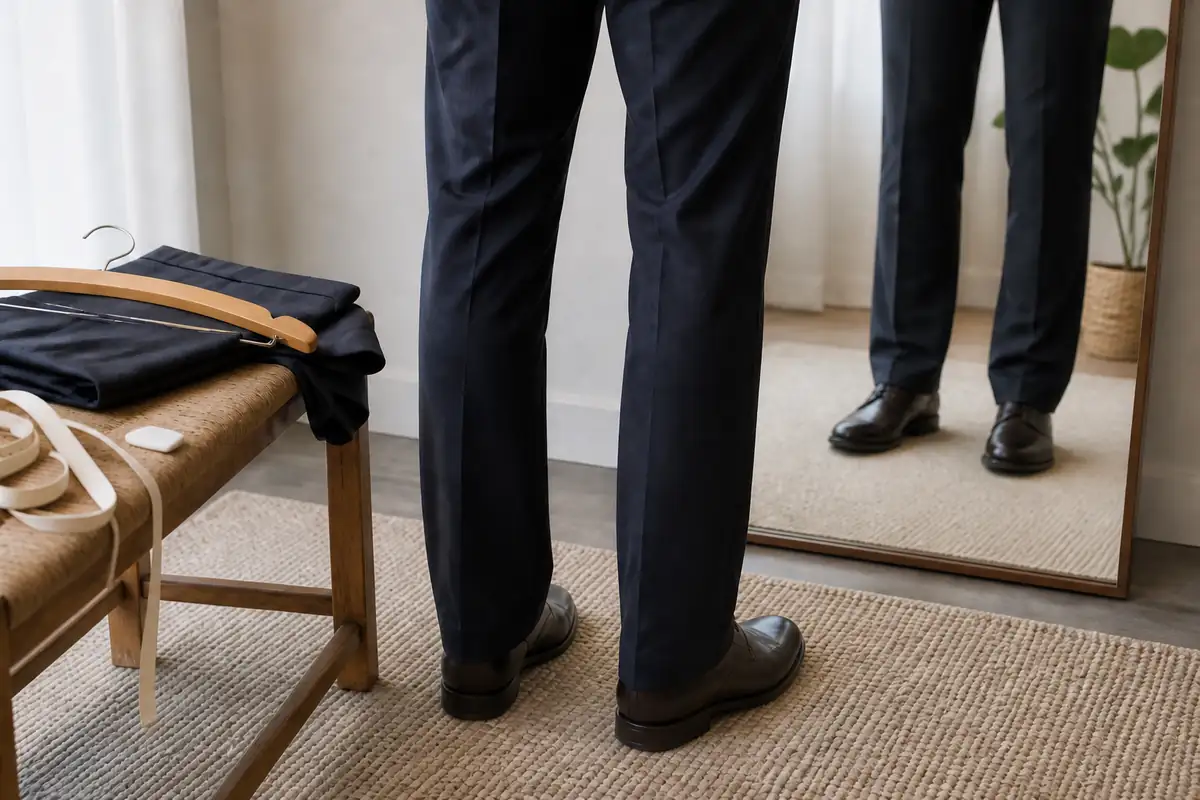
The image is an editorial illustration, not a photograph from a product test. Links are editorial and non-affiliate.