How to prevent knitwear pilling and recognise normal wear
Pilling is loose fibre ends tangling under movement and friction. It can occur on good and poor knitwear, but speed, severity and accompanying damage matter. Reduce repeated rubbing, follow the exact care label, wash only when needed and remove pills conservatively on a flat garment.
In this guide
Control friction before reaching for a shaver
Start with fit, layering, bag contact, washing load and drying method. A little early surface pilling may be removable loose fibre; rapid dense pilling with thinning, holes, distorted ribs or failing seams is more serious. Follow the garment label and tool instructions, test a hidden area, support the knit flat and stop before sound yarn is cut.
Understand what a pill is
A pill is a small tangle held on the fabric surface. Fibres migrate or break free under wear, then repeated movement rolls them together. Strong fibres can anchor the tangle, while weaker loose fibres may shed. This is why a simple rule such as “natural fibres do not pill” or “synthetics always pill” is unreliable.
Yarn twist, fibre length, knit density, brushing, fit and use all influence the result. An open, fuzzy jumper worn under a rough coat and shoulder bag receives more abrasion than a compact knit worn alone. Our fabric-composition guide explains fibre trade-offs, while the merino guide and cashmere guide examine material-specific construction.
| Surface change | What it may look like | First response | Concern level |
|---|---|---|---|
| Light pilling | Scattered small balls at rubbing zones | Reduce friction; remove gently if permitted | Often manageable |
| Fuzzing | Raised halo without distinct balls | Stop unnecessary brushing and rubbing | Monitor for thinning |
| Felting | Dense, shrunken or matted fabric | Do not stretch aggressively; review wash history | May be irreversible |
| Yarn or seam failure | Loops, holes, ladders or opening joins | Stop depilling and document the defect | Potential repair or rights issue |
Map the friction before changing products
Look at location. Underarms, side body, cuffs, seat-belt line and handbag contact suggest repeated abrasion. Pilling across the entire surface after one careful wear suggests a different pattern. Check whether another garment is transferring fibres: a dark coat can leave visible fluff on a pale jumper without the jumper itself shedding heavily.
Fit matters because tight zones rub and stretched stitches expose more surface. Very loose layers can also move repeatedly. Check the shape-retaining knitwear guide for rib recovery and knit stability. Rotate bags, smooth rough coat linings and avoid hook-and-loop fasteners contacting knitwear.
Pilling diary for the first wears
- Record the number and length of wears before the change appeared.
- Photograph the whole garment and close-up in consistent daylight.
- Mark where coats, bags, desks and seat belts contact it.
- Note laundering, detergent, cycle, spin and drying exactly.
- Check for thinning, growth, felting, holes and seam movement separately.
- Retain the receipt and product description if deterioration is unusually fast.
Wash less often, but do not substitute unsafe rituals
Air a clean garment between wears and address small permitted marks promptly. Odour, soil and skin contact differ, so no universal number of wears is responsible. When washing is due, follow the care label rather than a fibre-wide internet rule. The care-label guide explains the washtub, bar, temperature, drying and ironing instructions.
Turn the garment inside out only when that does not conflict with the maker’s instructions. Close compatible fastenings, separate rough hardware and avoid an overloaded drum. The laundry-bag guide explains what mesh can and cannot contain. A bag reduces some contact but cannot make an unsuitable programme, detergent or temperature safe.
Use the specified cycle and suitable detergent amount. Excess product does not cushion fibres and may leave residue. A high spin can distort a heavy wet knit even if wash temperature is low. Do not improvise conditioner, vinegar, shampoo or household remedies unless the manufacturer permits them for the exact garment and machine.
Dry with weight and shape in mind
Wet knitwear can stretch under its own weight. Reshape gently to the original measurements and dry as directed, commonly flat when the label requires it. Keep away from uncontrolled direct heat. A hanger can create shoulder points or lengthening; a radiator can concentrate heat and leave uneven drying.
Do not wring. If permitted, press water out without twisting and support the full garment when moving it. Before first laundering, the clothing-care guide recommends recording measurements and instructions so later change can be assessed rather than guessed.
Choose a removal method conservatively
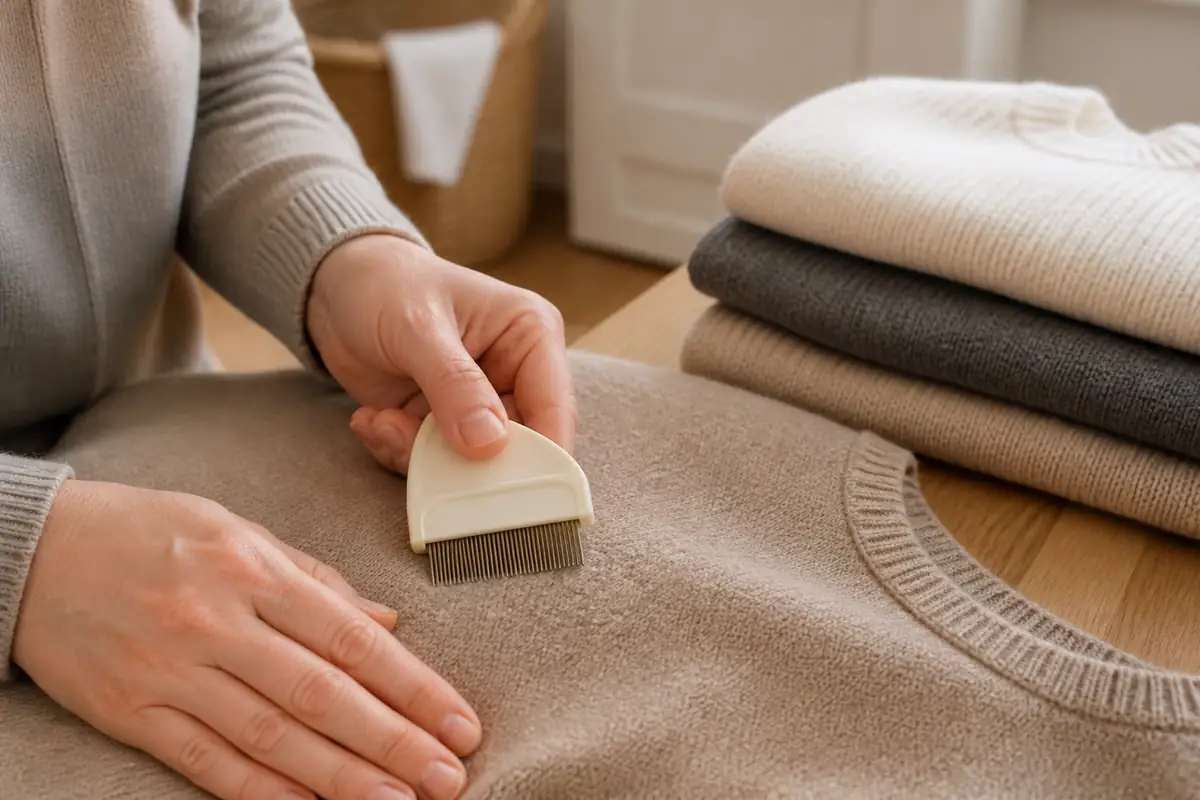
A knitwear comb, pumice-style tool, manual brush or electric shaver removes material. None is automatically safe. Check the garment and tool instructions, clean the tool, stretch neither the fabric nor the stitch, and test an inconspicuous area. Work on a hard flat surface with good light.
Use minimal pressure and few passes. Avoid seams, loose loops, embroidery, cables, thin zones and raised trims. Pulling pills by hand can draw sound fibres out of the yarn. Scissors risk cutting a stitch. An electric shaver set too close can thin the surface quickly even when the immediate finish looks neat.
Remove only what is necessary, then reassess. If the surface becomes translucent or pills return densely after each wear, repeated shaving is consuming the garment. Consider a professional repair opinion or use the repair, rotate or retire framework.
Distinguish normal wear from a possible fault
Normal wear is not defined by one pill count. Consider price representation, fibre and construction claims, care compliance, use, time and severity. Light friction-zone pilling after repeated wear may be expected. Extensive pilling, rapid thinning, yarn breakage or seam failure after limited ordinary use can justify contacting the seller with evidence.
Do not wash, shave and discard all evidence before reporting an unusual failure. Photograph condition, keep labels and order records, and describe wear and care factually. A seller may need the garment for assessment. Do not claim laboratory certainty about fibre length or yarn quality from appearance alone.
Buy future knitwear with pilling in context
Inspect knit density, yarn evenness, rib recovery, seam stability and surface fuzz. Read composition but do not use it as a score. A purposeful blend can improve resilience; a luxury fibre name cannot rescue unstable construction. Review close photographs for early fuzz and ask for documented care.
Fit the garment over intended layers and move through normal reaches. Check high-friction zones. If the care routine is unrealistic, the item is not good value for you even when the fabric feels exceptional. Cost per wear includes depilling time, specialist cleaning and repair.
Build wear and storage routines that reduce repeat abrasion
Let a recently worn knit rest and air before it returns to a crowded shelf. Empty pockets and remove detachable accessories that can press into the surface. Fold clean dry garments with closures secured as directed; do not compress them beneath heavy pieces or leave a rough zip against a soft face. Use clean storage and address moth risk with housekeeping rather than spraying an unapproved treatment onto the yarn.
Rotate the garments that sit beneath a backpack, desk edge or uniform jacket. If one jumper always pills at the same contact point, another purchase will not solve the environment. Smooth or cover the source where practical, change how the bag is carried and choose a more compact surface for that job. This is not about preserving clothes unused: it is about matching the most abrasion-resistant knit in the wardrobe to the highest-friction day.
Maintain at home when
- Pilling is light and localised without thinning or broken stitches.
- The label and tool permit a conservative method.
- Friction sources can be reduced.
- The knit remains stable after one careful treatment.
Stop and seek advice when
- Loops, holes, ladders or seams are involved.
- The fabric is thin, felted or badly distorted.
- Heavy pilling returned immediately after gentle care.
- The change was unusually rapid under ordinary compliant use.
Balanced verdict
The best anti-pilling method is lower unnecessary friction plus correct laundering. Surface tools are finishing aids, not a cure for unsuitable construction or repeated abrasion. Some pilling can coexist with good knitwear; the meaningful warning is pilling joined by rapid material loss, distortion or structural failure.
Diagnose the change before treating it. Work gently, document unusual deterioration and accept that every removal takes fibre away. Care should extend useful life, not chase a permanently untouched surface.
Official and specialist sources
Frequently asked questions
Does expensive knitwear still pill?
Yes. Price does not prevent fibre movement or friction. Construction, yarn, fit, care and use matter.
Should I pull pills off by hand?
No. Pulling can draw sound fibres from the yarn. Use only a permitted gentle method on a supported garment.
Does washing inside out stop pilling?
It may reduce some visible surface contact, but it does not override the label or prevent wear friction. Programme, load and drying still matter.
Is an electric fabric shaver safe?
It removes material and can damage thin, textured or loose knitwear. Follow instructions, test, use minimal pressure and avoid structural details.
Can I return a jumper because it pills?
It depends on severity, timing, representations, care and use. Document unusually rapid deterioration and contact the seller; pilling alone does not prove a fault.
How often should I depill knitwear?
Only when needed and permitted. Frequent removal can thin the surface, so first reduce the cause and stop if pills return rapidly.
How we researched this guide
Recommended Today reviewed care-symbol guidance, UK product-labelling and refund information, then separated fibre behaviour, mechanical friction, laundering, drying and conservative surface treatment. We made no laboratory or wear-test claims.
Limitations
Fibres, yarns, finishes, tools and instructions differ. Follow the exact garment and tool guidance and seek specialist help for valuable or structurally damaged knitwear. The image is an editorial illustration, not a photograph from a product test.