Cashmere quality explained: fibre length, ply, pilling and care
A “100% cashmere” label establishes fibre content, not fibre length, yarn quality, knit density, shape retention or years of wear. Assess the finished garment: surface, recovery, seams, ribbing, transparency, care and repair route matter more than softness in the first thirty seconds.
In this guide
Look for controlled softness, resilient knit and honest construction
Very fluffy new cashmere can feel luxurious because loose fibre ends have been raised, yet those same ends may shed and pill. Check the declared percentage, hold the garment against light, stretch a small area gently and watch recovery, inspect seams and ribbing, then price expected care and repair. Ply is useful only alongside yarn weight and knit construction.
Cashmere is the fine undercoat fibre associated with cashmere goats. Labelling can confirm the named fibre percentage, but retail pages rarely disclose every parameter needed to rank raw fibre. This guide focuses on evidence a shopper can verify without laboratory testing or unsupported “grade” claims.
Begin with the legally meaningful label
Read the sewn-in composition for the whole garment and any components declared separately. “Cashmere blend” could mean a small or substantial percentage; a product title does not replace the numerical fibre content. Terms such as pure or 100% should not be stretched to describe an undeclared mixture. Save a photograph and the online description in case they conflict.
UK textile guidance requires fibre content to be shown and makes manufacturers and retailers responsible for accurate labelling. Our fabric composition guide explains why fibre percentage cannot establish yarn, finish and construction. If a listing invents a vague luxury fibre name or omits the label, do not pay a cashmere premium.
| Claim | What it can mean | What to verify | What it does not prove |
|---|---|---|---|
| 100% cashmere | Declared fibre composition | Sewn-in label and seller identity | Long fibre, dense knit or durability |
| Two-ply | Two yarn singles combined | Yarn weight and finished fabric | Automatically thick or superior |
| Grade A | A seller or supplier quality shorthand | Definition and measurable evidence | A universal retail standard |
| Hand-combed | A claimed collection method | Traceability and certification scope | Finished garment performance |
| Anti-pilling | A treatment or construction claim | Test, conditions and care | No pills under real friction |
Five-minute garment inspection
- Read the fibre percentages and care label.
- Check surface fluff in neutral side light.
- Hold a single layer against light for uneven thin areas.
- Gently stretch the body and ribbing, then observe recovery.
- Inspect shoulder, armhole, side and neck seams.
- Look for twisted panels, dropped stitches and loose ends.
- Confirm spare yarn, repair or aftercare availability.
Fibre length and diameter matter, but labels rarely prove them
Finer fibre can contribute softness; longer fibres can provide more overlap within yarn and reduce loose ends. However, shoppers normally cannot measure microns or staple length at home. Marketing figures need a test source, sample definition and explanation of whether they apply to the exact garment or a supplier range.
Do not perform a crude burn or pull test. It can damage the garment and does not measure quality reliably. Instead treat unusually low price, exaggerated grades and missing traceability as questions. Evaluate the finished knit and seller evidence. A credible retailer should explain composition, care and origin claims without asking you to trust softness alone.
Ply is construction information, not a ranking
A ply describes yarn strands combined together. Two-ply can improve balance and strength compared with a comparable single, but a fine two-ply yarn can produce a light garment and a substantial single can be heavier. More plies add material and can change drape, warmth and cost; they do not repair short weak fibre or loose knitting.
Compare garment weight only within similar sizes and styles. A dense cropped vest and an oversized open cardigan are not meaningful gram-for-gram rivals. Ask whether the knit is intended as a base layer, everyday jumper or heavy outer layer, then judge yarn and density against that purpose.
Read knit density, recovery and transparency together
Spread a single layer over a neutral surface and then hold it against light. Even loops and controlled transparency suggest consistent knitting; obvious bands, ladders or sparse stress areas deserve scrutiny. Some lightweight cashmere is intentionally translucent, so the question is whether the construction matches the claimed use and price.
Gently stretch a small body area and rib, then release. A garment that remains distorted before wear may struggle at cuffs, hem and elbows. Ribbing should be attached evenly without a hard change in tension. The companion guide on shape-retaining knitwear compares recovery across wool, cotton, synthetics and blends without treating cashmere as a universal winner.
Softness can be engineered at the surface
Brushing and milling change handle and can create a soft halo. Excessive raising may expose many loose ends that shed. Rub one small inconspicuous area lightly with clean fingers only if handling is permitted; do not aggressively abrade a shop garment. Look for clouds of detached fibre, existing pills and a surface that conceals stitch definition.
Initial pilling is possible even in good cashmere because loose fibres work out under friction. Persistent heavy pilling can reflect fibre, yarn, knit, finish, fit and use. Bags, seat belts, desk edges and tight outer layers concentrate rubbing. A blanket claim that premium cashmere never pills is not credible.
Inspect seams and shape for repairable quality
Fully fashioned shaping uses planned increases and decreases around armholes and shoulders; cut-and-sew construction joins pieces cut from knitted fabric. Either can be serviceable when executed well. Check matched panel lengths, smooth joins, reinforced stress points and no trapped puckers. A visible linking seam should be even and comfortable.
Examine neck edge, underarms, side vents and any shoulder stabilisation. Spare yarn and a repair service add practical value. Decorative hand-finishing language is less useful than clear evidence that holes, pulled threads and worn cuffs can be assessed and mended.
Care determines whether the premium survives
Follow the exact label for washing or professional cleaning. When hand washing is allowed, use cool water and a suitable small dose, support the saturated garment, avoid wringing, reshape to measured dimensions and dry flat away from direct heat. Machine-washable claims need cycle, temperature, load and detergent details.
Air between wears, fold rather than hang heavy knitwear and store clean and fully dry. Protect from moths through housekeeping and monitoring rather than spraying unknown products onto fibres. Remove pills with a method appropriate to the garment, using minimal pressure. The care-label guide covers symbol interpretation.
Price evidence, not romance
Add cleaning, de-pilling and likely repair to the price. Estimate realistic wear given warmth, colour, neckline and dress code. Use the cost-per-wear method, but do not invent longevity. A blended or fine-wool jumper worn weekly can outperform cashmere kept for imagined occasions.
Ethical and environmental claims need scope: animal welfare, grazing, fibre traceability, dyeing and factory conditions are different questions. Use the green-claims checklist and verify the exact certification rather than assuming natural fibre is impact-free.
Compare cashmere with the closest practical alternative
Do not compare a fine cashmere layer with a heavy outdoor wool jumper solely by price. Match weight, silhouette, warmth role and care. Fine merino may offer a smoother everyday layer with different resilience; lambswool can provide loft at a lower price but a firmer handle; cotton or blends can suit warmer rooms and frequent washing. Our merino knitwear guide separates micron marketing, construction and care.
The right comparison may show that cashmere’s light warmth and handle justify the premium, or that it solves no real wardrobe gap. A fibre purchase is strongest when the garment role is defined before the label creates desire.
Pay a cashmere premium when
- Composition and seller evidence are clear.
- The knit is even, resilient and suited to use.
- Seams, ribbing and aftercare support ownership.
- The style will earn frequent careful wear.
Choose another fibre when
- Frequent washing or abrasion is unavoidable.
- The listing relies on grade language without proof.
- Fit or knit already shows weak recovery.
- A robust wool or blend better matches the task.
Balanced verdict
Cashmere quality lives in the finished garment, not one fibre word. Verify percentage, then assess yarn, density, recovery, seams, pilling behaviour and care as a system. Longer, finer fibre and well-balanced yarn can support quality, but most shoppers need transparent evidence rather than unverifiable grade claims.
Buy only when the shape, care and likely wear justify the premium. Softness at first touch is pleasant; resilience after repeated use is the harder and more valuable question.
Check current official information:
GOV.UK textile labellingGOV.UK product labelling and claim accuracyGOV.UK consumer rights and advice routes
Frequently asked questions
Is two-ply cashmere always better?
No. Ply must be read with fibre, yarn weight, knit density, finish and intended use.
Should good cashmere pill?
Some initial pilling can occur. Persistent heavy pilling depends on material, construction, fit, friction and care.
Does very soft cashmere mean high quality?
Not necessarily. Surface brushing can increase softness and loose fibre ends, so also check recovery and construction.
Can I wash cashmere at home?
Only as the exact care label allows. Support, reshape and dry flat when hand washing is specified.
What does Grade A cashmere mean?
Ask the seller for its definition and test evidence; it is not enough as a universal retail quality guarantee.
Is a cashmere blend poor quality?
No. A well-designed blend can improve strength, price or care, but the percentages and purpose should be clear.
How we researched this guide
Recommended Today reviewed current UK textile-labelling and product-claim guidance and compared fibre, yarn, knit, finishing, pilling, construction, care and value evidence.
Limitations
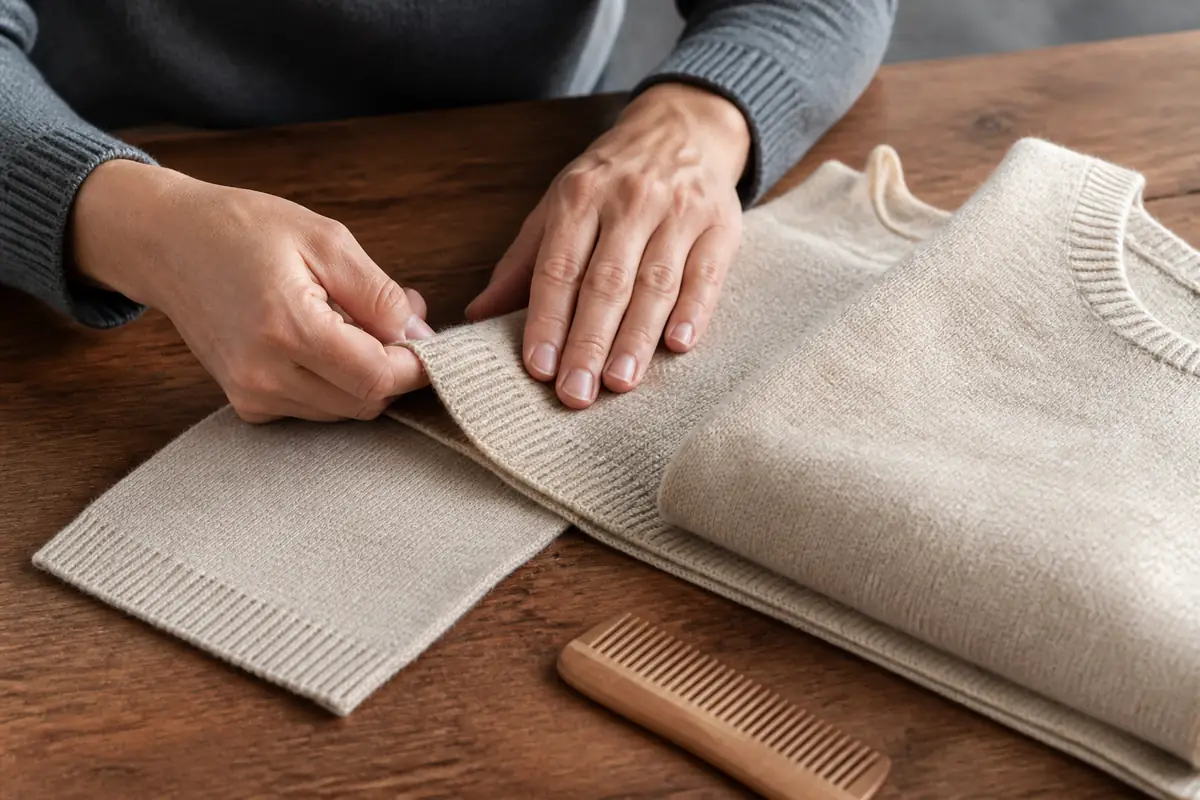
We did not microscopy-test fibre diameter or length, wear-test garments or verify private supply chains. Labels, yarn and finishes vary. Recheck exact composition, claims and care before purchase. The image is an editorial illustration, not a photograph from a product test.