Laundry bags and garment protectors: zips, hooks, snagging and machine loading
A mesh bag can contain straps, hooks and small items, but it cannot make an unsuitable wash process safe. Read the garment and appliance instructions first, close or secure fastenings as directed, choose a bag that permits water movement and keep the drum balanced.
In this guide
Use containment after choosing the correct process
Reject machine washing when the care instruction does; a bag does not override it. For a permitted wash, separate items that can snag or disappear, use a sound fine-mesh bag with a protected closure, leave room for movement and inspect both garment and bag before drying.
This guide addresses reusable mesh wash bags and simple garment protectors for ordinary domestic laundry. It does not claim to prevent all damage, preserve every trim or replace specialist cleaning, and it does not recommend placing an unsuitable object in a washing machine.
Start with the sewn-in care instruction
The wash tub, temperature, process bars, hand-wash symbol and do-not-wash mark define the permitted process. A delicate-looking garment may allow a mild machine cycle; another may require hand washing or professional care. Read every component and any separate manufacturer wording.
The care-label guide translates the symbols without inventing permission. If instructions conflict between a removable trim and main garment, detach only as designed and care for each part through its permitted route.
| Risk | What a bag may help with | What it cannot solve |
|---|---|---|
| Hooks and straps | Containment away from other garments | Weak attachment or unsuitable cycle |
| Small items | Keeping pairs and pieces together | Colour bleeding or wrong temperature |
| Surface abrasion | Reducing direct contact in some loads | Fibre weakness or rough internal trim |
| Machine balance | Organising several small items | One heavy dense bag causing imbalance |
| Decoration | Limited containment if washing is allowed | Adhesive, bead or sequin failure |
Pre-wash inspection
- Care symbols and item-specific wording checked.
- Colour-transfer and first-wash risks separated.
- Loose stitching, trims, wires and fasteners examined.
- Pockets emptied and removable accessories handled.
- Bag seams, mesh and closure intact.
- Bag size allows movement rather than compression.
- Machine programme and load remain balanced.
Choose a bag for the actual hazard
Fine mesh can contain hooks and small components; a more open mesh may improve water and detergent movement for robust items. A structured protector may limit crushing but occupies more space and can create a dense load. One bag is not optimal for bras, socks, embellished garments and trainers.
Check the maximum item size and closure design rather than buying a large mixed pack automatically. A bag that is too small compresses fabric and may inhibit cleaning or rinsing; a bag that is too large can let long straps tangle inside.
Inspect the closure and seams
A metal zip pull can strike the drum or escape its cover. Look for a closure that parks securely under a protective flap and cannot open as the load moves. Drawstrings can tangle and plastic sliders can crack under heat or impact.
Examine mesh joins and binding for rough edges. Retire a bag with holes, exposed wire, broken teeth or fraying that can catch the very garment it is meant to protect. Do not repair it with pins, staples or hard improvised fasteners.
Prepare fastenings deliberately
Close hooks and eyes so they cannot catch, and secure long straps without knotting them tightly around fabric. Zip guidance can vary with garment construction: closing can protect teeth and other items, while a stressed zip on a badly fitting load can distort. Follow the product instruction where supplied.
Button handling also depends on design; forcing a buttoned shirt through agitation can stress buttonholes, while loose buttons can detach. Inspect attachment before washing. The clothing-quality checklist helps identify weak seams, trims and fastenings before they enter the machine.
Do not bag an unresolved fault
A protruding underwire, detached bead, running loop or opening seam needs repair or a different care route first. Containment may stop a component travelling through the load, but it does not prevent further structural damage.
If a new garment appears faulty before washing, preserve its condition and use the clothing-returns guide. Washing can change evidence and an ordinary change-of-mind route; do not launder merely to see whether a defect improves.
Separate colours and surface treatments
A mesh bag does not isolate dye in the wash water. Dark, saturated or warned garments may need a separate first wash according to their instructions. Coatings, prints, adhesives and decorative finishes can react to water, detergent, heat and friction even when contained.
Use the before-first-wear guide to inspect colour-transfer and shrinkage risk while the item remains returnable. Avoid household “colour fixing” remedies unless the manufacturer recommends them for that product.
Load the bag loosely
Fold or arrange the item without hard creases and leave enough space for water to circulate. Do not pack several unrelated heavy garments into one protector. Multiple small bags should still leave the drum able to lift and drop or tumble the load as designed.
Pair items by weight where practical. A tiny lingerie bag in a load of heavy towels faces different forces from a balanced delicate load. Containment does not turn an aggressive cycle, high spin or overloaded drum into a mild process.
Choose cycle and detergent independently
Select temperature, mechanical action, spin and detergent from the garments and appliance instructions, not from the bag label. A “delicates bag” is not a cycle selection. Excess detergent can rinse poorly through compressed fabric, while too little may not handle the soil load.
Read the washing-machine manual using the manual-check method, particularly for minimum loads, imbalance, permitted accessories and programmes. Never use a bag that the appliance maker prohibits.
Do not assume a bag belongs in the dryer
Remove items after washing, inspect their shape and follow each drying symbol. A bag may be unsuitable for tumble-dryer temperature and can restrict movement or trap a fastener against fabric. “Washable” does not automatically mean dryer safe.
Reshape and dry flat or hang only as directed. A heavy wet knit can stretch on a hanger, and a moulded item can deform under heat. The weakest material or trim determines the safe route.
Clean and dry the protector itself
Hair, lint, detergent and colour can accumulate in mesh and seams. Empty the bag, inspect it and dry it fully before storage. Do not leave a damp bag containing a wet garment while deciding what to do next.
Store closures parked safely and separate bags used for heavily soiled items where hygiene requires. If odour, residue or damage persists after permitted cleaning, replace the protector rather than transferring the problem.
Use a garment bag for storage only when suitable
A laundry bag and long-term garment cover solve different problems. Breathable storage may protect from dust while allowing appropriate air movement; an airtight plastic cover can trap moisture or odour. Clean garments before seasonal storage and inspect periodically.
The repair, rotate or retire guide helps decide whether a garment deserves storage and a review date. Do not use a cover to postpone dealing with active moths, damp, contamination or structural failure.
Buy the smallest useful set
List garment categories that genuinely need containment and count simultaneous loads. A few well-sized durable bags can be better than a large assortment of weak shapes. Examine material, closure, seams and care instructions instead of relying on “premium” or “delicate” labels.
The fabric-composition guide helps connect fibre and construction to care, but no composition alone proves a protector’s durability. Replace it based on condition, not a promised number of washes unsupported by evidence.
Use a laundry bag when
- The care label permits the machine process.
- A defined snagging or containment risk exists.
- The bag is sound, correctly sized and securely closed.
- The full load remains balanced and appropriately gentle.
Use another care route when
- The label prohibits machine washing.
- A fault, loose trim or wire needs attention first.
- Colour, coating or decoration creates unresolved risk.
- The bag would compress or unbalance the load.
Balanced verdict
A laundry bag is a containment tool, not permission to ignore the care process. It can reduce contact and keep small parts together when garment, protector, cycle and load are compatible.
Read the label, inspect fastenings and leave room for water movement. Remove and examine the item before drying, and retire a damaged bag before it becomes the source of snagging.
Check current official information:
GINETEX care symbolsGOV.UK textile labellingUK product safety alerts and recalls
Frequently asked questions
Does a laundry bag make hand-wash clothing machine safe?
No. Follow the hand-wash or do-not-wash instruction; a bag does not change it.
Should the bag be filled completely?
No. Leave room for the item and wash liquid to move without hard compression.
Should zips and hooks be closed?
Secure snagging fasteners as the garment instructs and park the bag closure under its guard.
Can the bag go in the tumble dryer?
Only if both bag and garment instructions permit it; washable does not mean dryer safe.
Can mesh prevent colour bleeding?
No. Dye moves through wash water, so follow separation and first-wash instructions.
When should I replace a laundry bag?
When mesh, seams, binding or closure is damaged, rough or no longer secure.
How we researched this guide
Recommended Today reviewed current textile-care symbol guidance, UK labelling information and appliance-manual principles, then separated containment from washing and drying permission.
Limitations
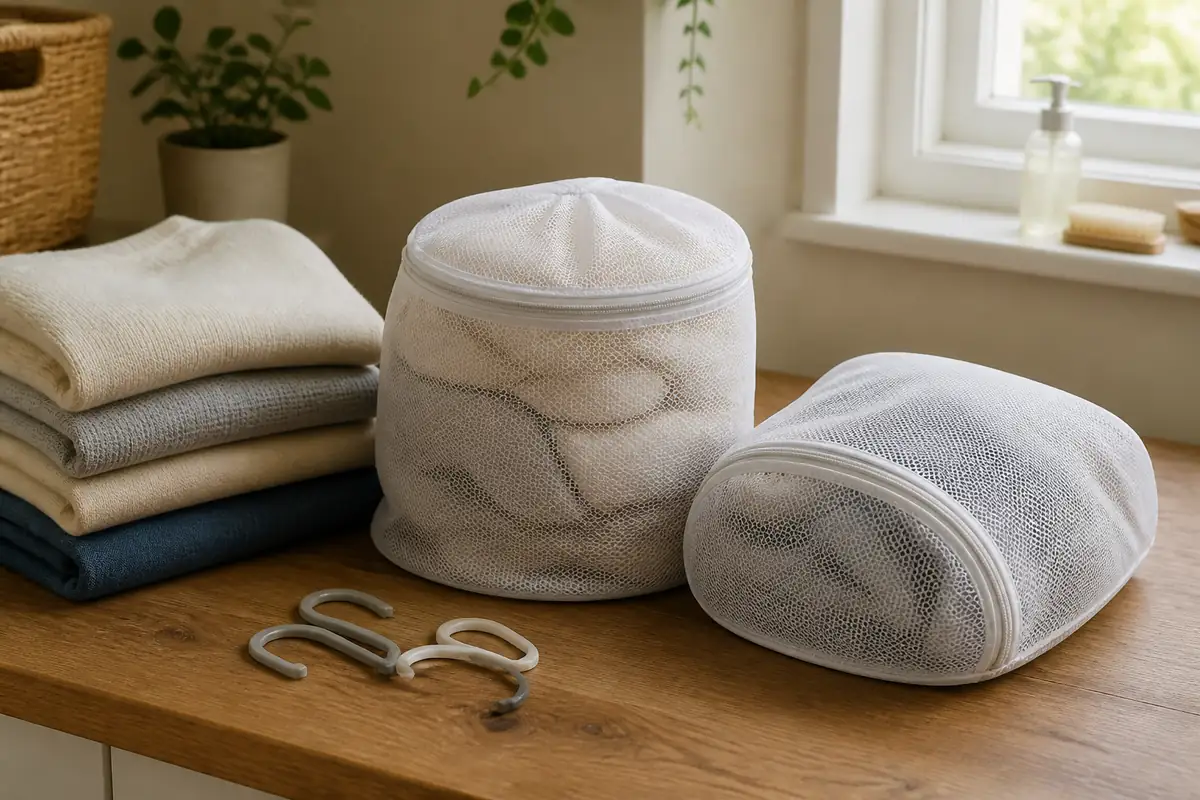
We did not wash a garment or test a named protector. Construction, machines and instructions differ. Recheck the exact garment, bag and appliance before purchase. The image is an editorial illustration, not a photograph from a product test.