Perfume sample and decant labelling guide: identity, evaporation, hygiene and no-buy decisions
A loose perfume vial loses value as soon as you can no longer prove what it is, where it came from or when it was opened. A simple identity-and-storage system keeps testing useful and makes an honest no-buy decision easier.
In this guide
Label identity before ranking the scent
Record the exact fragrance, concentration, source and received or decanted date while the evidence is still attached. Keep the original sample when possible. If a decant is anonymous, leaking, altered or impossible to verify, do not guess from smell or share it with someone else.
This guide covers loose samples and third-party decants, not the testing order already explained in our perfume discovery-set guide. Use the perfume storage guide for full bottles and the beauty minis guide for travel-size buying.
| Problem | Record or check | Safe action | Retire when |
|---|---|---|---|
| Unknown identity | Name, concentration, source and order | Keep with original card or add a blank external tag | Identity cannot be verified |
| Evaporation | Fill level, cap and storage position | Store upright, cool, dark and closed | Leak or unexplained major loss occurs |
| Hygiene | Applicator, sharing and skin contact | Keep spray nozzles clean and personal | Visible contamination or damaged applicator |
| Duplicate buying | Wear notes and role in collection | Require a clear use case before full bottle | Repeated tests never earn a role |
Minimum record for every vial
- Exact fragrance and maker.
- Concentration if known.
- Official sample or decant source.
- Order or gift reference.
- Date received and first opened.
- Nominal volume if supplied.
- Personal wear notes kept separately.
- Any leak, colour or spray change.
Why identity is the first ownership problem
A tiny vial can outlive its cardboard card, handwritten sticker or purchase email. Once identity separates from the liquid, later notes become unreliable: concentration, reformulation, source and even fragrance name may be confused. That uncertainty also makes it harder to check ingredients or contact the responsible business if a reaction or product problem occurs.
The UK Office for Product Safety and Standards says cosmetics, including perfumes and free samples, sit within cosmetics rules. Full consumer products normally carry responsible-person, batch, precaution and ingredient information, although very small containers may place some information on accompanying material. Keep that material with the sample rather than reducing the product to an anonymous smell.
Create a label without contaminating the vial
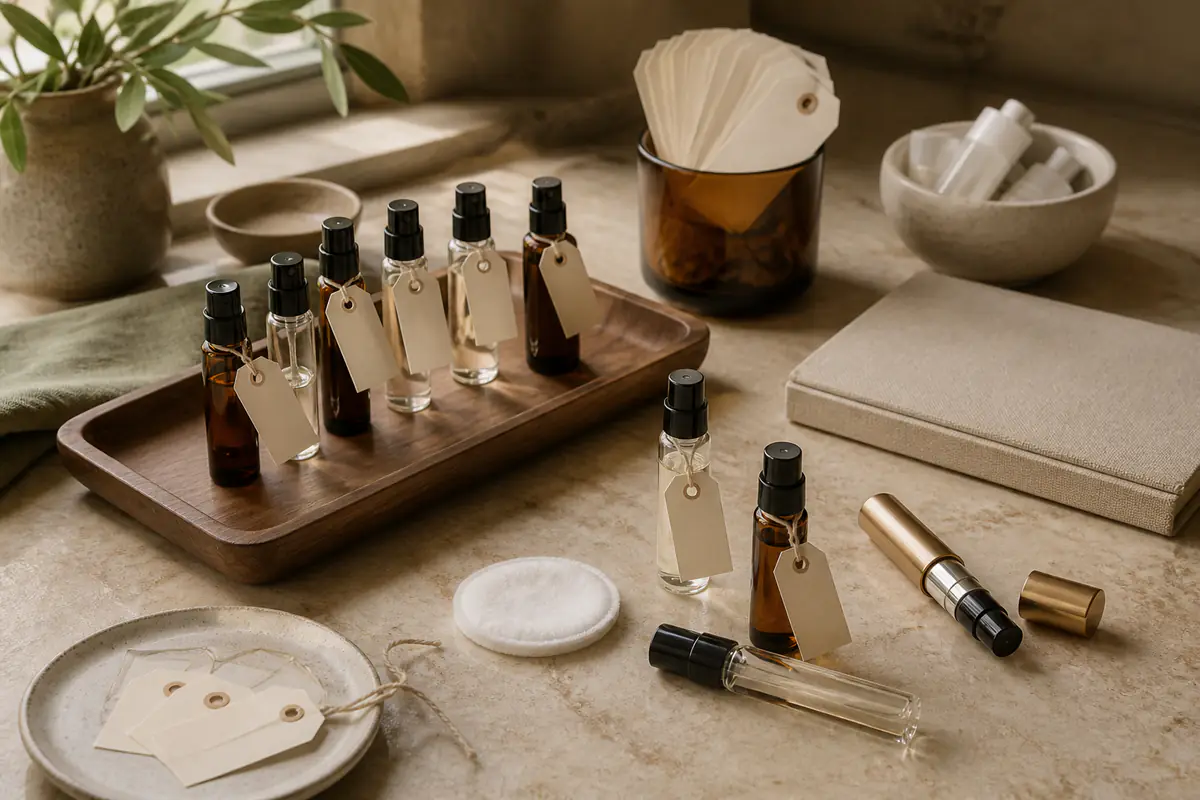
Use a small external tag or storage index rather than writing on a surface that flakes, dissolves or obscures the vial. Record maker, fragrance, concentration, source and date. If a seller supplied a decant code, preserve it with the order reference. Do not invent a batch number or transfer a code from a different bottle.
Keep personal impressions in a notebook or digital record, not on the product identity label. “Woody, too sweet” is a wear observation; it is not the name. Separate fields let you update the opinion after another test without changing what the vial is. The UK cosmetics label guide explains which original details matter.
Treat the source as part of the product record
An official carded sample, a retailer-prepared sample, a brand-authorised refill and an individual seller’s hand-filled decant are not identical propositions. Save the legal seller, listing, advertised concentration and volume. If the product arrived through a marketplace, establish who actually supplied it before assuming the platform or fragrance house filled the vial.
Be cautious when information is minimal, the responsible business is unclear or the decant presentation could be mistaken for another liquid. OPSS advises consumers to look for clear purpose, precautions, responsible-person details and readable English information on cosmetics. Use the genuine online-shop guide before treating a cheap sample source as low risk.
Control evaporation and leakage
Perfume sample vials have a high surface-to-volume ratio, so a poor seal can remove a meaningful share quickly. Store them upright in a stable tray, away from sunlight, radiators and repeated temperature swings. Close spray caps and dabber stoppers fully without forcing damaged threads. Do not top up a partly empty vial with another scent.
Mark the fill level when received if it is easy to see, but remember that nominal volume and container capacity are different. A vial need not look full to contain the advertised amount. A rapidly falling level, wet label or persistent odour outside the closed container suggests leakage. Isolate it from other cosmetics and protect nearby finishes.
Keep applicators personal and clean
Avoid touching a spray nozzle or vial mouth to skin. Apply from the mechanism as designed and replace the cap. Do not insert improvised tools, return used liquid to the vial or share a rollerball that contacts skin. If a nozzle blocks, follow the supplier’s guidance rather than widening it with a pin that can damage the pump or introduce debris.
A perfume is not sterilised by smelling alcoholic. Visible cloudiness, foreign material, damaged glass, a loose crimp or an unexplained odour change deserves caution. Do not try to rescue a questionable sample by filtering or moving it into another unlabelled container. The atomiser guide covers mechanism faults separately.
Test one variable at a time
Use blotter testing to remove obvious dislikes, then skin-test only products you can identify and are comfortable using. Follow supplied precautions and avoid applying to damaged or irritated skin. Test a small amount rather than layering several unknown samples, because a reaction or disliked note becomes harder to attribute when products are mixed.
Wear notes should include date, number of sprays, broad conditions and the point at which the scent became uncomfortable, pleasant or irrelevant. Do not turn one wear into a universal longevity claim. Skin, weather, application and perception vary. The perfume concentration guide explains why concentration labels do not predict every performance outcome.
Use samples to make no-buy decisions
A sample has done useful work when it prevents an unsuitable full bottle. Define the role first: workday, evening, warm weather, gift, replacement or curiosity. Require several identifiable wears before buying, including at least one ordinary day rather than only a special testing session. Compare what you already own by role, not merely by note list.
If the fragrance is pleasant but never selected, the correct outcome may be no purchase. Do not buy because the sample is nearly empty, a discount expires or the full bottle looks attractive. Use the perfume bottle-size guide to convert realistic wear frequency into a sensible volume.
Know when not to use or pass on a sample
Retire a vial when identity cannot be verified, the container leaks, the applicator is visibly contaminated, glass is damaged or the product conflicts with a recall or official warning. Keep it away from children and do not decant it into food or drink containers. Follow local disposal instructions and supplier guidance for alcohol-containing cosmetics.
Do not sell or gift an uncertain vial with a confident invented description. If passing on a sound sample, keep original identity and safety information attached and disclose opening or decanting honestly. Commercial decanting can raise separate product, labelling and intellectual-property issues; a personal storage guide is not a business compliance manual.
Handle reactions and product concerns properly
Stop using a product if irritation or another adverse effect develops and seek appropriate medical advice according to symptoms. Keep the product, identity record, batch information where available and chronology. Do not deliberately re-expose yourself to prove causation. Serious effects have official reporting routes through the responsible business and OPSS framework.
For a wrong, leaking or misdescribed delivery, photograph the unopened parcel and vial before cleanup, then contact the seller. Use the UK cosmetics returns guide for the difference between change of mind, hygiene restrictions, damage and fault. Keep public posts free of sensitive order details.
Review the sample tray monthly
Group vials by identity status: active tests, confirmed no-buy, undecided and retire. Reconcile every active vial with its record. Check caps, leakage and labels, then select only a small testing queue. A box of fifty anonymous options creates more confusion than choice.
Compare reformulation dates and source records where a scent changed unexpectedly; our reformulation comparison guide explains that evidence problem. Finish by deciding whether each vial earns another controlled wear, should be safely passed on with full identity, or has reached retirement.
Keep testing or retire the vial?
Identity and condition are secure
The source is recorded, container is sound, precautions are available and another wear answers a specific buying question.
Evidence or condition has failed
You cannot verify the liquid, the vial leaks or is contaminated, or repeated wears have no realistic use case.
Balanced verdict
A labelled no-buy is more valuable than an anonymous drawer of perfume. Preserve identity, source and date; control storage and hygiene; test deliberately; retire uncertainty instead of guessing.
Use the linked discovery, storage, label, seller, atomiser, concentration, bottle-size, returns and reformulation guides for their separate decisions.
Official checks:
OPSS consumer cosmetics safety and label guidance ↗
Official GB cosmetics compliance guidance ↗
UK product safety alerts and recalls ↗
Frequently asked questions
What should I write on a perfume decant label?
Record the exact fragrance, maker, concentration if known, source and received or decanted date. Keep the order reference separately.
Why does a sample vial look partly empty?
Container capacity can exceed nominal fill, so appearance alone does not prove shortage. Save the advertised volume and watch for active leakage or rapid loss.
Can I identify an unknown perfume by smell?
Smell may suggest possibilities but does not establish identity, concentration, ingredients, source or safety information. Do not relabel a guess as fact.
Should perfume samples be stored in a bathroom?
A cool, dark, stable and dry location is preferable. Bathrooms often bring heat and humidity changes.
Can I share a used sample?
Avoid sharing applicators that contact skin. If passing on a sound spray sample, keep identity and opening history clear and follow product precautions.
Methodology and limitations
We reviewed current Office for Product Safety and Standards consumer and business guidance for cosmetics on 2 September 2026. We separated identity, source, labelling, storage, evaporation, applicator hygiene, testing and retirement. We did not chemically analyse samples or make authenticity, allergy or performance claims.
Limitations
Small-sample packaging and information vary by source. Storage cannot reverse oxidation or prove authenticity. Reactions require appropriate medical advice; legal duties for commercial decant sellers are outside this personal ownership guide.