Beauty minis and travel sizes: unit price, packaging, expiry and realistic use
A smaller cosmetic is not automatically better value or suitable for travel. Compare price per millilitre or gram, container performance, required amount, opening period, ingredient information and the proportion you will actually finish.
In this guide
Pay more per millilitre only when the smaller format solves waste or access
A mini earns its premium when it lets you test tolerance, fits a genuine trip, stays hygienic or prevents an unfinished full size. Check whether it is a sale product, sample, gift or single-use pack; those labels affect the amount of information and the comparison you can make.
Distinguish mini, travel size and sample
“Mini” is a marketing description. “Travel size” may simply mean compact. A sample may be free, tied to another purchase or marked not for individual sale. A tester is not personal stock. Single-use sachets, small retail bottles and discovery sets have different purposes even when they contain similar quantities.
Look for the exact net weight or volume, product identity, ingredient information, responsible-person details, precautions and durability marking where required. The UK cosmetics-label guide explains what to check. Do not assume a tiny container is exempt from every disclosure; information may be supplied on outer packaging or a leaflet.
| Format | Useful for | Value check | Main risk |
|---|---|---|---|
| Retail mini | Short use or cautious trial | Price per ml/g and expected uses | High packaging and unit premium |
| Travel bottle | Known routine away from home | Closure, size and trip duration | Leakage or insufficient quantity |
| Single-use sachet | Patch or one-off texture check | Enough product for valid use? | Poor dosing and excess waste |
| Discovery set | Comparing several formulas or scents | Usable selection and voucher terms | Paying for unwanted variants |
Calculate unit price and usable value
Divide the product-only price by millilitres or grams. Compare like with like: a £12 15 ml mini costs 80p per ml; a £30 50 ml size costs 60p per ml. Then calculate usable value. If the full size would expire half-finished, the cheaper unit price does not create a saving. If the mini runs out before you can judge performance, it does not create a proper trial either.
Add delivery and any minimum basket. Free gifts are not free if they prompt an unnecessary order. Our beauty cost-per-use guide helps estimate applications rather than counting containers. For sets, assign zero value to products you will not use instead of using the retailer’s combined “worth”.
Estimate the amount per application
Cleanser, shampoo, body lotion, sunscreen, perfume and eye cream are used in very different quantities. A 10 ml product might last months in one category and two days in another. Use the maker’s directions, your application area and frequency. A facial sunscreen mini can be too small for repeated correct use on a trip even though it fits easily in a bag.
Pumps and droppers alter dosing. A mini jar may encourage finger contact; a stiff miniature pump may leave product behind. Consider the proportion that cannot be extracted. A transparent container makes quantity visible but may expose a light-sensitive formula. Package performance is part of value, not decoration.
Mini-format checklist
- Exact net amount and price per ml or gram.
- Number of realistic full applications.
- Ingredient list, precautions and responsible-person details.
- Best-before or period-after-opening information where relevant.
- Closure, pump, applicator and leakage risk.
- Whether the product is a retail item, sample or gift.
Check durability before opening several products
A period-after-opening symbol begins when the product is first opened, not when it is eventually placed in a travel bag. Opening several minis simultaneously can create several clocks. Record the date on the base or a private routine note. Products with a shorter minimum durability may instead carry a best-before date.
The make-up expiry guide explains the symbols and practical replacement cues. Do not keep a mini indefinitely because it contains less. Changes in smell, colour, separation, packaging integrity or skin response matter, and instructions can require particular storage.
Use minis for limited questions
A small amount can show texture, scent, immediate comfort, packaging and whether an obvious reaction occurs. It cannot prove long-term efficacy, compatibility across seasons or that an active formula will remain tolerable at full routine frequency. Avoid unsupported conclusions from one application.
For fragrance, a small spray can reveal development across several wears and settings; our perfume selection guide explains why a recognised scent or discovery route is safer than guessing. For skincare, compare the full ingredient list and do not introduce several trial products at once.
Understand travel restrictions separately
A container being marketed as travel size does not guarantee it meets the rules for every airport, carrier, rail service or destination. Security limits can change and may treat pastes, gels, aerosols and liquids similarly. Check the official route and airport guidance shortly before travel. Container capacity can matter even when it is partly empty.
Also consider pressure, heat and impact. Tighten closures, use caps, keep products upright where possible and place them in a suitable secondary pouch. Do not decant a product if losing its label would hide safety instructions, ingredients or identity. Never transfer cosmetics into food or drink containers.
Compare refill and decant routes carefully
Refilling a small container with a known product can reduce repeated mini purchases, but only when the container is compatible, clean, dry and designed for reuse. Mixing old and new contents, changing the formula’s exposure to air or light, or using an unsuitable pump can compromise it. Keep the original product identity and opening record.
Some branded refill systems are designed as a closed route; see the refillable perfume guide. A random decant is different. Follow manufacturer instructions and avoid making safety claims from appearance alone.
Check returns and hygiene restrictions
Online change-of-mind rights can have exceptions for sealed goods not suitable for return for health-protection or hygiene reasons once unsealed. A retailer may offer a voluntary policy, but do not assume an opened mini is returnable because it is small. Faulty, unsafe or misdescribed goods are a different issue.
Read terms before opening and photograph a leaking, empty or damaged item on arrival. The cosmetics returns guide separates these situations. Buy from an identifiable seller and use the genuine-shop checks when a miniature product lacks normal information.
Judge packaging and waste honestly
A mini uses less product but often more packaging per millilitre. Glass, pumps, mixed materials and decorative boxes can outweigh the formula saving. Conversely, a full size discarded half-used wastes both product and packaging. Avoid absolute environmental claims without a defined comparison.
The practical order is reduce unnecessary variety, use what is already open, buy the amount you can finish, and reuse or refill only where the system is safe and supported. A small plain tube that is completely used may be a better purchase than a prestigious full-size jar that expires.
Choose the mini when
- It provides enough applications for the question.
- You are unlikely to finish a larger size.
- The package protects and dispenses the formula.
- The exact trip or routine needs the smaller volume.
Choose full size or wait when
- The mini has an extreme unit-price premium.
- A correct trial needs several weeks of use.
- Several unwanted items inflate a set’s value.
- Labelling, seller identity or closure is unclear.
Balanced verdict
Beauty minis are useful decision tools, not automatically economical or sustainable products. Their value comes from a defined amount serving a defined task: enough uses to test, enough product for a trip, or less waste than an unfinished larger size.
Compare unit price, applications, package and durability together. When the small format supplies too little evidence or exists mainly to trigger a basket, wait. When it prevents a costly mistake or lets a known routine travel safely, the higher unit price can be rational.
Official UK sources
Frequently asked questions
Are travel-size cosmetics always allowed in hand luggage?
No. Check current official rules for the departure airport and route; marketing language does not determine security treatment.
How do I compare mini value?
Calculate price per ml or gram, then adjust for realistic applications and the amount you will finish.
Does a mini need an ingredient list?
Required information may appear on the container, outer packaging or an accompanying leaflet depending on the format and space.
When does the PAO period start?
It generally starts when the product is first opened for use, so record that date.
Can I refill a travel bottle?
Only when the product and clean container are compatible and the maker’s instructions allow it; preserve identity and safety information.
Can an opened mini be returned?
Change-of-mind returns may be restricted for unsealed hygiene-sensitive goods. Faults and misdescription are separate; check the exact terms.
How we researched this guide
Recommended Today reviewed current official Great Britain cosmetics information, labelling, hand-luggage and returns guidance. We compared formats through unit price, realistic dose, package function, durability, travel suitability and usable value.
Limitations
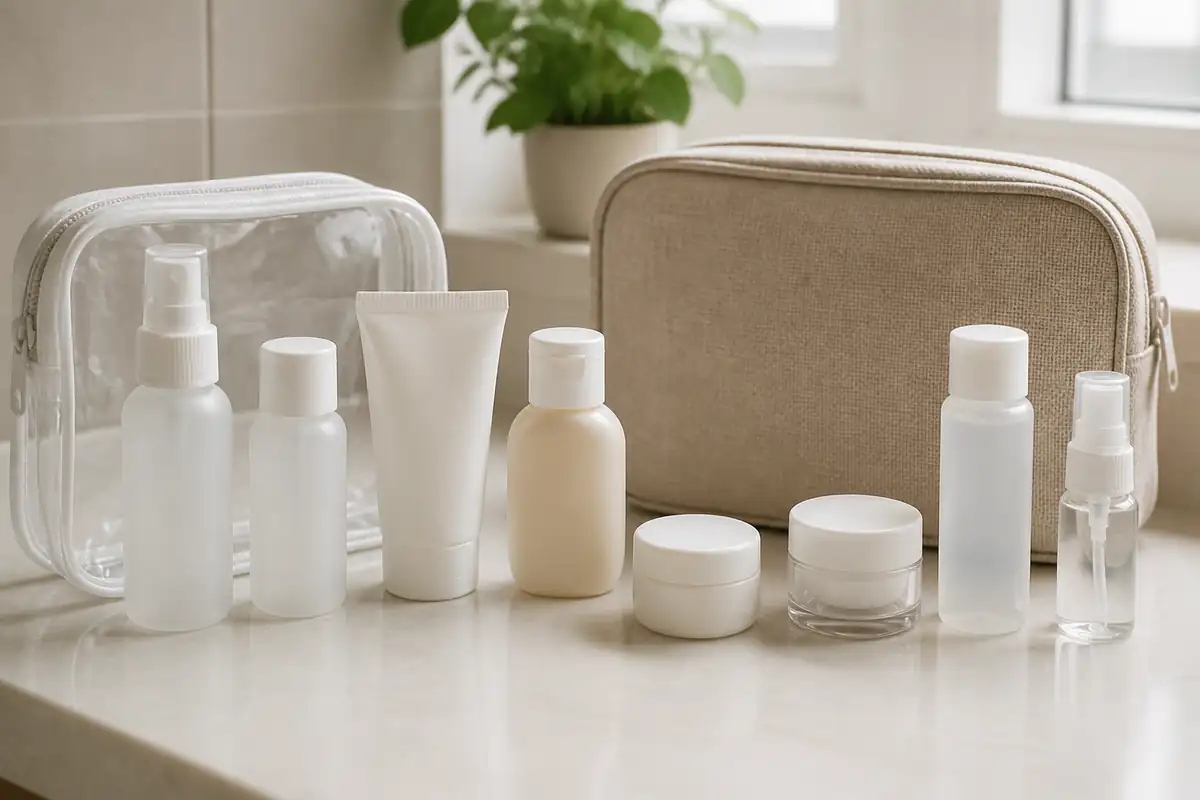
Formulas, pack sizes, airport processes and retailer terms change. Recheck the exact product label, route and basket before purchase. The image is an editorial illustration, not a photograph from a product test.