Choosing a perfume bottle size: 30ml, 50ml or 100ml, use rate, storage and value
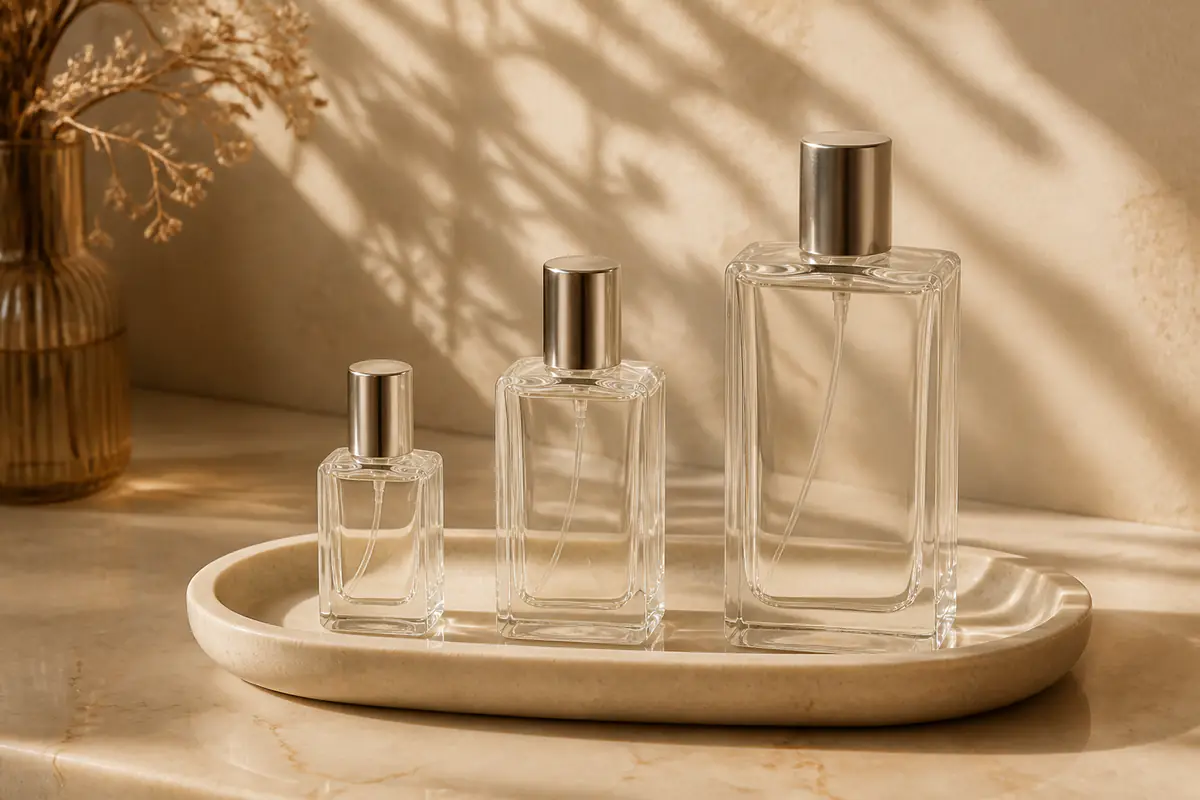
The largest bottle often has the lowest price per millilitre, yet it can be the most expensive choice when scent preference changes, storage is poor or use is occasional. Capacity should follow a realistic wearing plan.
In this guide
Buy the smallest bottle that comfortably covers realistic use
Price per millilitre is only useful after scent, concentration, spray output, storage and likely finish date are understood. Test through a legitimate sample route, record the exact formulation and preserve the unopened return decision.
First use the beauty minis and travel sizes guide. Then compare concentration with our perfume concentration explainer and protect the chosen bottle using the perfume storage guide.
| Capacity route | Often suits | Main advantage | Main risk |
|---|---|---|---|
| Travel or small format | Uncertain scent or infrequent wear | Low commitment and portability | High unit cost or limited spray mechanism |
| Around 30ml | Rotation and seasonal wear | Practical balance of commitment and use | Still too much for a disliked scent |
| Around 50ml | Established regular favourite | Moderate reserve and price per ml | Storage and reformulation exposure |
| Around 100ml | Frequent long-term use | Often lower unit price | Waste, evaporation risk and tied-up spend |
Perfume capacity worksheet
- Exact scent and current formulation.
- Concentration and spray format.
- Days worn per month.
- Approximate sprays per wear.
- Other bottles in rotation.
- Cool, dark storage available.
- Travel and decanting needs.
- Delivered price and return terms.
Separate bottle size from fragrance concentration
Thirty millilitres of eau de toilette and thirty millilitres of parfum are not equivalent wearing plans. Concentration names can indicate broad formula categories, but performance varies with the exact formulation, skin, clothing, weather and spray output.
Choose the scent and concentration first. Capacity is the second decision, because buying more liquid cannot correct a formula that feels wrong or disappears sooner than expected.
Test the exact fragrance legitimately
Use an authorised sample, discovery set or clean in-store blotter and skin test where appropriate. Observe opening, dry-down, comfort and whether the fragrance is still wanted after several ordinary days rather than one event.
Avoid assuming a similarly named flanker, older bottle or different concentration smells identical. Reformulations and batch variation can exist, while counterfeit or decanted products add identity and storage uncertainty.
Estimate wears before millilitres
Write down realistic wearing days per month and rotation with other scents. A daily signature fragrance and an occasional winter evening scent need very different reserves.
Use a conservative plan rather than an aspirational identity. If five bottles are already open, the new one competes for use and the finish date extends even when the price per millilitre looks attractive.
Understand why sprays are only an estimate
Atomisers release different volumes, and people use different numbers of sprays. Bottle shape, pump, formula and remaining liquid affect output, so universal sprays-per-millilitre claims should not be treated as precise.
Count ordinary sprays over several wears from a known sample or bottle, then create a range rather than a single finish date. The result is planning evidence, not a laboratory measurement.
When a small bottle is rational
A small bottle suits an unfamiliar scent, infrequent use, travel, a large existing rotation or limited storage. Higher unit cost can buy flexibility and reduce the cash committed to a preference that may change.
Check that the small format is a genuine spray bottle rather than a dabber, miniature or refill cartridge if application method matters. Compare usable product, not only the stated capacity.
When 30ml can be the balanced route
Around 30ml can provide enough wears for a considered purchase without creating a very long ownership horizon. It often fits seasonal rotation and modest vanity storage.
It is not automatically small. Someone wearing fragrance weekly may still need years to finish it, so calculate use and consider the number of open bottles.
When 50ml earns its place
A mid-size bottle can suit a fragrance already tested across weather and settings and worn regularly. It can offer a better unit price while retaining manageable dimensions.
Check whether the 50ml bottle uses the same formulation, atomiser and refill system as the sampled version. A gift set containing 50ml plus unused extras may cost more and create clutter.
When 100ml is not a bargain
A large bottle ties up more cash, occupies more storage and lengthens exposure to heat, light, air and preference change. Lower unit price does not recover money when half the liquid remains unwanted.
Apply the fair price-comparison guide and compare delivered cost, formulation, concentration and authorised seller. Do not cross-multiply different products as if capacity were the only variable.
Calculate price per millilitre correctly
Divide the final price attributable to the bottle by stated millilitres. Remove the imagined value of a bag or miniature unless it would otherwise be purchased and used.
Unit price is one column beside likely wears, cash spend and finish risk. A 30ml bottle can cost more per millilitre but less per successful ownership decision.
Add price per realistic wear
Estimate wear count from frequency and spray range, then divide the delivered price by that range. This reveals how an occasional fragrance can remain affordable even in a smaller bottle.
Do not promise performance from concentration alone. Update the estimate after genuine use and stop if irritation or discomfort occurs, following label and appropriate professional advice.
Plan storage before choosing the largest bottle
Perfume generally benefits from stable, cool, dark storage away from bathroom humidity, radiators, windows and hot vehicles. The bottle should stand securely with its cap or closure fitted.
A large decorative bottle displayed in sunlight may be a worse ownership choice than a smaller bottle stored properly. Keep the box only if it improves protection and space permits.
Travel changes the capacity decision
Large glass bottles add weight and breakage risk and can conflict with carrier liquid limits. Check current journey rules and use only compatible manufacturer-approved travel formats or sound decanting practices.
A travel spray can supplement a home bottle, but transferred liquid loses some original packaging evidence. Label it clearly for personal identification without making unsupported safety claims.
Refills are a separate compatibility question
A refillable bottle may reduce packaging and lower later unit cost, but only if the exact fragrance, bottle and authorised refill are compatible and the mechanism remains available.
Use the refillable perfume guide. Do not buy the largest initial bottle merely because a refill system exists on another size or concentration.
Reformulation and discontinuation risk
Buying a backup can feel protective when a fragrance changes, but storage, capital and uncertainty remain. Online rumours do not prove a reformulation or justify stockpiling.
Preserve batch and purchase records and evaluate the currently sold formula. A large reserve of an old favourite is valuable only if it remains sound and is genuinely used.
Returns and hygiene restrictions matter
Fragrance returns can depend on seal, condition, seller policy and legal context. Read the exact UK terms before opening and decide whether the unopened bottle should remain returnable after the sample stage.
Read the the online returns guide before opening a fragrance bottle whose size or format is uncertain. A dislike after substantial use is different from a wrong item, damage or fault and needs different evidence.
Gifting calls for less commitment
When the recipient has not requested an exact fragrance, a legitimate sample route, modest bottle, voucher or accompanied receipt can be kinder than 100ml chosen from broad personality language.
Read the perfume gifting guide and confirm allergies, household preferences, delivery timing and return conditions without spoiling the gift.
Avoid counterfeit and grey-market confusion
A surprisingly low large-bottle price deserves seller and product checks. Confirm responsible business, exact formulation, batch evidence and fulfilment rather than relying on bottle photography.
The the genuine-shop checklist helps assess the fragrance seller before bottle-volume savings enter the calculation. A cheap unknown 100ml bottle is not comparable to an authorised 30ml product with clear provenance.
Balanced capacity decision
Choose the capacity whose likely finish date, storage and cash commitment remain comfortable. Size up only after the exact fragrance has proved itself across normal use and the larger saving is real.
The goal is not the lowest unit price; it is the least wasteful route to fragrance that is used and enjoyed before preference or condition changes.
Small bottle or large bottle?
Use or preference remains uncertain
Rotation is large, wear is occasional, storage is limited or the exact formula is newly tested.
Frequent long-term use is evidenced
The scent, concentration, storage and realistic finish plan are established and the unit saving is genuine.
Balanced verdict
The best perfume size is the one likely to be finished comfortably. Choose by exact formula, use rate, rotation, storage, cash commitment and return risk.
A lower unit price is not a saving when the extra liquid becomes an obligation.
Official checks:
GOV.UK cosmetic product enforcement information ↗
GOV.UK product labelling law ↗
GOV.UK returns and refunds guidance ↗
UK Civil Aviation Authority baggage guidance ↗
Frequently asked questions
Is 100ml perfume always better value?
No — Lower unit price can be outweighed by higher spend, slow use, poor storage, reformulation or preference change.
How many sprays are in 30ml?
There is no precise universal figure because atomiser output and use differ. Estimate from the exact format and use a range.
Is 30ml enough for everyday use?
It may be, depending on spray output, sprays per wear and wearing frequency. Calculate a realistic finish range.
Should perfume be stored in the bathroom?
A stable cool dark place is generally preferable to a humid, bright or temperature-variable bathroom.
Can an opened perfume be returned?
Policies and circumstances differ. Read the exact seller terms before opening and distinguish change of mind from damage or fault.
Methodology and limitations
We assessed perfume capacity through exact formulation, concentration, sample route, use rate, spray uncertainty, rotation, unit price, storage, travel, refills, reformulation, returns and gifting using current UK labelling, consumer and travel guidance reviewed on 1 September 2026. We did not chemically analyse or stability-test fragrance.
Limitations
Formulas, atomisers, people, storage, travel rules and retailer terms vary. Recheck the exact product and current official information and seek appropriate medical advice for reactions or health concerns.