Perfume storage and ownership guide: heat, light, bottles and shelf life
Perfume does not improve simply because it is kept for years, and a decorative bathroom shelf can be a harsh environment. Stable temperature, limited light, secure closure and clean handling protect a formula better than folklore.
In this guide
Keep fragrance cool, dark, upright and identifiable
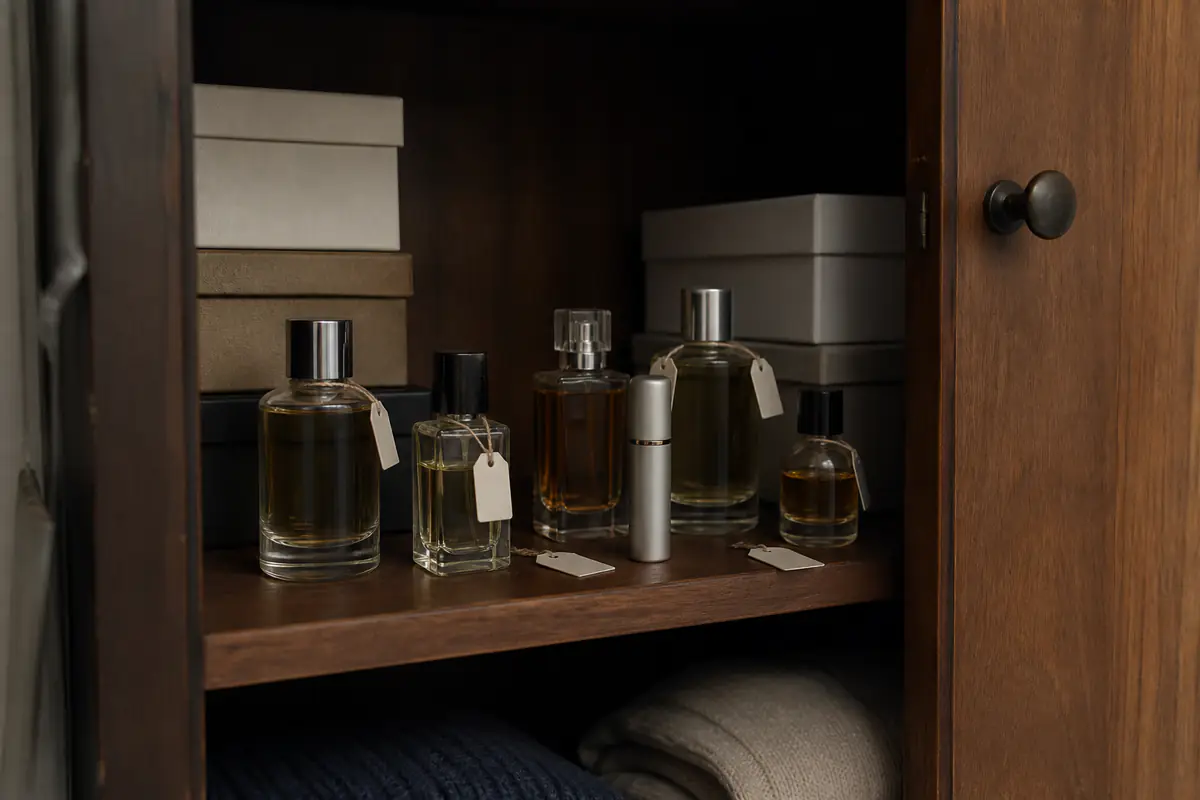
Use the original labelled bottle where possible, minimise heat and direct light, and record opening and purchase details. Investigate major colour, odour, leakage or spray changes without assuming every normal maturation effect means danger or authenticity failure.
Separate strength from care with the perfume-concentration guide, preserve options with the UK cosmetics-returns guide, and check product records using the UK cosmetics-label guide.
| Risk | What to check | Practical control | Avoid |
|---|---|---|---|
| Heat | Radiator, sunlight and temperature swings | Stable cupboard in a living space | Car, windowsill or hot loft |
| Light | Direct sun and strong display lighting | Closed box or dark cabinet | Permanent bright shelf |
| Air and leakage | Cap, atomiser, crimp and residue | Upright secure bottle | Loose decant for long storage |
| Confusion | Name, concentration, batch and opening date | Keep label and purchase record | Unmarked travel containers |
Fragrance ownership record
- Exact name and concentration.
- Bottle size and batch details.
- Retailer and purchase date.
- Opening date.
- Normal colour and spray.
- Storage location.
- Travel or decant history.
- Any leakage, irritation or odour change.
Preserve the identity first
Keep the bottle, label, concentration, size, batch details, seller and purchase evidence together. Similar fragrance names can exist in several strengths or later reformulations with different presentation.
Photograph the original information before a box is discarded. An unlabelled decant is harder to use safely, gift, compare or discuss with a retailer if something changes.
Choose stable temperature over maximum cold
A cool interior cupboard in an ordinary occupied room is often more practical than a location with repeated heating and cooling. Record nearby radiators, boilers, sunny walls and seasonal extremes.
Do not freeze perfume or move it repeatedly between refrigerator and warm room without specific maker guidance. Stability and safe household storage matter more than chasing one universal temperature.
Limit direct and prolonged light
Direct sunlight and strong display light add heat and can affect colour or formula over time. Opaque boxes and closed cabinets reduce exposure without requiring specialist equipment.
A dark bottle provides some protection but does not make a windowsill sensible. If display matters, rotate an empty decorative bottle rather than sacrificing the product.
Keep the bottle upright
Upright storage reduces prolonged liquid contact with closures and lowers leakage risk. Check that the shelf is level, stable and inaccessible to children and pets.
Do not crowd heavy bottles on a narrow glass shelf or store them where vibration and frequent knocks occur. Decorative caps may not support the bottle if lifted.
Protect the atomiser and closure
Wipe external residue with the maker-approved gentle method and keep the cap fitted where supplied. Spray away from the face to check a hesitant nozzle.
Do not insert pins into the atomiser or transfer perfume because of one weak spray. A damaged crimp, persistent leak or loose collar needs retailer or maker advice.
Minimise unnecessary air exposure
An atomiser normally limits open-air contact better than repeatedly uncapping or pouring. Use the original closure and avoid leaving splash bottles open during application.
Air space grows as a bottle empties, but that alone does not justify moving the remainder through several containers. Every transfer adds contamination, evaporation and labelling risk.
Treat bathrooms and cars as unstable storage
Bathrooms can combine humidity, warmth and repeated temperature changes, while parked cars can become very hot or cold. Neither is a dependable long-term location.
A small travel amount may be practical for a journey, but return the main bottle to stable home storage. Never leave glass where it can roll, break or be reached by a child.
Record opening rather than guessing age
Note when the product was first used and retain any durability or after-opening information supplied. Perfume presentation does not always use the same symbols as creams, so read the exact label.
Use the cosmetics expiry and PAO guide for the broader framework without inventing a universal life for every fragrance.
Know which changes deserve attention
Some fragrances deepen in colour or shift subtly with age, while severe sour, rancid or unfamiliar odour, leakage, sediment or irritation deserves caution. Compare with the product’s known baseline.
Do not diagnose safety or authenticity from colour alone. Stop using a product associated with a significant reaction and seek appropriate advice.
Apply with clean handling
Use clean dry skin as directed and avoid touching an atomiser opening. Splash bottles need particular care because fingers or applicators can introduce contamination.
Do not share a roll-on or other direct-contact format without a hygiene plan. Fragrance is cosmetic use, not a substitute for cleaning clothing or skin.
Protect eyes, damaged skin and surfaces
Follow label warnings, keep spray away from eyes and broken or irritated skin, and wash hands if necessary. Stop when unexpected burning, swelling or breathing symptoms occur.
Perfume can mark finished wood, painted surfaces, jewellery, plastics or fabric. Test material risk separately and do not use the room as a spray target.
Keep fragrance away from flame and heat
Many alcohol-based perfumes are flammable. Apply away from candles, smoking, cooking flames, heaters and other ignition sources, then allow spray to settle.
Do not store bottles beside a radiator or use heat to accelerate evaporation. Follow the exact label and local fire-safety guidance.
Make decants for defined short use
Choose a compatible clean container, transfer as little as needed and label fragrance, concentration and date. Keep it upright inside a protective leak-resistant pouch for travel.
A decant may not preserve the same closure performance as the original bottle. Do not sell, gift or retain an unlabelled liquid whose identity and handling are uncertain.
Plan air travel before packing
Check current carrier and airport liquid limits, container size and baggage rules. Protect glass from impact and leakage without relying on a decorative cap.
Do not assume duty-free or security treatment is identical on every connection. Carry purchase and identity information where a valuable bottle could be questioned or damaged.
Rotate use without forcing consumption
Keep a small visible selection and store the rest correctly, then record which fragrances are actually worn. This can prevent duplicates and forgotten open bottles.
A large collection is not lower cost simply because bottles last longer. Use total-cost thinking and count storage, decants and unused volume.
Buy a volume that matches the wearing pattern
Estimate sprays per use, uses per month and the number of other open fragrances competing for attention. A lower unit price on a large bottle does not help when the scent changes, taste moves on or most of the volume remains unused for years.
Samples and smaller bottles can reduce commitment, while a frequently worn signature fragrance may justify more volume. Do not build backup stock around temporary scarcity claims unless the exact formula, storage capacity and realistic completion date make the extra bottle defensible.
Prepare a bottle before gifting
For a new gift, preserve seals, receipt and exact concentration and check whether the recipient already owns it. For a personal bottle being passed on, disclose that it is opened and how it was stored.
Use the perfume gift guide. Do not disguise age, leakage, missing label or uncertain origin.
Address faults with evidence
Photograph leakage, damaged spray, packaging and order details before cleaning everything. Contact the retailer promptly and describe the observable fault rather than asserting an unproven cause.
Keep preference, age-related change and misdescription separate. Review online return evidence before sending a flammable liquid through a postal route.
Dispose of leftovers responsibly
Do not pour significant fragrance into drains or burn it off. Check local household hazardous-waste or cosmetic disposal advice and keep the product safely closed until accepted.
Only separate glass, pump and cap when local guidance permits and it can be done safely. Browse Beauty for related ownership decisions.
Original bottle or travel decant?
Longer storage and identity matter
The labelled closure, batch record and known material give the best ownership baseline.
A defined trip needs portability
A compatible labelled container holds only the amount needed and is protected from heat and leakage.
Balanced verdict
Stable, identifiable storage protects perfume better than display folklore. Control heat, light, closure, handling and travel while recording the normal condition.
Stop at major change, leakage or symptoms and seek evidence-based support rather than attempting a home repair.
Official checks:
GOV.UK cosmetics guidance for Great Britain ↗
NHS allergy information ↗
GOV.UK hand-luggage restrictions ↗
GOV.UK product safety advice ↗
Frequently asked questions
Should perfume be stored in a refrigerator?
Not routinely. A stable cool dark cupboard is often more practical; follow any exact maker guidance and avoid repeated temperature swings.
Does perfume expire after a fixed number of years?
There is no safe universal number. Use label information, opening records, storage history and observable changes for the exact product.
Can perfume be kept in a bathroom?
It is usually a variable environment with warmth and humidity, so a stable interior cupboard elsewhere is generally more suitable.
Is darker perfume automatically spoiled?
No — Some colour change can occur, but major odour change, leakage, sediment or symptoms deserves caution and evidence.
Can perfume be posted back for a return?
Alcohol-based fragrance can face carrier restrictions. Follow the retailer’s authorised route and never improvise packaging or declarations.
Methodology and limitations
We assessed perfume ownership through identity records, temperature, light, orientation, closures, air, opening dates, condition changes, hygiene, fire and surface safety, decants, travel, collection size, gifting, faults and disposal. We did not age-test formulas, authenticate bottles, diagnose reactions or set a universal expiry.
Limitations
Formulas, bottles, labels, homes, carriers and local waste services vary. Follow the exact current product and transport instructions and seek medical, retailer or disposal advice where appropriate.