How to measure for bras when shopping online in the UK
Underbust and bust measurements can build a starting shortlist, but they cannot capture breast shape, tissue distribution, wire width, cup depth or brand construction. Measure consistently, use the exact size chart and confirm the hygiene return policy before ordering.
In this guide
Use measurements to start, then fit the whole bra
Take a level snug underbust and a relaxed fullest-bust measurement, then follow the brand’s own UK chart. On arrival, assess band anchoring, wire placement, cup containment, centre front, straps and movement. If one area fails, change size, shape or style deliberately instead of tightening every adjustment.
This guide concerns adult everyday bras bought online. It is not medical advice and does not prescribe a size for pain, post-surgical needs, pregnancy, feeding, significant asymmetry or other specialist requirements. A trained fitter and appropriate healthcare professional can provide individual help.
Define the job before measuring
A smooth T-shirt bra, soft bralette, wired everyday bra, strapless style and high-impact sports bra solve different problems. Record the neckline, strap position, activity, preferred wire or wire-free construction and whether the bra must sit under close-fitting clothes. Do not assume one measured size will transfer unchanged across all of them.
Note current fit failures in specific language: band rides up, cups cut in, wire sits on tissue, straps slip or centre front floats. “Uncomfortable” matters, but a precise symptom helps choose the next change. Our shortlisting method separates essential fit and function from decorative preference.
| Fit area | Starting sign | Possible too small or shallow | Possible too large or deep |
|---|---|---|---|
| Band | Level, secure and comfortable on loosest practical hook | Pressure, distortion, fastening strain | Rides up or shifts with movement |
| Cup | Tissue contained without cutting or empty folds | Spillage, wire displaced, centre pulled away | Gaping or persistent loose fabric |
| Wire | Follows the breast root without sitting on tissue | Too narrow or cup lacks depth | Too wide or extends beyond the root |
| Centre front | Sits as designed without painful pressure | Floats because cups are small or shape differs | Can press if wires or gore are unsuitable |
| Straps | Stable with light supportive tension | Digging because band or cup is wrong | Slipping despite correct adjustment |
Measure and record consistently
- Use a soft tape over bare skin or a thin unpadded bra.
- Stand naturally, breathe normally and keep the tape level.
- Take a snug underbust without compressing painfully.
- Measure around the fullest bust without flattening tissue.
- Repeat each measurement and record the date.
- Read the brand’s method before converting to a size.
- Keep current-bra style, size and exact fit issues beside the numbers.
Take the underbust measurement
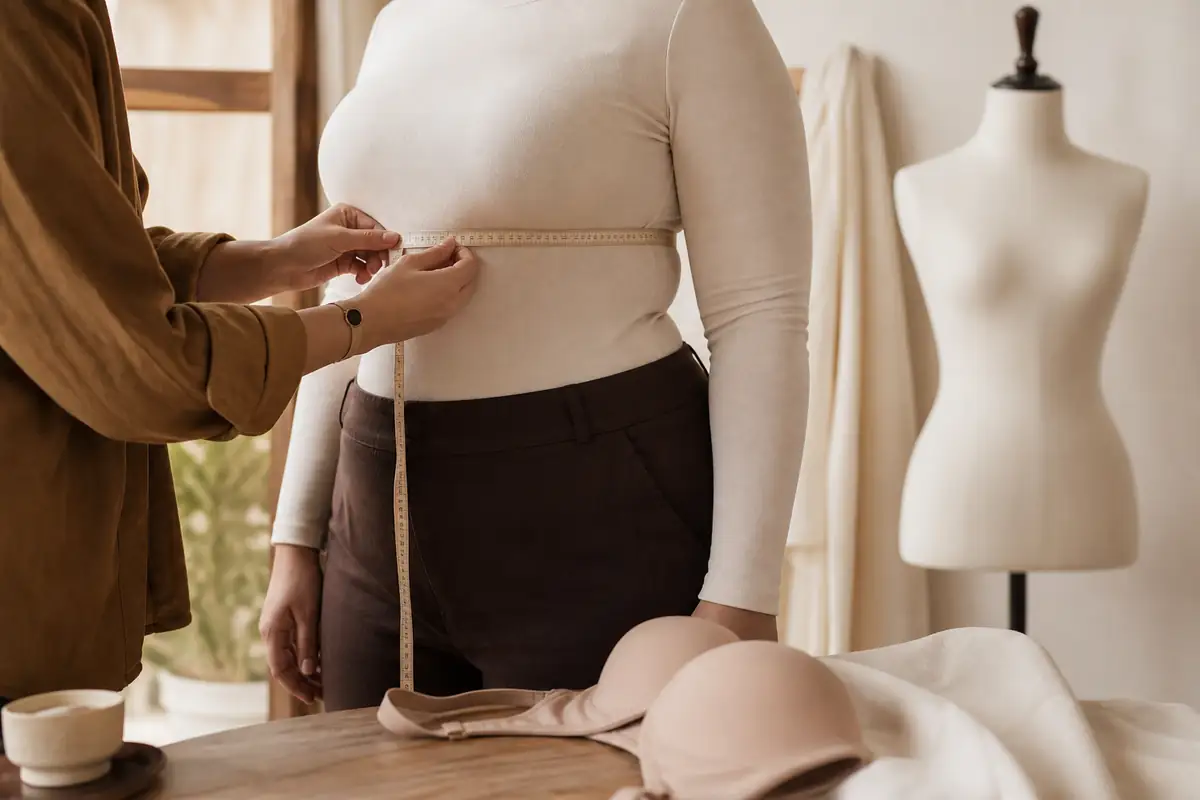
Place the tape directly beneath the breast root, level around the torso. Hold it snug enough to stay in place but not so tight that it changes breathing or digs into the skin. Check in a mirror from the side, or ask a trusted person to check the tape if preferred. Record the result rather than rounding immediately.
Some charts use the raw centimetre measurement, while others convert it to an even UK band size using their own method. Older “add inches” rules are not universal. Follow the current retailer or brand diagram and note whether a firm, snug or relaxed measurement is requested.
Take the fullest-bust measurement
Place the tape around the fullest part without compressing tissue. Keep arms relaxed and the tape parallel to the floor. A thin, non-padded bra can support tissue during measurement, but a heavily padded or poorly fitting bra may alter the result. If standing and leaning measurements differ substantially, a single number may be an especially rough starting point.
Repeat after resetting the tape. Small changes from breath, posture and tape angle are normal; a large change suggests the method needs checking. Do not pull the tape to obtain the size you expected.
Convert only with the exact chart
UK cup letters generally describe the difference between bust and band within a sizing system, not an absolute breast volume. Cup volume changes with band size. A 32D and 38D are not the same cup volume, and brands may progress letters differently, particularly around double letters and international conversions.
Use the UK column for the exact product. Do not assume that EU, US and UK letters map one-for-one. The UK size-chart guide explains why garment labels and international conversions need the retailer’s current table rather than memory.
Use sister sizes as a controlled adjustment
A sister size changes band and cup letter in opposite directions to keep an approximately similar cup volume. It can help when the cup volume is close but the band is clearly wrong. It does not preserve wire width, cup depth, strap position or fabric tension exactly, so it is a test direction rather than a guaranteed substitute.
If the band is too loose but cups fit, move to a smaller band and usually a larger cup letter according to that range. If the band is too firm but cups fit, move the other way. Recheck the brand chart because letter sequences vary.
Breast shape matters as much as volume
Two people with the same measurements may need different bras because fullness can sit higher, lower, centrally or towards the sides; roots can be narrow or wide; tissue can be firm or soft. Cup height, projection, seam direction, wire width and centre-gore height respond differently to those shapes.
Persistent gaping does not automatically mean the cup is too large. A tall moulded cup can gap on a shorter or differently distributed shape while its base is too shallow. Spillage does not always mean only “size up”; a narrower wire or deeper cup may be the more targeted correction.
Check the band independently
Try the bra backwards and upside down, with cups out of the way, if the construction permits. This can help distinguish band tension from cups that are stealing length because they are too small or shallow. A new adjustable bra is commonly assessed on the loosest usable hook so there is room to move inward as elastic relaxes, but design instructions take precedence.
The band should remain broadly level during normal movement. It should feel secure, not painful, and should not rely on straps to stay down. Very stretchy bands, longlines and wireless designs distribute pressure differently.
Position tissue and inspect the cup
Put the bra on according to its instructions, then gently settle tissue into the cup so the wire or cup edge sits at the root rather than on breast tissue. Inspect the neckline, underarm and centre while standing naturally. The cup should contain without cutting, folding or creating unstable empty space.
Moulded foam can hide the source of mismatch because it holds its own shape. Seamed unlined cups reveal tension more clearly but may show under clothing. Neither construction is automatically better. The right choice depends on shape, clothing and tolerance.
Assess wire and centre-front placement
For an underwired bra, the wire should follow the breast root and remain clear of tissue. Check underarm and centre placement after several minutes and movement. A centre gore may sit close to the sternum in many conventional wired designs, but plunge, soft-cup and some shapes behave differently; do not force a universal rule onto every construction.
Painful pressure, rubbing or tissue contact means the fit or style needs reassessment. Stop wearing a bra that causes injury or concerning symptoms. A fit guide cannot determine a medical cause.
Adjust straps last
Straps stabilise cups but should not provide most of the support. Adjust them after the band and cups are positioned. They should stay on the shoulders without cutting or pulling the band upward. Strap placement may be inherently unsuitable for narrow, sloping or asymmetrical shoulders even in the nominally correct size.
Convertible, racerback and J-hook arrangements change tension and neckline compatibility. Check the product instructions and ensure hardware lies comfortably. A larger cup is not a reliable fix for straps set too wide.
Test movement and clothing
Raise arms, reach forward, sit, turn and take several normal breaths. The band should remain anchored, tissue should stay contained and wires should not shift onto tissue. For sports use, test the movements relevant to the activity within the permitted clean try-on conditions; support claims should identify the activity level and evidence.
Try a clean top with the intended neckline. Seam visibility and silhouette are preferences, while displacement and pain are fit failures. Our occasionwear guide includes garment and underlayer checks when deadlines or alterations are involved.
Read materials and care before deciding
Elastane content alone does not predict firmness, recovery or lifespan. Band construction, knit, elastic width, power mesh and hardware matter. Check the fabric-composition guide and care-label guide, then decide whether hand washing, laundry bags, drying and rotation fit real habits.
Inspect seams, wire channels, hooks, sliders and elastic on arrival. Uneven stitching, exposed wire, sharp hardware or a product different from the listing should be documented before wear.
Protect the return option
GOV.UK lists sealed goods that are unsuitable for return for health or hygiene reasons, including underwear, among circumstances where change-of-mind cancellation can be restricted after unsealing. Retailer policies differ by product and seal. Read the exact policy before removing tags, gusset liners or hygiene seals.
Try on over clean skin, avoid scent or make-up transfer and keep packaging as required. Faulty, misdescribed goods are a different rights question from unwanted goods. Use the returns-policy checklist and verify the seller with the genuine-shop guide before ordering several sizes.
Order from the shortlist when
- The exact UK chart explains its measuring method.
- Style and cup construction address current fit issues.
- Materials, care and support suit the use case.
- The clean try-on and return route are clear.
Seek fitting help or pause when
- Charts conflict and the seller cannot explain sizing.
- Pain, injury or specialist needs are involved.
- Repeated size changes do not solve shape mismatch.
- Hygiene terms make an uncertain order too risky.
Balanced verdict
Underbust and bust measurements are a useful map, not a finished fit verdict. The best online process combines consistent measurements with the exact brand chart, a description of shape and current fit problems, then a clean movement test on arrival.
If the band is stable but the cup fails, investigate cup volume and shape before changing everything. If several styles remain painful or unstable, an in-person specialist fitting is more useful than repeatedly guessing across online charts.
Check current official information:
GOV.UK returns and refundsGOV.UK online and distance sellingGOV.UK textile labelling
Frequently asked questions
Can two measurements give an exact bra size?
No. They provide a starting size, while shape, wire, cup construction, band stretch and brand grading determine actual fit.
Should I add inches to my underbust?
Do not apply a universal rule. Use the measuring and conversion method published for the exact brand and product.
What is a sister size?
It changes band and cup letter in opposite directions to keep approximately similar cup volume, but shape and construction still change.
Does cup gaping always mean the cup is too big?
No. It can result from cup height, stiffness or a shape mismatch even when another part of the cup is too shallow.
Should straps carry most of the support?
Generally no. The band provides the main anchor in conventional designs; straps stabilise and should remain comfortable.
Can I return a tried-on bra?
It depends on the product, seal condition and retailer policy. Preserve tags and hygiene features, and distinguish change of mind from a genuine fault or misdescription.
How we researched this guide
Recommended Today reviewed current UK distance-selling, refund and textile-labelling guidance, then mapped online bra fit across measurement, sizing conversion, shape, band, cup, wire, straps, movement, care and hygiene returns.
Limitations
We did not fit-test individual bras or prescribe sizes. Bodies, brands, constructions and specialist needs vary, and charts change. Recheck the exact chart and return terms before purchase. The image is an editorial illustration, not a photograph from a product test.