Occasionwear online: sizing, alterations, delivery and return planning
An event outfit has two deadlines: arrival and final wearable fit. Buying online can widen choice, but success depends on body and garment measurements, underlayers, shoes, fabric behaviour, alteration scope and a return plan that remains open until the decision is made.
In this guide
Order for a fitting date, not the event date
Set a decision deadline early enough to return, replace or alter the outfit. Compare the exact garment measurements with the body in intended underlayers, prioritise fit at structural areas such as shoulders and waist, and never commission alterations until the outfit has passed the final keep-or-return decision.
This guide covers adult dresses, suits, separates and formal clothing for UK events. Bridal and highly specialist tailoring need longer lead times and expert fitting. Alteration feasibility varies by construction; an experienced tailor should inspect the physical garment before promising a change.
Turn the invitation into a clothing brief
Record date, venue, dress code, ceremony or work requirements, weather exposure, travel, sitting time and footwear. Decide what coverage, mobility and temperature control are essential. A rural outdoor wedding, city dinner and formal interview can all be “occasionwear” but demand different fabrics, hems and layers.
Use the invitation or organiser’s guidance rather than social-media assumptions. Build from pieces already owned: shoes, coat, bag, jewellery and underlayers can set colour, length and neckline constraints. The shortlisting framework prevents a dramatic photograph from replacing the actual event brief.
| Area | Low-risk evidence | Higher-risk sign | Decision |
|---|---|---|---|
| Fit | Body and garment measurements | Only a generic size label | Prioritise structural areas |
| Fabric | Composition, lining and care stated | Vague “luxury” language | Match climate and maintenance |
| Alteration | Generous seam or simple hem | Beading, boning or complex print | Ask a tailor before buying |
| Delivery | Dated checkout promise plus buffer | Arrival close to event | Order for first fitting |
| Returns | Clear condition, route and cost | Unclear specialist exclusions | Save terms before payment |
Build a backwards event timetable
- Event date and travel departure.
- Final complete outfit rehearsal.
- Latest alteration collection and correction.
- First tailor appointment, if required.
- Keep-or-return decision date.
- Expected delivery plus delay buffer.
- Order date and a backup-shop deadline.
Measure in the complete underlayer system
Measure bust or chest, waist, hip, shoulder, sleeve, inside leg and desired garment length as relevant. Wear the bra, shapewear, shirt, hosiery or base layer planned for the event, and stand naturally. Keep the tape level without pulling it tight. Repeat any surprising figure and note normal asymmetry.
Compare with the exact product chart and determine whether it gives body or garment dimensions. Garment measurements include design ease, while body measurements do not. For a structured jacket or dress, shoulders and upper torso are usually more difficult to alter than a simple hem. Our UK size-chart guide explains why nominal labels cannot be compared safely across brands.
Read the cut rather than copying the model
Model height and worn size can provide rough scale, but not your proportions, posture or preferred ease. Inspect where seams sit, whether the waist is fixed, how high the armholes are and whether the skirt or trouser shape allows sitting. Cropped, bias-cut, oversized and body-con designs need different measurement logic.
Look for back, side and moving views. A carefully posed front image can hide a low back, restrictive slit or pocket gape. If a decisive measurement is missing, ask the retailer. Product reviews can reveal repeated issues but should not override the current chart, because colours, batches and redesigned versions can be grouped.
Fabric and lining determine more than appearance
Read the fibre composition, lining, stretch description, transparency, weight clues and care instructions. Satin describes a weave, not one fibre or quality level. Sequins, beads, metallic yarns and bonded layers can add weight, snagging and alteration difficulty. Unlined pale fabric may need a slip; heavy lining may be uncomfortable in a warm venue.
Photographs under studio light may not show opacity or colour accurately. Read return conditions before conducting any light test at home and keep the garment clean. The fabric-composition guide and care-label guide help forecast comfort and upkeep without promising performance from fibre names alone.
Alterations need physical construction to work with
Simple shortening can become complex when a hem has lace, pleats, border print, beading or multiple lining layers. Taking in a side seam may disrupt pockets, boning or motif placement. Letting out requires sufficient seam allowance and matching fabric marks. Jacket shoulders and armholes are specialist changes and can cost more than expected.
Ask a local tailor about likely scope and lead time before relying on alteration. Send product details for an initial view, but treat any remote quote as provisional until the physical garment is inspected. Never pin, cut, steam aggressively or remove labels while a return is still possible. Once altered, a change-of-mind return is unlikely to remain available.
Delivery needs two independent buffers
The first buffer absorbs dispatch, carrier and split-parcel uncertainty. The second allows fitting, return, replacement and alteration. Enter the real delivery address and save the promised date at checkout; general banners and countdowns can exclude locations or products. Track every parcel, particularly if an outfit and matching piece come from different sellers.
For travel events, do not send an untested outfit directly to accommodation unless someone can inspect it. A backup should be a genuinely wearable outfit already owned, not another uncertain order. The delivery-planning guide explains cut-offs, split shipments and evidence if a promised date is missed.
Returns must remain possible through the first fitting
Read the current deadline, condition standard, return charge, route and exclusions before ordering. Occasion garments may include hygiene seals, protective strips or delicate embellishment instructions. Keep all tags and accessories attached, and preserve bags, hangers or boxes until the decision is complete.
Try indoors on a clean floor, protect fabric from make-up, fragrance, deodorant, jewellery snags, pets and food, and do not wear the piece to the event “just to see”. The returns-policy audit helps distinguish retailer goodwill from rights when an item is faulty or not as described.
Run a full outfit rehearsal
Wear the intended underlayers, hosiery, shoes, outer layer and bag. Stand, sit, walk, use stairs, raise arms, reach and simulate travel. Check that closures stay flat, straps remain positioned, trouser hems clear the ground and a jacket does not pull when seated. Photograph front, side and back in ordinary light.
Assess temperature and movement rather than only the mirror. Can you eat, dance, use facilities and carry essentials? A garment that looks perfect for one pose but cannot support the event is not a successful fit. Record alteration points clearly and take the shoes and underlayers to the tailor.
Calculate the event outfit at final wearable cost
Add delivery, returns, tailoring, specialist cleaning, suitable underlayers and any one-use accessories. A slightly higher garment price may be better value if construction fits without alteration; a sale item can become expensive after complex hemming. Do not treat returnable cash tied up across multiple speculative orders as cost-free.
After the event, future use and care determine value. Separates can be easier to rewear than a highly specific look, but only if they work with the existing wardrobe. The cost-per-wear guide can test that claim with conservative occasions rather than imaginary invitations.
Order online when
- The exact measurements and construction are clear.
- The first-fitting deadline has a real buffer.
- The clean return route is practical.
- Any alteration is plausible and budgeted.
Choose in-person fitting when
- Structural fit is difficult or highly asymmetric.
- The garment has complex tailoring or embellishment.
- The event leaves little recovery time.
- Several complete online orders would be necessary.
Balanced verdict
Online occasionwear works best as a planned fitting process, not a last-minute parcel. The strongest order combines item-level measurements, an appropriate fabric, an achievable delivery date and a return route protected until the garment is genuinely accepted.
Alteration can refine a nearly right garment, but it cannot make every construction suitable or preserve a change-of-mind return. Leave a backup and enough calendar space to say no.
Check current official information:
GOV.UK returns and refundsGOV.UK distance selling rulesGOV.UK textile labelling
Frequently asked questions
How early should I order occasionwear?
Work backwards from a first-fitting and alteration deadline, not merely delivery. Complex tailoring and travel require a longer buffer.
Should I size up for alterations?
Not automatically. Excess fabric can help some changes but harm shoulders, proportions and motif placement. Ask a tailor about the exact design.
Can I return a dress after pinning it?
Do not assume so. Pinning can mark or damage fabric; keep it unchanged until the return decision and check the current conditions.
Which area should fit first?
Prioritise structural, difficult-to-alter areas such as shoulders, upper torso and fixed waist, while considering the whole garment.
Are sale occasion clothes returnable?
Often, but not universally under voluntary policies. Check item eligibility, condition rules and statutory rights before paying.
What should I take to an alteration appointment?
Take the garment, intended shoes, underlayers and clear movement needs, with enough time for a second fitting.
How we researched this guide
Recommended Today reviewed UK distance-selling, returns and textile-labelling guidance and mapped an event timetable across measurement, delivery, fitting, alteration, return and backup decisions.
Limitations
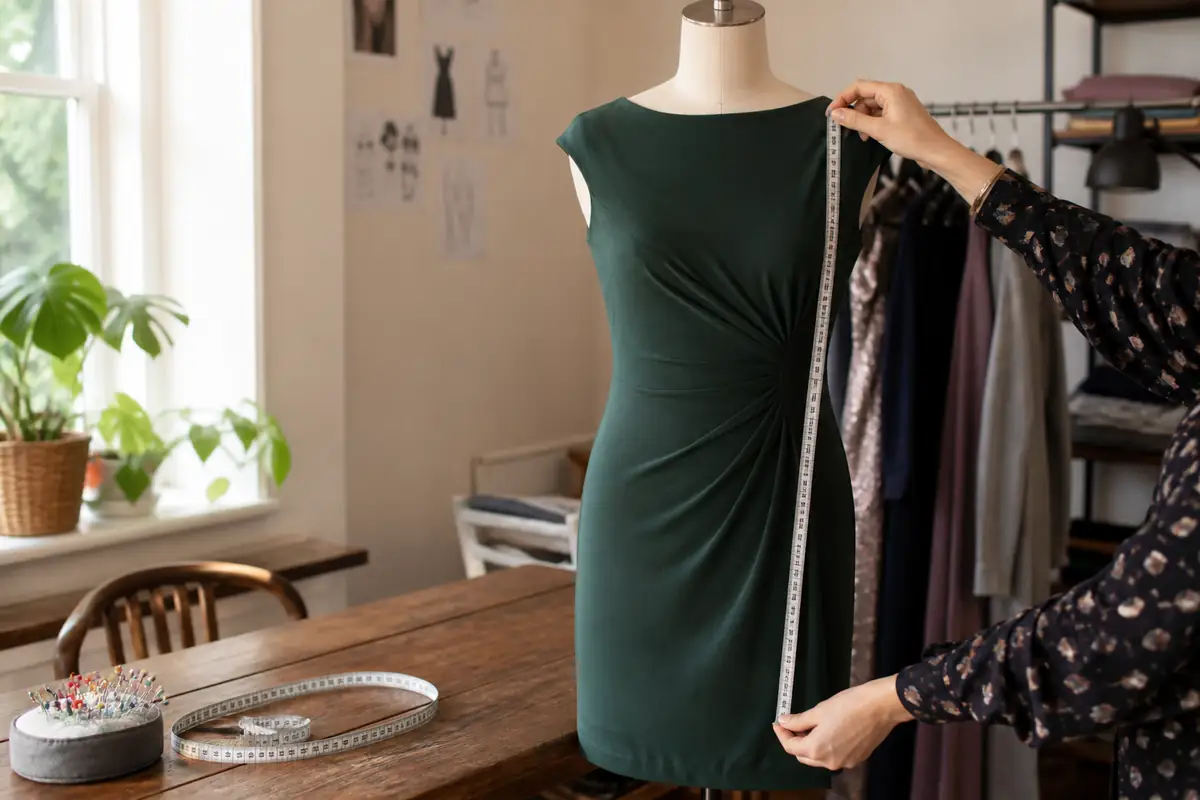
We did not fit or alter individual garments, and tailoring feasibility depends on physical construction. Retailer policies and delivery promises change. Recheck terms before purchase. The image is an editorial illustration, not a photograph from a product test.