Choosing an ironing board: working height, stability, surface and storage
An ironing board must be stable at a comfortable height, large enough for the garments being pressed and easy to store without becoming a household obstacle. Decorative covers are secondary to the frame and lock.
In this guide
Choose the frame and height range before the cover
Prioritise a rigid platform, secure leg lock, usable height adjustment and feet that suit the floor. Then compare surface dimensions, steam permeability, rest design and folded size against the actual iron, laundry and storage location.
A larger ironing board can speed up shirts and bedding, but it also weighs more and may not fit behind a door. A compact board stores neatly but forces repeated repositioning. The right compromise depends on the user’s height, the clothes normally pressed, the iron or steam generator and the safe space available around a hot appliance.
Measure use and storage before browsing
| Decision | What to measure | Risk if ignored |
|---|---|---|
| Working height | Comfortable elbow position standing or seated | Raised shoulders, bent back or poor control. |
| Surface | Length and widest point of garments and linen | Constant repositioning or fabric on the floor. |
| Iron rest | Base dimensions, cord exit and generator size | The appliance overhangs or sits insecurely. |
| Open footprint | Leg spread plus clear working space | Blocked route, contact with furniture or trip hazards. |
| Folded size | Height, width, depth and carrying route | The board will not fit its intended cupboard or hook. |
Find a neutral working height
Stand where the board will normally be used and estimate a surface height that allows relaxed shoulders and slightly bent elbows. The goal is controlled pressure without leaning heavily over the board. For more than one user, a broad adjustment range and a mechanism that is easy to reset are more useful than many closely spaced notches.
If seated ironing is required, check knee clearance, leg geometry and the lowest stable setting rather than assuming every adjustable board works from a chair. Handles and release levers should be reachable without placing fingers near pinch points. Product dimensions should state the working-height range, not only the folded height.
Judge stability on the intended floor
A stable board resists fore-and-aft movement, side sway and twisting when pressure is applied near the nose. Wider leg spacing can help, but frame stiffness, joints, feet and lock design all contribute. Hard-floor feet need grip without marking; carpet may need a different contact shape.
Read reviews for repeated reports of collapse, a slipping height mechanism or detached feet, but verify the current model because a familiar product name can cover revisions. Once delivered, open the board fully on a level surface, engage the lock and apply modest pressure at several points before placing a hot iron on it. See our online product-quality guide for a structured evidence check.
Choose a surface for the real laundry
Full-size boards reduce repositioning for shirts, trousers and bed linen. A tapered nose helps with sleeves, shoulders and smaller sections, while a broad rear section supports larger panels. Compact tabletop boards suit occasional small loads but require a stable heat-resistant supporting surface and do not replace a floor-standing model for everyone.
Measure the clear working room as well as the board. Fabric hanging from the sides should not touch a heater, cooking area or dirty floor. A very wide board may make it harder to reach the far edge for a shorter user. Our measure-before-buying guide applies the same doorway, footprint and storage discipline to household equipment.
Inspect the mesh, pad and cover as a system
Many boards use a perforated metal top so steam can pass through. Check that the platform feels flat and supported, without sharp edges or a pattern likely to mark through a thin pad. The pad should cushion seams without making the surface spongy, because excessive softness can reduce control.
A drawstring, clip or elasticated cover should remain taut without deep creases. Check whether replacements are sold in the exact size and shape. A cheap proprietary cover can become expensive if it is difficult to source, while a standard-size board is easier to maintain. Treat reflective or heat-retaining claims cautiously unless the maker explains the material and care.
Match the rest to the appliance
- Conventional steam iron: confirm the soleplate or heel can sit fully within the supported rest.
- Steam generator: compare the complete base-unit dimensions and weight with the stated platform limit.
- Cord route: make sure the lead does not cross the walking path or catch on the frame.
- Left-handed use: check whether the rest and cable arrangement work from either side.
- No rest: plan a separate heat-resistant location that remains stable and out of reach.
Do not balance an oversized generator on a rest designed for an ordinary iron. Manufacturer diagrams can exaggerate usable space, so rely on dimensions and load information. The board itself is not an electrical appliance, but its layout affects safe use of one.
Plan steam, ventilation and heat
Steam needs somewhere to disperse. Use the board in a ventilated area and allow the cover and pad to dry before storage. Repeatedly folding a damp board into a closed cupboard can encourage odour, staining or corrosion. Follow both the board and iron instructions for safe surfaces and maximum loads.
Keep the open board away from children, pets, door swings and busy routes. Fire-service advice is to use an ironing board, switch the iron off after use and leave it to cool on a heat-resistant surface. Never leave a hot iron unattended while answering the door or moving laundry.
Check the folding mechanism and carrying weight
Open and close the mechanism mentally from the product images: where is the lever, which way do the legs move and where could fingers be trapped? A transport lock helps stop a folded board opening unexpectedly. Confirm the product weight if it must be carried upstairs or lifted onto a wall hook.
Handles are uncommon, so a narrower frame edge may be the practical carrying point. Check that protruding rests, cable guides and antenna-style holders will not catch on door frames. If storage is vertical, the hook or bracket and wall fixing must be suitable for the board’s weight and the wall construction.
Think through useful extras
A sleeve board can help with narrow sleeves but adds another object to store. A laundry rack may keep finished items off the floor but can obstruct knees. Cable guides reduce snagging for some setups and get in the way for others. Integrated sockets add electrical complexity and should be chosen only with clear conformity information and a genuine need.
Extras should not compensate for an unstable frame. Score the board on stability, height, surface, rest and storage first. Apply our cost-per-use framework to the expected frequency: an occasional user may value compact storage, while a household pressing workwear weekly may benefit from a larger durable platform.
Inspect and maintain the board
Before each session, confirm that feet, hinges, fasteners and the height lock are secure. Replace a scorched, loose or heavily stained cover and allow the board to cool and dry before folding. Stop using it if the frame is bent, a weld or rivet fails, or the lock can release under normal pressure.
Clean only by the maker’s method and check replacement-cover dimensions before discarding the old one. A correctly tensioned cover is safer and easier to control than an improvised layer that can slide beneath a hot iron.
Keep the model and cover dimensions with the receipt. Replacement covers, feet or small parts extend useful life only when available. Our product-lifespan guide and repair and care framework help decide when maintenance remains sensible.
Which ironing-board route fits?
You regularly press shirts, trousers or linen
The open footprint fits safely, the height range works and storage can accept the folded dimensions and weight.
Use is occasional and storage is tight
You have a stable heat-resistant support, press smaller items and accept more garment repositioning.
Balanced verdict
A good ironing board disappears into the task: it stays still, supports the garment and folds away safely. Measure height, footprint, rest and storage before choosing the cover. Avoid an oversized board that cannot be used comfortably and a tiny one that turns every garment into repeated repositioning.
Continue with our appliance running-cost guide, durable appliance guide, warranty and guarantee guide and the Home & Kitchen archive.
Check current official sources:
Cleveland Fire Brigade electrical-equipment safety ↗HSE electrical-equipment guidance ↗
Frequently asked questions
What is the best height for an ironing board?
A height that allows relaxed shoulders, a fairly straight back and slightly bent elbows. Test the stated range against every regular user.
Can a steam generator sit on any iron rest?
No. Compare the complete base dimensions and weight with the rest and manufacturer’s stated load before use.
Is a wider ironing board always better?
It reduces repositioning but needs more reach, open floor space, storage space and carrying effort. Choose for the laundry and user.
When should an ironing-board cover be replaced?
Replace it when it no longer stays taut, is badly scorched or stained, or the pad no longer protects the fabric from the mesh pattern.
Can an ironing board be stored immediately after use?
Let the iron cool safely and allow the board and cover to dry before folding, following the manufacturer’s instructions.
Methodology and limitations
We assessed ironing boards through ergonomics, frame stability, surface geometry, cover construction, appliance compatibility, folding, storage, maintenance and public safety guidance. This is a buying framework, not a hands-on review of a named board.
Limitations
Dimensions, load ratings and replacement-part availability vary by model. Recheck the current manufacturer specification and instructions before purchase and use.
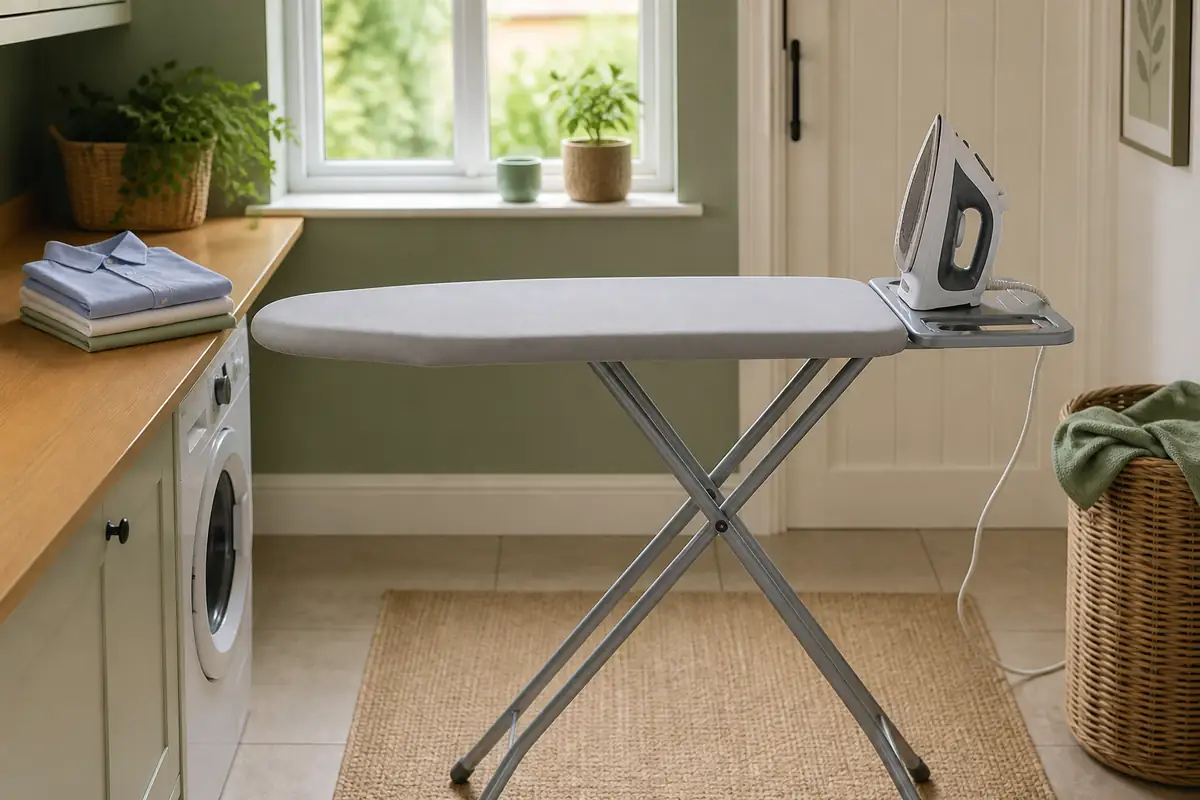
The image is an editorial illustration, not a photograph from a product test. Links are editorial and non-affiliate.