Foundations ownership guide: shade changes, pumps and expiry
Foundation ownership changes with skin condition, daylight, season, storage and packaging performance. A good routine preserves hygiene and shade confidence without forcing an unsuitable bottle to be finished.
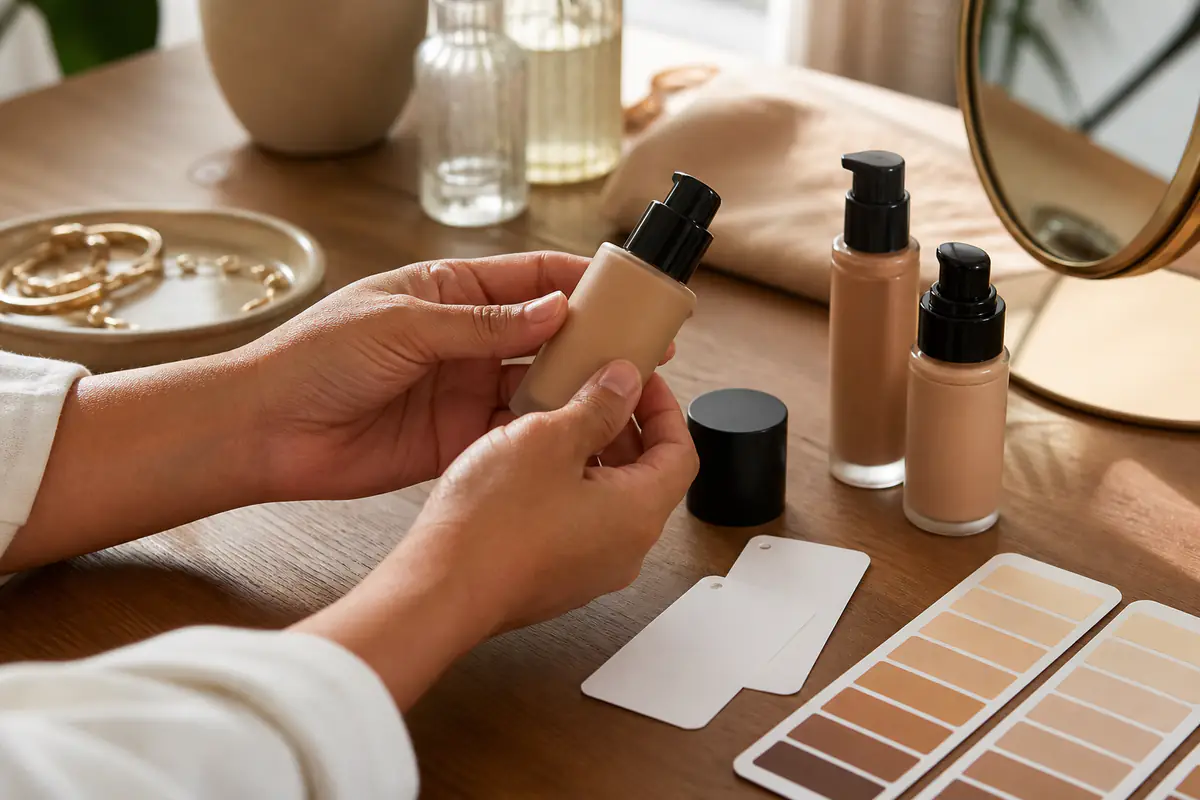
In this guide
Track the product, skin context and opening date together
A familiar shade name does not guarantee the same result across seasons, formulations or reformulations. Record batch and opening details, dispense hygienically, compare in stable light and stop when texture, smell, comfort or packaging changes.
Choose the product with the foundation value guide, refine depth and finish through the foundation selection guide, and coordinate targeted coverage with the concealer value guide.
| Change | Evidence to record | Reasonable response | Avoid |
|---|---|---|---|
| Shade mismatch | Daylight result, neck and seasonal context | Reassess depth and placement | Correcting with heavy layers |
| Pump fault | Bottle level, closure and dispensing pattern | Clean exterior and follow support | Adding liquid |
| Texture change | Opening date, storage, smell and separation | Stop and replace when unsuitable | Forcing remix |
| Skin reaction | Timing, products and symptoms | Stop and seek appropriate advice | Repeated challenge testing |
Foundation ownership record
- Write exact product and shade.
- Record opening date and batch.
- Photograph daylight match.
- Use clean application tools.
- Keep pump and cap clean.
- Follow the foundation label’s storage limits and keep the closure secure between applications.
- Log skin and seasonal changes.
- Stop if comfort or product changes.
Record the exact formula and shade
Keep brand, line, shade, finish, batch or lot identifier and purchase source together. A shade name can recur across different formulas without identical colour, coverage or oxidation.
Photograph the label rather than relying on memory. If a replacement behaves differently, compare codes and ingredient list before assuming the skin or technique is solely responsible.
Date opening and respect product life
Record the day the seal was first broken and follow period-after-opening and any shorter manufacturer instructions. Time begins with opening, not when the bottle looks half empty.
Discard earlier if smell, colour, texture, separation, comfort or packaging integrity changes. Remaining volume has no value when the product is unsuitable or potentially contaminated.
Expect seasonal skin and daylight changes
Skin depth, oil, dryness and redness can shift with sun exposure, heating, humidity and skincare. Recheck in indirect daylight rather than assuming one shade and finish works all year.
A seasonal mismatch does not always justify mixing products indefinitely. Decide whether a lighter application, different placement or a separate verified seasonal shade is simpler and more hygienic.
Separate oxidation from application context
Compare fresh and settled swatches under the same light and record time. Skincare, sunscreen, powder, oils and layer thickness can change perceived colour and finish.
Do not call every darkening oxidation without a controlled comparison. Use the same prepared area and avoid editing photographs that hides the relevant shift.
Dispense without contaminating the pack
Use the pump, nozzle or clean spatula as designed. Do not touch a nozzle to skin or tool and then return product to the bottle or jar.
Close promptly and wipe only the exterior with a method compatible with the packaging. Never add water, oil or solvent to restore flow unless the manufacturer explicitly instructs it.
Troubleshoot a pump conservatively
Check the lock position, cap, airless-pack instructions and whether the bottle has been stored as directed. Some pumps need initial priming, but repeated violent pumping can create mess or damage.
If the mechanism fails while product remains, contact the brand or retailer with product, batch and purchase evidence. Do not cut open a pack that was not designed for safe access.
Keep application tools genuinely clean
Wash reusable brushes and sponges with a compatible method and allow full drying in a clean ventilated place. A damp closed bag supports odour and contamination.
Single-use wedges are single use only. Do not share tools or foundation, especially where a person has an eye or skin infection.
Use thin controlled layers
Apply only where coverage is needed and build gradually while the formula remains workable. Thick correction layers can emphasise texture, transfer and shade mismatch.
Use beauty cost per use with successful applications, not pumps used. More product per day is not evidence of better value or coverage.
Coordinate sunscreen without diluting it
Apply sunscreen according to its own instructions and let the routine settle as appropriate. Do not mix foundation into sunscreen in a way that may create uneven protection.
Cosmetic SPF claims should not be used to justify insufficient application of a dedicated product. Follow current public-health and product guidance for sun protection.
Respond to pilling with one-variable tests
Pilling can involve incompatible layers, excess product, rubbing, insufficient setting time or dry surface material. Test foundation over a simplified known routine.
Change one layer or technique at a time. Buying a new foundation before identifying the interaction can reproduce the same problem and waste another product.
Manage transfer as a use-case trade-off
Record whether transfer occurs on masks, collars, phones or touch and under which powder or spray. A luminous flexible finish may transfer more than a dry set formula.
Do not over-powder irritated or dry skin simply to rescue an incompatible finish. Select the finish for the real day and accept the honest trade-off.
Stop when irritation appears
Remove the product gently and stop use if burning, swelling, rash or persistent discomfort develops. Record the timing, surrounding products and ingredient list for appropriate advice.
A patch test does not guarantee whole-face tolerance, and repeated self-testing through a reaction is not a value experiment. Seek suitable professional help for significant or persistent symptoms.
Store away from heat, moisture and light
Follow the label and keep the pack closed in a stable environment. A bathroom shelf, sunny windowsill or hot car can expose product and packaging to avoidable changes.
Keep liquid away from electrical vanity equipment and children. Do not freeze or refrigerate unless the manufacturer specifically directs it.
Replace by evidence, not sunk cost
Use the beauty-claims guide before repurchasing a reformulated or renamed line. Match ingredients, shade evidence, finish and pack rather than assuming continuity.
The the Beauty archive includes related routine and packaging decisions beyond foundation shade selection. Dispose of product and packaging through locally accepted routes without rinsing large residues into drains.
Keep travel decanting controlled
Use only a clean compatible container when the manufacturer permits transfer, label it with product and date, and avoid topping new product onto old residue. A decant loses some original pack protection and traceability.
For short trips, a secure original pack or verified smaller format may be safer than an anonymous pot. Do not share decants or return unused material to the main bottle.
Check mixing before making it routine
Mixing two foundations changes shade, finish, preservation context and wear. Use clean separate portions and observe comfort rather than pouring products together into their original packs.
A repeated two-bottle mixture can double open-product waste. When the ratio is stable and frequently needed, search for one verified closer shade or finish at the next replacement.
Record flash and camera behaviour separately
Photography can change colour through white balance, exposure, flash and screen processing. Test the actual event setup if photographs matter, without treating one phone image as daylight truth.
A product that looks acceptable in person but different on camera is a use-case decision, not necessarily a defect. Keep the intended viewing condition explicit.
Review the routine after a formula change
When the manufacturer changes ingredients, shade system or packaging, treat the replacement as a new product. Recheck compatibility with skincare, sunscreen, tools and removal.
Do not stockpile an old formula beyond a realistic opening and storage plan. Unopened backups can still age, and excess inventory hides money in products that may no longer suit the skin.
Plan correction without creating excess layers
If a shade is slightly off, first test placement, clothing neckline and daylight before adding bronzer, concealer or powder. Multiple corrective layers can change wear, comfort and total cost.
A consistent material mismatch should trigger a better shade decision at replacement rather than an ever-growing correction kit. Record what adjustment worked and whether it remained practical through a normal day.
Keep the cap and closure mechanically sound
Inspect cracks, dried product and loose threads around the cap, pump and bottle neck. A closure that no longer seals reliably can expose the formula and leak into storage or travel bags.
Do not transfer a damaged pack casually into an unlabelled household container. Contact the retailer or manufacturer with product, batch and purchase evidence when packaging fails prematurely.
What should you do when foundation stops working?
The product remains stable and comfortable
A seasonal layer, lighting or application issue can be isolated without contaminating or diluting the formula.
The product or skin has changed materially
Smell, texture, packaging integrity, expiry or comfort makes further use poor value.
Balanced verdict
Foundation value ends when shade confidence, comfort, hygiene or packaging fails. Track the exact product and opening date, use clean tools and reassess the skin context rather than forcing the bottle.
A smaller controlled wardrobe of verified formulas is easier to own than several simultaneous open products.
Official checks:
GOV.UK cosmetic product guidance ↗
NHS contact dermatitis information ↗
NHS sun safety guidance ↗
GOV.UK product safety advice ↗
Frequently asked questions
Can foundation shade change after opening?
Perceived colour can shift with formula settling, oxidation, storage, surrounding layers, light and seasonal skin changes.
Can water be added to a blocked foundation?
Do not dilute it unless the manufacturer explicitly instructs that method; contamination and formula performance can change.
How should an opening date be tracked?
Write it on a separate record or suitable label and follow the exact product period-after-opening guidance.
Can foundation be shared?
Sharing product or tools increases hygiene risk, especially when applicators contact skin.
Should a reaction be tested again?
Stop use and seek appropriate advice for significant or persistent symptoms rather than repeatedly challenging the skin.
Methodology and limitations
We assessed foundation ownership through shade tracking, seasonal skin change, dispensing, tools, storage, product life, application interactions, reactions and replacement. No individual foundation formula was trialled on skin or compared for wear duration by our team.
Limitations
Formulas, shades, packaging, storage instructions and individual skin responses vary. For this foundation, consult its precise label and ingredient list; continuing irritation or other persistent symptoms need appropriate professional advice rather than repeated cosmetic experiments.