Foundation value guide: shade match, formula, wear and cost per use
Foundation value starts with a credible shade and formula match. A cheap bottle that oxidises, separates or irritates is waste; an expensive one is no bargain if its finish and routine do not suit everyday use.
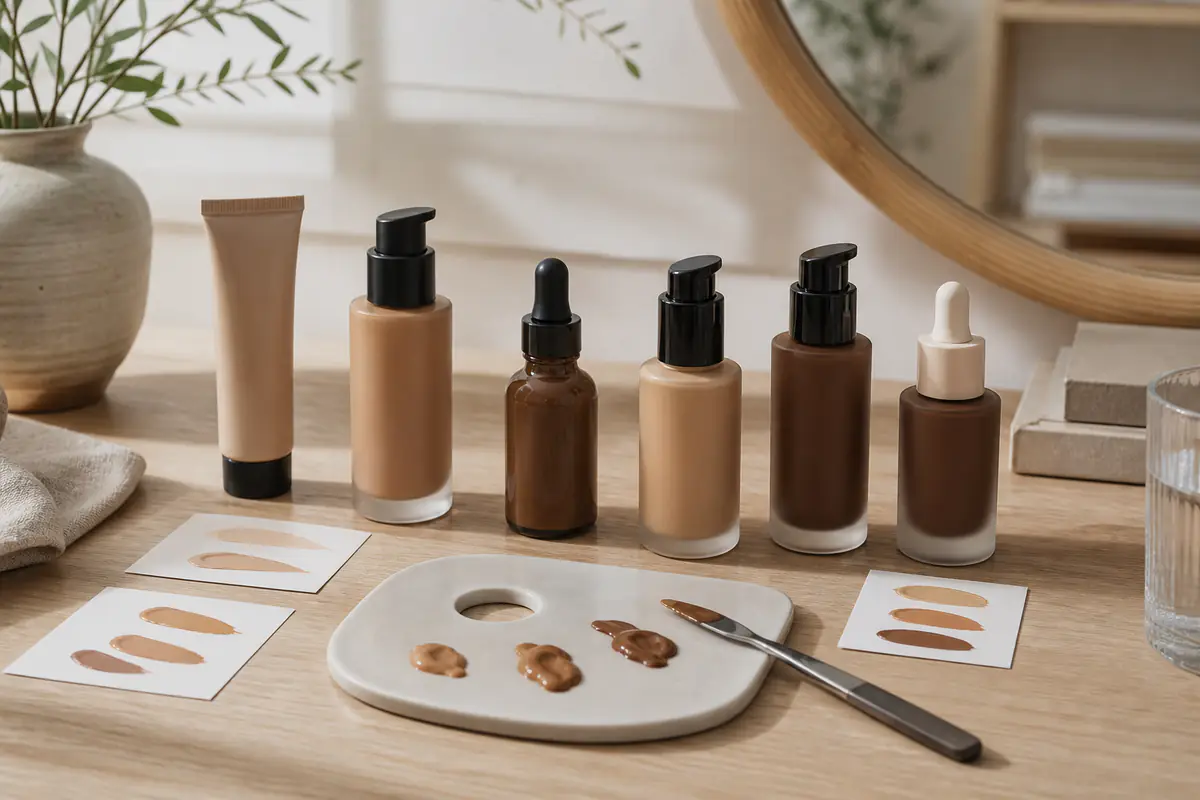
In this guide
Buy the smallest evidence-backed commitment
Shade depth, undertone, finish, coverage and compatibility with the real skincare routine matter before prestige or cost per millilitre. Use authorised shade evidence, patch test as appropriate, preserve hygiene and record opened date. Never share used liquid complexion products.
Build the specification with the foundation selection guide, compare use through beauty cost per use, and manage opened products with the PAO and expiry guide.
| Decision | Evidence to check | Low-waste method | Common false economy |
|---|---|---|---|
| Shade | Depth, undertone and change after drying | Authorised sample or hygienic tester | Buying several full bottles to mix |
| Formula | Ingredients, finish and skin needs | Patch test and one controlled routine | Copying an influencer with different skin |
| Wear | Transfer, separation and removal | Normal-day trial in varied light | Judging only immediately after application |
| Cost | Usable amount, frequency and PAO | Cost per successful wear | Largest bottle regardless of use |
Foundation value worksheet
- Define desired coverage and finish.
- Separate depth from undertone.
- Check complete ingredients and warnings.
- Use an authorised hygienic shade route.
- Observe the product after it dries.
- Test with the normal skincare routine.
- Keep the foundation’s first-opening date beside its period-after-opening symbol.
- Stop after irritation or material change.
Define what foundation must do
Write the desired coverage, finish, application speed, transfer tolerance, event or everyday role and removal routine. Decide whether targeted concealer or a tinted moisturiser could solve the same need with less product.
Value is not maximum coverage for minimum price. It is a repeatable result that fits the skin, lighting, time and comfort available without encouraging wasteful correction layers.
Separate shade depth from undertone
Depth describes how light or deep the colour is; undertone concerns the hue relationship, often described with terms such as warm, cool, neutral or olive. Brand labels are not standardised, so use them only within that range.
Compare along the jaw or another maker-recommended hygienic area where face and neck can be considered together. Observe in indirect daylight and normal indoor light rather than trusting one illuminated shop mirror or camera screen.
Allow the formula to dry before judging colour
Some foundations change as volatile ingredients evaporate or as the film settles. Record the freshly applied appearance and the result after the maker’s suggested setting time before deciding whether the match holds.
A darker or warmer dried result may be described as oxidation, but do not diagnose the chemistry from colour alone. Repeat with clean tools and a controlled routine to distinguish formula behaviour from mixing, lighting or old product.
Match finish and coverage to the real skin routine
Matte, natural, satin and radiant finishes describe an intended appearance, not guaranteed comfort. Skin preparation, sunscreen, primer, powder, climate and application amount can alter the result.
When assessing foundation value, keep the application routine stable while changing a single product or tool. Buying a new primer, powder and spray to rescue a mismatched foundation makes its true cost far higher and can obscure which layer causes pilling or separation.
Read ingredients for individual needs
Use the cosmetic ingredients guide to identify fragrance, pigments, film formers or other personally relevant ingredients without treating the list as a simple good-versus-bad ranking.
Follow warnings and professional advice for known allergies or skin conditions. A past reaction to one product does not prove an entire ingredient family is unsafe, while marketing terms do not guarantee suitability.
Use hygienic sampling where available
Prefer authorised samples, sealed sachets or staff-managed testers. Do not dip fingers into communal containers, share personal foundation or decant from an unknown source, because contamination can destroy any saving.
A sample should answer shade, finish, comfort and routine compatibility before a full-size commitment. It is not permission to stretch a contaminated product or ignore the stated use period.
Test wear through an ordinary day
Apply a measured normal amount with the tool and skincare routine you actually use. Check after application, once set, mid-day and before removal for separation, transfer, patchiness, colour change and comfort.
Include different lighting and ordinary activities without deliberately stressing the skin. One perfect photograph or an unusually long event is less useful than repeatable comfortable wear at normal frequency.
Count usable product, not bottle size
Record volume, typical pumps or drops, successful wears per week and the period in which the formula remains suitable after opening. A large bottle can be worse value if shade use is seasonal or the product changes before it is finished.
Apply cost per use only to successful comfortable wears. Do not count occasions where extra products were needed to repair the finish or the foundation was removed because it irritated or looked unsuitable.
Treat mixing shades as an ongoing cost
Mixing two compatible shades can improve a match, but it doubles inventory, opened-date tracking and formula interactions. Record the ratio and check that both products are intended for the same use and remain stable together.
A purpose-made mixer may be more controlled than buying repeated full bottles, but no mixture should override warnings or be stored after ad hoc blending unless the manufacturer permits it.
Do not buy sunscreen claims as a substitute routine
Foundation with SPF may contribute protection when applied as directed, but cosmetic coverage amount and evenness may not match a dedicated sunscreen routine. Follow official sun-protection guidance rather than reducing a separate suitable product by guesswork.
Layering can change finish and wear, so test the foundation over the sunscreen actually used. Value depends on compatibility without compromising the protective product’s instructions.
Understand hygiene, PAO and material change
Record the opened date, period-after-opening symbol and storage instructions. Keep pumps, caps and applicators clean, avoid adding water or saliva, and store away from inappropriate heat or sunlight.
Discard sooner after unusual odour, colour, texture, separation that does not resolve as instructed, contamination or irritation. Do not preserve an unsuitable product merely because it was expensive.
Read UK return restrictions before opening
Use the UK cosmetics returns guide to distinguish a sealed change-of-mind return from a faulty, unsafe or misdescribed product. Hygiene exclusions can limit voluntary returns once opened.
Save the listing, order and condition. If a product causes a concerning reaction, stop use and seek appropriate medical advice rather than repeatedly testing it to build evidence.
Resist claims that do not define the outcome
Use the beauty claims guide to translate terms such as flawless, skin-like, clean or long-wear into measurable questions about coverage, finish, ingredients and test conditions.
The the Beauty archive offers other ways to assess a foundation routine without treating a lower bottle price as the whole saving. The best-value foundation is not the one with the largest claim set; it is the smallest hygienic purchase that works repeatedly without unnecessary correction products.
Compare packaging by dose control and protection
A pump can limit contact and make dose repeatable, while a tube can allow controlled small amounts and a dropper may expose the neck or applicator to handling. Judge the complete package, cap and dispensing behaviour rather than treating one format as universally hygienic.
Record how much product is trapped, whether the container travels safely and whether the formula must be shaken. Do not dismantle packaging or decant unless the maker permits it, because air, light and contamination can change the product.
Keep shade records without turning them into universal matches
Save brand, range, exact shade, date, season, skin routine and lighting notes for a successful match. This can narrow a future search but does not prove that another formula with the same shade name or an online conversion will match.
Complexion and routine can change, while brands reformulate or rename ranges. Recheck a fresh product rather than relying indefinitely on an old bottle or a cross-brand matching database.
Which foundation is better value?
One formula works in the real routine
Shade, undertone, finish, comfort, normal-day wear, hygiene and usable quantity are all evidenced with little corrective product.
The bottle creates a second shopping list
A wrong shade, unstable wear or incompatible routine needs several mixers, primers or powders and the return or sample evidence is weak.
Balanced verdict
Foundation value is cost per comfortable, credible wear before the product expires or changes. Prioritise hygienic shade evidence, routine compatibility and a realistic quantity rather than prestige, bottle size or a perfect first-minute photograph.
A well-matched modest formula used consistently is better value than multiple speculative bottles bought to solve one uncertain shade.
Official checks:
NHS contact dermatitis guidance ↗
NHS sun safety guidance ↗
GOV.UK consumer protection rights ↗
Frequently asked questions
Should foundation be matched on the hand?
Usually not as the only check. Follow brand guidance and compare face, jaw and neck relationship in several relevant lighting conditions.
Why does foundation look darker after application?
Drying, lighting, skincare, mixing or formula change can affect appearance. Observe a controlled application after it sets before concluding why.
Is a larger bottle always better value?
No — It is poor value if the shade is seasonal, use is infrequent or the product changes before the PAO period ends.
Can two foundations be mixed?
Compatible products may be mixed for immediate use, but this adds cost and uncertainty. Do not store ad hoc mixtures or override warnings.
Can opened foundation be returned in the UK?
A retailer’s voluntary return terms may exclude opened foundation on hygiene grounds. Faulty or misdescribed goods are a different issue; keep evidence and check the retailer terms.
Methodology and limitations
We assessed foundation value through shade depth, undertone, drying, finish, coverage, ingredients, sampling hygiene, normal-day wear, quantity, mixing, sun claims, PAO, returns and claim interpretation. We did not dermatologically test products.
Limitations
Skin needs, allergies, lighting, climate, formulas, shades, stock and retailer policies vary. Follow manufacturer instructions and professional medical advice for reactions or known conditions.