Choosing foundations: undertone, depth, finish and coverage
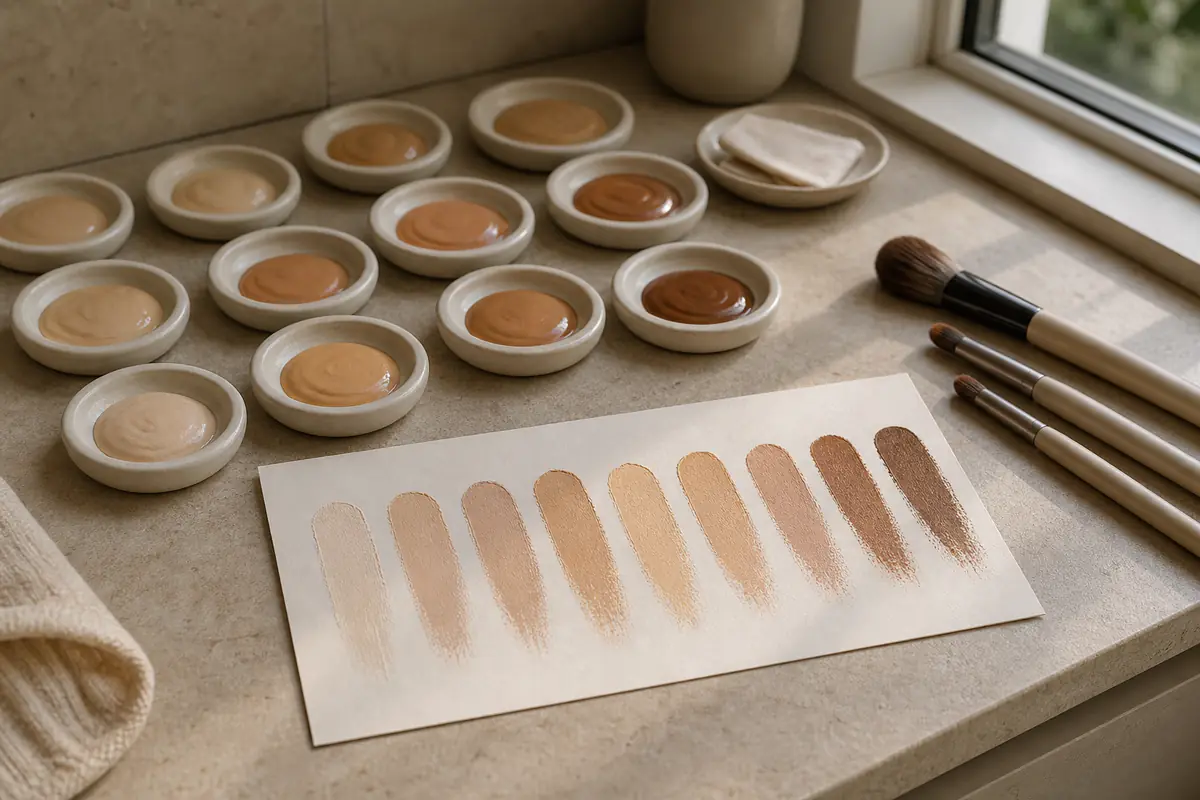
Foundation matching is a controlled comparison of depth, undertone, finish and coverage in the intended routine. Test a small hygienic sample across face and neck, check it in several lights and allow it to settle before deciding.
In this guide
Match depth first, then refine undertone and finish
Compare thin swatches on relevant facial areas in neutral daylight after the formula has settled. A perfect-looking wet hand swatch can dry darker, react with skincare or appear different across redness, pigmentation and neck depth.
Read labels through the cosmetics ingredients guide, assess claims with beauty marketing claims explained, and cost trial use through beauty cost per use.
| Variable | Question | Test | Common error |
|---|---|---|---|
| Depth | Is it visibly lighter or darker after settling? | Thin face-to-neck swatches | Matching only the hand |
| Undertone | Does it turn pink, yellow, orange or grey? | Compare adjacent undertone options | Treating labels as universal |
| Finish | Does light reflect or catch texture as intended? | Normal routine in several lights | Using only store spotlights |
| Coverage | Can thin layers reach the needed result? | One layer, then local build | Applying a mask to force coverage |
Foundation trial record
- Keep the foundation’s shade code and formula name beside the batch reference and sampling source so a later colour comparison is not made against an unidentified swatch.
- Record moisturiser, primer and sunscreen.
- Use clean tools and a hygienic sample.
- Use similarly thin foundation swatches over comparable areas of the jaw or face; a heavily built-up patch can change apparent depth and coverage.
- Check after the stated settling time.
- View window, indoor and camera light.
- Note transfer, comfort and texture.
- Keep purchase and return conditions.
Separate depth from undertone
Depth describes how light or dark the shade appears; undertone describes the colour direction within it. A shade can have a plausible undertone but still be too deep, creating a visible edge.
Start with neighbouring depths, then compare undertone. Brand names such as neutral or warm are internal labels and do not translate reliably across formulas.
Choose facial test areas deliberately
Hands and wrists differ from face, neck and chest in exposure, redness and depth. Use a hygienic sample on the side of the face or jaw as appropriate, comparing how it connects with the visible neck.
There may be no single colour that matches every area. Decide whether the goal is overall evening, spot coverage or matching the dominant visible region without masking natural variation.
Allow for settling and oxidation without myth
Some formulas darken or shift as volatile ingredients evaporate, oils mix and layers settle. Record the manufacturer guidance and compare at consistent times.
Do not label every mismatch oxidation. Too much product, wrong depth, lighting, powder, skincare or a dirty applicator can also change appearance.
Match finish to the complete routine
Matte, natural, satin and radiant describe intended light behaviour, not guaranteed comfort. Moisturiser, sunscreen, primer, powder and setting spray can alter the finish.
Test the foundation over the routine actually used, changing one variable at a time. Our moisturiser ownership guide helps stabilise that base.
Build coverage in thin controlled layers
Sheer, medium and full coverage are ranges influenced by tool and amount. Apply a measured thin layer, let it settle and add locally only where needed.
Using a heavy layer to force a sheer formula into full coverage can cause texture and transfer. A concealer may address isolated areas with less total product.
Check colour in several ordinary lights
View neutral window light, typical indoor light and the environment where the product matters. Avoid direct sun and coloured bulbs as the only test.
Phone cameras apply processing, so use the mirror as well as photographs. If flash photography matters, test it privately without assuming one image represents all conditions.
Use samples without contaminating products
For a facial shade check, choose a sealed foundation sample or a portion dispensed without contact between a shared applicator and skin. Use clean hands and tools, do not double-dip shared testers and never apply a communal applicator directly to the face.
Label decanted samples and use them within appropriate guidance. A sample helps assess shade and short wear but may not represent months of product stability.
Record skin response separately from appearance
Comfort, tightness, burning, itching and breakouts need their own timeline. Introduce one new base product into a stable routine and follow appropriate patch-testing advice.
Stop for concerning reactions and seek qualified advice where needed. A shade match does not make a formula medically suitable.
Interpret online shade tools as starting points
Reference-shade databases, photos and quizzes can narrow options, but screen colour, old formula matches and self-reported undertone add error. Confirm whether the reference product and shade still use the same formula.
Order from a genuine authorised route using the genuine-shop checklist, and read cosmetic return restrictions before opening full size.
Repeat the match when seasonal colour changes
Face and neck depth can shift with season, sun exposure, skincare and clothing contrast. Keep the successful shade, date, routine and lighting notes rather than assuming one match remains exact all year.
If two shades are mixed, record the ratio and recognise the extra cost and hygiene workload. A single close shade with flexible coverage may be more repeatable than a perfect mixture that is difficult to recreate.
Calculate usable cost, not bottle cost
Record stated volume, amount per application, need for mixing and whether the shade works across seasons. A bargain shade that needs another product to correct it may not be cheaper.
Use samples before backups, keep the pump clean and store as directed. Browse Beauty for separate hygiene and shelf-life guidance.
Keep the successful application method with the shade record
Record tool, quantity, placement order and whether thin layers were pressed, buffed or spread. A shade that looks balanced with a sheer sponge application may appear deeper or more opaque with a dense brush, while powder placement can change both finish and colour impression.
Repeat the same method when comparing an adjacent shade or replacement bottle. If the result changes, inspect routine, lighting, batch, storage and application before concluding that the labelled colour alone is responsible. This makes future sampling faster and reduces waste from correcting an inconsistent technique with extra products.
One shade or two controlled options?
Depth and undertone remain stable in the intended routine
A thin application settles evenly across relevant face and neck areas in ordinary light without requiring repeated correction.
A genuine seasonal depth change is documented
Two hygienically managed shades or a supported mixer cover predictable change more accurately than wearing one visibly wrong depth year-round.
Balanced verdict
Foundation matching succeeds when depth, undertone, finish and coverage are tested as separate variables. Use hygienic facial samples, ordinary lighting and a stable skincare base, then wait for the formula to settle.
Buy full size only when colour, comfort, routine compatibility and return restrictions are all understood.
Official checks:
GOV.UK Cosmetic Products Enforcement Regulations guidance ↗
NHS contact dermatitis guidance ↗
GOV.UK product safety alerts and recalls ↗
Frequently asked questions
Should foundation match the hand or jaw?
Hands often differ. Compare hygienic thin swatches on relevant facial areas and how they connect with the visible neck.
What does foundation oxidation mean?
It describes a colour shift after application, but lighting, amount, skincare and initial mismatch can produce similar impressions.
Is neutral undertone the safest choice?
Not automatically — Brand labels differ; compare adjacent options at the correct depth.
How long should a swatch settle?
Follow the formula guidance and use a consistent interval long enough to observe normal drying and interaction with the routine.
Can opened foundation be returned?
Retailer and hygiene restrictions vary. Read the exact UK policy before opening or ordering multiple shades.
Methodology and limitations
We assessed foundation choice through depth, undertone, facial test area, settling, finish, coverage, lighting, hygiene, response, online tools and usable cost. No named foundation was clinically evaluated or ranked by our team, and this guide does not establish its wear time, skin compatibility or colour change under controlled conditions.
Limitations
Skin, lighting, cameras, formulas and retailer policies vary. This is general cosmetic guidance, not dermatological advice. Stop using a foundation that causes a significant reaction and obtain suitable professional advice for persistent redness, discomfort or other concerning symptoms rather than continuing the shade trial.