Mascara value guide: brush, formula, wear, hygiene and cost per use
Mascara value comes from a compatible brush and formula that can be applied, worn and removed comfortably before the tube becomes dry or unsuitable. Price the usable period, not the nominal volume.
In this guide
Buy the smallest reliable formula-and-brush match
A dramatic claim or oversized brush is not value when control, comfort, removal or hygiene fails. Define the finish and wear conditions, compare wand geometry, choose a workable removal routine and replace a product when performance or safety changes.
Start with the detailed mascara selection guide, compare surrounding base choices through the foundation value guide, and place targeted coverage with the concealer value guide.
| Decision | Evidence to compare | Useful match | Avoid |
|---|---|---|---|
| Brush | Length, diameter, shape and spacing | Control for lash and eye geometry | Choosing only by dramatic appearance |
| Formula | Washable, water-resistant, tubing or waterproof | Wear and removal conditions | Assuming stronger wear is always better |
| Wear | Smudging, flaking, transfer and curl retention | Realistic day and climate | Judging only at application |
| Ownership | Opening date, hygiene, removal and usable period | Comfortable repeat use | Stretching a changed or contaminated tube |
Mascara evidence card
- Define length, volume or separation priority.
- Record eye sensitivity and contact-lens use.
- Compare brush dimensions and shape.
- Choose required water resistance.
- Plan a compatible remover.
- Open only one test tube at a time.
- Date the opening.
- Stop if smell, texture or comfort changes.
Define the finish without stacking contradictions
Choose the primary result: separation, visible length, root definition, volume, curl hold or a soft tint. A product cannot maximise every effect without trade-offs in build, stiffness, clumping or removal.
Write where it must work: short office day, humid commute, exercise, watery eyes or an event. The most durable formula is unnecessary when easy daily removal is the stronger need.
Match brush scale to eye and lash geometry
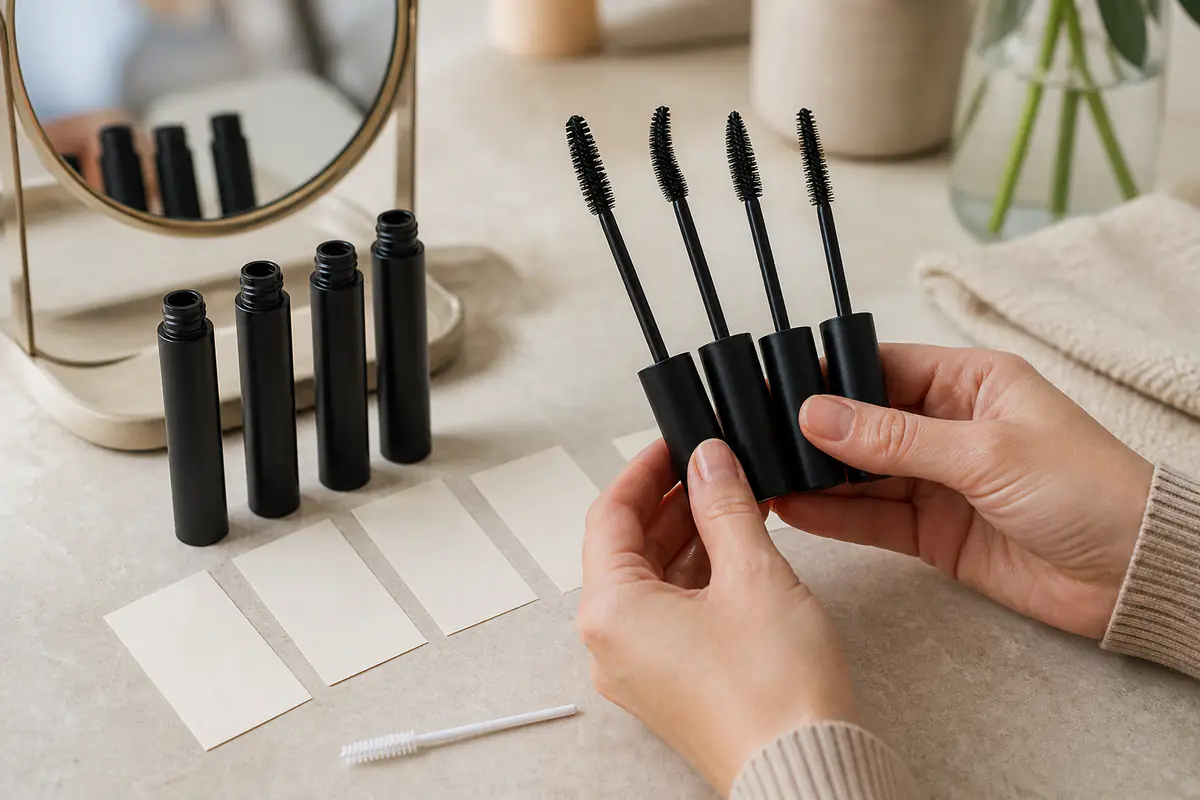
Record brush diameter, length, taper, curve and bristle spacing. A large dense wand may load quickly but can mark a small lid or crowded inner lashes; a narrow wand can improve control while needing more strokes.
The ideal brush is one that reaches the intended lashes without repeated skin contact. Product photographs rarely show scale reliably, so use stated dimensions or compare the wand with a familiar product where possible.
Separate moulded combs from fibre brushes
Moulded elastomer wands can provide defined teeth and flexible shapes; twisted-wire fibre brushes can hold and distribute formula differently. Neither type is universally superior because spacing, taper and formula viscosity work together.
Do not buy a brush shape in isolation. The same geometry can behave differently with a wetter or drier formula, so model-specific reviews should describe both and the conditions of use.
Choose formula family by removal need
Washable formulas usually prioritise easier cleansing; water-resistant and waterproof options can handle moisture with more demanding removal; tubing products form polymers around lashes and release according to their instructions.
Check the exact product wording rather than assuming every “long wear” claim means waterproof. Stronger resistance can increase rubbing or cleanser use if the routine is mismatched.
Treat curl claims as a system
Curl retention depends on lash properties, curler technique, formula weight, application amount and humidity. A lighter coat may hold better than repeated wet layers even when the product promises volume.
If using a curler, follow safe instructions and avoid pulling against hardened mascara. Replace damaged pads and stop if the tool pinches or exposes metal.
Build volume without making flakes inevitable
Allow a controlled first coat and add only while the formula remains workable under its directions. Repeated dry brushing can create brittle buildup, uneven tips and fallout.
A fibre or primer step adds another compatibility and removal question. Count it in cost and routine instead of judging the mascara as a standalone bargain.
Check smudging and transfer in context
Oil around the eye, sunscreen, concealer, lid shape, humidity and touching can all affect transfer. Test the intended surrounding routine rather than assuming one wearer’s result predicts another.
Use the concealer placement guide to avoid unnecessary emollient buildup near lashes. Do not powder or dry the eye area simply to rescue an incompatible mascara.
Consider sensitive eyes and contact lenses
Read ingredients and instructions for the exact product and stop if irritation, swelling, pain or visual change occurs. A “sensitive” label is not a guarantee for every person.
Contact-lens wearers should avoid contaminating lenses or applying product inside the waterline unless it is explicitly intended and tolerated. Seek appropriate professional advice for persistent symptoms.
Keep application hygienic
Do not share mascara, add water or other liquids, or repeatedly pump the wand to mix air into the tube. Close it promptly and keep the opening clean without introducing fibres.
Disposable wands reduce direct reuse only when a fresh applicator is used for every dip; double-dipping defeats the purpose. Retail testers need separate hygiene controls and should never be applied directly from a shared tube.
Date opening and watch performance
Write the opening date on a separate record or the tube with a suitable label. Follow the product period-after-opening and any shorter manufacturer direction, while also watching for a changed smell, texture or comfort.
Do not stretch use because product remains visible inside. A dry, contaminated or uncomfortable tube has no remaining value even when nominal volume is unfinished.
Plan removal before buying stronger wear
Check whether the formula needs warm water, an oil-based remover, a bi-phase product or another method. Budget for the remover and the time needed to dissolve rather than scrub.
Hold the compatible remover as directed and wipe gently. Repeated pulling can irritate skin and lashes; stop if removal remains difficult and reassess the formula.
Evaluate packaging and closure
The wiper should remove excess consistently, the cap should close fully and the wand should not scrape awkwardly against the neck. A heavy decorative pack does not improve application.
Keep the tube away from heat and do not use a cracked cap or damaged stem. Packaging that dries rapidly reduces successful uses regardless of initial price.
Compare usable cost, not volume alone
Use beauty cost per use with realistic successful applications before replacement. A smaller tube finished within a comfortable period can cost less per good result than a large formula discarded half-used.
Include primer, remover and correction time. Do not pad expected use to make a premium purchase appear economical.
Treat dupes as exact decision questions
Use the beauty-dupe framework to compare brush, formula family, colour, wear and removal rather than packaging resemblance. A lower-priced alternative is valuable only when it recreates the useful function.
Wear claims and subjective volume photographs can be difficult to compare. Prefer consistent lighting and a clearly described application method over dramatic before-and-after images.
Read claims without converting them into guarantees
Use the beauty-claims guide for terms such as lengthening, lifting, clean or ophthalmologist tested. Ask what was tested, against what baseline and for whom.
A percentage from a small perception study cannot establish comfort, hygiene or performance for every wearer. Use it as limited context beside formulation and brush evidence.
Choose one controlled product at a time
Opening several mascaras simultaneously shortens the usable life of each and makes transfer or irritation harder to attribute. Test one compatible candidate through normal conditions before adding another.
Browse the Beauty archive for related selection checks. Keep the successful product code because a reformulation can change behaviour even under a familiar name.
Compare colour as part of the finish
Black, brown, burgundy and other shades can change perceived definition without changing brush performance. Check the actual shade name and finish rather than assuming every dark tube contains the same black.
A softer colour may support an everyday brief, while a glossy or unusually pigmented formula can transfer differently. Colour value still depends on comfortable repeat wear and removal.
Keep a concise wear record
For several normal days, note application control, transfer time, flaking, comfort and removal rather than photographing only the first minute. Use the same surrounding skincare where practical.
This record helps separate a genuine formula mismatch from one unusual hot day or a changed eye product. Do not continue testing through irritation merely to complete the comparison.
Which mascara route offers better value?
Control and removal matter most
Ordinary wear, comfortable cleansing and a manageable brush produce reliable repeat use.
The conditions genuinely require it
Moisture, humidity or an event justifies the extra removal step and the exact product remains comfortable.
Balanced verdict
Mascara value is the number of comfortable, controlled and hygienic applications. Match brush and formula to the wearer, plan removal and replace the tube when the product or comfort changes.
Do not let dramatic claims, excess volume or sunk cost override eye comfort and safe use.
Official checks:
NHS contact dermatitis information ↗
NHS red eye guidance ↗
GOV.UK cosmetic product guidance ↗
GOV.UK product safety advice ↗
Frequently asked questions
Is waterproof mascara better value?
Only when the wear conditions require it and the removal routine remains comfortable and practical.
Does a larger mascara brush create more volume?
Not automatically — Brush scale, spacing, formula and application work together, and large wands can reduce control.
Can mascara be diluted when it dries?
Do not add water or other liquids. Follow the product instructions and replace it when texture or performance changes.
Should mascara be shared?
No — Sharing increases contamination risk, and retail testers require strict single-use applicators without double-dipping.
How should cost per use be calculated?
Divide total product and required remover cost by realistic comfortable applications before the tube is replaced.
Methodology and limitations
We assessed mascara value through brush geometry, formula family, wear conditions, removal, packaging, hygiene, usable period and cost per successful application. We did not conduct ophthalmic or hands-on comparative testing.
Limitations
Formulations, brushes, claims and personal tolerance vary. Check the exact ingredients and instructions, stop using an irritating product and seek suitable professional advice for persistent eye symptoms.