Concealer value guide: shade, coverage, formula, packaging and cost per use
Concealer value depends on the job: under-eye brightening, spot coverage and colour correction need different shades, textures and wear. One full-coverage tube is not automatically the economical answer.
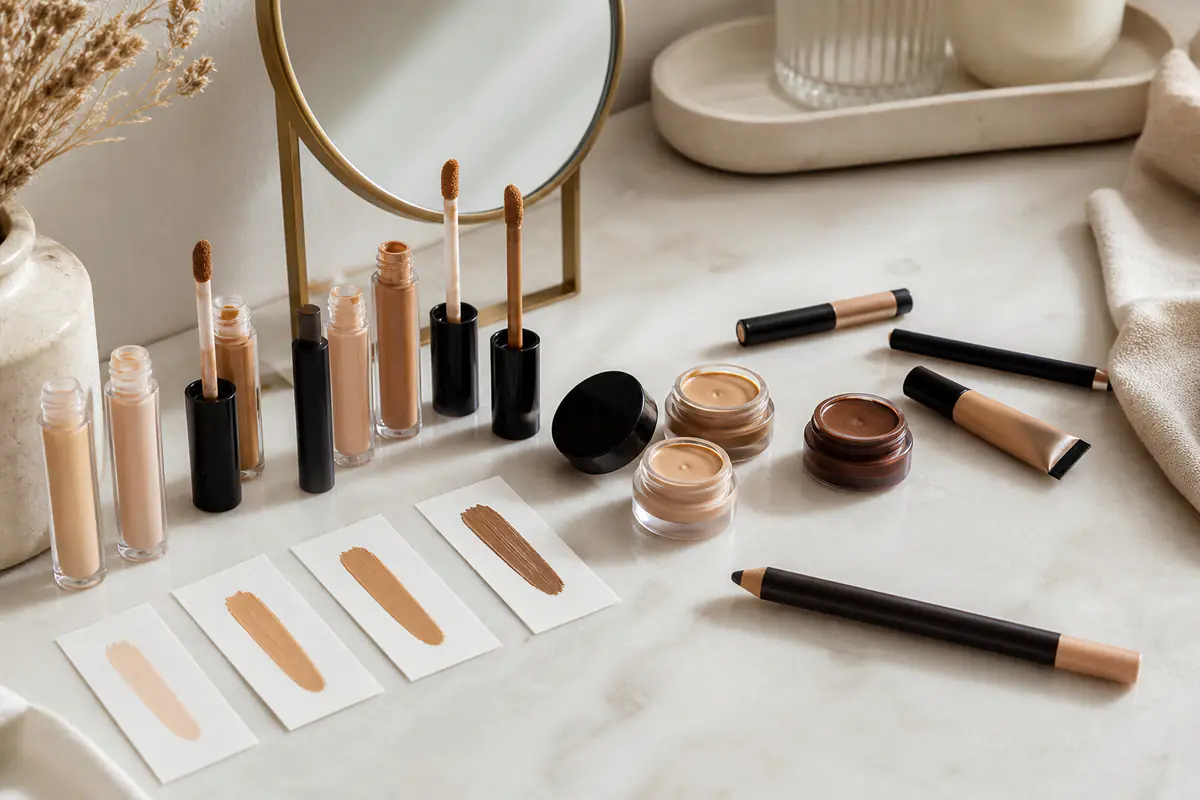
In this guide
Buy for one defined placement and finish
Match shade, undertone, texture and coverage to the specific area before comparing price per millilitre. Use hygienic samples where available, test with the normal routine and track opened date. Do not share used applicators.
Choose the format with the concealer selection guide, compare use through beauty cost per use, and track freshness using the PAO guide.
| Job | Evidence | Low-waste route | False economy |
|---|---|---|---|
| Under-eye | Tone, texture, movement and comfort | Small amount with suitable hydration | Maximum coverage |
| Blemish | Close shade, adhesion and hygiene | Precise clean application | Large brightening shade |
| Colour correction | Corrector hue and thin layering | Targeted placement | Heavy foundation over it |
| Travel | Secure package, dose and PAO | One proven format | Oversized multi-pot palette |
Concealer value worksheet
- Define under-eye, spot or correction job.
- Choose depth and undertone for placement.
- Read ingredients and warnings.
- Use hygienic sample or authorised tester.
- Test over the real skincare routine.
- Observe setting, creasing and removal.
- Log the concealer’s opening date and the package’s period-after-opening limit.
- Discard after contamination or material change.
Define the placement before the product
Write whether the job is shadow correction, blemish matching, redness, pigmentation, edge clean-up or travel. Different areas move, produce oil and tolerate coverage differently.
One product can serve several roles, but that should be demonstrated in the real routine rather than assumed from a full-coverage claim.
Choose shade for the job
A blemish concealer usually needs to disappear into the surrounding complexion, while an under-eye product may use controlled correction or brightening. Excessive contrast can emphasise texture.
Compare after the product sets in indirect daylight and normal indoor light. Camera exposure and shop mirrors can distort both depth and undertone.
Separate corrector from skin-tone concealer
Colour correctors use a targeted hue to reduce the appearance of another colour before a skin-tone layer. They are not universal shades.
Use the least product that changes the intended area. Heavy correction creates extra layers and can increase creasing, time and cost.
Match texture to movement and skin preparation
Liquid, cream, pot, pencil and serum-like formats distribute differently. Under-eyes may reward flexibility, while a precise blemish may need more adhesion.
Test with the sunscreen, moisturiser and foundation actually used. A concealer that only works after buying a new routine has a higher true cost.
Read coverage as an application range
Sheer, medium and full coverage depend on amount, tool and placement. Build thin layers rather than using a large opaque dose immediately.
Maximum pigment is not automatically value. Unused coverage can require more powder, removal effort and touch-ups.
Check ingredients for personal relevance
Use the ingredients guide for fragrance, pigments, film formers and known sensitivities without assigning universal good or bad labels.
Follow warnings and medical advice for allergies or skin conditions. Stop after irritation rather than repeating exposure to prove a pattern.
Compare packaging by dose and hygiene
A wand is convenient but returns to the tube; a pump can limit contact; a pot requires a clean tool; a pencil needs controlled sharpening. Judge the actual package and instructions.
Leaking caps, inaccessible product or oversized applicators create waste. Do not decant or dilute unless the maker permits it.
Use sampling without contamination
Prefer sealed samples or staff-managed testers and clean disposable tools. Never apply a communal wand directly to the face or share personal product.
A sample should answer shade, texture, comfort and wear. It should not be stretched beyond safe handling merely to reduce cost.
Run a normal-day wear test
Apply a measured amount and check after setting, mid-day and before removal for creasing, separation, transfer, dryness, fading and comfort.
Test ordinary expression and lighting rather than forcing an extreme endurance claim. Reproducible normal wear is the useful outcome.
Count successful uses, not product volume
Record amount per placement, weekly frequency and usable life after opening. A small precise concealer can deliver many uses when the applicator controls dose.
Cost per millilitre favours large packs that may expire unfinished. Count only comfortable successful wears in cost per use.
Avoid duplicate shades without a plan
Seasonal complexion change or separate under-eye and blemish roles can justify two shades. Record the job for each before buying.
A palette or multiple tubes are waste when most shades cannot be used hygienically and before PAO. Mixing also adds ratio and compatibility work.
Track PAO and material change
Record opened date, period-after-opening and storage instructions. Keep the rim, cap and tools clean and avoid heat or direct sun.
Discard sooner after unusual odour, texture, colour, contamination or irritation. Expense does not make a changed eye-area product worth preserving.
Read claims and returns accurately
Use the beauty claims guide to translate crease-proof, hydrating or clean into testable questions.
Check the cosmetics returns guide before opening, because voluntary hygiene restrictions differ from fault or misdescription rights.
Keep the routine small and repeatable
Browse the Beauty archive for related evidence. The best-value concealer solves its defined placement with a thin repeatable amount and ordinary removal.
Do not rescue an unsuitable product with several primers, correctors and powders unless those products already have useful independent roles.
Separate eye-area comfort from cosmetic finish
The under-eye area can respond differently from the rest of the face. A smooth photograph does not prove comfort through blinking, tears or removal.
Test a small appropriate amount and stop after stinging, swelling or concerning irritation. Do not place a product closer to the eye than its instructions permit.
Compare applicator precision
A large doe-foot can deposit more than a small spot needs, while a pencil or narrow tip may control placement. Record whether the applicator reaches the job without touching unrelated areas.
Wiping excess repeatedly wastes product and can contaminate the neck. A controlled smaller package may yield more successful uses than a larger low-cost tube.
Price removal and touch-up honestly
Include the cleanser, time and any powder or spray that is genuinely required for comfortable wear. A long-wear claim has little value if removal irritates the area or the product needs repeated correction.
Use the same normal removal method during comparison. Do not scrub to prove durability or add another purchase for a product that is already mismatched.
Keep tools in the hygiene calculation
Brushes, sponges and palettes require cleaning, drying and replacement. Finger application can be appropriate where instructions and clean hands permit, but it is not automatically contamination-free.
Count tool cost only when the tool has a real role. A dedicated tiny brush can improve precision, whereas a large collection of seldom-cleaned applicators reduces practical value.
Record a successful shade and routine
Save exact shade, product, opened date, placement, amount and compatible skincare. This makes repeat buying more precise without claiming the match transfers to another formula.
Complexion and formulas change. Recheck a replacement rather than using an old product indefinitely or relying on a cross-brand database as proof.
Plan seasonal shade use before buying backups
A shade used only during part of the year may not be finished within its safe usable period. Estimate actual weeks and amount before buying a larger tube or duplicate.
Store unopened backups only as instructed and check expiry where provided. A promotion is not a saving when the second product ages before it is needed.
Treat reformulation as a new product decision
A familiar shade name can return with changed pigments, applicator, ingredients or wear. Compare the current list and sample rather than assuming the old routine will transfer.
Do not mix old and new products in the package. If the result differs, record the version and adjust the decision without blaming a general product category.
Use photography as a secondary check
A camera can reveal flashback, texture or colour difference under a specific setup, but exposure, white balance and screen processing can mislead. Check the mirror and comfort first.
For event use, test with the actual lighting and photography conditions while preserving hygiene. One favourable image does not compensate for irritation or unstable normal wear.
Which concealer is better value?
The shade and texture suit multiple real placements
It blends with the routine, doses cleanly and delivers comfortable repeatable coverage before PAO.
Under-eye and blemish needs genuinely conflict
Each has a clear job, distinct shade or texture requirement and enough use to finish hygienically.
Balanced verdict
Concealer value is cost per successful targeted use, not maximum pigment per millilitre. Define placement, test shade and texture, control hygiene and buy a quantity that can be used before change.
One well-matched small product is usually better value than a collection of speculative corrections.
Official checks:
NHS contact dermatitis guidance ↗
GOV.UK consumer protection rights ↗
CTPA consumer cosmetic information ↗
Frequently asked questions
Should under-eye concealer be lighter?
Not automatically — The useful depth and undertone depend on the shadow, corrector, desired finish and surrounding complexion.
Can one concealer cover blemishes and under-eyes?
It can if shade, texture and wear suit both areas, but the jobs often benefit from different properties.
Is a pot less hygienic than a wand?
Hygiene depends on design and handling. Use clean tools, close packaging and follow the product instructions.
How can creasing affect the useful value of a concealer?
Movement, amount, texture, skincare and setting can contribute. Test one controlled change at a time.
Can opened concealer be returned?
Opened concealer can fall outside a shop’s voluntary hygiene-related return promise. Faulty or misdescribed products are a different issue; keep evidence.
Methodology and limitations
We assessed concealer value through placement, shade, correction, texture, coverage, ingredients, packaging, sampling, wear, quantity, shade inventory, PAO, claims and returns. We did not conduct dermatological testing.
Limitations
Skin, allergies, lighting, formulas, shades and retailer policies vary. Follow maker instructions and seek medical advice for concerning reactions or known conditions.