Buying deadstock and archive fashion: age, storage, sizing and condition
“Deadstock”, “new old stock” and “archive” can describe unsold or older fashion, but they do not guarantee unused condition, original storage or modern sizing. Judge the exact item as aged material: identify the period, request current photographs and measurements, map storage risks and price any cleaning or repair.
In this guide
Unused is a history claim, not a condition grade
Ask where and how the item was stored, whether it was tried on, displayed, altered, cleaned or repaired, and what “deadstock” means in that listing. Fresh detailed images, flat measurements and a protected payment route matter more than a hang tag or seller adjective.
This position replaces a duplicate second-hand designer authentication brief already assigned to row 209. It covers a distinct buying question: material age and storage in unworn, shop-soiled, sample, vintage-stock and archive garments. It does not authenticate brands or promise collectable value.
Define the seller’s term before comparing
Deadstock can mean unsold original inventory, old fabric, discontinued stock or merely a vintage-style item, depending on the seller. Archive can mean a brand-held historic piece, a past-season resale item or a curated marketing category. New old stock may still have decades of storage exposure.
Ask for a plain description: approximate production year, acquisition route, storage environment, prior ownership, display use, tags, alterations, cleaning and faults. A term that cannot be translated into facts should not command a premium.
| Listing description | Useful evidence | Unresolved risk |
|---|---|---|
| Deadstock with tags | Current whole-item and label photographs | Storage, substitution and shop wear |
| Warehouse stock | Location history and sealed-unit condition | Heat, damp, pests and compression |
| Sample | Measurements, construction and wear statement | Non-standard sizing or finishing |
| Archive piece | Exact season, model reference and provenance | Marketing use of “archive” |
| Unworn vintage | Interior, folds, elastic, fasteners and odour report | Ageing without visible wear |
Request these fresh images
- Front, back and interior in neutral daylight.
- Shoulders, underarms, cuffs, collar, hem and fold lines.
- Elastic, coated surfaces, faux leather and bonded areas.
- Zips, snaps, hooks, buttons and their attachment.
- Composition, care, size and batch or style labels.
- Every mark, fade, repair, alteration or missing part.
- A current handwritten date card beside the item.
Age can affect an unworn garment
Elastic can lose recovery, coatings can become sticky or flake, foam can crumble, adhesives can yellow, metal can corrode and folds can create permanent lines. Light may fade one shoulder or shop-window side while the rest remains saturated. Moths and other pests can damage protein fibres without ordinary wear.
These changes depend on fibre, construction, finish and storage. Use the fabric-composition guide to separate fibre names from coatings, linings and structure. Ask about mixed materials because the weakest component can determine usability.
Inspect high-risk material combinations
Polyurethane-coated imitation leather, bonded fabrics, rubberised prints, foam shoulder pads, elasticated waists and glued embellishments can age differently from a woven shell. A seller photograph may not show tackiness, powdering or brittle flex.
Ask the seller to flex a concealed area gently only if safe, operate closures and describe odour without spraying fragrance. Do not request destructive testing. If the construction depends on an ageing coating, price the item as uncertain unless recent condition evidence is strong.
Measurements outrank the historic size label
Numbered sizing changes across decades and markets, while samples can use non-standard blocks. Alterations may be invisible from the front. Request flat chest, waist, hip, shoulder, sleeve, rise, inside leg and total length as relevant, with the measurement method shown.
Compare with an owned non-stretch garment using the size-chart method. Leave appropriate ease and account for seam allowance. Do not buy a rare piece on the assumption it can always be let out.
Look for alteration evidence
Uneven seam allowance, a second stitch line, mismatched thread, shortened lining, moved buttons and pressed-out hems can reveal changes. Alterations are not necessarily defects, but they affect measurements, originality and future options.
The alterations guide explains which changes are relatively bounded and which disturb garment balance. Ask whether original pieces or spare buttons remain, without treating accessories as proof of provenance.
Price cleaning and conservation before purchase
A musty smell, old stain or yellowed lining may not respond safely to ordinary cleaning. Care labels can be outdated, missing or inappropriate after trims have aged. Ask a relevant specialist for a conditional estimate before buying a high-value or fragile piece.
Do not promise that dry cleaning removes all odour or restores coatings. Add inspection, cleaning, repair, storage and insured shipping to the total. The total-cost guide keeps the attractive listing price from hiding immediate work.
Separate provenance from authenticity and condition
A credible stock story can support provenance but does not authenticate every item in a mixed lot. A genuine item can still be unusable, and an unused one can be incorrectly described. If a designer claim materially affects value, follow the separate second-hand designer authentication guide.
Do not make rarity claims from the absence of search results. Archive records are incomplete, names vary and samples may never have appeared in a catalogue. Buy for documented usefulness unless independent expertise supports collectable value.
Identify the seller and remedy route
Business and private sales can produce different rights and practical return routes. Save the listing, images, seller status, messages and payment receipt. Keep all communication and payment inside the platform where buyer protection depends on it.
Use the returns-policy checklist to check deadlines, condition requirements, authentication disputes and return insurance. “No returns” in a description does not resolve every misdescription question, but individual facts may need advice.
Inspect before cleaning or wearing
Photograph the parcel and opening. Examine it in daylight over a clean surface, then compare each measurement and disclosed fault. Test fasteners gently; do not force brittle parts. Keep tags attached until the decision is made.
If the item differs materially, use the platform route promptly. Cleaning, steaming, repairing or wearing can change evidence and condition. Preserve packaging and tracking until the case is complete.
Read the care label as historical evidence, not an automatic instruction
The label can identify fibre, original care expectation and country or period clues, but it may no longer describe a safe process after decades of ageing. Trims may have been replaced, dyes may have migrated and a coating may have changed even when the woven shell remains stable. Photograph the full label and any separate warnings.
Use the care-label guide to interpret symbols, then ask a specialist about the present combination. Do not steam indiscriminately: heat and moisture can set stains, distort unsupported areas or affect adhesive and coated finishes.
Plan transport and storage as part of ownership
A fragile garment can be damaged by tight folding, an unsuitable hanger, acidic tissue, plastic trapping moisture or direct light. Ask how it will be packed and whether rigid support is needed. Insured delivery protects financial loss only under its terms; it does not prevent crushing or dye transfer.
At home, provide clean, dry, dark and appropriately supported storage. Avoid scented sprays and untested pest treatments on the item. Inspect periodically for new holes, corrosion, tackiness, colour transfer or odour and isolate a suspected pest problem from the rest of the wardrobe.
Do not count on future resale to rescue the price
Resale value depends on demand, provenance, size, condition, fashion cycles, platform fees and the evidence you retain. An archive description today may not produce a buyer tomorrow. Treat a possible resale amount as zero in the affordability decision unless loss would still be acceptable.
If future sale matters, keep purchase records, current measurements, professional work invoices and neutral condition photographs. Never conceal a repair or storage change. Honest documentation supports a later listing but cannot guarantee value.
Proceed when
- The seller defines the term with verifiable facts.
- Fresh images cover storage-sensitive components.
- Measurements and ease work without heroic alteration.
- The protected total still makes sense after care.
Walk away when
- Tags are the only condition evidence.
- Coatings, elastic or odour cannot be assessed.
- Rarity language replaces provenance.
- Payment or return protection must be abandoned.
Balanced verdict
Archive and deadstock fashion can offer distinctive construction and unworn surfaces, but time itself is part of condition. The best listing explains age, storage and material behaviour rather than using a premium label.
Buy only when the garment’s present state, measurements and protected total justify the risk. Declining a supposedly rare item with weak evidence is better than inheriting an expensive conservation problem.
Check current official information:
GOV.UK buying second-hand goodsUK IPO fake-fashion guidanceGOV.UK consumer rights
Frequently asked questions
Does deadstock always mean unworn?
No. Ask the seller to define it and disclose display, try-on, alteration, cleaning and storage history.
Do original tags prove condition?
No. Tags can remain on aged, shop-soiled or incorrectly paired goods.
Can unused elastic still fail?
Yes. Time, heat, oxidation and storage can reduce recovery without wear.
Should vintage sizing be converted directly?
No. Use current flat measurements and appropriate ease.
Can every old garment be dry-cleaned?
No. Aged trims, coatings and adhesives may need specialist assessment.
Is an archive item automatically valuable?
No. Value needs demand, provenance, condition and independent market evidence.
How we researched this guide
Recommended Today mapped UK second-hand safety and consumer guidance onto the distinct risks of aged unworn garments: terminology, storage, material degradation, sizing, alterations, care and remedies.
Limitations
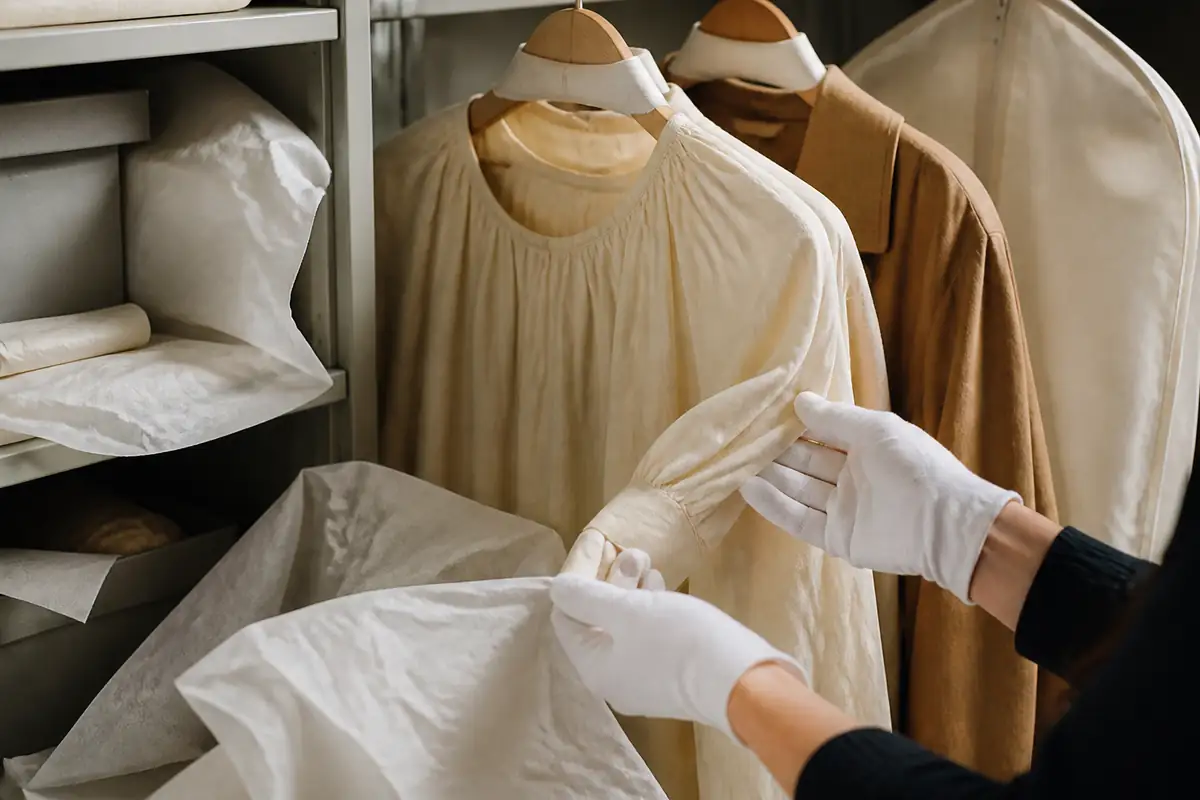
We did not date, authenticate, conserve or value individual garments. Fibre ageing and rights depend on facts. Recheck the item, seller and terms before purchase. The image is an editorial illustration, not a photograph from a product test.