Buying second-hand designer fashion online: authentication, condition and returns
A platform badge, dust bag or confident seller is not proof that an item is genuine. Build a case from the listing, seller history, construction, provenance and payment route, then price the item for its actual condition and the protection available if it is not as described.
In this guide
Buy the evidence and protection, not the logo story
Pause when the photos, price or seller account do not support the claim. Ask for specific, newly taken images; compare construction details with reliable references for the exact model and period; keep payment and messages inside the platform; and understand the dispute deadline before paying. Authentication reduces risk but is not the same as a guarantee of condition, fit or future resale value.
The UK Intellectual Property Office published specific second-hand fashion guidance in May 2026. It recommends checking details such as materials, stitching and seller evidence, and using platform verification and buyer-protection tools. This guide turns those principles into a repeatable buying decision without pretending that a photograph alone can prove authenticity.
Start by identifying the seller and the contract
Your rights and practical route to a remedy depend partly on who sold the item. A business seller has different obligations from a private individual clearing a wardrobe. Do not infer status only from a profile description: repeated stock, multiple sizes, commercial photography or a continuous stream of similar items may justify asking directly. Save the listing, seller name, item description, photographs, measurements, messages and payment confirmation before anything can be edited or removed.
Read the platform rules as carefully as the item page. Note when buyer protection applies, what evidence a dispute needs, who pays return postage, whether authentication is included or optional, and the deadline for reporting a problem. Our guide to keeping purchase records explains what to retain, while the genuine-shop checklist covers identity, payment and domain checks when a seller directs you away from a recognised marketplace.
| Evidence | What it can establish | What it cannot establish alone |
|---|---|---|
| New, detailed photographs | Visible construction, wear and possession of the item | Complete authenticity or hidden condition |
| Receipt or order record | A claimed purchase trail when details align | That the current item is the one on the record |
| Platform authentication | An additional check under stated methods | Perfect accuracy, fit or condition |
| Seller history | Patterns in trading and dispute feedback | That this listing is genuine |
| Very low price | A reason to investigate harder | A bargain or a fake by itself |
Build an authentication file before paying
Work from the exact product, not a generic brand checklist. Models change by season, factory and market, and genuine vintage construction may differ from current stock. First identify the likely product name, colour, material, hardware finish and approximate period. Then request straight, sharp photographs of the whole front and back, lining, seams, closures, hardware, care and composition labels, serial or date markings where the model should have them, and every worn or repaired area.
Ask for one unusual new shot, such as the item beside a handwritten card showing only the current date and seller’s first name. This is not authentication, but it tests whether the seller controls the photographed item rather than reusing somebody else’s images. Reverse-image search can expose copied photographs, though no match is not proof. Never publish or share another person’s personal data while seeking advice.
A useful pre-payment request
- Full front, back, interior and base in neutral light.
- Close-ups of stitching, joins, fastenings and the highest-wear points.
- All labels and markings, with sensitive personal details covered.
- Measurements taken flat using a visible ruler or tape.
- A direct statement about alterations, repairs, odour, stains and missing parts.
- The original purchase channel and any evidence the seller can lawfully share.
Read construction details as a group
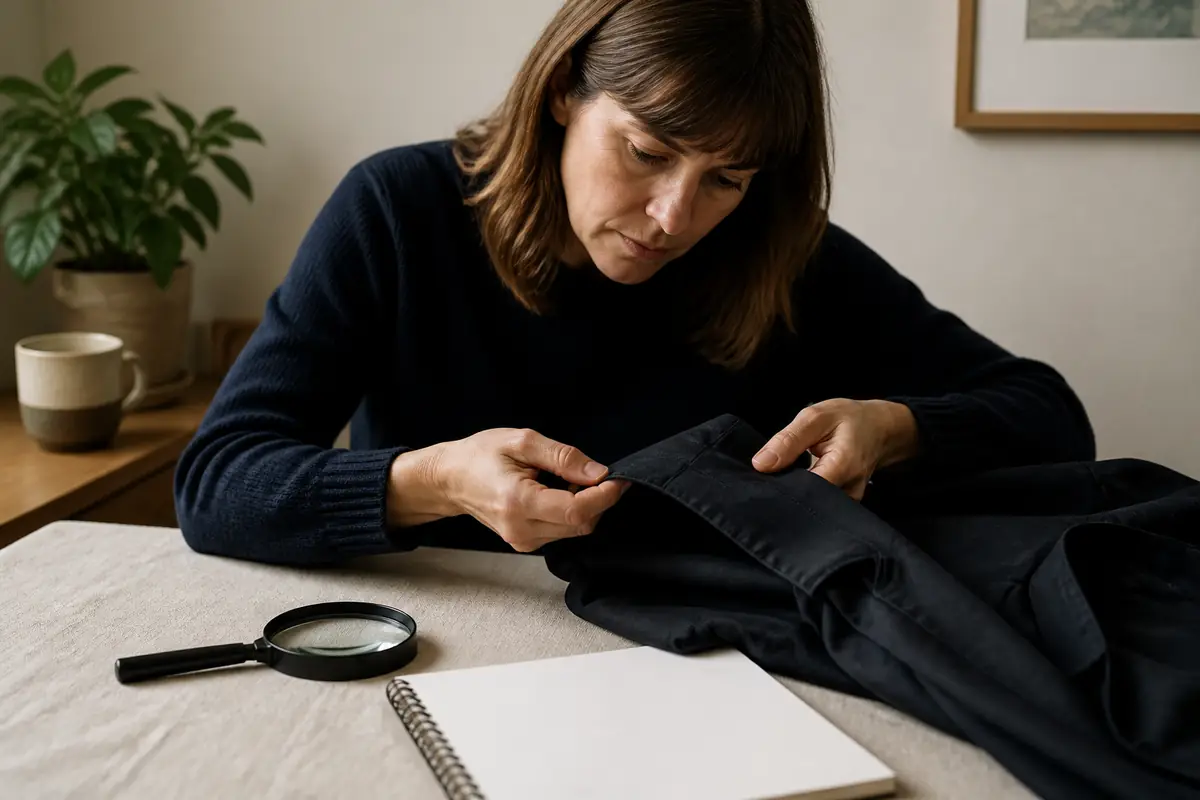
Counterfeit indicators can include uneven stitching, misspelling, weak materials and poorly reproduced marks, but one irregularity is not a universal verdict. Genuine hand-finishing can vary, vintage items can age unevenly, and repairs alter original details. Compare several independent features: material feel and grain, seam placement, stitch density, edge finishing, lining alignment, hardware weight and operation, label typography and location, and whether dimensions match the claimed model.
Use authoritative references where possible: the brand’s own archived product information, a recognised authentication service that explains scope, or a resale platform’s disclosed process. Forum comments and image-search matches can suggest questions, but they should not be treated as a certificate. If the price is material to your budget and evidence remains mixed, walk away or make an independent professional check a condition of purchase.
Grade condition separately from authenticity
A genuine item can still be poor value. Translate adjectives such as “excellent” into observable facts. For clothing, inspect underarms, cuffs, collar, hems, pocket corners, closures and lining. For footwear, check heel wear, outsole thickness, flex cracking, insole impressions and repairs. For bags, examine handles, base corners, glazing, lining, zips, structure and odour. Ask whether cleaning, re-dyeing, shortening, resoling or replacement hardware has changed original material.
Measurements are more reliable than the size tag because older sizing and alterations vary. Compare with a garment that fits, following our online measurement method. Use the cost-per-wear framework only after subtracting likely cleaning, repair and resale costs. A visibly used piece at an honest price can be better value than an “as new” claim with weak evidence.
Calculate the protected landed cost
Add item price, buyer-protection fee, delivery, authentication, currency conversion, import charges where relevant, immediate repair or cleaning, and insured return postage if the terms could place it on you. Compare that total with a verifiable new price and realistic resale alternatives, not an inflated claimed retail price. Our total-cost guide helps structure the calculation.
Pay only through a route covered by the platform and appropriate card or payment protections. A request to move to bank transfer, private messaging or an unfamiliar link removes evidence and may remove platform protection. Do not let artificial urgency override the shortlisting process.
Proceed when
- The seller answers specific questions consistently.
- Fresh detailed images support the exact item and condition.
- The total cost still makes sense after repairs and fees.
- Payment, authentication and dispute routes are documented.
Walk away when
- Images are copied, blurred or avoid essential details.
- The seller pressures you off-platform or refuses new photos.
- The provenance story changes or cannot be tested.
- A bargain requires you to ignore several unresolved warnings.
Inspect promptly when the parcel arrives
Film or photograph the sealed parcel, shipping label, opening and condition in one continuous sequence where practical. Do not remove tags, clean, wear, repair or resell the item before deciding whether it matches the listing. Compare every stated measurement and photographed flaw. If authenticity or description is disputed, open the platform case within its deadline and follow its instructions before returning anything.
Keep the item secure and do not send it to an address supplied outside the formal case. Use tracked, appropriately insured return delivery when required and retain acceptance evidence. The UK returns guide and returns-policy checklist explain the broader distinction between cancellation, faulty goods and private sales; obtain individual advice where facts are disputed.
Avoid turning authentication into certainty theatre
More photographs, certificates and opinions can still repeat the same weak assumption. Ask what each new item of evidence genuinely adds and whether it is independent of the seller. A useful authentication service should explain which categories it covers, what materials it needs, what outcome it provides and what remedy exists if the conclusion is challenged. If those boundaries are vague, price the service as advice rather than insurance. The strongest file is coherent across product, period, construction, seller and transaction—not merely thick.
Balanced verdict
Second-hand designer fashion can offer better materials, lower environmental impact and access to discontinued pieces, but brand demand also creates a profitable counterfeit market. The sensible response is not to assume every resale listing is unsafe or that a platform badge solves everything. Combine item-specific evidence, seller behaviour, independent verification when proportionate, realistic condition pricing and a protected payment route. If the evidence is not strong enough for the money at risk, declining the purchase is a successful decision.
Official UK sources
Frequently asked questions
Does a receipt prove a designer item is genuine?
No. It can support provenance when product and seller details align, but it does not prove that the listed item is the one originally purchased.
Is platform authentication a guarantee?
Read its scope and remedy. It is an added check, not a promise about fit, every hidden defect or future resale value.
Can a private seller refuse returns?
Private-sale rights differ from business sales, but an item still should match its description. Get advice for the exact circumstances.
Is a low price proof of a counterfeit?
No, but an implausible discount is a warning that justifies stronger evidence and protection.
Should I clean the item before opening a dispute?
No. Cleaning or alteration can change evidence. Photograph it and follow the platform process first.
Are dust bags and boxes useful evidence?
They can be part of the overall file, but packaging can be copied or paired with another item and never proves authenticity alone.
How we researched this guide
Limitations
Checked 29 August 2026 against current IPO, OPSS and GOV.UK consumer guidance. We compared authentication, condition, payment and dispute decisions rather than naming a “best” marketplace. We did not physically authenticate products, test a platform service or provide legal advice. Brand construction changes over time, photographs conceal defects and platform terms can change, so buyers must verify the exact item, seller, terms and official sources at purchase.