Petite, tall and curve ranges: what the labels do and do not guarantee
Petite, tall and curve are retailer-defined fit systems, not universal body types or standardised promises. A useful range adjusts the garment’s proportions as well as its label, but the only reliable comparison is the exact product’s body and garment measurements, cut, fabric and return conditions.
In this guide
Treat the range name as a search filter, then verify the garment
Start with the fit problem you need to solve: length, rise, shoulder position, sleeve, bust, waist, hip or ease. Open the retailer’s current definition and the exact size chart, compare measurements with a garment that fits, and check whether the pattern was re-proportioned. Height or dress size alone cannot guarantee fit.
This guide covers adult women’s clothing sold online in the UK. It does not prescribe a body category, replace alteration advice or assume that every retailer uses the same block. The aim is a repeatable evidence check that avoids both size-label certainty and unnecessary returns.
Understand the three labels
Petite usually signals proportions intended for a shorter frame; tall usually signals longer proportions; curve, plus or extended-size ranges usually cover larger numbered sizes and may use a distinct pattern block. Those are broad commercial descriptions. Retailers decide their own height thresholds, size spans and pattern changes, and the same customer may use different ranges for tops and trousers.
Next, for example, currently describes its petite range as suitable for people 160 cm and under and its tall range for 178 cm and over. That is evidence about Next’s system, not an industry definition. ASOS publishes separate charts for Petite, Curve and Tall. Always read the named retailer’s chart rather than transferring one threshold to another shop.
| Range label | Changes worth looking for | What the label cannot promise |
|---|---|---|
| Petite | Shorter body, sleeve, rise and leg; repositioned waist and detail | That every shorter person has the same proportions |
| Tall | Longer body, sleeve, rise and leg; adjusted shaping | That length, shoulder and volume all increase correctly |
| Curve or plus | Extended size chart, redistributed ease and altered shaping | That one block fits every bust, waist and hip relationship |
| Short or long length | Usually a changed trouser or skirt length | That rise, knee point or torso has also changed |
| Regular | The retailer’s core block | That it is a neutral or universal body shape |
Seven measurements to record
- Shoulder or cross-back where the garment provides it.
- Bust or chest at the fullest point.
- Natural waist and where the garment waist must sit.
- Full hip and the vertical distance from waist to hip.
- Front and back rise for trousers.
- Inside leg plus the preferred finished break.
- Sleeve and total garment length from the retailer’s stated points.
Separate body measurements from garment measurements
A body chart tells you which size the brand associates with your body. A garment chart tells you the finished item’s dimensions. They are not interchangeable because the garment includes ease: the extra room needed for movement, design and layering. The UK clothing size-chart guide explains how to identify the two.
If only a body chart is supplied, compare product description, cut and fabric with an owned garment. A fitted woven jacket needs different ease from a stretch jersey top. Ask customer service for the missing finished measurement when the purchase or return cost is material.
Petite should change more than the hem
A properly re-proportioned petite jacket may shorten the body and sleeve, lift the waist, move pockets and reduce the distance between shoulder, bust and waist. Petite trousers may alter rise and knee position as well as inside leg. Simply shortening a regular garment can leave darts, pockets or flare breaks in the wrong place.
Check product-specific evidence. If the page only offers “short” as a length choice, assume no other change unless stated. For possible fixes, use the alterations-before-buying guide: hems are usually simpler than moving shoulders, armholes or a shaped waist.
Tall should preserve balance as length increases
Tall fit is not just a longer inside leg. A useful tall coat or dress may need extra torso length, lower waist placement, longer sleeves and correctly positioned pockets or vents. Trousers need the knee shaping and rise to match the wearer, not merely fabric added below the knee.
Use the UK tall-range shopping guide to compare filters and measurement disclosure. A retailer can have a broad tall category but limited stock in a particular size or garment type, so verify availability on the exact date.
Curve is a size system, not a promise about shape
Curve and plus ranges may extend sizes and redistribute ease, but names are not standardised. Some retailers use a separate block; others grade the core block further. Neither approach tells you whether the garment suits a fuller bust, straighter waist, fuller hip, larger upper arm or another proportion.
Read the bust, waist and hip columns individually. If one measurement points to a different size, choose around the least alterable or most fitted area, then judge whether the cut accommodates the rest. The plus-size shop comparison focuses on range depth, filters and return practicality rather than declaring one universal fit.
Use product geometry, not model height alone
Model information can give scale, but it is not a measurement table. Pose, styling, pinned fabric, sample size and camera angle affect appearance. Two people of the same height can have different torso, rise and leg proportions.
Look for total length, sleeve, rise and inside leg on the product page. Note where each measurement begins. “Dress length” taken from shoulder is not comparable with a back-neck measurement unless you adjust the method.
Fabric changes the fit margin
A knitted fabric with recovery can tolerate a different measurement gap from rigid denim or woven tailoring. Stretch percentage alone is incomplete: fibre, knit or weave, weight and recovery matter. Read the fabric weight and opacity guide for evidence visible online.
Do not size down automatically because elastane is present. Excess extension can distort pockets, seams and opacity, while weak recovery can leave knees or elbows bagged. Check reviews for specific, repeated measurement observations, not only “true to size”.
Compare one problem at a time
Make a small matrix: owned garment measurement, petite option, regular option, tall or curve option. Highlight where each solves or creates a problem. A petite blazer may fix sleeve and waist placement but feel tight across the back; a regular-short trouser may fit rise better than the petite block. Mixed-range wardrobes are normal.
Do not order several sizes reflexively when returns are costly or stock is scarce. Shortlist the two most plausible configurations and record why. This produces better evidence for the next purchase.
Protect the clean home trial
Try the garment indoors with the underwear, shoes and layers it will be worn with. Keep tags attached; avoid fragrance, make-up transfer and floor contact. Check front, side and back while standing, sitting, reaching and walking. Photograph fit points for your own record.
Read the returns-policy checklist before ordering. Confirm the deadline, return charge, excluded items, parcel route and whether different brands sold by a marketplace have different terms.
Reset the chart for every brand on a multi-brand site
A retailer can sell its own petite, tall or curve block beside third-party brands with different definitions. The category filter describes where the product is listed; it does not merge every brand into the host retailer’s measurements. Open the brand-specific chart and confirm whether the displayed size conversion belongs to the brand, retailer or marketplace.
Watch for products described as “petite style”, “curve hem” or “tall boot” where the word refers to design rather than a specialist clothing block. Read the full product name, category and measurement page. If the site offers an automated size recommendation, record the measurements supplied and treat its result as an estimate, not a replacement for the garment dimensions.
Build a personal fit log without turning it into a universal rule
After deciding, record the retailer, brand, range, size, product code, fabric, body and garment measurements, and the result at shoulder, bust, waist, hip, rise, sleeve and length. Note whether washing or wear changed the fit. This creates evidence for the same block and similar garment, not a claim that one labelled size will transfer everywhere.
Returns are useful data only when the reason is specific. “Too small” is less useful than “upper arm 3 cm narrower than owned jacket” or “front rise pulls while waist has spare room”. Over time, this log can show whether a range consistently solves one proportion and fails another, reducing speculative multi-size orders.
Use a specialist range when
- Its chart addresses the exact proportion problem.
- Product measurements show genuine re-proportioning.
- The fabric and cut leave appropriate ease.
- A protected home trial is available.
Use another block when
- The label changes length but not the problem area.
- Your torso, rise and limb proportions cross categories.
- A simple alteration gives a cleaner result.
- The chart or return route is too vague for the risk.
Balanced verdict
Petite, tall and curve labels are useful doors into a catalogue, not fit guarantees. Their value depends on transparent definitions, garment-level measurements and pattern changes that address a real proportion.
Use whichever block works for each garment. A mixed approach is more rational than forcing an identity label across a whole wardrobe, and a careful measurement record becomes more valuable with every purchase.
Check current official information:
Next women’s sizing guidesASOS women’s specialist size chartsGOV.UK textile labelling
Frequently asked questions
Is petite simply a smaller dress size?
No. It normally refers to shorter proportions and may be offered across several numbered sizes.
Does tall always mean a longer inside leg?
Often, but a genuinely re-proportioned range may also change rise, body, sleeve and detail placement. Check the exact chart.
Is curve the same at every retailer?
No. Names, size spans and pattern blocks are retailer-defined.
Can I be petite for tops and regular for trousers?
Yes. Height distribution and garment geometry differ, so choosing by item is sensible.
Should I trust the model’s stated size?
Use it only as context. Your measurements and the garment’s dimensions are stronger evidence.
Are specialist-range returns different?
They can be, especially for marketplace or concession stock. Check the exact seller and item terms before ordering.
How we researched this guide
Recommended Today compared current retailer specialist-range definitions, UK textile information requirements and the measurement evidence needed across tops, dresses, outerwear and trousers.
Limitations
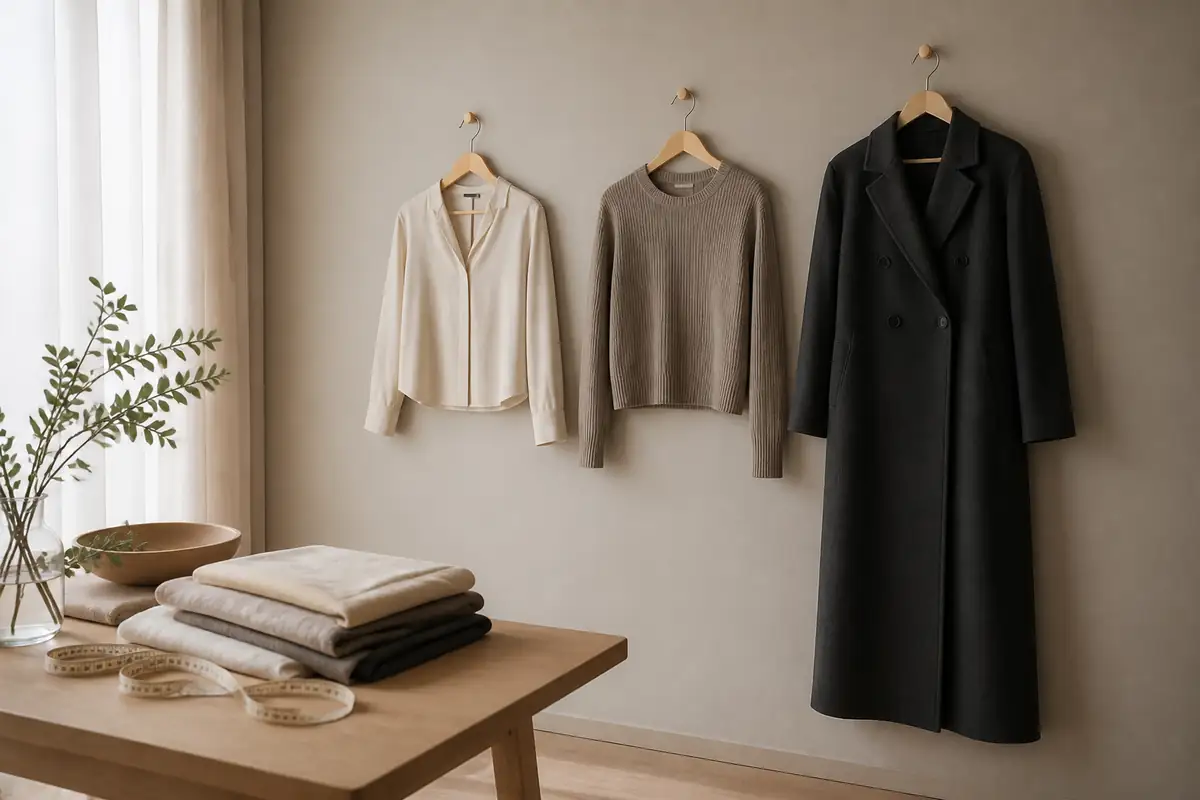
We did not fit-test individual garments or define a universal body standard. Retailer blocks, stock and size charts can change. Recheck the exact product, measurements and terms before purchase. The image is an editorial illustration, not a photograph from a product test.