How to choose jeans online: rise, stretch, leg shape and measurements
A familiar waist size can fit differently across brands, washes and fabrics. Compare the garment with jeans you already wear, then use rise, hip, thigh, leg opening and fibre content to predict where the shape will sit and move.
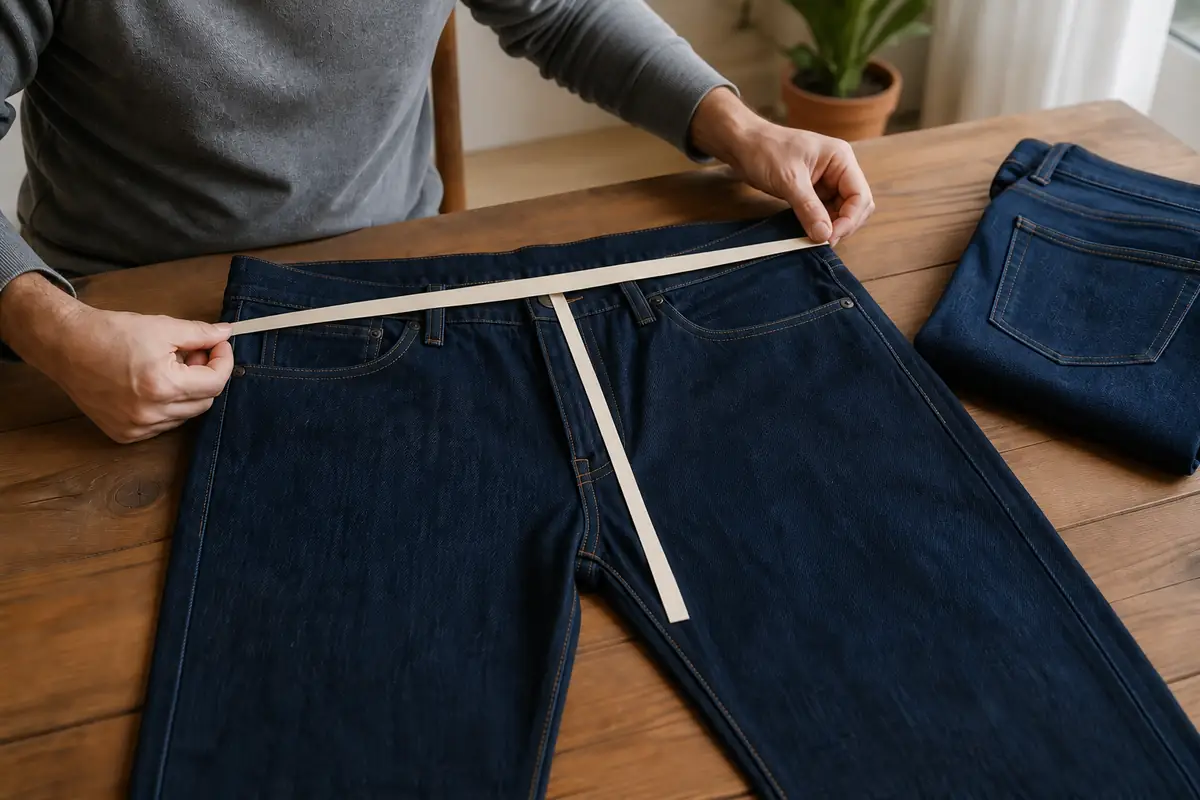
Measure a trusted pair before reading the size chart
Lay well-fitting jeans flat and record waistband, front rise, back rise, hip, thigh, inside leg and hem opening using one consistent method. Compare those garment measurements with the exact product, not a generic body-size table. Then adjust for fibre content, stretch recovery, intended silhouette and where you prefer the waistband. If the retailer provides only a label size and styled photographs, uncertainty remains high.
Fit is personal, and bodies do not need to conform to a number. The goal is to predict a garment’s shape and comfort while reducing avoidable returns—not to prescribe one “correct” rise or leg.
Build a reference from jeans you actually wear
| Measurement | How to take it flat | What it predicts | Common mistake |
|---|---|---|---|
| Waistband | Across top edge, relaxed | Where the jeans fasten | Doubling a curved or stretched edge inaccurately |
| Front rise | Crotch seam to front waistband | Front waist position | Ignoring back rise |
| Hip | Across a consistent point below waist | Seat and upper-hip room | Comparing different vertical points |
| Thigh | Across leg near crotch seam | Upper-leg ease | Measuring at an unspecified point |
| Inside leg | Crotch seam to hem | Finished length | Using body height as a substitute |
| Hem opening | Across one leg at hem | Taper, straightness or flare | Trusting the style name alone |
Create a three-pair fit library
- One pair that fits closely and comfortably.
- One relaxed pair with the ease you like.
- One pair whose fit problem you understand.
- Record measurements after laundering and resting.
- Note fibre composition, size label and whether fabric has relaxed.
- Photograph the silhouette from front, side and back for private reference.
- Use the same flat-measurement points every time.
Distinguish body measurements from garment measurements
A body-size chart usually maps waist and hip circumference to a labelled size. It does not reveal the finished garment’s ease, rise or leg opening. A garment chart provides dimensions of the jeans themselves, but methods vary: some list the circumference, others a flat width, and some measure after stretching.
Read the chart heading and notes. If a “waist” figure seems much smaller than expected, it may be a flat half-measurement; if much larger, it may be a body range. Our women’s size-chart guide explains how to reconcile brand charts without assuming sizes are standardised.
Rise is a length and a placement decision
Low, mid and high rise are relative marketing terms. Front rise tells part of the story; back rise and waistband shape determine coverage and how the jeans follow the seat. Two pairs with the same front rise can feel different if one has a more contoured waistband or greater back rise.
Measure the reference pair from the crotch seam junction to the top of the waistband, following the seam without stretching. Note where it lands on your body when standing and sitting. A higher rise may reduce waistband movement for some wearers but can feel restrictive if the torso length or waistband shape is mismatched.
Stretch percentage does not predict recovery
A small proportion of elastane can change movement, but the fibre percentage alone cannot tell you whether denim will snap back, soften gradually or bag at knees. Yarn, weave, fabric weight, finishing and garment construction all contribute. “Comfort stretch”, “power stretch” and “rigid feel” are not standard laboratory grades.
Read the complete composition using the fabric-composition guide. Cotton-rich rigid denim can mould with wear but gives less immediate give. Stretch denim may feel comfortable sooner, yet poor recovery can loosen during the day. Review comments about change after several hours are more useful than “true to size” without measurements.
Use leg opening to decode vague silhouettes
“Straight”, “slim”, “mom”, “barrel” and “wide” vary between retailers. Compare thigh, knee and hem widths where available. A straight cut maintains more similar width below the knee; a taper narrows; a bootcut or flare widens. The same hem opening looks different across sizes and inside-leg lengths.
Styled photos can hide shape through stance, pinning or cropped framing. Look for a full front, side and back view on more than one body if available. A product page with garment measurements is stronger evidence than a trend name.
Check fabric weight, wash and surface treatment
Heavier denim can hold a structured shape but may feel stiff; lighter denim drapes more and can show pocket outlines. Dark indigo and coated finishes may transfer colour. Abrasion, whiskering and ripped details deliberately weaken or alter areas and may shorten the period before visible wear.
Use the fabric weight and opacity guide when gsm or ounce weight is listed. If it is absent, look for close-up fabric photographs, composition and care instructions. Wash names such as “vintage” or “authentic” are aesthetic descriptions, not a durability guarantee.
Predict pocket and yoke effects
Back-pocket size, height and spacing change visual balance; the yoke seam influences how the fabric shapes across the seat. Front-pocket depth affects usefulness and can add bulk. These details are rarely captured in a size chart but are visible in straight, unposed product views.
Check whether decorative rivets, thick seams or a rigid button sit where you bend. If sensory comfort matters, zoom into waistband construction, internal labels and seam finish. A polished front image should not override construction evidence.
Choose length around footwear and alteration
Inside leg should be compared with the same footwear and hem break you intend to wear. Cropped jeans need a deliberate ankle position; wide or flared hems may require more length; a turn-up consumes fabric. Retailer “regular” lengths are not universal.
Shortening a straight leg is usually simpler than preserving the exact shape of a pronounced flare or ankle detail. Our alterations-before-buying guide explains when tailoring is realistic and when it changes the design.
Read care instructions before choosing a close fit
Denim can shrink, soften, fade or transfer colour depending on composition and finish. Follow the care label rather than a universal “never wash jeans” rule. Wash dark garments with similar colours and avoid heat beyond the instructions. If a pair fits only when stretched to its limit before first wash, the margin is poor.
The first-wear clothing care guide covers colour transfer, washing and inspection. Keep tags attached while assessing indoors and do not wash before deciding to keep, because laundering normally changes the return position.
Audit the return path before ordering two sizes
Check the notification deadline, return method, fee, condition rules and whether the item is sold by a marketplace partner. Free returns can reduce fit risk, but ordering several speculative washes and sizes still ties up money and creates deadline pressure.
Use the returns-policy audit and the UK returns guide. Photograph a defect or wrong item before trying on, and use a clean floor or sheet so pale denim is not marked.
Use a confidence score, not a size guess
- Exact garment measurements match a trusted pair: high confidence.
- Composition and stretch description are clear: add confidence.
- Full unposed views show rise and leg: add confidence.
- Only a generic body chart is supplied: subtract confidence.
- Wash, fabric and return terms are vague: subtract confidence.
If several core measurements are missing, contact the retailer or choose a listing with better evidence. The clothing-quality guide adds seam, pocket and finish checks after delivery.
You value shape and predictable silhouette
Cotton-rich, lower-stretch denim can hold a clear line, provided the measured waist, hip, thigh and rise already allow comfortable movement.
Seated comfort and movement lead
A stretch blend may suit changing posture, but look for evidence of recovery and do not size down solely because the fabric stretches.
Balanced verdict
Online jeans shopping becomes less random when you compare garments, not labels. A measured reference pair provides more useful evidence than height, body shape labels or a claim that a cut is universally flattering.
Prioritise waist, rise, hip and thigh first, then leg shape and length. Treat stretch and style names as supporting clues, and keep a realistic return route for the uncertainty that remains.
Check current official information:
GOV.UK textile labelling guidanceGOV.UK returns and refundsGOV.UK distance-selling requirements
Frequently asked questions
Should I size down in stretch jeans?
Not automatically. Compare garment measurements and look for information about recovery; excessive tension can distort fit and shorten useful life.
How do I measure a waistband?
Lay the jeans flat without stretching and measure across the top edge using the retailer’s stated method. Curved waistbands need particular care.
Does front rise tell me whether jeans are high waisted?
It is an important clue, but back rise, waistband shape and your torso proportions also affect where the jeans sit.
Are cotton-only jeans better quality?
Not inherently. They offer a more rigid denim experience, while blends can improve movement. Construction and fabric quality matter in both.
Can every pair be shortened?
Many can, but shortening may change a flare, crop or finished hem detail. Check the cost and design effect before buying.
What should I do if no garment measurements are listed?
Ask the retailer for them or choose a better-documented product. A generic size chart leaves more return risk.
How we researched this guide
Recommended Today reviewed current UK textile-labelling and distance-selling guidance. We built the comparison around repeatable flat measurements, fibre content, construction evidence, care and return risk rather than brand sizing.
Limitations
We did not fit-test individual jeans or claim universal body-shape rules. Fabric behaviour, grading and retailer methods vary; recheck the exact chart and composition on publication day. The original image shows plain unbranded dark denim being compared with blank unmarked cotton ribbons; no logo, label, text, number, package or price appears. Links are editorial and non-affiliate.