How to choose bedside lighting: scale, brightness and controls
Good bedside lighting puts useful light on a book without exposing your eyes to a bare bulb. Measure from mattress to shade, choose lumens for the task and make the switch reachable in the dark.
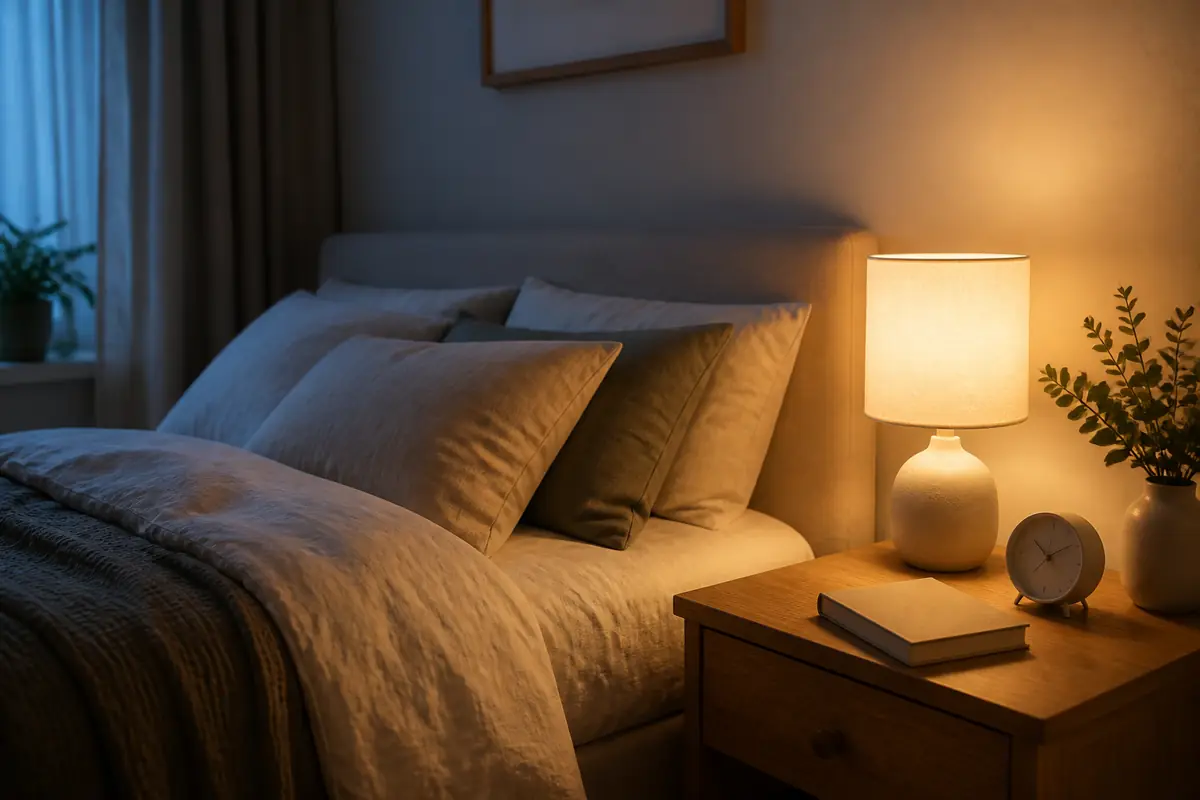
In this guide
Position and control matter before decorative style
Start with the seated eye line and reading position, then choose a shade that hides the lamp source while directing enough light onto the page. Warm white light commonly suits a bedroom, but lumen output, dimmer compatibility and reachability decide whether the lamp works. Keep cables away from walking routes and never exceed the fitting’s stated lamp rating.
This guide combines measurement, published lamp specifications and UK electrical-safety principles. It does not prescribe a medical sleep treatment or certify an individual fitting. A fixed wall light or new socket should be installed by an appropriately competent person.
Bedside lighting decisions at a glance
| Question | What to measure | What a good choice does |
|---|---|---|
| Will it glare? | Mattress and seated eye height | Shade conceals the bright source |
| Can you read? | Distance from source to page | Puts useful light on the book |
| Can you switch it? | Reach from normal sleeping position | Works without stretching or standing |
| Will it fit? | Table width, lamp base and shade | Leaves space for daily essentials |
| Is it safe? | Cable route, rating and ventilation | Avoids trip, heat and pinch hazards |
Measure height from the mattress
A lamp is judged from where your eyes are, not from the floor. Sit against the pillows as you normally read and measure the mattress surface to your eye line. The shade should generally screen direct view of the bulb while allowing light to spread across the page. A low table may need a taller lamp; a tall bedside chest may need a shorter one.
Record four dimensions
- Top of mattress to seated eye line.
- Bedside surface height and usable width.
- Distance from the lamp position to the reading page.
- Clear route from plug to lamp without crossing a walkway.
Also test the shade diameter against drawers, water glasses and the bed edge. A beautiful oversized shade that is knocked every morning is badly specified.
Lumens, colour temperature and glare
Lumens describe light output; watts describe power use. The same wattage can produce different light levels across lamp technologies, so shortlist the lumen figure and confirm it does not exceed the fitting’s restrictions. A dimmer extends flexibility, but the LED lamp, control and fitting must be compatible or flicker and poor low-level performance can follow.
Colour temperature is stated in kelvin. Warm white options around the lower end of common domestic ranges usually feel calmer than cool, blue-white task lighting, but the shade fabric and wall colour change the result. A dark shade absorbs more light; a translucent shade spreads it; an opaque shade sends more light up and down. The goal is not maximum brightness but comfortable contrast between page and room.
Table lamp, wall light or clip light?
Choose a table lamp if…
- You rent or want installation-free flexibility.
- The bedside surface is wide and stable.
- You want to change shade, position or room layout easily.
- A reachable inline or base switch is available.
Choose a wall or focused light if…
- The table is very small or absent.
- Two sleepers need independent directional light.
- You can place it from actual seated measurements.
- Installation and cable concealment can be completed safely.
Controls that work at night
Place the control where a person can reach it without leaning across a hot lamp, trailing a hand behind furniture or standing. A base switch is easy to find; an inline switch is useful only when the cable position stays fixed; a pull cord can work on a wall light. Touch and smart controls may be convenient, but they should not remove a dependable manual route.
For smart lamps, check platform, hub and household access before purchase using our smart-home compatibility guide. A voice command is not a complete substitute when the network fails. If the room is shared, make sure both people can operate each side without controlling the other accidentally.
Test the control sequence before committing to a pair. Some touch lamps cycle through every brightness level before switching off, which can be irritating at night. Others return at full output after a wall switch is used. Product instructions should explain memory behaviour, minimum dimming level and whether replacement lamps are supported; if they do not, treat the feature as uncertain.
Plan the light in layers
A bedside lamp should not have to light the whole room and the reading page at once. Start with the room’s ambient light, then decide whether the bedside source is for reading, orientation, atmosphere or more than one job. A shaded table lamp may soften the room while a focused wall light handles reading. When one fitting must do both, a compatible dimmer or separate directional head can be more useful than simply increasing output.
Contrast matters because a bright page in a completely dark room can feel uncomfortable even when the page itself is easy to read. Keep a modest surrounding light level or use a shade that contributes some indirect light. Glossy tables, mirrors and pale headboards can reflect a visible source back towards the pillow, so assess the likely view from lying and seated positions rather than only from the doorway.
Check three positions
- Lying down: can you see the bright lamp source directly?
- Sitting to read: does useful light reach the page without your head creating a shadow?
- Standing beside the bed: can you reach the switch and move safely without catching the cable?
Specify the lamp and shade together
A fitting, lamp and shade form one system. Check the cap type, maximum rated wattage, physical lamp size and whether an enclosed shade restricts the lamp options. For dimming, the lamp and control must both state compatibility; a dimmable lamp does not guarantee good results with every existing dimmer. If a smart lamp is used, confirm that the wall switch will normally remain powered and that another understandable control remains available.
Shade proportions affect stability as well as appearance. A wide shade on a narrow lightweight base can be easy to knock, particularly when the table is close to bedding. Confirm that the shade sits securely, that the lamp cannot touch fabric and that ventilation is not obstructed. If the shade is being bought separately, match the fitting type and dimensions instead of assuming a universal attachment.
Set up and review after dark
Daylight disguises glare and weak task lighting. Assemble the planned setup after dark, sit in the normal reading position and check the switch, page illumination, reflections and cable route. Try the lowest useful dimmer setting and listen for buzz while looking for flicker. If two people share the room, test whether one light reaches the other pillow. Repositioning a portable lamp is a normal part of setup; moving a fixed wall light later is not, which is why temporary marking and measurements matter before installation.
Safety and placement
- Use the fitting type and maximum lamp rating stated by the manufacturer.
- Keep fabric, paper and bedding away from hot surfaces and ventilation openings.
- Do not trap a cable under furniture, rugs or a sharp bed frame.
- Replace damaged plugs, switches and flexes rather than taping them.
- Check that a lightweight lamp cannot be pulled over by its cable.
Bathroom-adjacent bedrooms do not turn ordinary lamps into bathroom fittings, but any light inside a bathroom must suit its location and installation zone. For general specification literacy, see our IP ratings explainer.
Match pairs without forcing symmetry
Two identical lamps create visual order, but two sleepers may need different solutions. One side may use a focused reading light and the other a soft table lamp. Keep a shared material, shade colour or silhouette if cohesion matters, while allowing output and direction to follow the user. Our furniture measuring guide, furniture quality guide and bedding explainer help coordinate the surrounding setup.
Our verdict
The best bedside lamp is sized from the mattress and controlled from the pillow. Screen the bulb from the seated eye line, direct sufficient light towards the task, choose a compatible warm lamp and keep the base and cable stable. Decorative colour comes after those requirements.
Browse Style & Gifts, Home & Kitchen or the UK shop directory for related choices.
Check current official information:
Energy Saving Trust lighting guidance ↗Electrical Safety First home guidance ↗IKEA UK bulb specifications ↗
Once the height, shade and light direction fit the room, use our Best Table Lamps Under £50 in the UK: Six Real Options Compared.
To choose the colour of the light as well as its direction, use our Warm vs cool lighting for interiors: colour temperature and placement.
Frequently asked questions
How tall should a bedside lamp be?
There is no universal height — Measure from the mattress and seated eye line. The shade should conceal direct glare and put light on the page from the actual table height.
How many lumens do I need for reading?
Needs vary with distance, eyesight, shade and ambient light. Compare lumen output rather than watts and favour dimmable flexibility where every component is compatible.
Is warm white best for a bedroom?
Warm white is commonly comfortable, but the shade and room surfaces alter perception. Check the stated kelvin value rather than relying on a product name alone.
Are touch lamps suitable at a bedside?
They can be convenient if the whole base is easy to reach and accidental activation is unlikely. Confirm dimmer and LED compatibility and retain an understandable manual control.
Can I install a wall light myself?
A plug-in wall light may need only secure mounting, but fixed wiring should be handled by an appropriately competent installer in accordance with current requirements.
How we researched bedside lighting
We reviewed current UK energy and electrical-safety guidance plus official bulb specifications on 18 August 2026. We compared lumen, colour-temperature, control, fit and placement considerations. We did not photometer a room or inspect a user’s wiring.
Limitations
Perceived brightness and comfort vary with eyesight, shade, wall colour, distance and task. Product specifications and electrical requirements change. Seek professional advice for fixed wiring or damaged installations.