Children’s clothing size charts: measurements, fit and sensible growth room
Age labels are starting points, not body measurements. Compare the child’s current dimensions with the exact brand chart, distinguish body from garment measurements, allow movement and layering, and add growth room only where it will not create a safety or comfort problem.
In this guide
Fit the largest relevant measurement, then test movement
Use height plus chest, waist, hip, inside leg and foot measurements as the garment requires. If the child falls between sizes, choose from the garment’s purpose, cut and fabric—not a rule that bigger is always better. Keep returns possible until fit, movement and layering are checked.
Why age labels are unreliable
Children of the same age vary in height, torso length, limb length and proportions. Brands use different blocks and may group ages differently. “7–8 years” is not a national measurement standard. A child may need one size for tops, another for trousers and a different footwear width.
Start with the chart attached to the exact product or brand, not a generic conversion found elsewhere. Note whether it shows body measurements—the child the garment is designed to fit—or garment measurements—the item laid flat or measured around. Our broader UK clothing size-chart guide explains why a label is only a routing tool.
| Measurement | How to take it | Used for | Fit risk |
|---|---|---|---|
| Height | Barefoot, upright, head level | Overall size starting point | Misses body proportions |
| Chest | Level around fullest point | Tops, dresses and coats | Tight armholes or excess body |
| Waist and hip | Natural waist; fullest hip | Trousers, skirts and fitted layers | Waist slips or seat pulls |
| Inside leg | Crotch to desired hem | Trousers and leggings | Tripping, dragging or exposure |
Take measurements calmly and consistently
Use a flexible tape over light clothing or underwear, following the brand instructions. The tape should sit level and touch without compressing. Record the date because children change. Repeat an unexpected number and avoid measuring while the child twists or holds their breath.
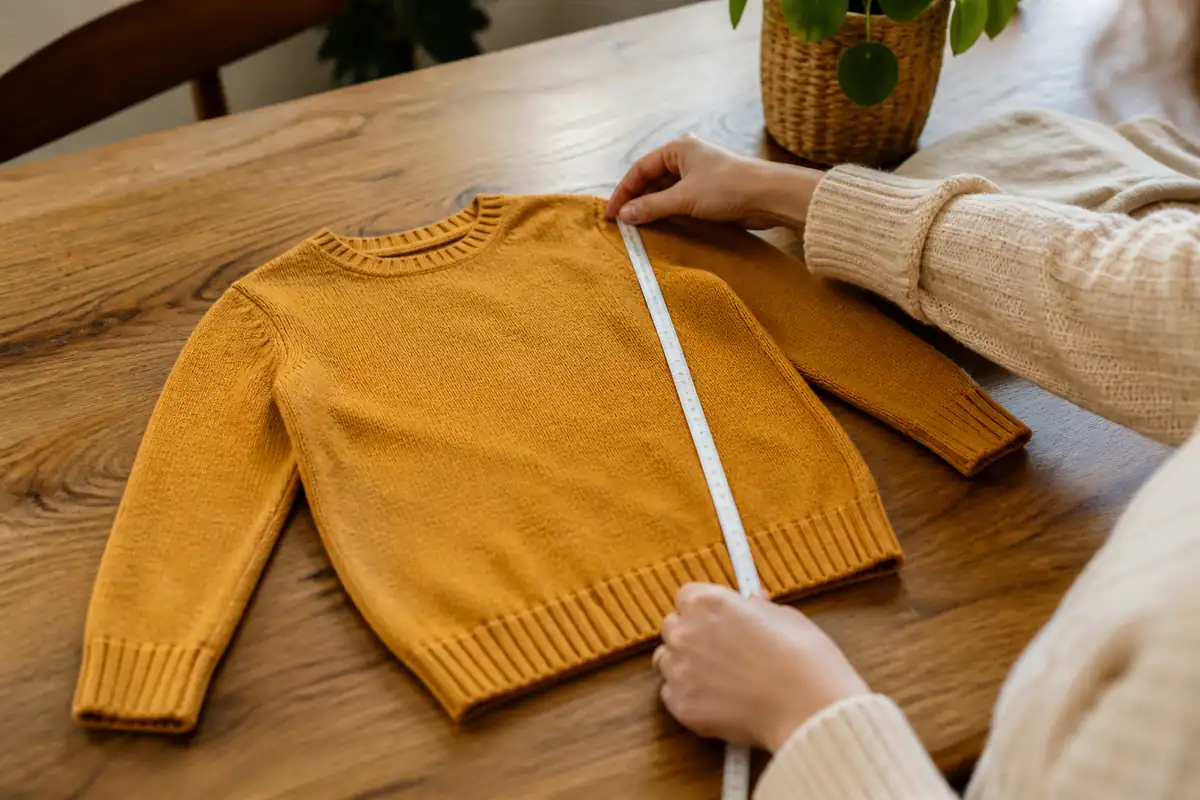
For height, use a flat floor and wall without skirting interference. For sleeves, some charts measure shoulder point to wrist, others centre back to wrist. For inside leg, identify the endpoint the garment needs. Write centimetres beside each number to prevent conversion errors. If an existing garment fits well, measure it flat using the retailer’s garment diagram.
Separate body and garment measurements
A garment must normally be larger than the body in some dimensions. That difference is ease. A body chest of 64 cm does not mean a jumper laid flat should measure 32 cm across in every cut: knit stretch, intended ease and seam placement change the comparison. Do not subtract or add an arbitrary amount.
When a retailer supplies garment measurements, compare them with a similar item that fits, not directly with the body unless the instructions say so. Keep fabric and shape consistent. A dropped-shoulder sweatshirt, fitted school shirt and insulated coat can have very different widths while each fits the same child.
Before adding to basket
- Current dated body measurements in centimetres.
- Exact product and brand size chart saved.
- Chart type: body measurement or garment measurement.
- Intended base layers, movement and season.
- Adjustment features and their safe range.
- Returns window, tags, multipack treatment and postage.
Add growth room selectively
Growth room is useful when the garment remains secure and functional. Adjustable waists, turn-up hems designed for extension, longer cuffs and generous coats can accommodate change. Excess trouser length can create a trip hazard; oversized necks and armholes expose or chafe; a loose hood can impair view; oversized footwear can alter gait.
Do not size up several years for theoretical value. The garment may wear out at knees, cuffs or seats before the child reaches the intended size, and an unusable first season destroys cost per wear. The cost-per-wear guide works best with realistic wear, washing and hand-down potential.
Test movement, not only standing fit
Ask the child to sit, crouch, reach, raise arms and walk. Check that waistbands stay secure without digging, sleeves do not cover hands during tasks, and hems do not catch shoes. For active clothing, reproduce the movement and base layers. For outerwear, zip it over the thickest normal layer without pulling at shoulders.
Comfort feedback matters. A garment can look correct but have a scratchy seam, stiff fastening, tight cuff or label that makes it unworn. Allow enough time for a calm try-on and avoid asking a child to tolerate a problem because the item was expensive or part of a set.
Read fabric and construction with size
Elastane, rib, knit structure, lining and cut affect movement; fibre names alone do not promise stretch or recovery. A stretchy waistband can fit a range but still twist or lose recovery. Woven shirts may need more exact shoulder and neck fit. Read the fabric-composition guide alongside construction photographs.
Check seam allowance, reinforced stress points, adjustable tabs, fastener access and whether a label can be removed safely. The clothing-quality guide covers evidence visible online. Avoid loose decorative parts and follow age-appropriate safety information.
Plan for washing without buying oversized
Follow the care label and do not assume every natural fibre will shrink by a fixed percentage. Tumble heat, agitation and drying shape matter. If the seller warns of shrinkage, ask whether the size chart describes the item before or after care and follow its instructions. Buying oversized as a correction is unreliable.
Keep an initial measurement for successful basics and record how they changed after correct washing. The first-wear care guide explains colour transfer and shrinkage checks. Compatible care across a child’s weekly wardrobe can be more valuable than a marginally lower purchase price.
Handle multipacks and sets carefully
A multipack may be treated as one return unit, and opening or washing one piece can affect the practical return route. Confirm whether every item uses the same cut. Sets can force a compromise when the top and bottom require different sizes; separates may cost more initially but fit and wear better.
For repeated basics, order one size test where delivery and timing permit. After a successful wash-and-wear cycle, record the model, size and measurements before ordering more. Do not assume a later colour or season uses the same factory, fabric or block.
Use reviews as clues, not measurements
“Runs small” can reflect the reviewer’s expectation, chosen fit, body proportions or an incorrect comparison size. Give more weight to reviews that state the child’s measurements, selected size, garment version and specific result. Even then, use the retailer chart.
Photographs can reveal cut and proportion but not exact scale. Check whether an image is of the selected colour and current version. If the seller is unfamiliar, use the genuine-shop checklist before sharing a child’s delivery details or paying.
Protect returns and future records
Read return timing before ordering a growth purchase. A garment bought months ahead may be outside the window before it is tried in the intended season. Keep tags attached during the fit test and do not wash until the decision is made. Underwear, swimwear and personalised items can have narrower change-of-mind routes.
The clothing returns guide explains hygiene seals and policy details. Save the order and chart you relied on using the purchase documentation method. If the garment materially differs from its description, record measurements before alteration.
Choose the larger size when
- The largest relevant body measure requires it.
- Normal layers and movement need the ease.
- Adjustments keep the garment secure now.
- Extra length does not create a hazard.
Choose the closer size when
- Oversizing impairs movement or fastening.
- The garment must support active use now.
- The fabric already provides suitable stretch.
- Future growth is too uncertain to justify poor fit.
Balanced verdict
The best children’s size is the one that works safely and comfortably now with modest, usable growth room. Age labels narrow the search; body measurements, garment data and movement make the decision.
Keep a dated record, learn which dimensions drive fit for each garment type and resist overbuying far ahead. A slightly more expensive item worn immediately and repeatedly can offer better value than a bargain that spends a season waiting to fit.
Official UK sources
Frequently asked questions
Should I buy children’s clothes by age or height?
Use age only as a starting point. Height plus the relevant chest, waist, hip, leg or foot measurements gives stronger evidence.
What if the child falls between sizes?
Use garment purpose, cut, fabric, movement and adjustment features. Bigger is not automatically safer or more economical.
How much growth room is sensible?
Only enough that the garment stays secure, comfortable and functional now. There is no universal centimetre allowance.
Can I compare garment measurements with body measurements?
Not directly unless the retailer instructs it. Garments include ease; compare garment data with a similar item that fits.
Should I wash before checking fit?
No. Complete the return-safe fit test first, then follow the care label once you keep the garment.
Are customer reviews useful for sizing?
They are clues when they state measurements and exact versions, but they do not replace the current brand chart.
How we researched this guide
Recommended Today reviewed current UK textile, product-information, distance-selling and returns guidance, then applied a fit model covering body and garment measurements, movement, growth room, construction, care and evidence.
Limitations
Brand blocks, children’s growth, garment cuts and retailer policies change. Recheck the exact product chart and terms before purchase. The image is an editorial illustration, not a photograph from a product test.