Carpet cleaner value guide: capacity, extraction, tools and running cost
A carpet cleaner earns value when it safely wets, agitates and extracts from the actual floor covering without creating excessive drying, maintenance or storage work. Define the jobs before buying capacity.
In this guide
Buy for the carpet, stain pattern and drying plan
A larger tank or motor does not prove better extraction, safer fibres or easier ownership. Confirm flooring compatibility, separate clean and dirty capacity, tool access, detergent rules, parts and a realistic route for ventilation and machine cleaning.
Use the carpet-cleaner buying guide for the full process, compare dry pickup through the cordless vacuum value guide, and decode headline numbers with vacuum specifications explained.
| Decision | Evidence to collect | Value test | Hidden cost |
|---|---|---|---|
| Compatibility | Carpet fibre, backing, warranty and dye stability | Approved wet-clean route | Damage or invalidated warranty |
| Capacity | Usable clean and dirty tank volume | Fits room without awkward refills | Weight and sink handling |
| Extraction | Pass method and remaining moisture | Predictable drying plan | Damp, odour and repeat passes |
| Ownership | Detergent, filters, brushes, hose and parts | Supported service routine | Consumables and storage |
Carpet-cleaner evidence file
- Identify every carpet and rug type.
- Check manufacturer cleaning instructions.
- Map stains, rooms and stairs.
- Measure storage and filling route.
- Record clean and dirty capacities.
- Price approved detergent.
- Check brush, belt and hose parts.
- Plan ventilation and exclusion time.
Confirm that wet extraction is appropriate
Identify fibre, backing, construction, colour stability and any flooring or stain-treatment warranty. Some rugs, natural fibres, loose-laid coverings and absorbent backings need specialist care rather than a household extractor.
When uncertain, follow the carpet or rug manufacturer and use a competent professional. A machine bargain is poor value if it creates shrinkage, dye bleed, delamination or trapped moisture.
Define the jobs and frequency
List whole-room refreshes, pet accidents, entrance soil, drink spills, stairs, upholstery and car interiors separately. These jobs require different head widths, hoses, tools and cleanup.
A large upright may suit periodic room cleaning but be inconvenient for a small local mark. A compact spot machine can be valuable for accidents while leaving whole-room work to rental or professional service.
Pre-vacuum and remove dry debris
Wet cleaning should not begin with loose grit, hair and crumbs that a dry vacuum can remove. Pre-vacuum slowly, move suitable furniture and inspect for sharp objects or unstable edges.
Use cordless versus robot vacuum to plan routine dry control. Reduced embedded soil can lower the frequency and intensity of wet extraction.
Understand clean and dirty tank capacity
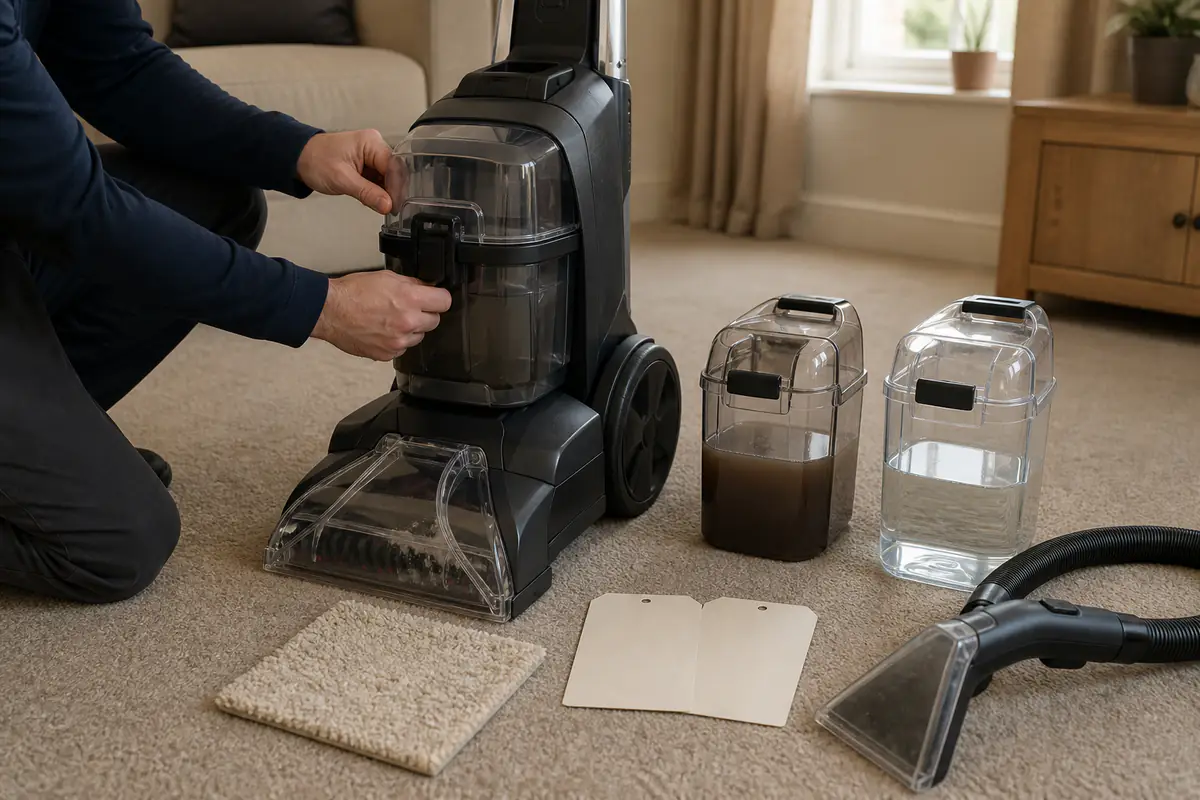
Compare usable volumes separately and note the smaller limiting tank. A quoted total may not represent how much solution can be laid down before dirty water, foam or a float ends the pass.
Lift and carry the tank weight from the actual sink. A large capacity reduces refills but can become awkward on stairs or for users with limited grip.
Inspect tank access and sealing
Check lid, gasket, float, filter, handle and the opening used for filling and rinsing. Narrow channels or trapped ledges can retain dirty water and hair.
A tank that is easy to remove but difficult to align can leak or reduce suction. Read instructions and reviews for the exact model rather than generalising from product family photographs.
Do not equate wattage with extraction
Electrical input does not directly state how much water remains in carpet. Head seal, airflow, pass speed, brush action, solution amount and fibre all affect pickup.
Look for consistent model-specific tests with a described method. A marketing claim without carpet type, pass count and measured residual moisture is limited evidence.
Plan detergent as part of the machine
Check approved formula, dilution, tank dosing and whether pretreatment or rinse passes are allowed. Excess detergent can leave residue that attracts soil or creates foam in the recovery path.
Price the concentrate by mixed usable volume, not bottle size. Do not combine chemicals or add household products that the manufacturer does not approve.
Match brush action to the covering
Rotating brushes can improve agitation on suitable carpets but may be too aggressive for delicate loops, fringes or unstable rugs. Check whether brushes stop for hard floor or tool use.
Inspect brush access for hair removal and replacement. A hidden or non-serviceable brush reduces long-term performance and can damage fibres when debris becomes wrapped.
Value tools only when the hose works
A stair or upholstery tool needs adequate hose length, secure connection, manageable machine position and a clear rinse path. Measure the staircase and do not balance a heavy machine on a step.
Check upholstery cleaning codes and manufacturer instructions before wetting fabric. The presence of a tool does not prove material compatibility.
Plan stain treatment without unsupported promises
Identify the substance, age, previous chemicals and material. Blot fresh liquid where appropriate and follow recognised product instructions; avoid heat or scrubbing that can set or spread some stains.
No machine can guarantee removal of every colour change. Test in an inconspicuous area and describe any remaining mark honestly rather than applying stronger unapproved mixtures.
Control water application
Use measured solution and steady passes according to instructions. Repeated wet passes can overload backing and underlay even when surface fibre looks clean.
Extra dry passes may improve recovery without adding solution, subject to the machine method. Stop if the tank, head or carpet behaves unexpectedly.
Create a drying plan before starting
Ventilate appropriately, use safe heating or air movement and keep people and pets off damp carpet. Weather, fibre, underlay and room humidity affect drying time.
Do not replace furniture or close the room while moisture remains. Protect legs from dye or rust transfer and follow carpet guidance for foil or blocks.
Clean the machine immediately after use
Empty dirty water safely, rinse tanks, remove hair and allow components to dry before storage. Flush tools and hose according to instructions so residue does not harden or smell.
Machine-cleaning time belongs in ownership cost. A model that saves minutes on the floor but takes awkward dismantling afterwards may not suit frequent local spills.
Check parts, belts and support
Use the appliance repairability guide to find brushes, belts, seals, tank caps, filters and hoses. Record model-specific part numbers before purchase.
A cracked proprietary tank can stop an otherwise working cleaner. Parts availability and a replaceable cord or hose can matter more than an extra cleaning mode.
Compare buying, renting and professional cleaning
Apply total cost of ownership to machine, detergent, parts, storage and time. Buying suits repeat compatible jobs; rental can suit occasional whole-room use; professional service can reduce risk for valuable or difficult coverings.
Do not justify ownership by scheduling unnecessary cleaning. Frequency should follow soil, household need and carpet guidance, not the sunk purchase.
Store clean, dry and accessible
Measure cupboard height, hose position and tank drying space. Do not seal damp components into the machine, and protect it from frost if residual water could remain.
Browse Home & Kitchen for related cleaning systems. Keep instructions and the compatible detergent record with the machine.
Plan electrical safety around water
Inspect cable, plug and machine before use, keep connections away from wet areas and follow the manufacturer’s filling and emptying sequence. Do not pull the machine by its cord or handle a plug with wet hands.
Stop if liquid reaches an unintended part, a protective device trips or the machine smells hot. Disconnect safely and seek appropriate service rather than repeating the fault.
Use room sections to control workload
Divide a large carpet into logical passes that allow steady overlap and a clear exit without walking over cleaned areas. Keep children and pets away from tanks, cable and damp flooring.
A planned section also makes solution use and recovery easier to compare. If dirty-water pickup falls unexpectedly, stop and check tank seating, float, filter and head rather than laying down more liquid.
Record each cleaning cycle
Note room, product dilution, passes, drying time and the condition that prompted cleaning. This creates an evidence-based interval instead of an arbitrary seasonal habit.
If drying becomes slower or results decline, inspect machine maintenance and carpet condition before increasing chemical or pass count. More intervention is not automatically better care.
Which carpet-cleaning route offers better value?
Repeat compatible jobs justify ownership
The floors, storage, detergent and cleanup routine are known and the machine can be maintained with available parts.
Use is occasional or risk is high
Valuable rugs, uncertain fibres, difficult drying or rare whole-room work make specialist equipment or service safer.
Balanced verdict
Carpet-cleaner value depends on compatibility, extraction workflow and ownership discipline. Confirm the floor, control solution, plan drying and choose capacity that can be carried and cleaned.
A smaller serviceable machine can outperform a larger model that is difficult to rinse, store or repair.
Official checks:
NHS advice on damp and mould prevention ↗
HSE cleaning chemicals guidance ↗
GOV.UK product safety advice ↗
GOV.UK consumer protection rights ↗
Frequently asked questions
Does higher motor wattage mean drier carpet?
Not by itself — Head seal, airflow, fibre, solution amount, pass method and extraction all affect remaining moisture.
Can every rug be cleaned with a carpet cleaner?
No — Fibre, backing, dye and construction can require specialist care; follow the rug or carpet manufacturer.
Should household detergent be put in the tank?
Use only products and dilution approved for the exact machine and surface.
Is a large tank always better?
It reduces refills but increases carried weight and can be harder to fill, empty, rinse and store.
When is professional cleaning better value?
It can be safer for valuable, delicate or uncertain coverings and for rare jobs where buying and storing equipment is inefficient.
Methodology and limitations
We assessed carpet-cleaner value through material compatibility, task mix, tank design, solution control, extraction, tools, drying, cleanup, parts and the alternatives of rental or professional service. We did not conduct comparative extraction tests.
Limitations
Carpets, rugs, stains, underlay, humidity, detergents and machine designs vary. Follow the exact surface and machine instructions and use a competent specialist when material or moisture risk is uncertain.