Winter glove sizing and materials: warmth, dexterity, lining and care
Warm gloves need enough room to trap air without sliding around the fingers. Measure the hand, define the weather and task, then compare shell, insulation, lining, cuff and grip instead of treating one material as automatically best.
In this guide
Fit comes before insulation claims
Choose a glove that reaches the finger ends without pressure, allows a full fist and overlaps the coat cuff. For everyday cold weather, a wind-resistant shell with a comfortable lining usually offers a better balance than maximum bulk. Mittens are warmer for low-dexterity use; separate fingers are better when grip matters.
Hands become cold through wind, moisture, contact with cold surfaces and reduced circulation. Adding thick insulation can help, but a tight glove compresses that insulation and restricts movement. The right answer depends on whether the wearer is commuting, standing outdoors, pushing a buggy, cycling or handling tools.
Choose the glove format for the task
| Format | Best use | Advantage | Trade-off |
|---|---|---|---|
| Five-finger glove | Everyday grip, travel and handling objects. | Highest finger independence. | More surface area and seams can lose heat. |
| Mitten | Standing, walking and very cold low-dexterity tasks. | Fingers share warmth. | Poorer control of keys and fasteners. |
| Convertible mitt | Intermittent phone, camera or fine work. | Warmth with temporary access. | Openings can admit wind and catch. |
| Liner glove | Layering or mild weather. | Low bulk and washable contact layer. | Limited wind and rain protection alone. |
| Technical insulated glove | Wet, windy or sport-specific conditions. | Purpose-designed shell, cuff and grip. | Higher bulk, specialist fit and care. |
Measure hand circumference and length
Use the brand’s current chart because size labels are not standard. Measure around the widest part of the dominant hand without including the thumb, keeping the tape snug but not tight. Measure from the wrist crease to the tip of the longest finger. If the two measurements point to different sizes, follow the brand’s instructions or compare both.
Print-at-home templates can be inaccurate if page scaling changes. Check the stated scale marker with a ruler. For gifts, measure an existing well-fitting glove laid flat and retain an exchange route. Our clothing sizing guide explains how to use charts without treating the size name as a measurement.
Test fit with the movements that matter
- Reach every fingertip. Empty length reduces control; pressure at the tip can make fingers colder.
- Make a relaxed fist. The palm should bend without the glove pulling tightly across the knuckles.
- Pinch a key or zip. Excess finger width can be as limiting as excess length.
- Flex the wrist. A stiff cuff should not expose a gap when the arm moves.
- Check lining stability. Fingers should withdraw without pulling the lining inside out.
- Wear both gloves. Hands differ, and manufacturing tolerances or twisted seams may affect one side.
Shell material controls wind, water and wear
Leather can offer grip, wind resistance and a smart appearance, but type, thickness, finish and stitching matter. It is not automatically waterproof and may stiffen or mark if cared for incorrectly. Woven synthetic shells can combine low weight with coatings or membranes, although breathability and durability vary. Knitted wool or acrylic gloves can be comfortable in dry conditions yet allow wind through open structures.
Read the full fibre label and any separate lining composition. “Thermal”, “weatherproof” and similar language needs defined evidence. Water-resistant may mean brief light exposure, not immersion or sustained rain. Use our online quality evidence guide to distinguish construction details from vague claims.
Insulation works by holding air
Lofted synthetic insulation and down-like fillings need space to retain air. A tight glove compresses the layer. Wool linings can buffer moisture and feel warm, while fleece can be soft and quick drying; neither label reveals thickness, density or wind protection. A reflective layer or proprietary name is not a substitute for a clear intended temperature and activity range.
Temperature ratings are difficult to compare because circulation, wind, damp, activity and test methods differ. Treat a range as context, not a guarantee. People with circulation conditions or loss of sensation should seek appropriate medical guidance rather than relying on shopping advice.
Cuffs close the coat-to-glove gap
A short dress glove can work under a fitted sleeve; a longer gauntlet may fit over a technical jacket. Decide the overlap direction before buying. Drawcords, elastic and hook-and-loop tabs should be usable with the other gloved hand and should not create pressure at the wrist.
Try the actual coat if possible. A thick cuff inside a narrow sleeve can compress insulation, while a loose outer cuff can scoop rain. If buying online, compare cuff opening and length rather than relying on styled photographs.
Grip and touchscreen panels are consumable features
Palm overlays and silicone patterns can improve contact when clean and dry, but heavy printing may crack or wear. Seam placement at the thumb and index finger affects steering-wheel, pram and tool grip. For cycling or safety-critical work, use equipment designed and certified for that activity rather than general fashion gloves.
Touchscreen patches depend on fit, screen, moisture and the size of the conductive area. They can degrade with wear. Choose them as a convenience, not the main reason to accept poor fit. Repeated owner reports about the exact model are more useful than a generic touchscreen icon; evaluate them with our review-checking method.
Care can change fit and weather performance
Follow the sewn label and manufacturer instructions. Leather, membrane shells, wool and bonded touchscreen materials require different methods. Heat can shrink, harden or delaminate components; fabric conditioner may impair some technical finishes. Dry gloves fully away from unsuitable direct heat and reshape them if instructed.
Clean salt and dirt before long storage, pair the gloves without stretching cuffs and repair small seam failures early where safe. Include specialist leather care or waterproofing renewal in the cost-per-wear assessment.
Layering works only when sizes remain compatible
A thin liner can add flexibility: it manages skin contact, can be washed frequently and gives brief protection when the outer glove is removed. It also occupies space. An outer glove that fits closely without a liner may compress both layers when one is added, reducing circulation and dexterity. Try the complete system with the intended coat.
Choose liner seams that do not stack directly under outer seams, and check whether conductive fingertips still align. Silk, wool and synthetic labels do not reveal seam bulk or stretch recovery. If the liner pulls out with damp hands, the system may be frustrating during travel. Mitt shells over separate liners can suit changing conditions, provided the wearer can store each layer safely.
Carry a dry replacement for long outdoor periods where wet gloves are foreseeable. Two moderate pairs used in rotation can be more practical than one heavily insulated pair that cannot dry overnight. This is a use-pattern decision, not a reason to buy extra by default.
Before accepting a new pair, turn the hands palm-up and compare seam symmetry, fingertip shape and the way insulation is distributed. Feel for hard knots or twisted lining, then check the thumb web while gripping. Cosmetic irregularity may be harmless, but a ridge at a pressure point or an opening stitch is relevant to comfort and durability. Record any concern before outdoor wear. Repeat the movement after several minutes indoors because lining and hand position can settle once the glove warms.
Which design should you choose?
Everyday grip and control are priorities
The fit follows each finger, the shell blocks the expected wind and the cuff works with the usual coat.
Warmth matters more than fine control
The activity allows reduced dexterity and the system can be vented, dried and adjusted as conditions change.
Balanced verdict
A correctly sized, wind-resistant glove with stable lining is the strongest everyday default. Add specialist insulation, waterproofing or mitt construction only for a defined exposure. Warmth claims cannot compensate for compressed fingers, an exposed wrist or a slippery palm.
Before ordering, compare the seller’s return position, apply our clothing construction checks, and browse more Fashion guidance or the shop directory.
Check current official guidance:
GOV.UK textile labelling ↗NHS Raynaud’s guidance ↗HSE workplace temperature guidance ↗
Frequently asked questions
Should winter gloves be tight or loose?
They should be secure without pressure. A little room supports movement and insulation, but excess length reduces control.
Are mittens warmer than gloves?
Usually for comparable construction because fingers share heat, but weather protection, fit and activity still matter.
Is leather waterproof?
Not necessarily. Check the exact finish and care guidance; water resistance differs by product and condition.
Can I rely on a temperature rating?
Use it only with the stated method and conditions. Personal circulation, wind, damp and activity can change the result.
Why does a glove lining pull out?
It may be loosely anchored, damp or gripping the hand. Stable attachment and correct drying reduce the problem.
Methodology and limitations
We assessed winter gloves through hand measurement, movement, shell, insulation, lining, cuff, grip, weather claims and care. Official UK textile, health and workplace guidance was checked on 29 August 2026. No named glove was worn or laboratory tested.
Limitations
Warmth is individual and condition dependent. Size systems, construction and claims vary. Confirm the exact chart, materials, activity guidance and returns before purchase.
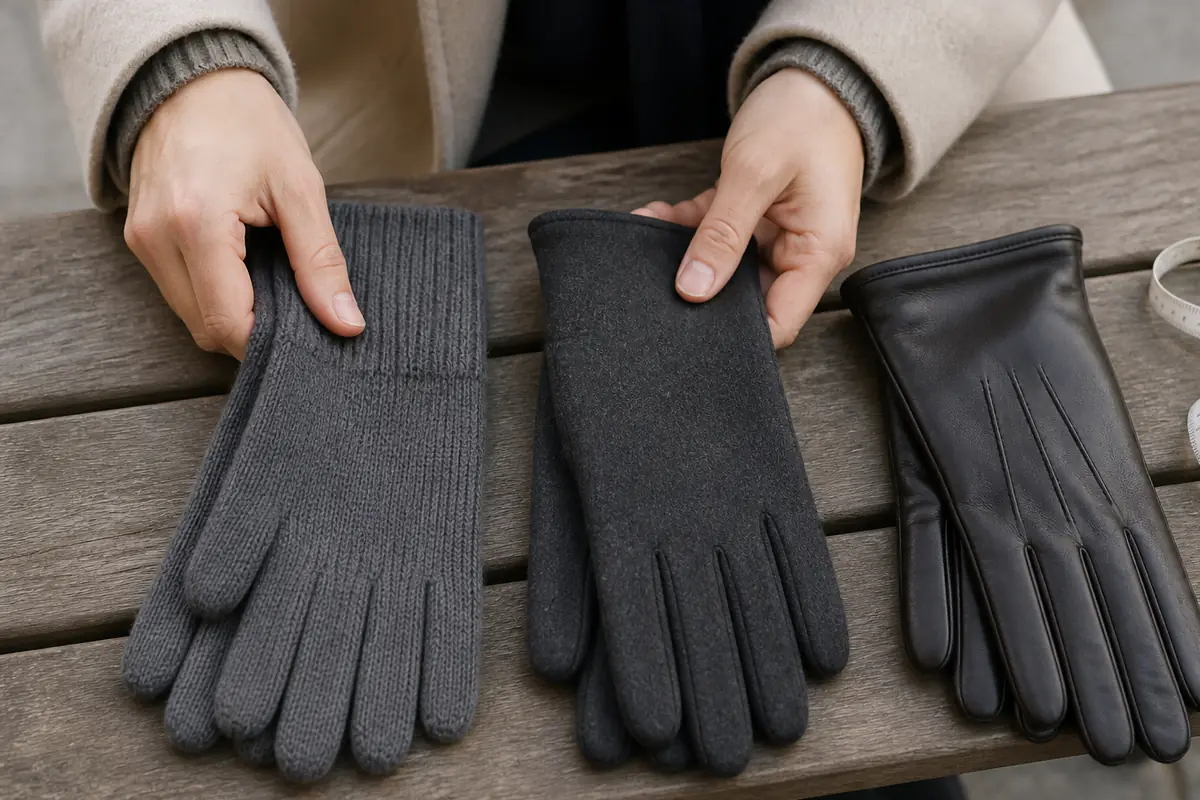
The image is an editorial illustration, not a photograph from a product test. Links are editorial and non-affiliate.