How to choose a winter scarf: fibre, weave, dimensions and care
A useful winter scarf is warm enough for the intended weather, comfortable at the neck and easy to wear with the coats already owned. Fibre matters, but weave, thickness, dimensions, finish and care determine how the material performs in practice.
In this guide
Choose the lightest scarf that closes the real warmth gap
For most everyday UK use, a medium-weight scarf long enough for one secure wrap is more versatile than an oversized blanket style. Look for an accurate fibre label, an even weave, finished edges and care you can realistically follow. Reject severe shedding, scratchy seams and vague “cashmere feel” language that hides the actual composition.
A scarf has a simple job—cover exposed skin and reduce heat loss around a coat opening—but online listings often turn that into a fibre-ranking exercise. A costly fibre can be loosely woven, poorly finished or unsuitable for sensitive skin. Start with the coat, weather and tying method, then compare construction.
Match scarf construction to the job
| Format | Useful for | Check before buying | Common drawback |
|---|---|---|---|
| Fine woven scarf | Smart coats, mild weather and low bulk. | Edge finishing, transparency and snag risk. | May offer little insulation in wind. |
| Brushed woven scarf | Soft surface and adaptable daily warmth. | Shedding, pilling and whether brushing hides a loose structure. | Fibres may transfer to dark coats. |
| Knitted scarf | Stretch, texture and casual outerwear. | Recovery, seam finish and snag-prone loops. | Heavy knits can lengthen in wear. |
| Blanket scarf | Multiple wraps and shoulder coverage. | Exact dimensions, packed volume and coat compatibility. | Bulk can crowd the neck and overwhelm smaller collars. |
| Tube or snood | Simple coverage without loose ends. | Opening circumference, depth and stretch recovery. | Less adjustable for temperature changes. |
Fibre content is evidence, not a performance score
UK textile-labelling guidance requires fibre composition to be stated. Read the percentage for the complete product and check whether fringe, lining or decorative components are treated separately. “Wool blend” is incomplete without the constituent percentages; “cashmere touch” or “silk feel” may describe a finish rather than fibre.
Wool fibres can provide warmth at modest weight, but feel and care vary by fibre diameter, yarn and finishing. Acrylic can be light, easy to colour and affordable, yet static, pilling and heat sensitivity differ between constructions. Polyester is often durable and quick drying but can retain odour. Cotton is comfortable and familiar, though a dense cotton scarf can become heavy when wet. Recycled-content and environmental claims need scope and evidence; use our green-claims checks instead of treating one percentage as a complete impact assessment.
Judge weave and finish at the failure points
- Hold a section to light. Large unintended gaps reduce wind resistance and reveal uneven construction.
- Inspect both faces. Floats, knots and pulled loops can catch jewellery or rough fasteners.
- Check the edges. Rolled, hemmed or properly bound edges should lie flat without missed stitches.
- Test fringe gently. It should be secured into the body rather than pulling free with light handling.
- Rub a hidden area. Excess loose fibre before wear suggests transfer may be significant.
- Smell cautiously. Strong finishing odour is not proof of harm, but it is a practical reason to check care and returns.
Product photographs can hide transparency by folding a scarf repeatedly. Seek a flat image, close-up of the edge and the item against a contrasting background. Apply the wider evidence method in our clothing-quality guide.
Dimensions decide whether the scarf will actually wrap
Measure a scarf already worn comfortably. Record length without fringe, width and thickness when folded. Then reproduce the intended knot with a tape or strip of fabric. A broad scarf needs more length to complete the same wrap, while a thick coat collar consumes space around the neck.
Do not use model height alone. The listing should give product dimensions and explain whether fringe is included. If measurements are inconsistent, follow our dimensions and tolerances framework. Oversizing is not free value: extra material adds weight, drying time and storage bulk.
Skin feel needs a realistic test
The neck and lower face can be more sensitive than the hand. If possible, hold the scarf against the side of the neck for several minutes while moving normally. Initial softness from brushing can change after wear and cleaning. A soft product can still irritate through a rough label, hard seam, loose fibre or trapped fragrance.
For known allergies, eczema or respiratory sensitivity, composition alone may not answer the question; seek appropriate medical advice and avoid unsupported “hypoallergenic” claims. Online buyers should preserve tags and test only as far as reasonably permitted before deciding whether to keep the item.
Colour transfer and shedding can affect the whole outfit
Dark or saturated scarves may transfer loose dye or fibre onto pale coats, especially with moisture and friction. Check the care label for separate-wash advice and read repeated, specific owner reports about the exact colour. One dramatic review is weaker than several dated reports naming the same transfer point; use our review-checking method.
Shedding is not the same as pilling. Shedding releases loose fibres; pilling forms small entangled balls at friction points. Both can be worsened by bags, hook-and-loop fasteners and rough coat collars. Removing pills carefully may improve appearance, but aggressive shaving can thin a loose knit.
Care must fit the household routine
Read the symbols before purchase. Hand-wash, machine-wash and dry-clean-only instructions create different costs and risks. A large wet scarf may need flat space and support to avoid stretching. Never assume wool percentage makes a scarf safe for a particular cycle, or that “easy care” overrides the sewn label.
Air and spot-clean where appropriate, store fully dry and protect from rough hardware. Fold heavy knits rather than hanging them for months. Include specialist cleaning and likely replacement in the cost-per-wear calculation.
Read online evidence in a fixed order
Start with the fibre percentages, dimensions and care instructions, then inspect flat product images, edge close-ups and repeated comments about shedding or snagging. Styled photographs come last because folds, coats and movement can conceal width and transparency. Save the specification used for the decision; a marketplace title or search snippet may omit qualifying detail.
Check whether colour names correspond to separate compositions or care. Some listings group several scarves under one review set even though fabric and finish differ. Filter feedback to the exact colour or size where possible, and prefer dated descriptions of a specific failure point over general praise. If the retailer gives conflicting measurements, ask in writing before purchase rather than averaging them yourself.
For a gift, preserve the label and packaging only as far as necessary for a clean return. Avoid fragrance spraying, outdoor wear or aggressive skin testing before the recipient decides. A gift receipt is useful, but an accurate description of composition and care is the more important handover.
Consider the whole winter wardrobe before adding a second scarf. A neutral everyday option may already cover most coats, while a brighter or lighter scarf should solve a different outfit or temperature need. Check storage space and likely weekly use. Variety has little value when two bulky items compete for the same weather and require different specialist care.
Which scarf should you choose?
You want flexible everyday coverage
The dimensions allow one or two wraps, the weave blocks draughts without excessive bulk and the care works with regular use.
Texture or maximum coverage is the priority
You have room inside the coat collar, accept the storage and drying volume, and have checked recovery, snagging and edge finish.
Balanced verdict
A medium-weight, accurately labelled scarf with secure edges is the most adaptable default. Fibre prestige cannot rescue the wrong dimensions or an irritating finish. Buy against the intended coat, tying method and care routine; choose extra bulk only when it solves a real cold-weather gap.
Before checkout, use our clothing-measurement guide, confirm the UK return position and browse more Fashion guidance or the shop directory.
Check current official guidance:
GOV.UK textile labelling ↗CMA Green Claims Code guidance ↗Business Companion textile guidance ↗
Frequently asked questions
Is wool always warmer than acrylic?
No. Fibre matters, but yarn, weave, thickness, wind exposure and moisture also determine warmth.
How long should a winter scarf be?
Long enough for the intended wrap without unsafe trailing ends. Measure a successful scarf and compare width as well as length.
Does “cashmere feel” mean cashmere?
No. Check the legally stated fibre composition; feel language may describe surface finishing only.
Can a scarf be returned after trying it on?
Rights and retailer policies depend on the purchase and handling. Keep it clean, preserve tags and check current terms.
How can I reduce pilling?
Limit friction, follow care instructions and remove pills gently with a suitable method once the scarf is clean and dry.
Methodology and limitations
We compared scarf formats by composition evidence, structure, dimensions, skin contact, shedding, care and outfit compatibility. Official UK textile and environmental-claims guidance was checked on 29 August 2026. No named scarf was worn, washed or ranked.
Limitations
Warmth and comfort are personal and weather dependent. Fibre labels do not reveal every finish or construction choice, and colourfastness can vary by colour. Recheck the exact product, care label and return terms.
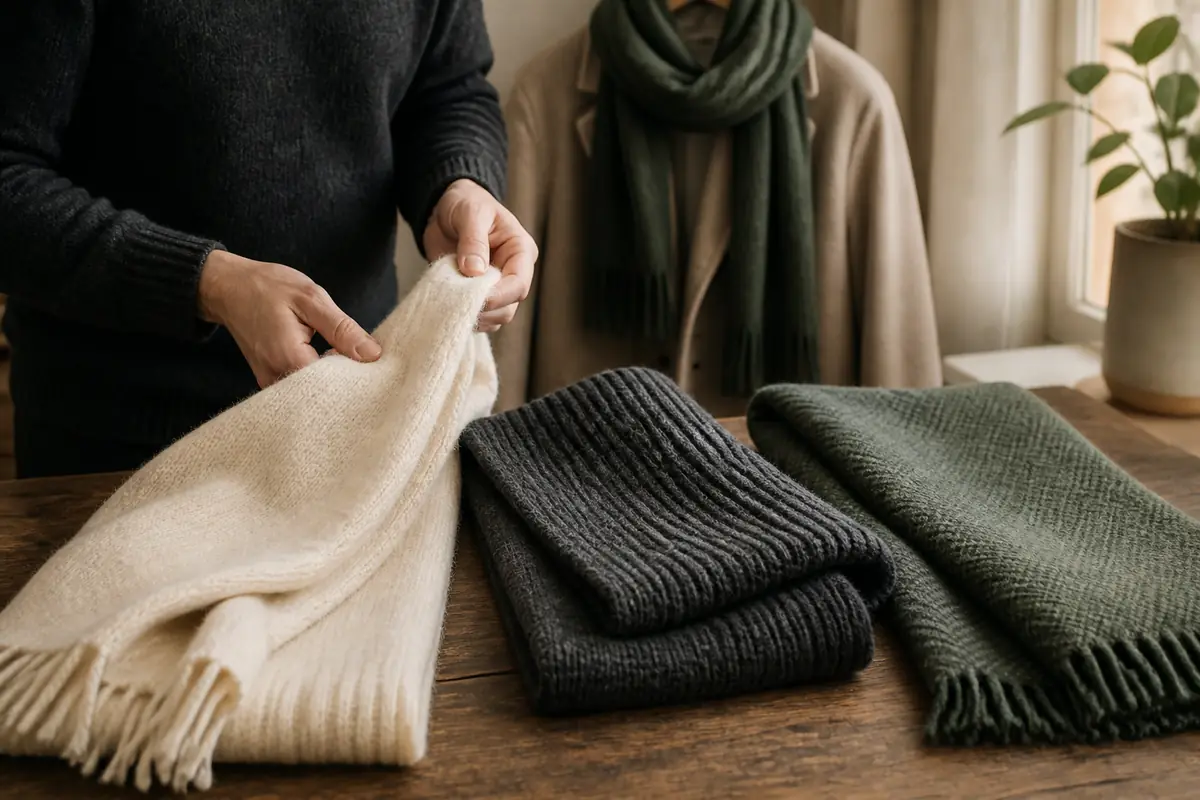
The image is an editorial illustration, not a photograph from a product test. Links are editorial and non-affiliate.