Choosing table lamps: scale, shade, bulb, controls and cable
A table lamp must fit the surface, direct useful light, accept an appropriate source, remain stable and put its control and cable where you can reach them. Start with the task and measured location, then compare shade geometry, brightness, colour appearance, glare, replaceability and safety before choosing a decorative finish.
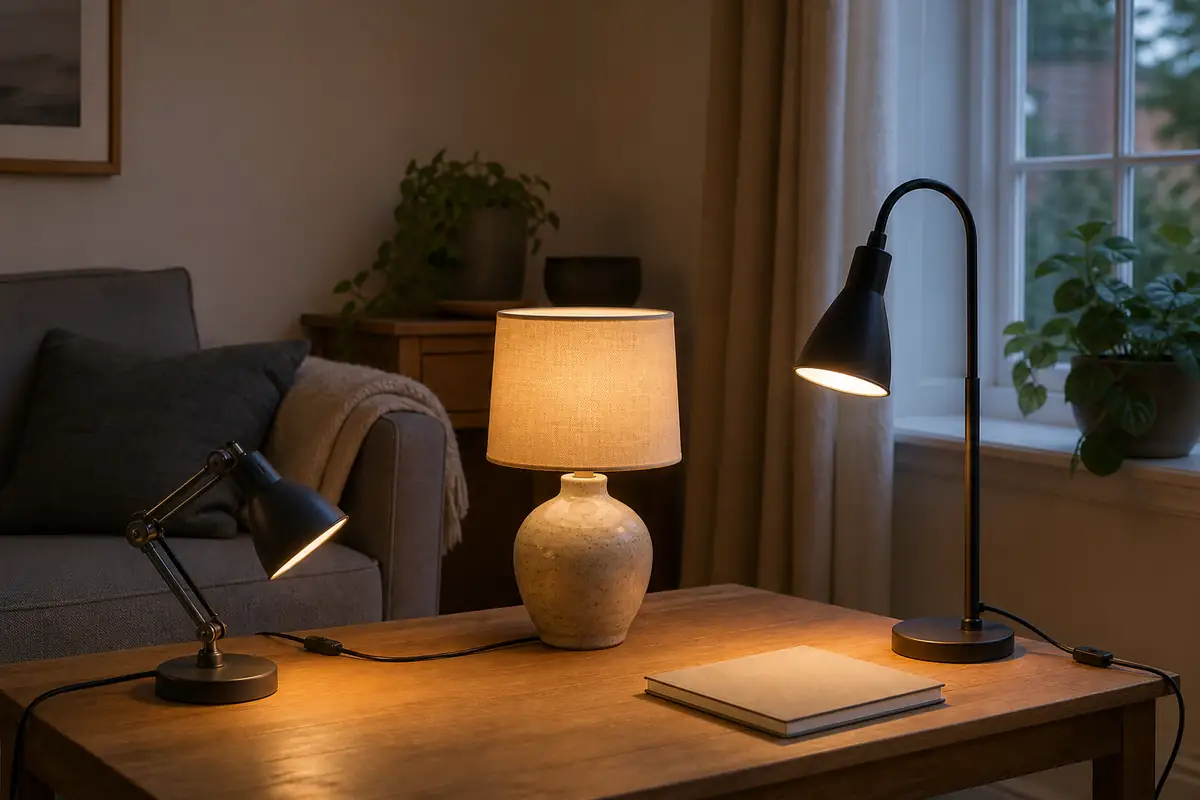
In this guide
Choose the beam and proportions before the base colour
For reading or desk work, prioritise controlled light, adjustability and low glare; for ambience, prioritise shade diffusion and comfortable brightness. Measure the base, widest shade, overall height, cable route and switch position. Check whether the light source is replaceable and whether the fitting supports dimming.
For a room-wide colour decision, read our warm versus cool lighting guide. This article focuses on the physical lamp, its light source and daily use.
| Type | Useful for | Key measurement | Watch for |
|---|---|---|---|
| Ambient shaded lamp | Soft room or bedside light | Shade diameter and seated eye line | Visible bulb and glare through thin shade |
| Adjustable task lamp | Reading, hobbies and desk work | Reach, pivot range and base footprint | Joint drift and harsh narrow beam |
| Decorative lamp | Visual balance and low-level light | Total height relative to furniture | Poor output or awkward replacement source |
| Integrated LED lamp | Slim forms and fixed light engine | Useful life and control access | Whole-lamp replacement if LEDs or driver fail |
Define the job in one sentence
“Make the corner feel warmer” is different from “let me read small print for an hour”. Record the activity, user position, other lights and desired control. A decorative bedside lamp may need gentle low-level output; a task lamp needs useful illumination on a defined area without shining into the eyes.
Do not expect one small lamp to provide ambience, detailed task light and whole-room brightness equally well. Layering two purposeful lights may be better than buying one over-bright compromise.
Measure before buying
- Surface width and depth, including objects that remain there.
- Base footprint and widest shade diameter.
- Overall height and shade position relative to seated or lying eye level.
- Distance from lamp to task area.
- Cable length along a safe route to the socket.
- Reach to inline, base, pull-cord or touch control.
- Permitted bulb cap, shape, wattage and dimensions.
- Clearance from curtains, bedding, shelves and fragile objects.
Scale includes the shade
Retail dimensions may emphasise overall height while the shade creates the widest collision point. Tape the base outline on the table and mark the shade edge above it. Check doors, drawers, shelves and the route of a hand reaching for a drink or alarm.
On a console, a very small lamp can appear visually lost and cast little light. On a narrow bedside table, a wide shade can overhang, become easy to knock and crowd essentials. Proportion is practical before it is stylistic.
Set the light at the right height
A seated reader should not see a dazzling bare bulb beneath the shade. Measure eye height in the actual chair or bed position and compare it with the lower shade edge. A diffuser can help, but it may reduce useful output and complicate bulb access.
For task work, check whether the head reaches above and slightly to the side of the work, reducing hand shadows. Left- and right-handed users may prefer different placement. Photograph the proposed position to reveal sight lines.
Shade shape controls distribution
A tapered fabric shade usually sends light both upwards and downwards while diffusing the sides. An opaque metal shade can focus a stronger pool. A glass shade may spread light widely but expose the source and show dust. The inner lining also affects warmth and reflection.
Check whether the shade is included, removable and replaceable. Unusual rings, clips or integrated assemblies can limit future options. If buying base and shade separately, confirm fitter type, weight and clearance around the bulb.
Brightness: use lumens, not old watt equivalents
Lumens describe light output; watts describe power. Choose output for the task and room, then check the lamp’s permitted source. Marketing comparisons with incandescent wattage are approximate and should not replace the actual lumen figure.
Very high output inside a small shade can create glare even if electrically allowed. A lower-output bulb may suit ambience, while task lighting needs enough useful light on the page. Compare beam and diffusion as well as total lumens.
Colour appearance and rendering
Colour temperature influences whether light appears warmer or cooler. It does not alone describe how accurately colours appear. If clothing, artwork, crafts or make-up matter, look for colour-rendering information from the light-source maker.
Use consistent sources in adjacent lamps where visual harmony matters. Smart colour control adds flexibility but also apps, accounts, standby power and compatibility questions covered in our Matter smart-lighting guide.
Replaceable bulb or integrated LED?
A replaceable lamp lets you change brightness, colour appearance or a failed source within the fitting’s limits. Confirm cap type, bulb shape, maximum dimensions and whether the shade traps larger bulbs.
An integrated LED can enable a slim form and designed optical system, but ask what happens when the driver or light engine fails. Check rated life, warranty and availability of service parts. Do not assume a long LED-life claim means every electronic component is replaceable.
Dimming needs compatibility
A dimmable bulb, dimmable lamp and control must be compatible. Putting a non-dimmable source on an unsuitable dimmer can cause flicker, noise or failure. Touch lamps may use stepped levels or proprietary electronics.
Check the lowest stable level as well as maximum brightness. For bedside use, a lamp that switches on at full output before dimming can be disruptive. Memory behaviour after power loss may also matter.
Controls should be reachable
Inline switches can disappear behind furniture or hang off the table. Base switches may require steadying a lightweight lamp. Pull cords need clear movement; touch controls can react to cleaning, pets or conductive metal surfaces.
Simulate the action from the chair or bed. A smart plug can add remote control to a simple lamp, but it should be suitable for the load and not used to disguise an inaccessible or unsafe socket arrangement.
Cable and plug planning
Measure the safe route along furniture, not a straight diagonal through walking space. Do not trap a cable beneath furniture, rugs or sharp edges. Check where the cable exits the base and whether it forces the lamp away from a wall.
Avoid overloading adaptors. If the socket or wiring is damaged, use a competent person rather than arranging furniture around the problem. Our electrical-safety buying checks explain seller and product evidence.
Stability and materials
Compare base width, weight distribution and grip. A tall narrow lamp beside a bed, child’s reach or pet route needs a more conservative stability margin. Articulated arms shift the centre of gravity when extended.
Ceramic can chip, glass can break, metal can become hot near the source and fabric shades collect dust. Inspect joins, cord entry, strain relief and shade attachment on arrival. Stop using a lamp with damage, scorching, looseness or exposed wiring.
Heat and clearance
Follow the fitting’s maximum wattage, specified light-source type and clearance instructions. Do not drape fabric over a shade or position hot components against curtains, bedding or paper. LED sources use less power for similar output but their electronics still generate heat.
Allow ventilation and keep the lamp dry unless specifically rated for the environment. Bathroom zones and outdoor use involve separate requirements; an ordinary table lamp is not automatically suitable.
Energy labels and product information
UK energy information for light sources uses the rescaled A-to-G format. Check the source’s label and product sheet when applicable, including energy use and model identity. The luminaire and the replaceable bulb are related but distinct buying decisions.
Integrated products can present information differently. Use the exact model documentation and do not infer efficiency from “eco”, “low energy” or LED alone.
For a room-wide plan, compare the lamp with our warm versus cool lighting guide; colour appearance should be chosen with the surfaces and evening task, not from the lamp finish alone.
Task lamp or ambient lamp?
You need controlled useful light
The head reaches the work area, adjusts without drifting, avoids glare and puts the switch and cable within safe reach.
You want comfortable background light
The shade diffuses appropriately, proportions suit the furniture and the source creates the intended brightness without exposing glare.
Balanced verdict
A good table lamp fits the surface, user, task and electrical setup at the same time. Attractive materials matter only after scale, distribution, source compatibility, controls, cable and stability work.
Make a measured sketch, choose the light source and test glare immediately on arrival. For more room-planning decisions, browse Style & Gifts and our measurement guide.
Official checks:
GOV.UK: energy labelling of products ↗
UK Government: lamps and light-source label fields ↗
GOV.UK: Electrical Equipment Safety Regulations guidance ↗
Frequently asked questions
How do I check a bedside table lamp’s shade height before buying?
There is no universal height — Position the shade so the source is shielded from your normal lying or seated eye line and the control remains reachable.
Can I put any LED bulb in a table lamp?
No — Match cap, shape, dimensions, electrical rating, enclosed-fitting suitability and dimmer compatibility.
Are integrated LED table lamps replaceable?
Sometimes the driver or module can be serviced, but many require whole-lamp repair or replacement. Check before buying.
What makes a good reading lamp?
Enough useful light, controlled beam, comfortable colour appearance, low glare, stable adjustment and a reachable switch.
Can I use a smart bulb in a touch lamp?
Compatibility varies. Touch or stepped-dimming electronics may not work safely or reliably with every smart bulb; follow both manufacturers’ instructions.
Methodology and limitations
We assessed purpose, scale, position, shade, output, colour appearance, source replaceability, dimming, controls, cable, stability, heat and official UK energy and electrical-safety information. We did not photometrically test individual lamps.
Limitations
Room surfaces, eyesight, tasks, lamp geometry and light sources change the result. Verify the exact fitting documentation and obtain competent electrical help where needed.