Hot-water bottle buying guide: material, stopper, cover and replacement
Buy a traceable hot-water bottle with clear markings. Inspect the neck, seams and stopper before every use, avoid boiling water and replace it on time.
In this guide
Choose traceability and inspection over novelty
Buy new from a reputable seller, look for the relevant British Standard marking and a readable manufacture code, then follow the exact filling and replacement instructions. Use hot—not boiling—water, expel air carefully, fit the stopper without cross-threading, add a cover and never sit or lie on the bottle.
Hot-water bottles can cause serious scald and contact burns through hot surfaces, ageing material, weak seams, poor stoppers or unsafe filling. A thick decorative cover can hide deterioration, so the bottle and stopper—not the character or gift finish—must lead the decision.
Compare the complete safety system
| Part | Check before buying | Reject or clarify |
|---|---|---|
| Bottle body | Material, capacity, standard marking and manufacture code. | Unknown age, vague compliance or damaged surface. |
| Neck and thread | Clean moulding, undamaged thread and stable opening. | Splits, distortion, rough edges or stopper mismatch. |
| Stopper | Correct supplied stopper and intact sealing surface. | Loose substitute, damaged washer or difficult engagement. |
| Seams | Even, intact perimeter and reinforcement around neck. | Cracks, thinning, separation, sticky or brittle material. |
| Cover | Full coverage, removable inspection access and clear care. | Buttons or trims that press into skin or conceal the neck. |
| Instructions | Filling, water temperature, capacity, use and replacement. | Missing English guidance or untraceable seller. |
Buy new and identify the maker
Choose a product with a responsible business, postal contact, model or batch information and usable instructions. Marketplace presentation does not prove the individual trader or product is traceable. Search current UK Product Safety Alerts, Reports and Recalls before first use and retain the order record.
A low price cannot compensate for uncertain materials, standard marking or age. Avoid second-hand bottles because storage, hot-water exposure and internal degradation are unknown. Use our online-shop checks and marketplace responsibility guide.
Inspect the unfilled bottle in good light
- Remove the cover. The full body, seams, neck and manufacture marking must be visible.
- Flex gently. Look for brittleness, thinning, cracking, stickiness or unusual discolouration without stretching the material.
- Check the thread. The supplied stopper should engage smoothly and sit square without force.
- Examine the seal. A damaged washer or sealing face is a reason to stop, not improvise.
- Smell cautiously. A change from the product’s normal material odour can support replacement.
- Record first use. Keep a private reminder rather than guessing the age later.
Manufacture markings are not decorative
Many rubber bottles carry a flower or daisy-style wheel showing manufacturing information. Read the maker’s explanation because marking formats can vary. The mark is evidence of age, not permission to use indefinitely. NHS burns specialists have recommended replacing bottles every two years from first use and inspecting them before every use.
Follow any shorter manufacturer life and replace immediately at signs of damage. Do not wait for a leak. A cover that still looks new says nothing about the concealed bottle. Record replacement in the same household safety routine as smoke-alarm and appliance checks.
Never use boiling water
Boiling water can damage the bottle and greatly increases scald severity. Follow the manufacturer’s water-temperature instruction; NHS burns guidance warns to use hot or warm water rather than boiling water. Do not fill directly from a boiling kettle or while holding the bottle against the body.
Place the bottle in a stable upright position, keep children and pets away, fill only to the stated proportion, gently expel excess air as instructed and fit the stopper securely. Dry the exterior and check for leaks over a sink before adding the cover. Never let a child fill it.
The stopper must fit the exact bottle
A stopper is not a generic plug. Thread pitch, length, washer and sealing face work together. Do not swap an apparently similar stopper from another bottle, add improvised tape or overtighten damaged threads. If a replacement is permitted, obtain the exact approved part from a traceable source.
Cross-threading may feel tight before sealing. Start square and turn according to the instructions. If it resists, remove it and inspect when cool and empty. A bottle that cannot be closed predictably should be replaced.
Keep the stopper clean and free from grit, oil or cosmetic residue that could affect the seal or material. Never enlarge the opening or trim the stopper. A cap that was lost during storage is a reason to contact the maker, not to borrow a visually similar part.
Use a cover and avoid sustained pressure
A suitable cover reduces direct heat contact but does not make an overheated or damaged bottle safe. It should cover the surface without forcing the neck sideways, and should be removable for inspection and drying. Hard decorations, cords and fasteners can create local pressure points.
Never sit, lie or sleep on the bottle. Pressure can stress seams and concentrate heat against skin. Do not leave it on one area for prolonged periods. People with reduced sensation, impaired circulation, diabetes, mobility limitations or certain medical situations may not detect injury; seek appropriate clinical advice before use.
Store empty, cool and uncompressed
Empty the bottle after it has cooled, drain it according to the maker’s instructions and allow it to dry with the stopper removed if directed. Store away from sunlight, heat, oils and sharp objects. Do not fold it under heavy bedding or hang it by the neck.
Keep stopper and bottle together without tightening for long storage unless instructed. Inspect again at the start of the cold season. If a smell, surface or flexibility has changed, replace rather than testing with hot water.
Choose a cover that permits safe handling
The cover should be thick enough for the maker’s intended use but should not make the bottle difficult to grip, fill or inspect. Check the neck opening, seams and closure with the cool empty bottle inserted. A loose bottle can fold inside an oversized cover; a tight one can pull at the neck and make stopper access awkward.
Fur-like pile, knitted texture and padded novelty shapes can change perceived heat and hide damp. Look for clear fibre and washing instructions, remove the cover for every bottle inspection and dry both pieces fully. Avoid buttons, zips, cords or hard embroidery that create pressure against skin or encourage a child to treat the product as a toy.
A spare washable cover can help only if it fits the exact bottle without compressing or exposing it. Never improvise a thick wrap that conceals leaking. If the user cannot feel excessive heat or reposition the bottle, cover choice cannot solve the underlying risk.
What to do after a burn or leak
Stop exposure and follow current NHS burns first-aid guidance. Cool a burn with cool or lukewarm running water for 20 minutes, remove nearby clothing or jewellery unless stuck, do not apply ice or creams, and seek appropriate medical help. Call emergency services for serious injury.
Preserve the cooled product, order evidence and photographs without re-filling it. Contact the retailer and check whether an official recall or safety report applies. Use our UK consumer-rights guide without trying to reproduce the failure.
Which warming option is appropriate?
The user can fill and inspect it safely
A new traceable product, correct cover and controlled short use fit the household, with no clinical reason to avoid direct heat.
Filling, sensation or pressure cannot be controlled
Seek suitable professional advice and compare bedding or room-warmth options that remove the open hot-water handling step.
Balanced verdict
A plain, traceable bottle with a visible date mark and simple removable cover is the strongest default. Safe value comes from predictable inspection and replacement, not a premium fabric shell. Never use boiling water, sustained body pressure or an ageing bottle.
For other cold-weather decisions, compare thread-count and tog evidence, review home-energy choices and browse more Home & Kitchen guidance or the shop directory.
Check current official guidance:
NHS hot-water-bottle warning ↗
NHS burns first aid ↗
UK product recalls and alerts ↗
Frequently asked questions
Can I fill a hot-water bottle with boiling water?
No. Follow the maker’s instruction and NHS safety guidance; boiling water increases damage and burn risk.
How often should it be replaced?
NHS burns specialists recommend replacement every two years from first use, sooner for damage or shorter maker guidance.
Can I sleep on a hot-water bottle?
No. Do not sit, lie or sleep on it; pressure can stress the bottle and intensify contact heat.
Can I use another bottle’s stopper?
Not unless the maker explicitly confirms compatibility. Thread and sealing parts must match the exact bottle.
Is a thick cover enough to prevent burns?
No. It helps reduce direct contact but cannot make boiling water, damage or prolonged pressure safe.
Write the first-use date on a separate household reminder rather than on the bottle unless the maker permits marking. A seasonal inspection is not a substitute for the replacement interval: retire the bottle sooner after damage, uncertain storage, leaking or any change in the neck, stopper, seams or flexibility.
Methodology and limitations
We assessed hot-water bottles through traceability, marking, body, seams, stopper, cover, filling, use, storage and replacement. Official NHS and UK recall guidance was checked on 29 August 2026. No bottle was pressure- or heat-tested.
Limitations
Markings and instructions vary. Medical suitability is individual. Follow the exact manufacturer and current clinical advice, and stop using any uncertain or damaged product.
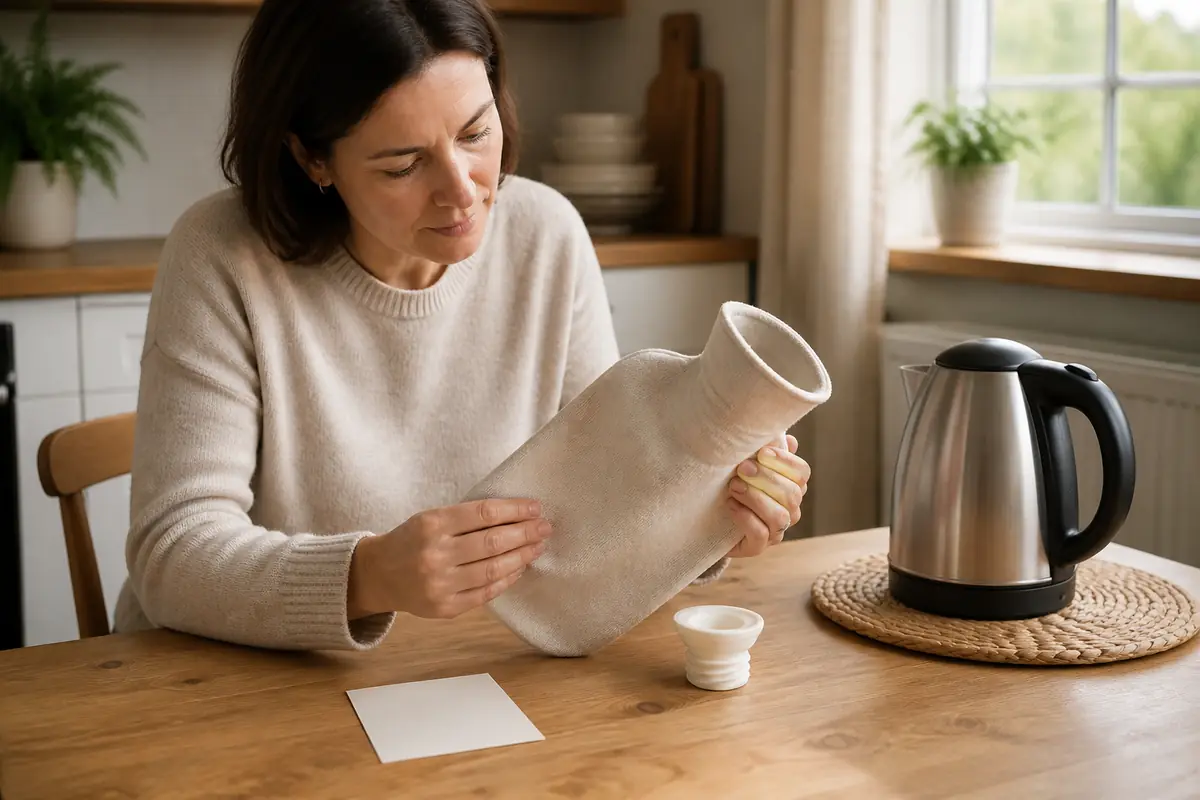
The image is an editorial illustration, not a photograph from a product test. It does not demonstrate filling. Links are editorial and non-affiliate.