Choosing home fragrance diffusers: format, room size, ingredients and intensity
A diffuser changes indoor fragrance continuously or in repeated bursts, so format, room, exposure, spill risk and refill evidence matter more than a long note list. Start with the lowest controllable intensity.
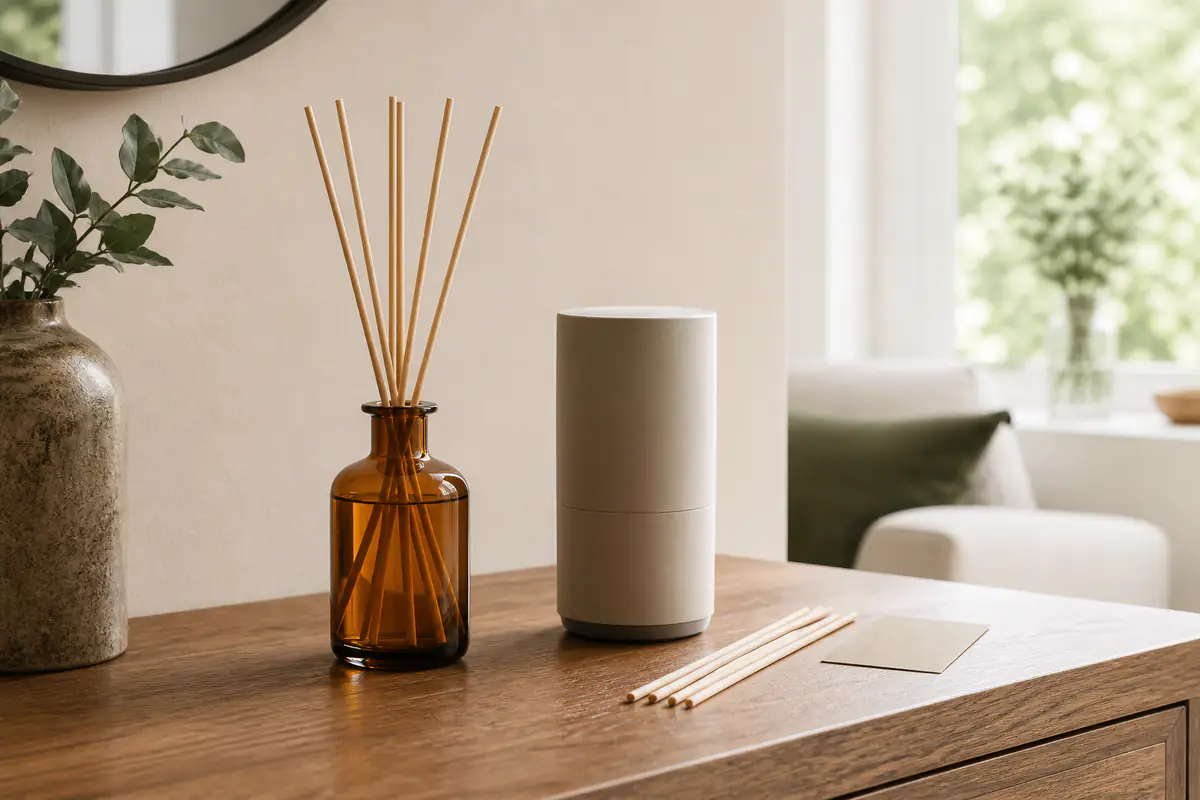
In this guide
Choose the exposure pattern before the fragrance
Decide whether the room needs passive reeds, a non-liquid solid format or a powered device with timed control, then check labels and refills. Avoid medical, purification and universal pet-safety claims; stop use when fragrance causes discomfort and keep liquids away from vulnerable surfaces.
Compare open-flame alternatives with the scented-candle guide, screen gift suitability through our recipient-first guide, and protect return options with gift-return planning.
| Format | Main control | Main risk to check | Best evidence |
|---|---|---|---|
| Reed diffuser | Reed count, flipping and vessel opening | Spill, ingestion and surface damage | Liquid volume, label and stable base |
| Passive solid or ceramic | Placement and exposed area | Contact, breakage and limited adjustment | Material and replacement information |
| Water-based powered device | Timer, output and cleaning | Electrical use, water hygiene and residue | Manual, fill line and compatible liquid |
| Waterless powered device | Timed dose and cartridge setting | Concentrated exposure and proprietary refills | Output, refill composition and lockout |
Diffuser requirement sheet
- Assess the diffuser’s proposed room and how it is ventilated.
- Account for the room’s occupants, pets and fragrance sensitivities before selecting a diffuser.
- Passive or powered exposure.
- Fragrance family and intensity.
- Ingredient and hazard label.
- Stable spill-safe position.
- Refill type and monthly use.
- Cleaning, electricity and disposal.
Define the room and reason for fragrance
Record room volume, ventilation, time occupied and the specific aim: a subtle entrance scent, occasional living-room atmosphere or a consistent background. A bathroom, bedroom and open-plan kitchen create different exposure and placement problems.
Do not use fragrance to cover damp, smoke, drains, spoiled materials or inadequate cleaning. Identify and fix the source first; masking an odour can delay recognition of a building or safety issue.
Screen household exposure before format
Ask about asthma, migraine, fragrance sensitivity, young children, pets and anyone unable to move the product safely. Continuous passive exposure may be harder to control than a short timed session even when the scent seems gentle at first.
Stop use and ventilate appropriately if occupants feel unwell. Fragrance products are not medical treatments, and natural or essential-oil language does not make a formulation suitable for every person or animal.
Understand passive reed diffusion
Reeds draw fragranced liquid upward and expose it to air. Vessel opening, reed material, count, length, room airflow, temperature and formulation affect intensity and rate, so volume alone does not predict duration.
A reed diffuser has no flame, but it contains an accessible liquid and can run continuously. Choose a stable base and a location protected from knocks, pulling, ingestion and vulnerable finishes.
Compare passive solids and porous ceramics
Solid, gel or porous formats can avoid an open liquid reservoir, but their exposure, ingredient, replacement and surface-contact requirements still need evidence. Decorative shape does not establish low intensity or child safety.
Check whether oil is applied directly, whether a tray is required and how the product is refreshed. Reject improvised use of liquids on materials not designed for them.
Separate water-based and waterless powered devices
A water-based ultrasonic device, heated unit, fan-driven cartridge and waterless nebulising system operate differently. Confirm the exact mechanism, compatible liquid, output control, fill limit, timer and cleaning method.
Never add perfume, essential oil or refill from another system unless the manufacturer explicitly permits it. Concentration, viscosity, residue and material compatibility can affect exposure and damage the device.
Choose the lowest controllable intensity
Begin with fewer reeds, a lower powered setting or shorter timed session only when the instructions allow adjustment. Give the room time to equilibrate instead of escalating because the nose adapts after prolonged exposure.
Olfactory adaptation can make the user perceive less fragrance while visitors still find it strong. Use a neutral break and feedback from occupants rather than increasing output automatically.
Read the complete label before purchase
Look for the responsible business, volume, intended use, ingredients or allergen and hazard information where applicable, safe-use instructions, batch traceability and disposal. Photograph the label before discarding an outer sleeve.
IFRA standards manage fragrance ingredients by intended product category, but IFRA does not certify finished products and a conformity statement does not replace the manufacturer’s safety assessment or legal duties.
Do not turn an ingredient story into a health claim
Botanical names, essential oils and natural percentages describe sourcing or composition only when supported. They do not prove cleaner air, safer breathing, sleep treatment, antimicrobial action or suitability around pets.
Treat therapeutic, detoxifying or air-purifying language as a separate claim requiring appropriate evidence. A pleasing scent changes perception; it does not replace ventilation or remove indoor pollutants.
Match fragrance family to duration
Use broad families—citrus, green, floral, woody, amber, gourmand or fresh—to shortlist, then assess likely intensity and persistence. Detailed story notes are subjective and may develop differently in the actual room.
For an uncertain household or gift, choose lower commitment or a sample route. The restraint used in our fragrance storage and ownership guide also applies: do not buy the largest volume before the scent and storage conditions are understood.
Plan spill and surface protection
Diffuser liquids can mark paint, wood, plastic, textiles or stone. Use the manufacturer’s stated protective base, keep the vessel upright and place it away from edges, cords, door swing and direct contact with a valued finish.
Do not flip reeds over an unprotected surface or wipe a spill across a larger area. Follow label cleanup and seek product-specific advice where the liquid contacts skin, eyes or a material.
Keep the product inaccessible where needed
A tall reed arrangement can attract children or animals and a powered cable can be pulled. Choose a position that is stable, ventilated as directed and genuinely inaccessible without creating a falling hazard above people.
Pet species and individual health vary, and internet lists of universally safe oils are unreliable. Ask a veterinary professional about a specific exposure concern rather than relying on a retailer’s broad pet-friendly badge.
Control heat, sunlight and airflow
Radiators, direct sun and strong draughts can change evaporation, scent movement and material ageing. Follow storage and operating temperature instructions and keep liquids away from ignition sources even when the device has no flame.
A hallway current may distribute fragrance quickly but also empty reeds faster. Place for controlled use rather than maximum throw, and never block ventilation to make scent last.
Check electrical and water maintenance
For powered devices, confirm UK plug or power input, cable length, rated environment, automatic shutoff where claimed and the cleaning access. Water reservoirs need the specified water and routine to prevent residue and stale standing liquid.
Unplug before cleaning and keep connectors dry. Use the manual-before-buying guide when the reservoir, cartridge or app is unclear.
Audit refills and compatibility
Record the exact refill code, volume, claimed duration basis, ingredients, current price and whether reeds or cartridges are replaced. Proprietary formats can limit fragrance choice and create high ongoing cost.
Third-party refills may be cheaper but require explicit compatibility and safe-use evidence. Do not pour a refill into a decorative bottle whose closure, material or opening was not designed for it.
Calculate use rather than headline duration
A 90-day claim depends on setting, reeds, temperature, airflow and use. Estimate monthly liquid or cartridge consumption from the planned routine and show a range instead of treating the maximum claim as a guarantee.
Use total-cost thinking for device, electricity, cleaning and refills. A controllable smaller system can be better value than a large passive bottle that becomes overpowering.
Preserve gifting and return options
Fragrance preference is personal and liquids may be excluded from voluntary returns after opening. Check seals, exchange terms, delivery protection and whether the recipient has a safe location before sending directly.
Use the direct-send gift guide and avoid including a large refill commitment with an untested scent. A thoughtful gift should not create disposal work.
Store and dispose without improvisation
Keep unused refill closed, upright and in the stated temperature range away from children, pets, heat and sunlight. Preserve the original label so contents and hazards remain identifiable.
Follow local and manufacturer guidance for liquid, reeds, cartridges, batteries and electrical devices. Do not pour concentrated fragrance into drains or combine leftovers unless official instructions permit it.
Balanced buying verdict
A good diffuser fits the room, occupants, exposure pattern and maintenance routine with clear labelling, adjustable intensity and a credible refill path. Format matters because it controls liquid access, dose and work.
Choose a smaller or more controllable route when sensitivity, pets, surface risk or preference is uncertain. Browse Style & Gifts for other recipient-led home choices.
Passive reeds or a powered diffuser?
Continuous low output is acceptable
The vessel can stand safely and reed adjustment gives enough control for the room.
Timed exposure matters
A documented timer, compatible refill and cleaning routine justify electricity and device upkeep.
Balanced verdict
The best diffuser provides controllable scent without creating a new household risk. Choose by format, room, label, intensity, placement, refills and real monthly use.
Fragrance should never be used to hide damp, pollution or another source problem.
Official checks:
IFRA Code of Practice ↗
IFRA explanation of fragrance standards ↗
GOV.UK product safety advice ↗
NHS allergy information ↗
Frequently asked questions
Are reed diffusers safer than candles?
They avoid an open flame but introduce continuous fragrance liquid, spill, ingestion and surface risks that still need control.
How can diffuser intensity be reduced?
Use only manufacturer-approved adjustments such as fewer reeds, lower output or shorter timed sessions, then reassess after a neutral break.
Can any essential oil go in an electric diffuser?
No — Use only liquids and concentrations explicitly approved for the exact device and intended application.
Are natural diffusers safe for every pet?
No universal claim is reliable. Species, product, concentration and health matter; seek veterinary advice for a specific concern.
Does a diffuser clean indoor air?
Fragrance changes smell, not ventilation or pollutant removal, unless a separate supported function is clearly demonstrated.
Methodology and limitations
We reviewed current IFRA standards explanations and official UK product-safety and health information on 1 September 2026. We assessed passive and powered formats, room, exposure, ingredients, intensity, labels, spills, pets, electricity, refills, cost, gifting and disposal. We did not chemically analyse products, test scent throw or give medical or veterinary advice.
Limitations
Formulations, labels, rooms, people, animals and devices vary. Recheck the exact UK product, refill, instructions and current safety information before purchase and stop use when harm or discomfort is suspected.